
Managing Victoria's Firefighting Fleet
Audit snapshot
Are fire authorities planning and maintaining their firefighting fleets to meet Victoria's current and future needs?
Why we did this audit
A fit-for-purpose and well-maintained firefighting fleet is essential for fire authorities to protect the community, property and environment from fires, and respond to other emergencies.
Victoria’s 3 fire authorities are the Country Fire Authority (CFA), Fire Rescue Victoria (FRV) and the Department of Energy, Environment and Climate Action (DEECA). Under the Occupational Health and Safety Act 2004, they must provide a safe working environment for firefighters and not expose them, or the public, to health and safety risks.
Meeting these obligations requires effective planning and management to make sure fire trucks are safe, reliable and operational, and are replaced when they can no longer meet operational needs.
Victoria's firefighting fleet is ageing. Recent reports of fire truck breakdowns have raised concerns about the fleet's reliability, operational capability and safety.
We did this audit to see if Victoria's fire authorities are meeting their responsibilities to make sure their firefighting fleets are safe, reliable and capable of meeting operational needs.
Key background information
Source: VAGO, based on information from fire authorities and the Productivity Commission.
What we concluded
Fire authorities vary in how effectively they plan and maintain their fleets, and they are facing funding shortfalls.
Fire authorities need an estimated $1.5 billion between 2024–25 and 2033–34 to address critical fire truck replacement and upgrade needs. But they only have around one-quarter of the funding they need.
CFA and FRV have well-designed systems to plan their fleets. But some parts of their asset strategies are not fully in place, which may limit their ability to respond to risks and needs.
DEECA’s fleet planning approach has significant gaps. It lacks strategic and operational plans, and it did not follow development and quality assurance processes for parts of its fleet. This led to widespread faults in DEECA’s fleet, which meant DEECA operated fire trucks that were overweight or had cracking. It removed over half of its fleet from service in 2025 to address these issues. It has since returned these fire trucks to service under ongoing monitoring and repair programs.
No fire authority is completing all its scheduled maintenance, which may lead to more breakdowns.
Together, these issues increase the risk that fire authorities will not have enough fit-for-purpose fire trucks to respond to fires and other emergencies.
1. Our key findings
What we examined
Our audit followed 2 lines of inquiry:
1. Are fire authorities planning and allocating their firefighting fleets to minimise risk to firefighters and the community?
2. Are fire authorities maintaining the condition of their firefighting fleets to ensure they are operable and safe?
To answer these questions, we examined:
- Fire Rescue Victoria (FRV)
- Country Fire Authority (CFA)
- Department of Energy, Environment and Climate Action (DEECA)
- Department of Justice and Community Safety.
Identifying what is working well
In our engagements we look for what is working well – not only areas for improvement.
Sharing positive outcomes allows other public agencies to learn from and adopt good practices. This is an important part of our commitment to better public services for Victorians.
Terms used in this report
Fire trucks
Fire trucks are specialised vehicles that Victoria’s fire authorities use for firefighting. In this report, it does not include the authorities’ other vehicles, such as all-terrain vehicles, hazmat vehicles, fireboats, aircraft, plant and machinery or standard motor vehicles.
G-Wagen and Unimog
G-Wagen and Unimog are types of vehicles in DEECA's fleet. To create a complete fire truck, a third-party manufacturer designs and builds a firefighting body (which includes a body subframe, water tank, pump and other firefighting equipment) onto these vehicles. G-Wagen fire trucks are relatively lightweight and can access areas that larger fire trucks cannot. Unimog fire trucks are heavy vehicles that carry and pump more water.
Background information
Victoria's fire authorities
FRV, CFA and DEECA are responsible for preventing, mitigating and suppressing fires in Victoria, as described in Figure 1.
Figure 1: Fire authorities and their main responsibilities
| Authority | Number of firefighters | Responsibilities |
|---|---|---|
FRV
| 3,980
| Responding to fires and emergencies, including structure fires, road crashes, hazardous materials incidents, rescues and other emergencies. FRV was established on 1 July 2020 under Victoria’s fire services reforms. |
CFA
| 29,084
| Responding to fires and emergencies, including structure fires, grass and bushfires, road crashes, hazardous materials incidents and rescues. It also has responsibilities related to preventing fires in regional Victoria and carrying out regulatory services. It operates mainly in rural and semi-rural urban areas mostly on private land. CFA operates 1,209 brigades. |
DEECA
| 1,800
| Leading bushfire prevention, preparedness, response and recovery on around 8 million hectares of public land in Victoria. It manages around 3.2 million hectares of state forest through Forest Fire Management Victoria and supports year-round land management and emergency response activities across Victoria. DEECA has approximately 500 seasonal firefighters that support permanent staff during peak fire season. |
Note: Number of firefighters includes operational firefighters only.
Source: VAGO, based on information from fire authorities.
Victoria's firefighting fleet
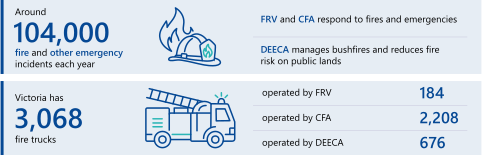
Victoria's firefighting fleet comprises just over 3,000 active fire trucks:
- FRV has 184 fire trucks
- CFA has 2,208 fire trucks
- DEECA has 676 fire trucks.
FRV and CFA's fire trucks are ageing. Of their combined fleets, 57.1 per cent are 15 years old or more and 35.2 per cent are 20 years old or more. DEECA's fleet is relatively new by comparison, as Figure 2 shows.
Figure 2: Percentage age distribution of Victorian fire trucks
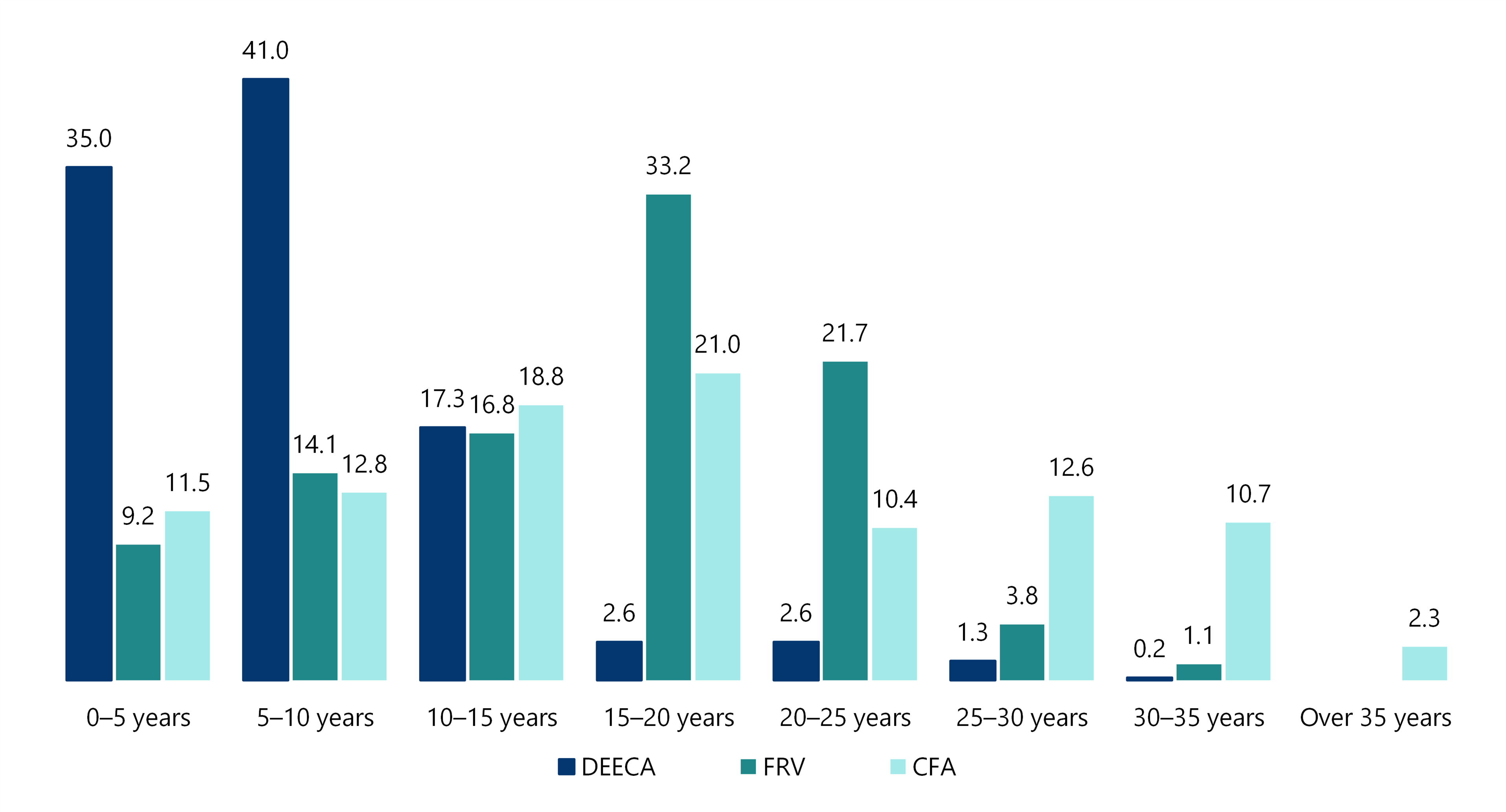
Source: VAGO, based on information from fire authorities and the age of vehicles as at July 2026.
| fire trucks have a median age of ... | and … | |
|---|---|---|
| CFA’s | 16.4 years | 56.9 per cent are at least 15 years old. |
| FRV’s | 16.1 years | 59.8 per cent are at least 15 years old. |
| DEECA’s | 8.5 years | 6.7 per cent are at least 15 years old. |
Service standards and performance
Fire authorities have service targets for:
- response times
- fleet availability
- fire suppression.
Fire authorities’ targets are not directly comparable because they have different operating contexts. But the targets define each fire authority’s expected standard of service, which informs their fleets’ required capacity and capability.
In 2025–26 fire authorities met some service delivery targets but had mixed results against others, as Figure 3 shows.
Figure 3: Service targets and performance in 2025–26
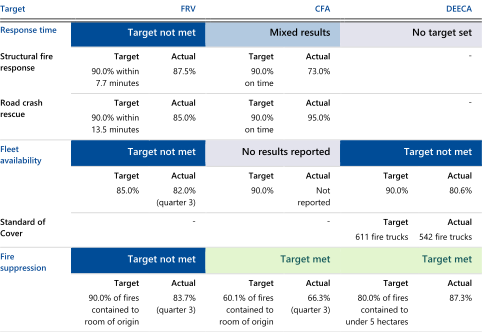
Note: ‘-‘ means not applicable. Results include expected outcomes reported in the 2026–27 Department Performance Statement. ‘Structural fires’ are fires involving the physical components of a building or fixed structure, so this measure excludes response times for non-structural fires, which are a large proportion of CFA’s fire response. CFA has service delivery standards that specify a response time target for a brigade to attend an emergency incident, depending on brigade risk classification (8 minutes for Hazard Class 2; 10 minutes for Hazard Class 3; 20 minutes for Hazard Class 4). The State Road Crash Rescue Arrangements sets response times of 20 minutes in urban areas and 40 minutes in rural areas. ‘Fleet availability’ is the average fleet availability across a fire authority’s fleet. While DEECA did not achieve its fleet availability target during the reporting period, it met the Standard of Cover in January 2026.
Source: VAGO, based on the 2026–27 Department Performance Statement, Fire Services Implementation Monitor and information from fire authorities.
Standard of Cover
The Standard of Cover is a statewide performance framework that outlines DEECA's expected capability across bushfire prevention, preparedness, response and recovery. It guides service delivery based on bushfire risk, seasonal conditions and multi-agency deployment.
The Asset Management Accountability Framework
Fire authorities must work under the government’s Asset Management Accountability Framework (AMAF). It sets out requirements and best-practice guidelines to make sure they take a strategic approach to asset management.
The AMAF supports reliable service delivery by requiring agencies to:
- plan for the whole lifecycle of their assets
- align their assets with operational needs
- use data to guide their decisions.
To comply with the AMAF, fire authorities must meet 41 mandatory requirements, including implementing an asset management strategy (asset strategy).
It also recommends using asset management plans that explain how the authority will maintain, renew and replace its assets to support service delivery.
Under the AMAF, authorities must also self-assess their compliance and continually improve their asset management practices to stay operationally prepared.
Asset management
Asset management focuses on how an organisation will use its assets, resources and capability to achieve its objectives, manage risks, meet service needs and deliver value over time.
Asset strategy
An asset strategy outlines an organisation’s approach to asset management. It helps guide decisions, set priorities, coordinate work and resources, and hold business units accountable for agreed actions.
Ensuring fit-for-purpose fire trucks
Fire authorities manage their fleets through several processes to make sure they are fit for purpose.
| This includes ... | which help to ... |
|---|---|
| asset strategies and planning | identify current and future fleet needs. |
| fleet design and development | make sure fire trucks meet operational requirements. |
| fleet replacement and procurement | make sure fire trucks are replaced when needed. |
| fleet deployment and allocation | manage risk and ensure fire trucks are available where they are most needed. |
| fleet monitoring and condition assessments | identify performance, availability and condition issues. |
| maintenance programs | keep fire trucks safe, reliable and available for service. |
What we found
This section focuses on our key findings, which fall into 3 areas:
1. There are gaps in fire authorities’ fleet planning.
2. Fire authorities are not keeping up with maintenance needs.
3. Fire authorities have not always sought or received enough funding to maintain safe and reliable fleets.
The full list of our recommendations, including agency responses, is at the end of this section.
Consultation with agencies
When reaching our conclusions, we consulted with the audited agencies and considered their views.
You can read their full responses in Appendix A.
Key finding 1: There are gaps in fire authorities’ fleet planning
CFA has a sound asset strategy, but FRV and DEECA’s asset strategies have gaps
To comply with the AMAF, fire authorities must have an asset strategy.
CFA has an asset strategy and asset management plans, which explain how it will use, maintain, renew, acquire and dispose of its fleet.
FRV's asset strategy and plans are still in draft form. It has risk management and contingency planning for its fleet, which is part of an asset strategy, but it does not comply with the AMAF because its asset strategy is in draft. This means FRV cannot be sure that its fleet-planning decisions are based on risk and service needs. Consultation processes (which are still in progress) have contributed to delays finalising FRV’s asset strategy.
DEECA does not have a complete asset strategy or asset management plans for its firefighting fleet. Its strategic asset management plan for its fleet is incomplete and has not been updated for 7 years.
FRV and CFA have sound fleet development processes, but DEECA does not
FRV and CFA effectively manage fleet design and development risks through policies, procedures, standardised designs and testing.
But DEECA does not have a formal quality management system or fleet development and engineering policies. It has done limited testing and quality assurance to make sure its fire trucks meet requirements. This includes testing prototypes, design changes and complete fire trucks.
DEECA operated overweight and cracked fire trucks and had to ground more than half of its fleet
Gaps in DEECA’s fleet planning and development processes have led to cracking and safety risks across its fleet.
DEECA’s predecessor, the Department of Environment, Land, Water and Planning, found cracking in the:
- G-Wagen fire trucks from 2017, beginning in the fire trucks' cabin (which is the driver and passenger compartment)
- Unimog fire trucks from 2020, mainly in the fire trucks’ body sub-frame (which is a secondary structural frame used to support specialised equipment such as tanks or pumps).
Weaknesses in design, quality assurance and asset management processes contributed to the cracking. G-Wagen fire trucks were also carrying too much weight during operations. DEECA operated Unimog fire trucks with cracking and G-Wagen fire trucks carrying too much weight, despite safety and roadworthiness issues.
Cracking became so widespread that DEECA had to remove 54.4 per cent of its fleet from service leading into the 2025–26 fire season.
DEECA implemented a large-scale remediation program to inspect, repair and return fire trucks to service for the 2025–26 fire season. This enabled it to meet its Standard of Cover in January 2026. It now operates the fire trucks under ongoing monitoring and repair programs.
DEECA has continued to find cracking in the G-Wagen and Unimog fire trucks.
To reduce re-cracking, DEECA has engaged engineers to develop, test and implement repair measures. DEECA is updating its Forest and Fire Fleet Strategy, which is due in December 2026 and will outline how it plans to address these issues and its future fire truck needs.
Key issue: DEECA used fire trucks with overloading and cracking
DEECA used its G-Wagen fire trucks even though they were above their weight limit when loaded with water and supplies. This put firefighters at direct risk because fire trucks were used outside their safe operating limits.
Extra weight makes fire trucks harder to stop, steer and control. It also puts more pressure on tyres, axles and suspension, and increases the risk of fire trucks rolling over. These risks are greater for DEECA's fire trucks because they have a high centre of gravity and often operate on slopes, uneven ground and off-road tracks.
DEECA also used its Unimog fire trucks with cracked body sub-frames. It did this based on engineering advice that vehicles could continue operating with cracks of up to 100 millimetres long.
But this advice did not consider applicable heavy vehicle standards under the Heavy Vehicle National Law and regulations. It also did not consider the National Heavy Vehicle Inspection Manual criteria for assessing vehicle compliance and defects, including cracking.
DEECA did not always fully assess the cracks or certify repairs before using the fire trucks.
The Road Safety Act 1986, the Road Safety (Vehicles) Regulations 2021 and the Heavy Vehicle National Law require vehicles to meet vehicle and safety standards, including roadworthiness requirements.
FRV and CFA allocate fire trucks to maximise coverage and reliability, but DEECA does not
FRV and CFA allocate and rotate their fire trucks to make sure they have reliable, available fleets. This includes maintaining a fleet of service exchange vehicles (which are temporary vehicles used while fire trucks are being repaired or serviced).
This approach reduces operational risks and helps FRV and CFA make the best use of their resources, maintain coverage and extend fire trucks’ life.
Working well: FRV's strategies help to make sure it has critical service coverage
FRV considers service coverage and fire truck reliability when it plans how it will use its fleet. When new fire trucks are available, it allocates its fleet to improve service coverage and response times and maximise the life of existing trucks. It:
- deploys new fire trucks to address gaps in service coverage
- moves existing fire trucks to other fire stations
- makes older fire trucks service exchange vehicles or moves them to its training academy.
DEECA does not adequately consider how it allocates and rotates its fire trucks to help manage operational risks caused by cracking. Its fire trucks operate in tough, off-road conditions and have a high rate of re-cracking in regions where the operating terrain is most challenging. This reflects that the cracking is a structural problem that can be difficult to repair, especially when repaired vehicles continue carrying heavy loads off-road.
Addressing this finding
To address this finding, we have made one recommendation to all fire authorities about:
- establishing and maintaining best-practice management arrangements for their fire trucks.
We also made one recommendation to DEECA about:
- implementing best-practice design, development and quality assurance processes for its fleet.
Key finding 2: Fire authorities are not keeping up with maintenance needs
Fire authorities are not completing all scheduled maintenance and only completing part of it on time
Fire authorities are not completing all required scheduled maintenance on their fire trucks. This increases the risk of breakdowns during emergency responses and safety issues for firefighters.
Since 2021:
- CFA has completed 94.9 per cent of its scheduled maintenance
- DEECA has completed 85.5 per cent of its scheduled maintenance
- FRV has completed 67.9 per cent of its scheduled maintenance.
Of the scheduled maintenance fire authorities complete, they have completed 58.2 per cent on time.
An increase in unplanned repairs has reduced FRV and DEECA’s fleet availability
FRV and DEECA have experienced an increasing number of faults in their fire trucks that need repair. This has reduced their fleet availability below their target levels.
For FRV, faults are higher because of the age of its fleet. For DEECA, this is because of design and weight issues.
Age also affects the reliability of CFA's fire trucks. But it uses them less in some parts of Victoria than FRV, so it allocates older trucks to brigades with fewer incidents.
Despite their high volume of repairs, FRV and CFA typically return fire trucks to service within 4 weeks – and more than half within 2 weeks. But limited parts availability and increasingly complex faults mean that some major faults are taking longer to repair, which increases the risk of service gaps.
DEECA takes longer to repair its fire trucks. It took DEECA more than 2 years to repair body sub-frame cracking on its Unimog fire trucks, which took them out of service and has affected its ability to meet its Standard of Cover in some years.
Despite widespread and increasing instances of cracking across its fleet, DEECA’s repair times are improving. It now completes a higher percentage of repairs within 2 weeks than it did in 2021.
Key issue: Major repairs have limited FRV's aerial appliance availability
In 2025–26, 5 of FRV’s aerial appliances (which are fire trucks with ladder platforms designed for highreach rescue or firefighting) were unavailable for extended periods. This was due to cracking repairs, electrical faults, major overhauls and parts delays.
As a result, aerial appliances were available only 57.3 per cent of the year on average. This is well below FRV's 85.0 per cent fleet availability target.
At Sunshine Station, FRV needed to replace a 27 year-old teleboom (a specialised truck for highreach firefighting). No aerial appliances were available, so it replaced it with a pumper (a truck that pumps water from hydrants). Pumpers do not have similar high-reach equipment, so this reduced the station’s aerial capability.
Fire authorities have underestimated their maintenance needs
Fire authorities need accurate maintenance forecasts to help them plan their operations and create funding proposals. But all fire authorities have underestimated growth in maintenance costs, which has contributed to maintenance backlogs.
Without accurate forecasts, fire authorities increasingly rely on ad-hoc funding requests to pay for maintenance. This means fire authorities often respond to maintenance pressures after they become urgent, rather than planning and managing risks over the life of their fleet.
Fire authorities are not comprehensively monitoring the condition and performance of their fire trucks
Monitoring fire trucks’ condition and performance helps fire authorities plan for maintenance before major faults occur.
There is no consistent set of measures to track the condition of Victoria’s firefighting fleet. Instead, fire authorities use their own measures. But:
- there are gaps in what fire authorities monitor
- fire authorities do not have targets or regularly report against most of their measures.
This makes it difficult for fire authorities to assess their fleet’s condition, track performance, make sure maintenance meets expected standards, and plan for future maintenance demand and fire truck replacement.
Addressing this finding
To address this finding, we have made 3 recommendations to all fire authorities about:
- completing scheduled maintenance on time and to required specifications
- improving monitoring and reporting to establish proactive maintenance schedules
- improving the accuracy of their fleet maintenance forecasting.
Key finding 3: Fire authorities have not always sought or received enough funding to maintain safe and reliable fleets
Fire authorities need $1.5 billion to replace and upgrade their fire trucks
FRV and CFA have estimated how much funding they need to replace and upgrade their fleets. But DEECA has not, including estimating how much funding it needs to fix cracking across its fleet.
Victoria's fire authorities collectively need an estimated $1.5 billion between 2024–25 and 2033–34 to address critical fire truck replacement and upgrade needs. This is based on FRV's and CFA's estimates, and our cost estimate to replace DEECA's fleet.
FRV and CFA, but not DEECA, have told the government how much funding they need
When fire authorities need to replace their fleets, they request funding through state Budget proposals.
FRV's initial funding proposals in 2024–25 and 2025–26 aligned with its asset strategy and covered most of its replacement and upgrade needs.
CFA has sought funding for a smaller share of its replacement and upgrade needs, but it also receives capital funding to help build and fix its assets and equipment. It also has a plan that outlines its replacement and upgrade needs (including costs from 2024–25 to 2033–34), which it referenced in recent funding proposals.
FRV's and CFA's recent funding proposals:
- clearly explain issues with their fleets, including their age, condition, performance, maintenance costs and risks
- identify the number of fire trucks that need replacing and the funding required
- assess options, and identify delivery and procurement timeframes, risks and mitigation strategies.
Despite cracking in its fleet, DEECA is still developing a long-term fleet replacement program and is yet to give the government a complete plan to replace its fire trucks. This includes how many fire trucks need replacing, what it will cost and when replacements will happen.
Funding proposals and allocations have been insufficient to manage service delivery and safety risks
From the 2024–25 to 2026–27 state Budgets, fire authorities have received 12.1 per cent of the estimated funding they need to address issues across their fleets.
During this time, FRV and CFA reduced their state Budget funding proposals in response to instruction from the Treasurer to all ministers that government agencies should limit their funding requests in line with the government’s fiscal strategy. The Department of Justice and Community Safety reinforced this in its feedback on FRV and CFA’s funding proposals.
In response to their funding allocations, FRV and CFA have:
- prioritised replacing older fire trucks that have the most reliability and safety risks
- adopted fleet allocation strategies that maximise service coverage and spread risk across fleets as much as possible.
DEECA has sought a limited share of the funding it needs to replace its fire trucks, despite widespread cracking. Instead, it has implemented a fleet remediation program that includes:
- repairing cracked fire trucks
- checking for re-cracking each month
- carrying out engineering assessments
- leasing additional fire trucks to maintain a basic level of fire prevention and suppression capability.
But this has increased the annual cost of maintaining DEECA's fleet by $8.6 million per year. DEECA’s delays in seeking funding, combined with the time needed to replace fire trucks, increase the risk that it will continue to operate unreliable and potentially unsafe fire trucks for several years.
In addition to Budget funding, some fire authorities also receive grant and capital funding. With all Budget, capital and grant funding, fire authorities have just 26.7 per cent of the total estimated funding needed to address issues across Victoria’s fleet.
Addressing this finding
To address this finding, we have made one recommendation to all fire authorities and the Department of Justice and Community Safety about:
- advising the government on the risks associated with Victoria's firefighting fleet and funding needs.
See the next page for the complete list of our recommendations, including agency responses.
2. Our recommendations
We made 6 recommendations to address our findings. The relevant agencies have accepted the recommendations in full or in principle.
| Recommendation | Agency response(s) | |||
|---|---|---|---|---|
| Finding: There are gaps in fire authorities’ fleet planning | ||||
All fire authorities
| 1
|
| Accepted
| |
Department of Energy, Environment and Climate Action
| 2
| Establish and implement a quality management system for designing, developing and modifying the firefighting fleet that complies with the International Organization for Standardization 9001, to minimise the risk of non-compliance with road safety, heavy vehicle and occupational health and safety laws (see Section 3).
| Accepted
| |
| Finding: Fire authorities are not keeping up with maintenance needs | ||||
All fire authorities
| 3
| Complete all scheduled maintenance according to maintenance schedules and original equipment manufacturing requirements (see Section 4).
| Accepted in principle by Country Fire Authority Accepted by other fire authorities
| |
4
|
| Accepted in principle by Country Fire Authority Accepted by other fire authorities
| ||
5
|
| Accepted in principle by Country Fire Authority Accepted by other fire authorities | ||
| Finding: Fire authorities have not always sought or received enough funding to maintain safe and reliable fleets | ||||
All fire authorities Department of Justice and Community Safety | 6
| As part of each annual state Budget process, advise the government about:
| Accepted
| |
3. Fleet planning
CFA has a sound asset strategy for its firefighting fleet.
FRV's fleet planning is also sound, but its asset strategy and many of its planning documents are in draft form and incomplete.
DEECA has significant gaps in its fleet planning, development and quality assurance processes. This has led to widespread cracking across its fleet and DEECA operating overloaded and cracked fire trucks.
FRV and CFA allocate and rotate their fire trucks to maintain service coverage and extend their useful life. But DEECA does not strategically allocate its fire trucks to manage risks to service coverage.
Covered in this section:
- Fire authorities do not fully comply with the AMAF’s planning requirements
- FRV and CFA have controls to manage fleet design and development risks
- Weaknesses in DEECA's development processes led to cracking across its fleet
- FRV and CFA manage fleet constraints through risk-based allocation, but DEECA does not
Fire authorities do not fully comply with the AMAF’s planning requirements
AMAF requirements
Under the AMAF, fire authorities must have a complete, up-to-date asset strategy that includes risk management and contingency planning.
The AMAF has 5 requirements for asset planning, as shown in Figure 4.
Figure 4: The AMAF’s asset planning requirements
| Requirement | Details |
|---|---|
| 20 – Asset strategy | Develop an asset strategy for all combined assets over their full lifecycle. |
| 21a – Asset strategy | Outline how the organisation’s assets will be used to support service delivery objectives and include planning for assets (such as proposed upgrades) over different periods. |
| 21b – Asset strategy | Evaluate the asset strategy and update it where applicable. |
| 22 – Risk management and contingency planning | Incorporate asset risk management planning, which describes risk management strategies and plans for assets. |
| 23 – Risk management and contingency planning | Monitor and evaluate the effectiveness of risk management measures and, if necessary, redefine them. |
Source: VAGO, based on the AMAF.
Meeting the AMAF requirements
No fire authority fully meets the AMAF’s 5 planning requirements.
In 2024–25:
- CFA assessed that it fully complied with 4 requirements
- FRV assessed that it did not fully comply with any requirements
- DEECA assessed that it fully complied with 3 requirements.
We agree with CFA's and FRV's self-assessments.
CFA has a sound asset strategy. But its fleet data is spread across different systems and is not fully joined up. This reduces its ability to monitor fleet performance and evaluate its strategies and risk management approach, which prevents it from complying with AMAF requirement 23. It is addressing these issues.
FRV's fleet planning approach is sound, but it does not comply with any of the AMAF’s requirements because its asset strategy is in draft. Consultation processes have contributed to delays in FRV updating its asset policy and asset strategy, which is in progress. But this means it does not have an approved approach to:
- guide its decisions across the lifecycle of its fire trucks
- make sure its decisions always consider risk and service delivery needs.
We do not agree with DEECA’s self-assessment.
Based on DEECA's asset management documents, it does not comply with any of the AMAF’s requirements.
| DEECA does not comply with requirement … | because it does not have ... |
|---|---|
| 20 – Asset strategy | an up-to-date, complete and approved asset strategy that shows its proposed fire truck upgrades, acquisitions or disposals over time. DEECA’s forest and fire fleet strategic asset management plan has not been updated since 2019. |
| 21a – Asset strategy | |
| 21b – Asset strategy | |
| 22 – Risk management and contingency planning | plans for its fire trucks that turn its asset strategy into action or address major risks, including cracking and mechanical failures. |
| 23 – Risk management and contingency planning | plans for its fire trucks that monitor and evaluate the effectiveness of its risk management measures. |
These gaps limit DEECA's ability to effectively manage its firefighting fleet. DEECA is taking steps to address these gaps, including updating its asset strategy and developing plans for its fire trucks. It expects to complete these by December 2026.
Following the AMAF’s guidance
The AMAF also provides guidance on how authorities’ asset strategies can meet its requirements.
| It says asset strategies may have ... | that ... |
|---|---|
| an asset management policy | sets asset management principles, objectives, roles, responsibilities and decision-making requirements. |
| a strategic asset management plan | explains how the authority will use, maintain, renew, acquire and dispose of its assets. |
| asset management plans | are plans for specific groups of assets, such as fire trucks, that outline operational approaches, resources and responsibilities to deliver the strategy. |
Figure 5 shows how each fire authority meets the AMAF’s asset strategy guidance.
Figure 5: Fire authorities' fleet planning strategies
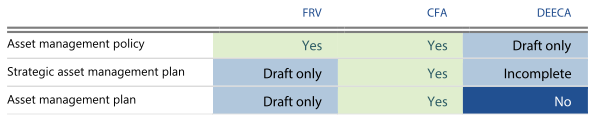
Note: FRV's strategic asset management plan and asset management plans are yet to receive executive approval.
Source: VAGO, based on information from fire authorities.
FRV and CFA have controls to manage fleet design and development risks
Design and development standards
Fire authorities need to plan their spending carefully to make sure they have the right fire trucks to respond to emergencies.
They must also operate safe and roadworthy vehicles in line with Victoria’s Road Safety (Vehicles) Regulations 2021 and the Heavy Vehicle National Law.
There is no approved design standard for fire trucks in Australia. This means fire authorities need to design and develop custom trucks to meet their needs. This requires strong processes to make sure that fire trucks are fit for purpose and meet the relevant standards.
The International Organization for Standardization (ISO) 9001 Quality management systems sets out quality management requirements for organisations that design or develop assets. This includes:
- having a clear design and development process
- checking that designs meet requirements
- confirming that finished assets work as intended.
FRV's fleet design and technical assurance processes
FRV does not have an ISO-certified quality management system. But it has policies and processes to manage fleet design and development risks for new fire trucks. This includes:
- using in-house engineers to set performance requirements and inspect fire trucks
- procuring complete or near-complete fire trucks
- applying engineering processes to guide design, testing and acceptance
- completing quality assurance inspections and tests before accepting fire trucks from its suppliers.
CFA's design and technical assurance processes
CFA does not have an ISO-certified quality management system or fleet design and development, and engineering policies. But it has a range of controls to manage design and development risks for new fire trucks. This includes:
- using standard designs and making incremental improvements over time
- using working groups to oversee its trucks’ development, refinement and procurement
- having detailed performance specifications
- completing comprehensive quality assurance inspections and tests before accepting fire trucks from its suppliers.
Weaknesses in DEECA's development processes led to cracking across its fleet
Fleet development
DEECA does not have an ISO-certified quality management system, or implement policies or controls to manage design and development risks for new fire trucks.
Several departments have been responsible for DEECA’s fleet over time, due to government restructuring. It was the responsibility of the:
- Department of Sustainability and Environment until June 2013
- Department of Environment and Primary Industries from July 2013 to December 2014
- Department of Environment, Land, Water and Planning from January 2015 to December 2022
- DEECA from January 2023 to present.
In 2010, the Department of Sustainability and Environment received funding to build a safe, fit-for-purpose firefighting fleet to address bushfire risks following the Black Saturday bushfires.
It planned to separately procure cab chassis and slip-on units, which it would then assemble into complete fire trucks. It later added a falling object protection system in July 2013 after 2 firefighters were killed when their fire truck was hit by a falling tree.
Cab chassis
Cab chassis are vehicles that have only a front cabin and an open frame at the rear so a purpose-built body or equipment can be added. Victoria’s fire truck cab chassis are typically made overseas by a vehicle manufacturer.
Slip-on unit
A slip-on unit is a firefighting module that includes a water tank, pump and hose system. They can be fitted to a cab chassis to enable firefighting operations. Victoria’s fire truck slip-on units are typically made in Australia by a third-party manufacturer.
Falling object protection system
A falling object protection system is a structure built into a vehicle to protect people from falling objects.
DEECA introduced fire trucks with falling object protection systems to better protect firefighters from falling trees and other tree strike hazards. This approach also supported recommendations from the 2015 Harrietville coronial findings. DEECA remains the only fire authority in the world to fit these systems across most of its fleet.
Cracking in DEECA’s fleet
Issues with fleet development processes have resulted in major cracking in DEECA’s fleet.
The former departments responsible for DEECA’s fleet wanted new fire trucks to be delivered quickly for use in fire seasons. But they did not have strong enough controls during fleet development, including when:
- testing fire trucks in all the necessary terrain, loading and environmental conditions
- managing changes to the fire trucks’ scope and design, such as adding falling object protection systems and increasing water tank capacity.
The departments did not:
- assess the risks and impacts of scope and design changes
- adequately review, verify or validate designs
- test complete and fully equipped fire trucks before executing contracts
- conduct quality assurance before accepting finished fire trucks.
This has led to structural cracking across DEECA's G-Wagen and Unimog fire trucks. Structural cracking is a significant safety issue because it can compromise a fire truck's integrity and make it unroadworthy.
| Structural cracking includes … | which is cracking in a fire truck’s ... | This was found in … |
|---|---|---|
| cabin cracking | driver and passenger compartment. | G-Wagen fire trucks’ cab chassis supplied by Mercedes-Benz Australia. |
| body cracking | body structure, including the frame, mounting points and panels. | G-Wagen fire trucks’ body structure manufactured by Quik Corp. |
| body sub-frame cracking | secondary structural frame, which is used to support equipment such as tanks, pumps, bodies or trays. | Unimog fire trucks’ body sub-frames manufactured by Quik Corp. |
| chassis cracking | main structural frame, which carries the overall load of the fire truck, its body and its equipment. | G-Wagen fire trucks’ cab chassis supplied by Mercedes-Benz Australia. |
The Department of Environment, Land, Water and Planning first found cabin cracking in G-Wagen fire trucks in 2017 shortly after they were delivered. It found chassis cracking from 2024, as Figure 6 shows.
Figure 6: New cracking found in DEECA's G-Wagen fire trucks each year from 2017 to 2026
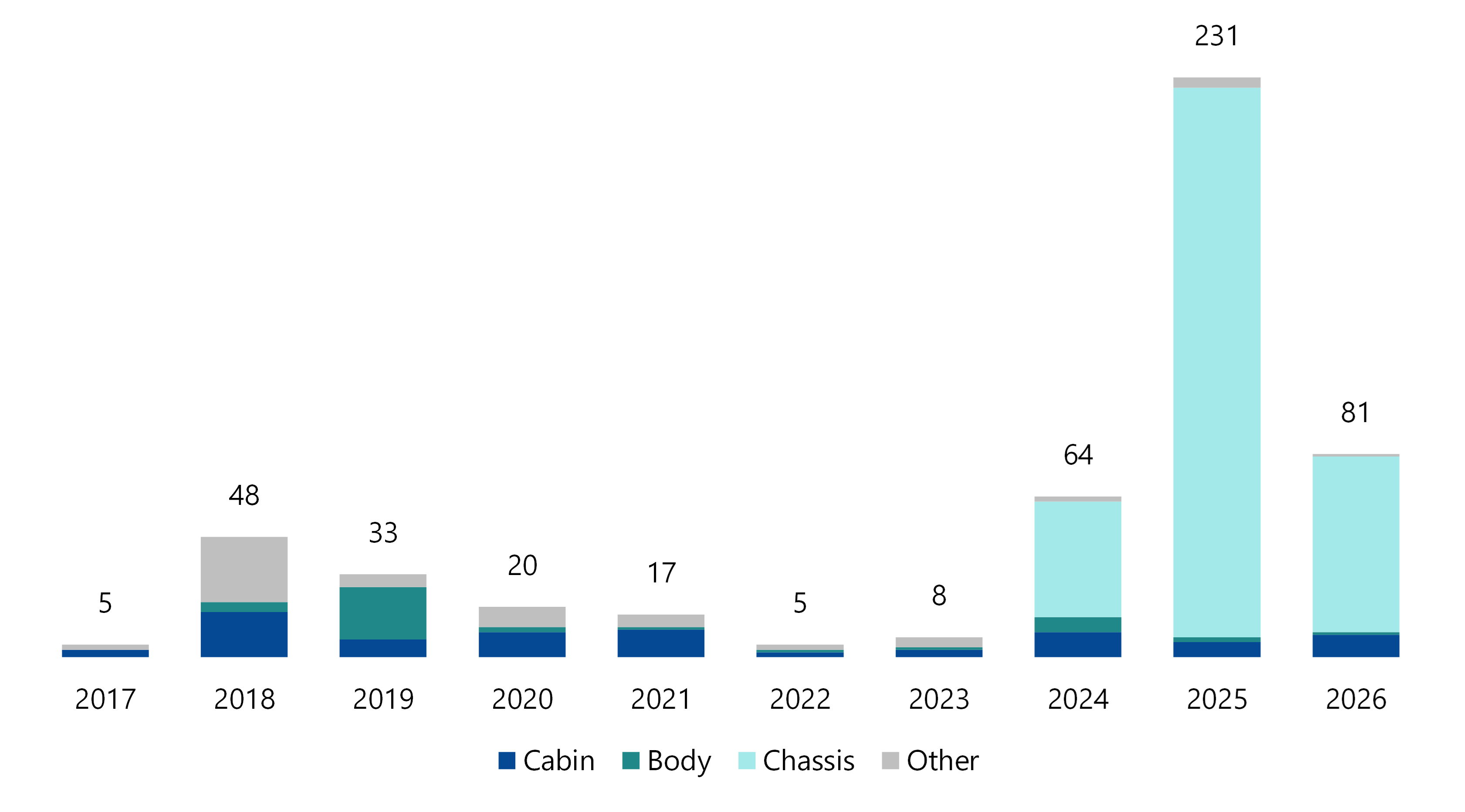
Note: The extent of cracking is likely underreported because of gaps in DEECA's record-keeping. Data for 2026 reflects available cracking records to May 2026 only. ‘Other' includes non-structural cracking on fire trucks’ body components, such as the water tank, plumbing, falling object protection system or spare wheel carrier.
Source: VAGO, based on information from DEECA.
The Department of Environment, Land, Water and Planning first identified body sub-frame cracking in Unimog fire trucks in 2020 shortly after they were delivered, as Figure 7 shows.
Figure 7: New cracking found in DEECA's Unimog fire trucks each year from 2018 to 2026
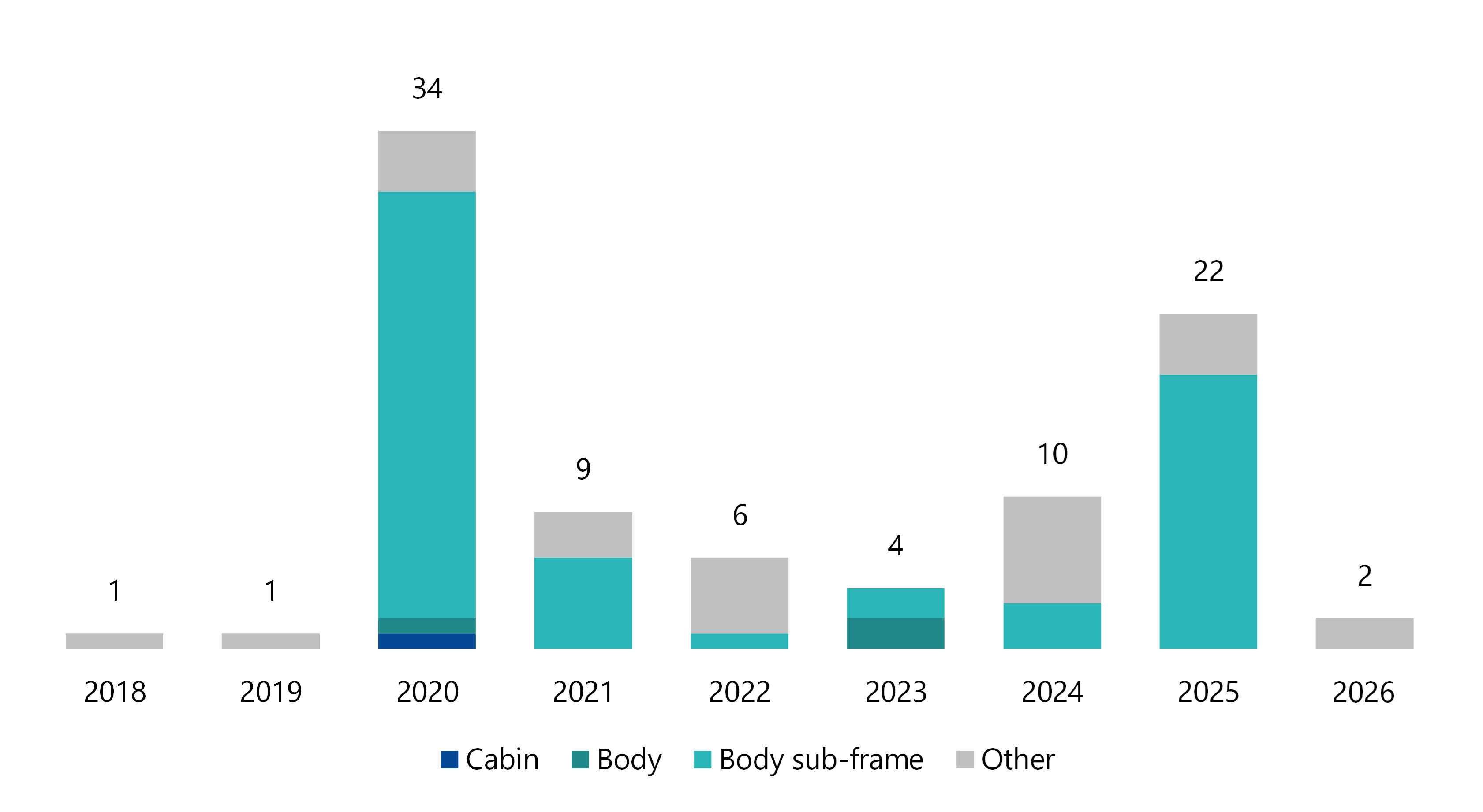
Note: The extent of cracking is likely underreported because of gaps in DEECA's recordkeeping. Data for 2026 reflects available cracking records to May 2026 only. ‘Other' includes non-structural cracking on fire trucks’ body components, such as the water tank, plumbing, falling object protection system or spare wheel carrier.
Source: VAGO, based on information from DEECA.
Case studies 1 and 2 describe how gaps in design, development and quality control processes contributed to the cracking.
The department
In case studies 1 and 2, for simplicity we use ‘the department’ to refer to the former departments responsible for DEECA’s firefighting fleet at the time.
Case study 1: The department's development of G-Wagen fire trucks
Weak testing and validation led to overloading and cracking in G-Wagen fire trucks
In 2013, the department issued a request for tender for new G-Wagen fire trucks that could carry 230 kilograms of tools and supplies, and a 400-litre water tank. But it did not include requirements for a falling object protection system, or define the type of work the fire truck needed to perform including where and how often it would be used.
The department selected:
- Mercedes-Benz Australia to supply the cab chassis
- Quik Corp to design and manufacture the slip-on units and body sub-frames, and assemble the fire trucks.
It later approved design changes to install the falling object protection system and increase the water tank capacity from 400 litres to 650 litres. These changes meant the department needed to re-negotiate scope and price with Quik Corp.
The department did not put the changes through a design and risk-assessment process or make sure testing was complete or sufficient. For example, when it tested prototype G-Wagen fire trucks, they were already close to the weight and rear axle limits. The department did not test them with their full expected operational load, including equipment and passenger weight.
We estimate that when fully equipped, the G-Wagen fire trucks exceeded the maximum weight limit by 75.3 kilograms, as Figure 8 and Appendix D show. The department also agreed to a warranty period with Quik Corp of just 12 months.
Despite this, it executed contracts for 290 G-Wagen fire trucks for $98.8 million in 2014. It did not complete quality assurance tests before it received the first 31 fire trucks in 2015 and a further 259 from 2016. Structural cracking, engine failures, tyre and rim issues, and other defects were detected from 2017 onwards, after just 2 fire seasons.
The department commissioned an independent review in 2020, which found that:
- a partially equipped vehicle exceeded its maximum weight limit
- operating at or above the maximum weight limit would increase stress on the fire trucks and significantly affect their reliability and durability
- the fire trucks were not fit for purpose unless the department reduced vehicle weight.
Figure 8: G-Wagen fire truck weight against the maximum weight limit
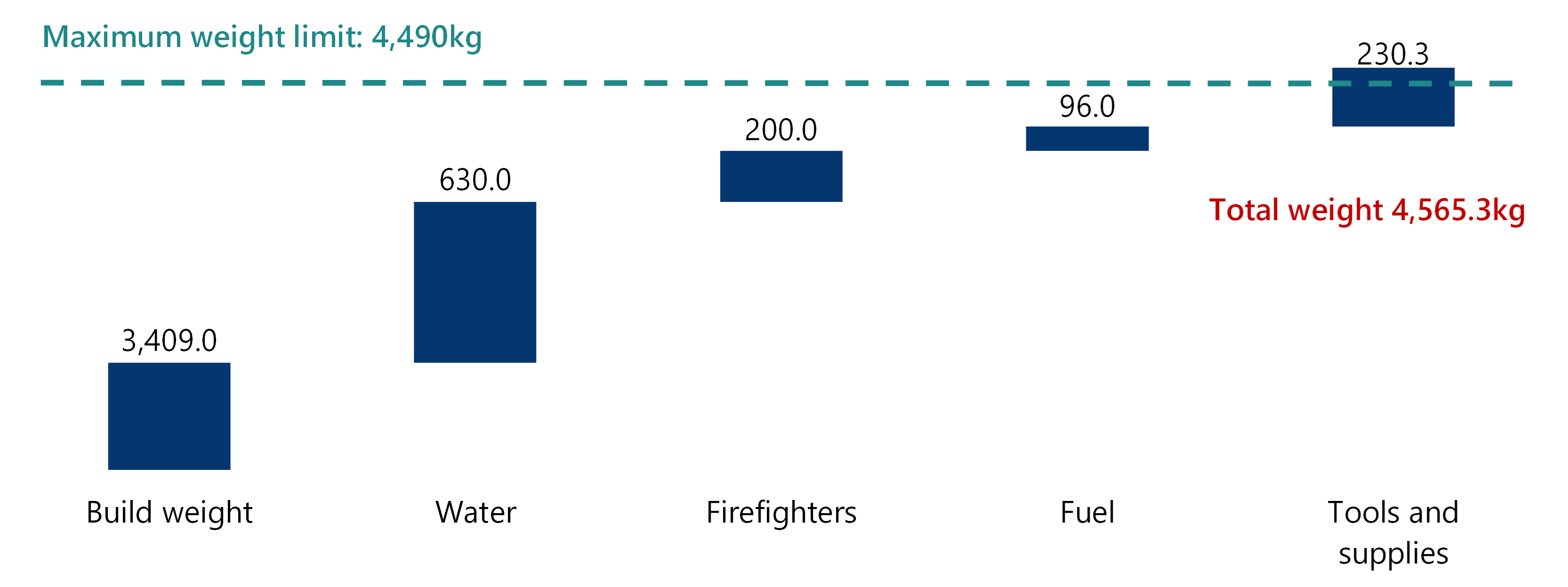
Note: The independent review found that a partially equipped vehicle weighed 4,494.6 kilograms. We used the full list of tools and supplies, and their weights, in Appendix D to estimate the vehicle’s fully loaded weight. Calculations do not include firefighter personal belongings or towing weight, which could add 200 kilograms or more.
Source: VAGO, estimates based on the 2020 independent review and vehicle weights listed in DELWP’s RFQ Annex A: Load List.
Source: VAGO, based on information from DEECA.
Case study 2: The department's development process for Unimog fire trucks
Incomplete testing and verification failed to detect design flaws in Unimog fire trucks
In 2016, the department began testing its first Unimog fire truck prototype.
But it did not complete planned testing or quality assurance on the fire trucks. Instead, it put them into use without completed build, road, pump, defect, compliance and sign-off checks.
Despite incomplete testing, the department procured 60 Unimog fire trucks for a total of $50 million in 2016. It selected:
- Mercedes-Benz Australia to supply the cab chassis
- Quik Corp to design and manufacture the slip-on units and body sub-frames, and to assemble the fire trucks.
Like its agreement for the G-Wagen fire trucks, the department agreed to a 12month warranty period with Quik Corp.
The department received the first fire trucks from 2017. By 2020, it had identified body sub-frame cracking in 28 of 41 operational Unimog fire trucks. Despite this, it still accepted 20 remaining fire trucks and did not enforce its contract warranty.
The department had planned to test the new Unimog fire trucks in-house after they were delivered. But it cannot show that it did this before operating them in the field.
Source: VAGO, based on information from DEECA.
Responding to G-Wagen fire truck cracking
DEECA and its predecessor, the Department of Environment, Land, Water and Planning, continued to use G-Wagen fire trucks despite evidence they were overweight.
This put firefighters at direct risk because they were asked to drive fire trucks outside of their safe operating limits. Extra weight can make fire trucks harder to stop, steer and control. It can also put more pressure on tyres, axles and suspension, and increase the risk of the fire truck rolling over.
These risks are greater for DEECA’s G-Wagen fire trucks than other vehicles because they have a high centre of gravity and often operate on slopes, uneven ground and off-road tracks.
The Road Safety Act 1986 and the Road Safety (Vehicles) Regulations 2021 require vehicles to be safe and roadworthy, and to comply with applicable weight limits.
DEECA also continued to detect cracking. In July 2024, it found chassis cracking in 46 G-Wagen fire trucks, which it repaired and returned to service.
In May 2025, DEECA increased the value of its contract with its partner, Fleet Partners, from $23.5 million to $47.8 million to fund the maintenance and repair of the G-Wagen fire trucks to 2029. Fleet Partners subcontracts this work to authorised Mercedes-Benz Australia dealerships.
DEECA said the increase was necessary because it had exhausted its original contract funding due to substantially higher-than-expected maintenance costs.
In June 2025, DEECA found chassis cracking in 219 G-Wagen fire trucks. Mercedes-Benz Australia refused to cover chassis repair costs due to the fleet’s extreme operation, including operation beyond the vehicle’s specified weight limit.
In August 2025, DEECA found that a G-Wagen fire truck had an excessive weight in scheduled servicing. To keep the vehicles within maximum weight limits, DEECA directed firefighters to limit water loads to 450 litres, remove unauthorised modifications, and carry only approved equipment.
Responding to Unimog fire truck cracking
DEECA and its predecessor, the Department of Environment, Land, Water and Planning, also continued to use Unimog fire trucks despite body sub-frame cracking.
Both departments removed Unimog fire trucks with cracks larger than 100 millimetres from service. But they continued to operate Unimog fire trucks with smaller cracks. This was based on engineering advice that vehicles could continue to safely operate with cracks of up to
100 millimetres long.
The Heavy Vehicle National Law states that heavy vehicles must be safe and meet applicable heavy vehicle standards. But the advice did not consider applicable heavy vehicle standards under the Heavy Vehicle National Law and regulations. It is also inconsistent with the National Heavy Vehicle Inspection Manual, which states that any chassis or sub-frame crack (regardless of length) makes a heavy vehicle unroadworthy.
In some cases, DEECA and the Department of Environment, Land, Water and Planning did not fully assess cracks or certify repairs before using the fire trucks.
Between 2020 and 2024, body sub-frame cracking was found in a further 12 Unimog fire trucks. In mid 2025, DEECA found the same issue in another 18.
Removing fire trucks from service
In September 2025, DEECA received advice that any crack in a chassis or sub-frame makes a vehicle unroadworthy.
In response, it grounded all its G-Wagen and Unimog fire trucks. This removed 54.4 per cent of its fleet from service in the leadup to the 2025–26 fire season.
It then introduced a remediation program to:
- repair the cracks
- certify repairs before fire trucks were returned to service
- check for re-cracking in monthly inspections.
This helped it address compliance issues of operating Unimog fire trucks with sub-frame cracking or un-certified repairs. It also met its required Standard of Cover in January 2026 (peak fire season).
But these issues could have been avoided. The former departments responsible for the fleet could have carried out detailed testing of the first fire trucks and tested completed fire trucks as they were delivered. DEECA and its predecessors could have reduced vehicle weight sooner. They also could have used their contracts more effectively to address the underlying causes of defects, which could have prevented the defects from reoccurring and worsening over time.
Reviews by Quik Corp, DEECA and the Department of Environment, Land, Water and Planning identified design problems that put pressure on specific points of the Unimog fire trucks' body sub-frame, which made it vulnerable to cracking. The impacts of off-road use and the weight of water loads and the falling object protection system also contributed to body sub-frame cracking.
Separate reviews by DEECA and the Department of Environment, Land, Water and Planning found the G-Wagen fire trucks were also under pressure. They were vulnerable to cracking from the weight of the falling object protection system, off-road use and operation at or above the vehicles’ maximum rated weight.
A 2026 independent review found that DEECA's processes, systems, controls and governance 'appear to be loose and/or absent' and pose a significant occupational health and safety risk.
FRV and CFA manage fleet constraints through risk-based allocation, but DEECA does not
Allocating fire trucks
The AMAF requires agencies to manage assets proactively to respond to changing risks, resourcing and technology, to ensure assets remain fit for purpose.
The Australasian Fire Authorities Council’s resource Optimising the service life of operational response vehicles provides best-practice guidance for fire authorities to manage the lifecycle of their assets. This includes deploying fire trucks in ways that address risks and maximise their lifespan.
FRV's allocation approach
FRV uses a range of strategies to maintain emergency response coverage and extend the life of its fire trucks. This includes moving:
- new fire trucks to stations where use and coverage is highest
- older trucks to other stations or for use as service exchange vehicles (which are temporary vehicles used while fire trucks are being repaired or serviced).
FRV's policy is to retire older, lower-performing fire trucks. But it has not done this because of funding constraints and a decrease in its fleet’s availability. Since 2022, it has kept older trucks as service exchange vehicles.
FRV has deployed its new trucks by:
- allocating the new fire trucks to stations where there are gaps in coverage such as road crash rescue support
- moving existing fire trucks to other fire stations
- making older fire trucks service exchange vehicles or moving them to its training academy.
| For example, FRV sent its new ... | to its ... | to replace … | FRV moved that truck to its … | to replace … |
|---|---|---|---|---|
car 1
| Carlton station
| a 21.1 year-old truck with 65.5 per cent availability.
| service exchange fleet
| trucks being repaired or serviced on a temporary basis.
|
car 4
| Hawthorn station
| a 12.0 year-old truck with 56.0 per cent availability.
| Eastern Hill station
| an 18.8 year-old truck with 59.0 per cent availability, which went to the service exchange fleet.
|
car 10
| Preston station
| a 16.6 year-old truck with 41.7 per cent availability.
| Heidelberg station
| an 18.7 year-old truck with 87.9 per cent availability, which went to the Port Melbourne station. This replaced a 21.3 year-old truck with 87.9 per cent availability, which went from Port Melbourne to the service exchange fleet. |
This approach helps FRV manage its resources and maintain a critical number of service exchange vehicles. But moving less reliable or older fire trucks can transfer risk to other fire stations and the service exchange fleet, rather than eliminate it.
For example, when FRV allocated car 4 to its Hawthorn station, it reduced the age of Eastern Hill station's fire truck from 18.8 years to 12.0 years. But the trucks had similar availability (59.0 per cent and 56.0 per cent) so it did not represent a reliability gain for Eastern Hill station.
CFA's allocation approach and limitations
CFA aims to allocate fire trucks based on the risk its stations face.
We found that CFA has allocated newer trucks to higher-risk stations and older trucks to lower-risk stations. As Figure 9 shows, this means stations in:
- lower-risk remote and rural areas have the highest share of trucks aged over 25 years
- higher-risk urban areas have the lowest share of older trucks.
Figure 9: CFA's distribution of fire trucks in 2025
| Risk class | Definition | Frequency of emergencies | Average fire truck age (years) | Share of fire trucks 25 years or older |
|---|---|---|---|---|
| 1 | Remote/rural: isolated structures with no township | Low | 21.1 | 44.9% |
| 2 | Rural: township with buildings | Moderate to low | 16.9 | 37.0% |
| 3 | Low-risk urban: semi urban areas | Moderate | 14.8 | 17.7% |
| 4 | Medium-risk urban: urban areas with residential, commercial and industrial zones | High to moderate | 14.9 | 16.0% |
| 5 | High-risk urban: dense urban areas with residential, commercial and industrial zones and high incident rates | High | 14.1 | 12.5% |
Source: VAGO, based on information from CFA.
Fire trucks older than 25 years still make up a large percentage of CFA's fleet across all stations. This reflects CFA’s funding constraints to replace its ageing trucks.
When it receives new fire trucks, CFA deploys them across stations to reduce overall risk across its fleet. For example, in 2022 it developed a plan to:
- allocate 21 new fire trucks to risk class 4 stations
- reallocate 2012 and 2013 model year fire trucks from risk class 4 to risk class 3 stations
- retire single-cab fire trucks (which are older trucks gradually being phased out) from risk class 3 stations.
But CFA has not been able to fully implement this plan. It purchased 21 new fire trucks in 2021–22 and expected to receive them in 2024. But it has only received 4 trucks because of supply chain and manufacturing delays.
This illustrates how fire authorities face industry capacity challenges, which can significantly delay the replacement of fire trucks that are older or in poor condition.
Weaknesses in DEECA's allocation approach
DEECA does not have clear rules or a documented approach for moving fire trucks between regions to maintain service coverage. This made it harder for it to respond to cracking.
DEECA first identified cracking in Hume, Gippsland and Grampians, where fire trucks operate in difficult terrain.
When fire trucks failed, DEECA's approach was to repair them and return them to their original location. But it did not adequately respond to fleetwide risks. This is effectively a ‘run-to-failure’ approach, which is when an asset is kept in service until it fails and then is repaired or replaced.
This is not an appropriate risk management strategy for assets that are at risk of critical service failure and pose service delivery and safety risks.
DEECA has identified further cases of re-cracking in G-Wagen ultralight tankers.
DEECA continues to monitor the fleet through an assurance program. To reduce re-cracking, it has trialled, approved and begun implementing additional measures to strengthen repaired vehicles before the 2026–27 fire season. Vehicles are not returned to service until repairs have been certified by an accredited engineer.
DEECA is updating its Forest and Fire Fleet Strategy, which is due in December 2026 and will outline how it plans to address these issues and its future fire truck needs.
But chassis cracking is a serious structural problem that can be difficult to repair, particularly when vehicles continue to carry heavy loads in off-road conditions. While DEECA has a backup fleet of leased LandCruisers, re-cracking in its fleet could make it harder to meet its Standard of Cover in future fire seasons.
DEECA's ability to meet the Standard of Cover will depend on how well it maintains, repairs and replaces its fire trucks, and plans for breakdowns or shortages.
4. Fleet maintenance
Fire authorities are not completing all their scheduled maintenance and only completing part of it on time. This reduces assurance that faults are found before fire trucks are used in emergencies.
FRV and DEECA have recorded an increase in unplanned repairs in recent years, which has reduced fleet availability below their target levels. This creates risks for service coverage and response readiness.
All fire authorities have gaps in condition and performance monitoring. This limits their ability to forecast maintenance demand and act before issues develop.
Covered in this section:
- Fire authorities are not completing all scheduled maintenance on fire trucks
- The volume of unplanned repairs is increasing for some fire authorities
- Increased unplanned repairs have reduced fleet availability
- Fire authorities have gaps in condition and performance monitoring
Fire authorities are not completing all scheduled maintenance on fire trucks
Scheduled maintenance
Fire authorities should service fire trucks on time, and follow maintenance schedules and manufacturer advice. This is outlined in WorkSafe guidance, National Heavy Vehicle Regulator maintenance standards and the AMAF.
Fire truck manufacturers give advice to fire authorities about when to check, test, lubricate, adjust or replace important parts before they fail.
Fire authorities use manufacturers’ advice and their own operational requirements to set maintenance schedules. These schedules outline the activities each authority completes and their frequency, as Figure 10 shows.
Figure 10: Fire authorities’ maintenance schedules
| Fire authority | Frequency | Maintenance type | Activities |
|---|---|---|---|
| FRV | Monthly | Inspection | Routine checks and service of mechanical, electrical, fitter and body components |
| Every 4–6 months | Minor service | Service of mechanical, electrical, fitter and body components | |
| Every 12–24 months | Major service | In-depth service and inspection of all mechanical, electrical, fitter and body components | |
| Every 24–48 months | Major service | Comprehensive overhaul of all mechanical, electrical, fitter and body components | |
| CFA | Weekly | Inspection | Checks of crew protection sprays, delivery valves and testing pump operation |
| Every 12 months | Minor service | Engine oil replacement, suspension checks and pump performance testing | |
| Every 8 years | Major service | Inspection of engine belts, pumps and brake cylinders for wear and leaks | |
| DEECA | Daily during fire season | Inspection | Checks of fire trucks |
| Every 10,000 kilometres (G-Wagen fire trucks) / every 1,200 hours (Unimog fire trucks) | Scheduled service | Service in line with manufacturer recommendations to maintain fire truck condition and prevent failure | |
| Yearly (between April and October) | Fire preparedness service | Maintenance service for fire trucks to reduce breakdown risk during fire season |
Source: VAGO, based on information from fire authorities.
Completing scheduled maintenance
Completing scheduled maintenance helps to make sure fire authorities:
- keep fire trucks safe, reliable and available
- find any serious faults before using fire trucks in emergencies
- meet their duties to provide and maintain safe systems of work
- prevent small faults from becoming larger faults that may cause breakdowns, affect emergency response and be costly to repair.
But fire authorities are not completing all scheduled maintenance on their fire trucks, based on our analysis of their available records, as Figure 11 shows.
Figure 11: Percentage of scheduled maintenance completed by fire authorities from 2021 to 2025
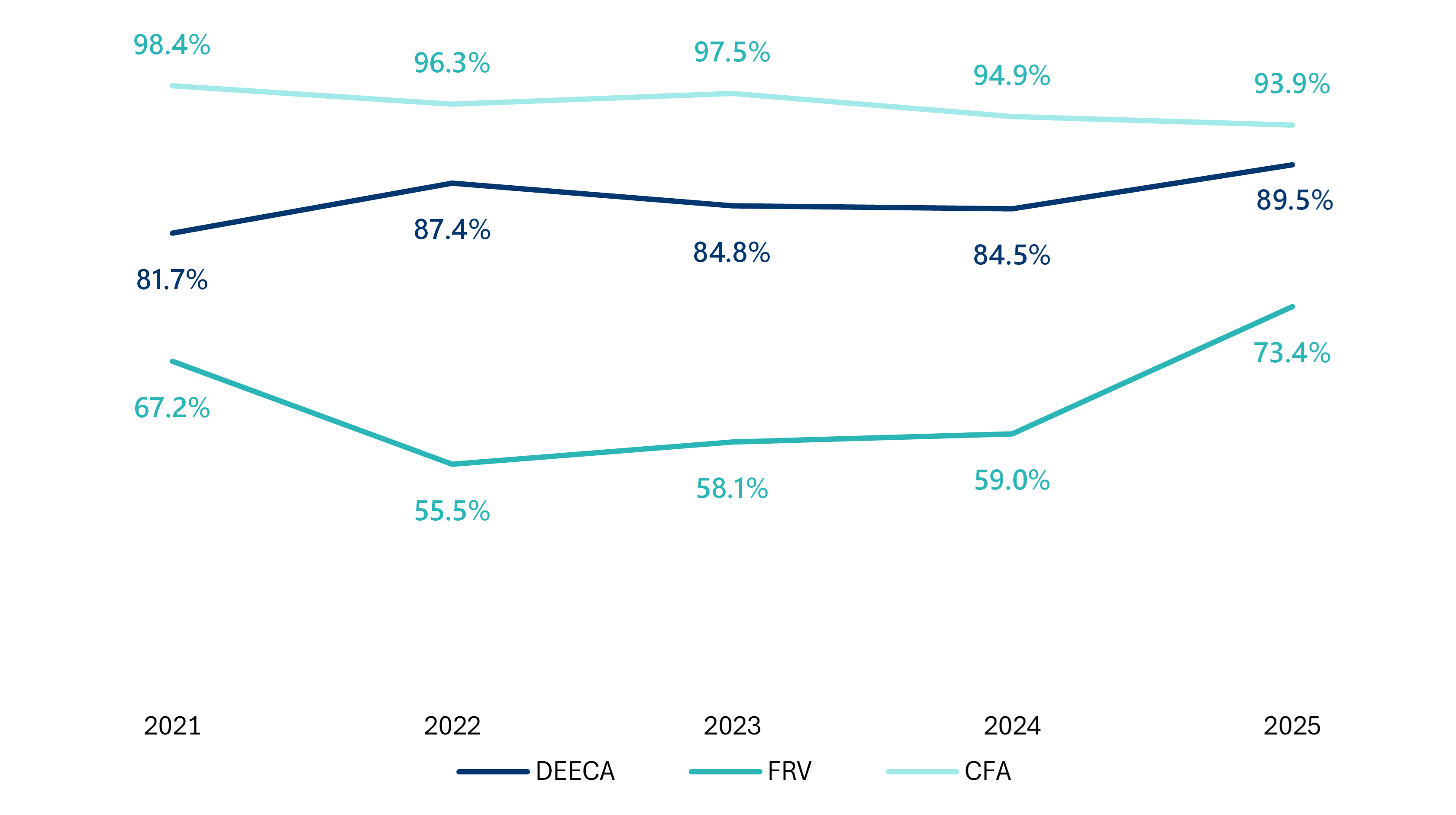
Note: This graph excludes distance-based services from DEECA's results because it does not have reliable usage data to show when these services were due. CFA’s data does not show if a scheduled service is a minor annual or major 8-yearly service, so we do not distinguish between CFA service type for this analysis.
Source: VAGO, based on information from fire authorities.
CFA completed more scheduled maintenance than the other fire authorities, but it still missed some services. On average, 105 fire trucks (4.8 per cent of its total fleet) per year did not receive a scheduled service between 2021 and 2025.
DEECA has also not completed all scheduled maintenance. This meant that some scheduled inspections did not happen, which has reduced opportunities to identify and repair defects such as cracking before they become more serious. Between 2021 and 2025 it missed:
- 14.4 per cent of its annual fire preparedness services
- 20.1 per cent of its distance-based services each year.
The service types in FRV’s maintenance schedule do not match the service types in its maintenance records, so it is difficult to know if it completed all scheduled maintenance. But based on the service types described in FRV’s available maintenance records, it appears to have missed the highest proportion of scheduled maintenance of the 3 fire authorities. Between 2021 and 2025 it missed:
- 20.8 per cent of annual services
- 42.6 per cent of 6-monthly services for its division A fleet
- 51.7 per cent of 6-yearly services.
Data gaps for scheduled maintenance
Not all fire authorities record maintenance data in a way that allows them to monitor whether scheduled maintenance is completed on time.
CFA adequately records this information for its own fleet and FRV's division B fleet (which CFA maintains under a service agreement with FRV). But:
- FRV does not record when scheduled maintenance is due for its division A fleet (which it maintains itself)
- DEECA records due dates for its annual fire preparedness services, but does not record mileage and engine hours in a way to make sure it services G-Wagen fire trucks according to its maintenance schedule.
These information gaps make it difficult for FRV and DEECA to monitor compliance with their maintenance schedules.
Completing scheduled maintenance on time
If fire authorities defer or miss scheduled maintenance, faults may go undetected and become more significant. This can create a cycle of increasing faults and unplanned repairs, which can put pressure on fire authorities’ workshop capacity.
CFA has a standard of completing scheduled maintenance within a 90‑day window. This means maintenance is on time if it is completed up to one month before or 2 months after its scheduled start date.
DEECA does not have a standard, so we assessed it against CFA's standard. We consider CFA’s standard to be a reasonable benchmark. DEECA also needs to complete scheduled maintenance before the start of the fire season to deliver its Standard of Cover and to prepare its fire trucks for a period of higher demand.
Based on available data, neither CFA nor DEECA have met the standard. As Figure 12 shows, between 2021 and 2025:
- CFA completed on average:
- 57.6 per cent of its own fleet’s scheduled maintenance on time
- 51.0 per cent of FRV's division B fleet scheduled maintenance on time
- DEECA completed on average 62.6 per cent of its annual preparedness services on time.
Because FRV does not record when scheduled maintenance is due, we could not assess its performance for division A fire trucks.
Figure 12: Proportion of scheduled maintenance completed on time from 2021 to 2025
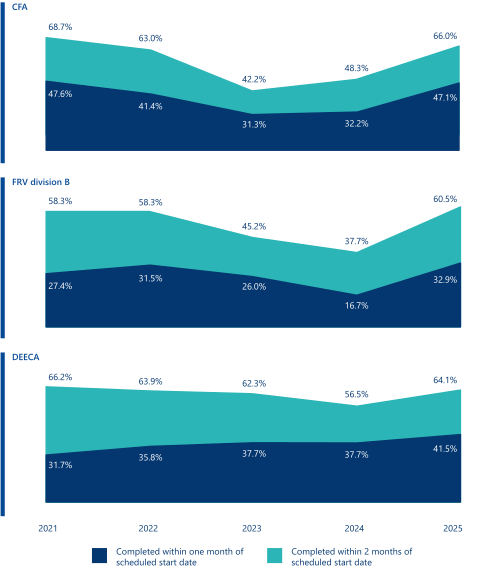
Note: ‘Completed within one month of scheduled start date’ includes scheduled maintenance completed within the month before the scheduled date.
Source: VAGO, based on information from CFA and DEECA.
The volume of unplanned repairs is increasing for some fire authorities
Volume of unplanned repairs
FRV and DEECA have seen an increase in unplanned fire truck repairs, which are necessary when a fault or breakdown happens.
As Figure 13 shows, between 2021 and 2025 the number of unplanned repairs to fire trucks:
- increased by 19.8 per cent for FRV
- increased by 5.6 per cent for DEECA
- decreased by 4.2 per cent for CFA.
Figure 13: Number of unplanned repairs for each fire authority from 2021 to 2025
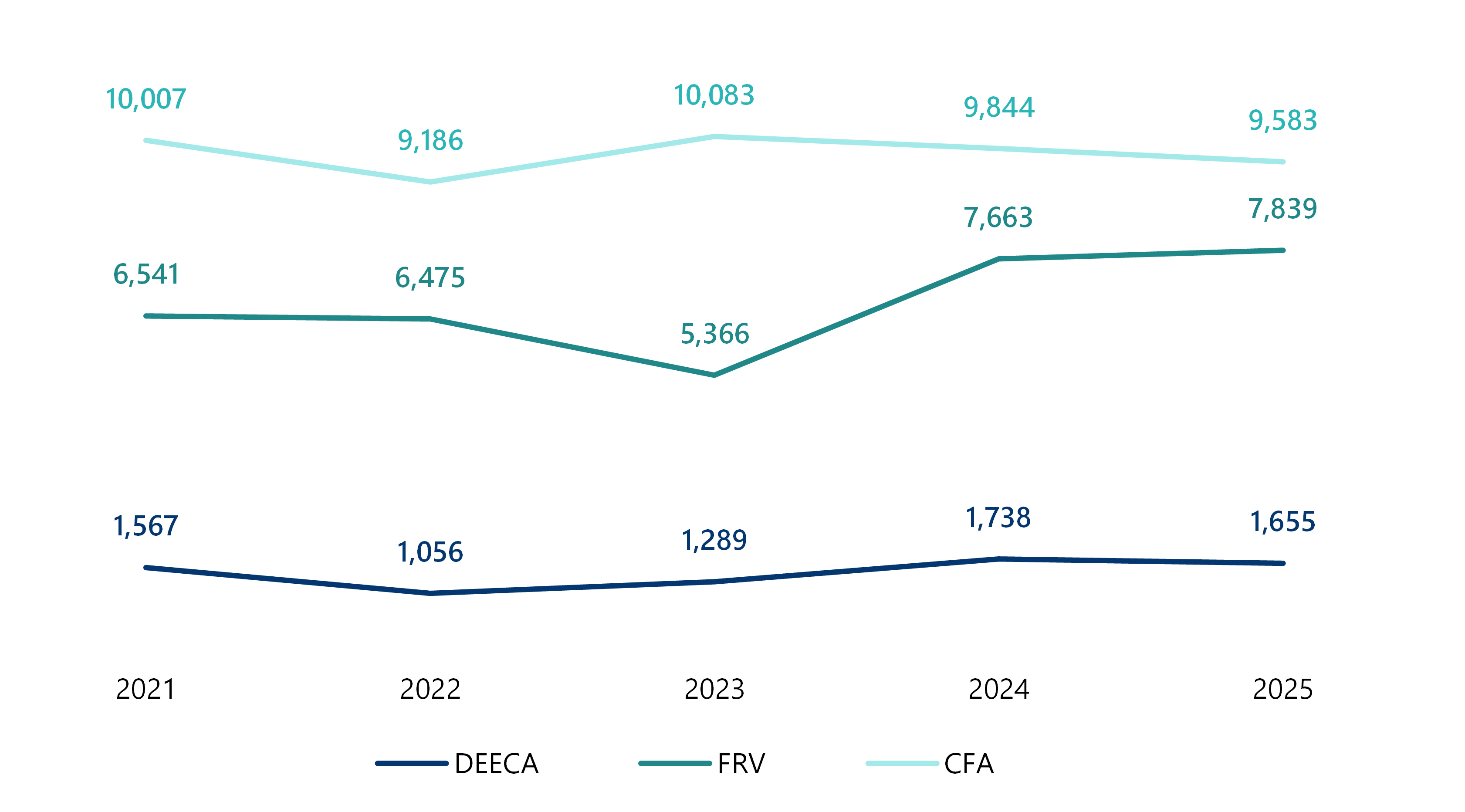
Note: DEECA and FRV’s maintenance data has gaps, which means maintenance activity may be understated. DEECA has gaps in its record-keeping. FRV’s gaps are due to industrial bans and a cybersecurity incident.
Source: VAGO, based on information from fire authorities.
DEECA's maintenance data does not show all repairs. It:
- records faults affecting multiple fire trucks under a single entry
- records unplanned repairs as part of scheduled maintenance work.
This means its data likely underestimates the volume of unplanned repairs and the number of fire trucks that needed repairs.
Impact of age on unplanned repairs
Older fire trucks are more likely to have faults than younger trucks, which creates extra maintenance work for ageing fleets.
As Figure 14 shows, fire trucks aged 15 to 20 years on average have had:
- 37.5 per cent more unplanned repairs per year for FRV than trucks aged zero to 5 years
- 23.0 per cent more unplanned repairs per year for CFA than trucks aged zero to 5 years (although CFA’s trucks have needed much less unplanned repairs than FRV's because of lower usage).
DEECA has also faced increased unplanned repairs on some older vehicles, but DEECA's fire trucks are much younger than FRV or CFA's. The high number of unplanned repairs for DEECA’s fleet is because of cracking.
Figure 14: Average annual faults per fire truck by age for FRV and CFA
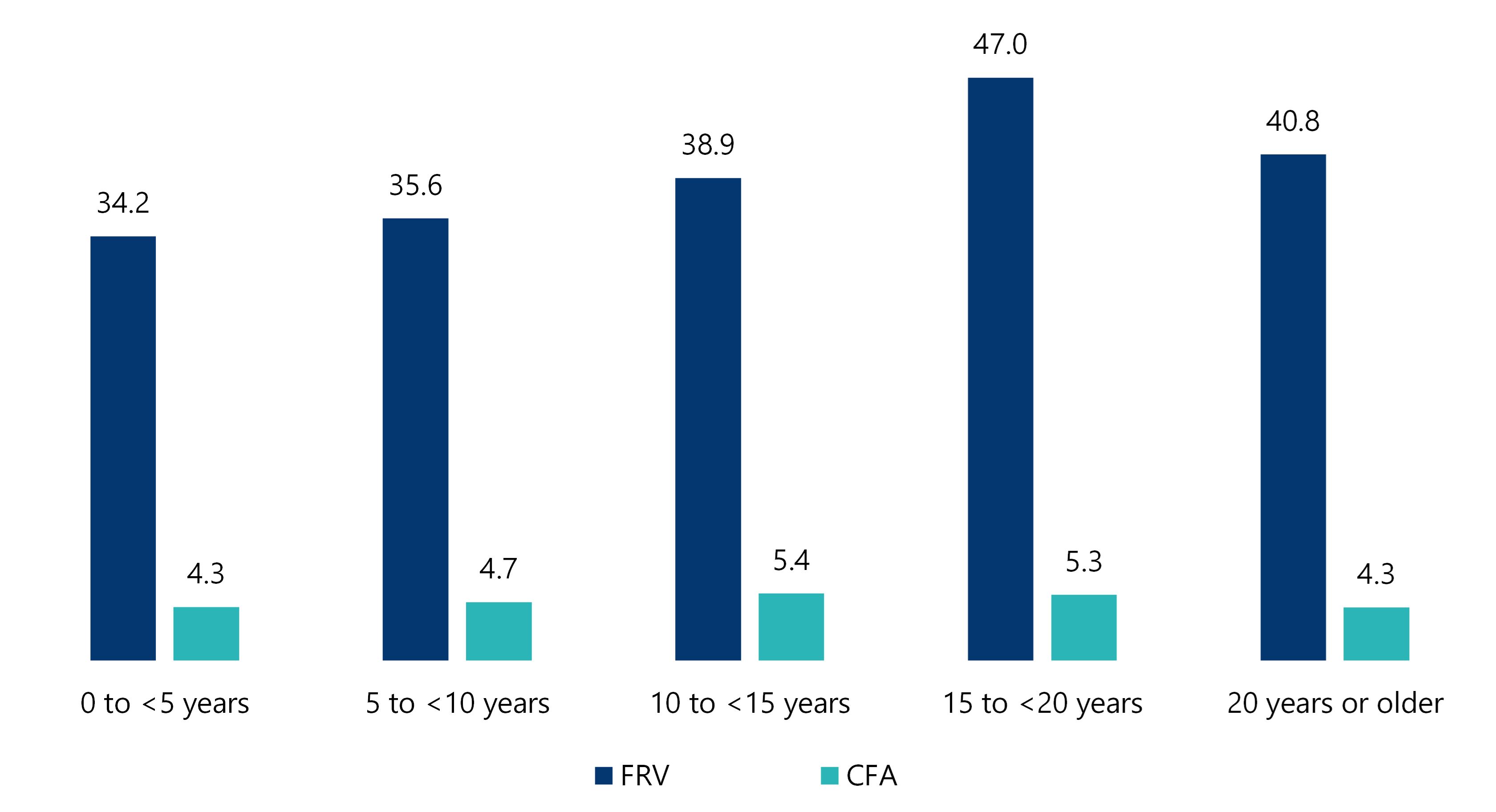
Note: Data is from 2021–25 for FRV (excluding 2023 due to lack of reliability) and 2015–25 for CFA. DEECA data is excluded because some work orders cover multiple fire trucks, making the data incomplete and unreliable.
Source: VAGO, based on information from FRV and CFA.
All fire authorities have adopted strategies to reduce their use of older fire trucks and maximise vehicle life, such as moving trucks to lower-risk stations or the service exchange fleet. This approach reduces the operational demand placed on older fire trucks (despite transferring risk between stations, rather than eliminating it).
Older trucks on average need more unplanned repairs. After adjusting for the number of days fire trucks were operationally available, FRV trucks older than 20 years needed 68.4 per cent more unplanned repairs than those aged 5 years or less.
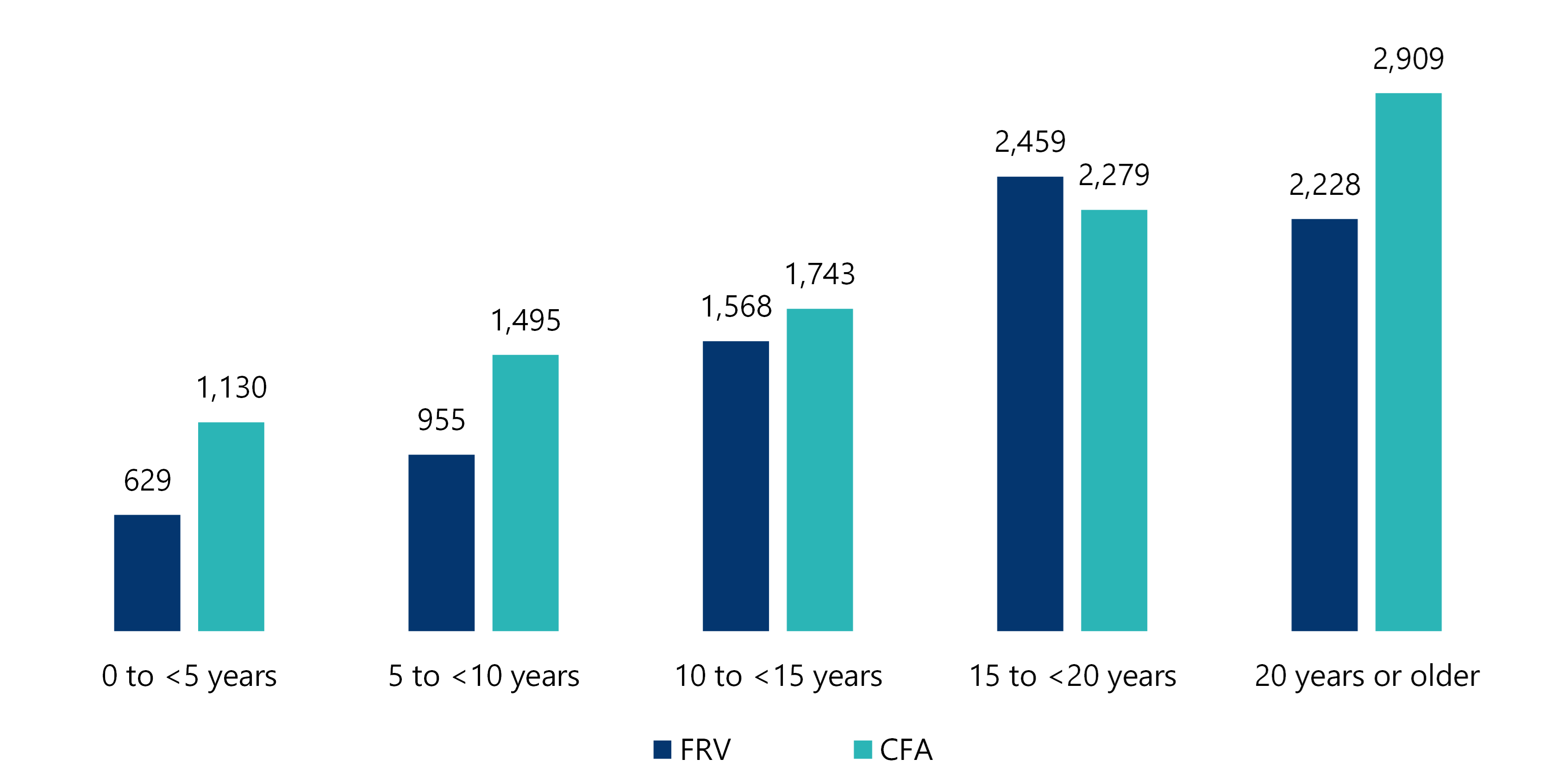
Older trucks account for the largest share of FRV and CFA's unplanned repairs, as Figure 15 shows. This is because fire trucks over 15 years old make up:
- 59.8 per cent of FRV's fleet
- 56.9 per cent of CFA's fleet.
Figure 15: Number of unplanned repairs by age bracket for FRV and CFA in 2025
Source: VAGO, based on information from FRV and CFA.
Timeliness of unplanned repairs
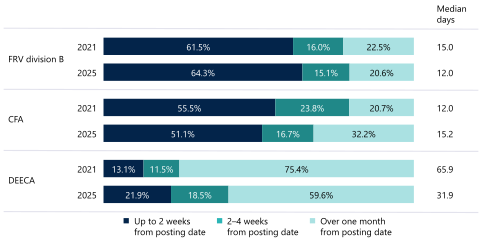
The timeliness of unplanned repairs varies between fire authorities:
- CFA completes most unplanned repairs on its own fleet and FRV's division B fleet within 2 weeks.
- DEECA takes longer – it completed only 21.9 per cent of unplanned repairs within 2 weeks in 2025.
- FRV’s division A maintenance data is incomplete. Since 2022, FRV staff have not consistently recorded labour and timing data due to work bans during protracted enterprise agreement bargaining. This reduces FRV's visibility of whether maintenance work is completed on time and increases the risk of overdue work. As a result, we have only assessed FRV division B maintenance completed by CFA.
As Figure 16 shows, between 2021 and 2025 the median time for CFA to complete maintenance on FRV's division B fleet decreased from 15.0 days to 12.0 days. But it took longer to repair faults on its own fleet, as the median time increased from 12.0 days to 15.2 days.
Over the same period, the median time for DEECA to complete repairs more than halved from 65.9 days to 31.9 days. But most repairs still took over one month to complete.
Figure 16: Timeliness of unplanned repairs
Note: This analysis is based on work records that have recorded labour and measure the time from the repair being recorded to it being completed.
Source: VAGO, based on information from fire authorities.
In 2025–26, 5 FRV aerial appliances were unavailable for extended periods because of cracking repairs, electrical faults, major overhauls and parts delays. The periods they were unavailable were made longer because major repairs to older, specialist fire trucks require engineering certification before they can return to service. This meant that aerial appliances were available only 57.3 per cent of the year.
These delays also meant FRV replaced a 27 year-old teleboom at Sunshine station with a pumper because there was no replacement aerial appliance available. Pumpers do not have the same high-reach equipment as aerial appliances, so this has reduced local aerial capability. This will continue until repairs are completed to aerial appliances, or a new aerial appliance is delivered.
Maintenance demand has exceeded forecasts
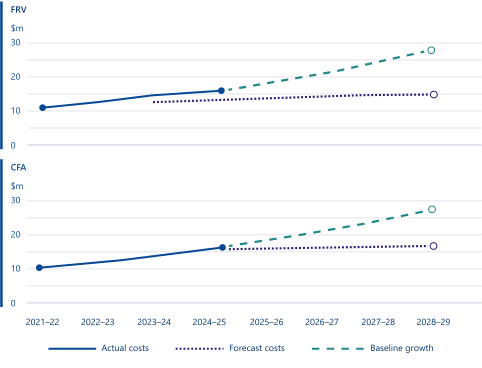
Fire authorities need to plan for higher maintenance needs as their fleets age. But they all use forecasting methods that underestimate growth in maintenance costs. For example, in 2024–25 FRV underestimated its maintenance costs by $3.5 million.
CFA and FRV assume maintenance cost growth will slow significantly compared to historical trends. But:
- CFA has not updated its maintenance forecasts since 2023–24 and it lacks complete maintenance cost records for individual fire trucks
- FRV has significant gaps in its maintenance data because of work bans during its enterprise agreement bargaining.
Figure 17 shows FRV and CFA’s actual maintenance costs, as well as their forecasts compared to baseline growth (which is growth based on historical trends).
Figure 17: FRV and CFA fleet maintenance cost forecasts compared with baseline growth
Note: ‘Baseline growth’ is calculated using actual annual cost growth from 2021–22 to 2024–25. This figure includes forecasts and actual results provided by fire authorities. Where fire authorities have not provided a maintenance forecast, the most recent and best available information (such as operating and maintenance data) is used. Results are therefore indicative of maintenance cost trends, rather than precise comparisons.
Source: VAGO, based on information from fire authorities.
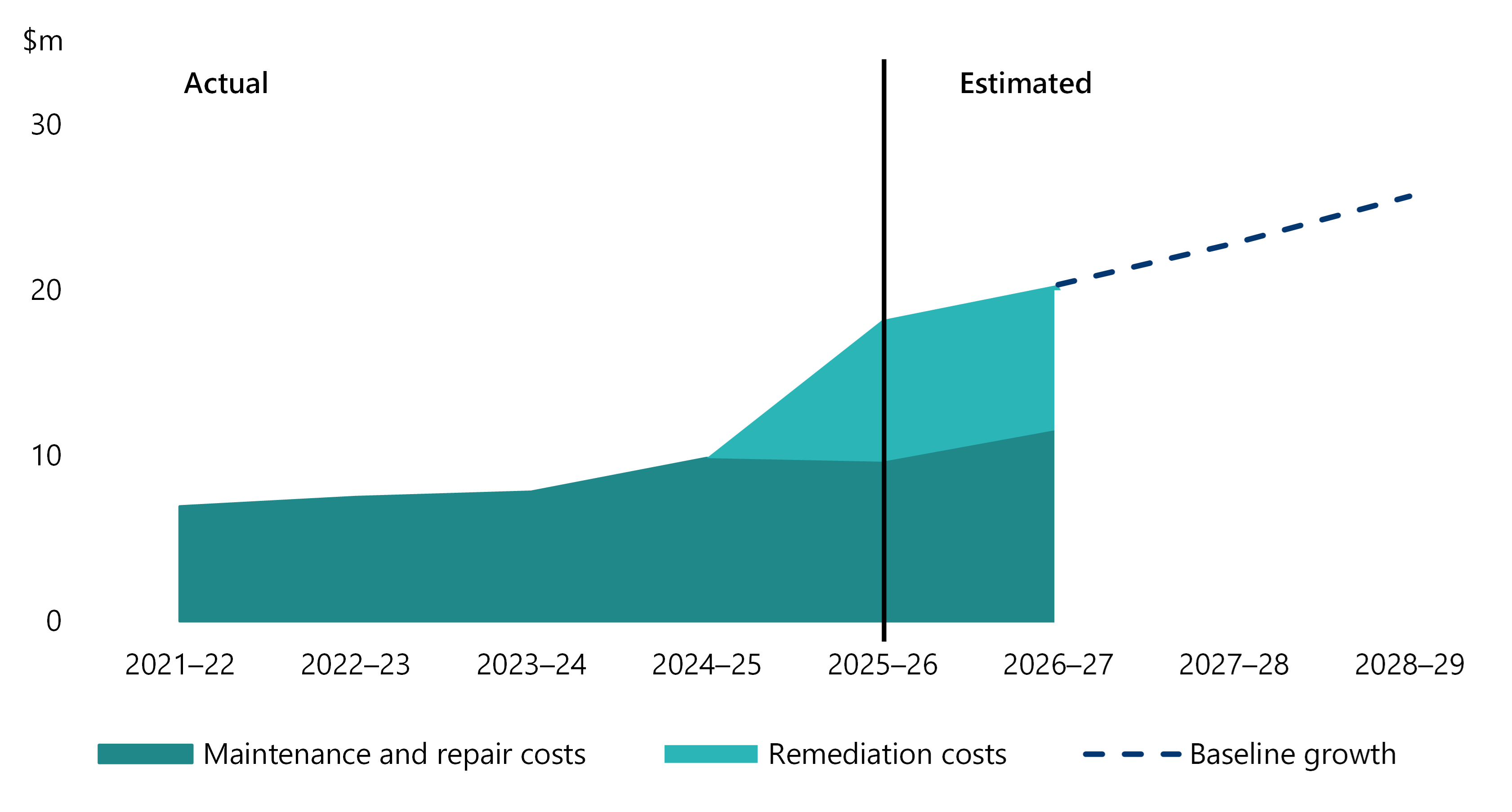
Due to cracking, DEECA implemented a fleet remediation program for the 2025–26 fire season, where it repaired cracked fire trucks and checked for re-cracking each month. But this increased the total cost of its repairs and maintenance by $8.6 million, or 85.0 per cent.
As shown in Figure 18, DEECA has only forecast spending for 2026–27, even though its fleet may have higher maintenance needs for several years. Until DEECA replaces its cracked fire trucks, it will need to continue carrying out inspections, repairs and other remediation activities.
Without long-term forecasts and a replacement plan, DEECA cannot know if it has enough funding and capacity to keep its fleet safe, reliable and available until replacement fire trucks are delivered.
Figure 18: DEECA's fleet maintenance, repair and remediation costs with baseline growth
Note: ‘Baseline growth’ is calculated using actual annual cost growth from 2021–22 to 2024–25.
Source: VAGO, based on information from DEECA.
Without reliable forecasts, there is a risk that fire authorities have underestimated future maintenance funding needs.
To address funding shortfalls, fire authorities have relied on ad-hoc funding. For example:
- in September 2025, FRV received $1.1 million for 2025–26 to establish a second workshop to reduce a backlog of 751 maintenance services. It also amended its service agreement with CFA, so that CFA can charge it for the additional maintenance required to maintain its ageing division B fleet.
- DEECA received around $11.0 million for 2025–26 after advising the government it had exhausted its Plant and Machinery Fund (which is internal funding to replace, maintain and operate its plant, machinery and fire trucks) and required additional funding for:
- fire truck leasing and operational costs
- maintenance and repairs.
This funding was separate to the cost of the fleet remediation program, which DEECA funded by reprioritising its asset program.
Relying on ad-hoc funding increases the risk that maintenance issues are addressed only once they become critical, instead of being managed over a fleet’s life cycle. This can lead to deferred maintenance, higher future costs, reduced reliability and lower fleet availability.
Increased unplanned repairs have reduced fleet availability
Impact of unplanned repairs on fleet availability
Increased unplanned repairs have reduced the number of fire trucks available for FRV and DEECA to deploy.
FRV has a fleet availability target of 85.0 per cent, which means that across its fleet, fire trucks will be available and operational for 85.0 per cent of their potential usage time.
But the number of FRV’s fire trucks that were unavailable due to maintenance (including scheduled maintenance and unplanned repairs) doubled between 2023 and 2026. This caused its fleet availability to fall from 91.0 per cent to 82.0 per cent.
Despite this, its fire response timeliness has remained relatively stable. It helped achieve this by moving fire trucks between stations and its service exchange fleet to maintain coverage when trucks were unavailable.
In 2022 FRV responded to 89.3 per cent of structure fires within its target 7.7 minutes. In 2025 it responded to 88.8 per cent within this target.
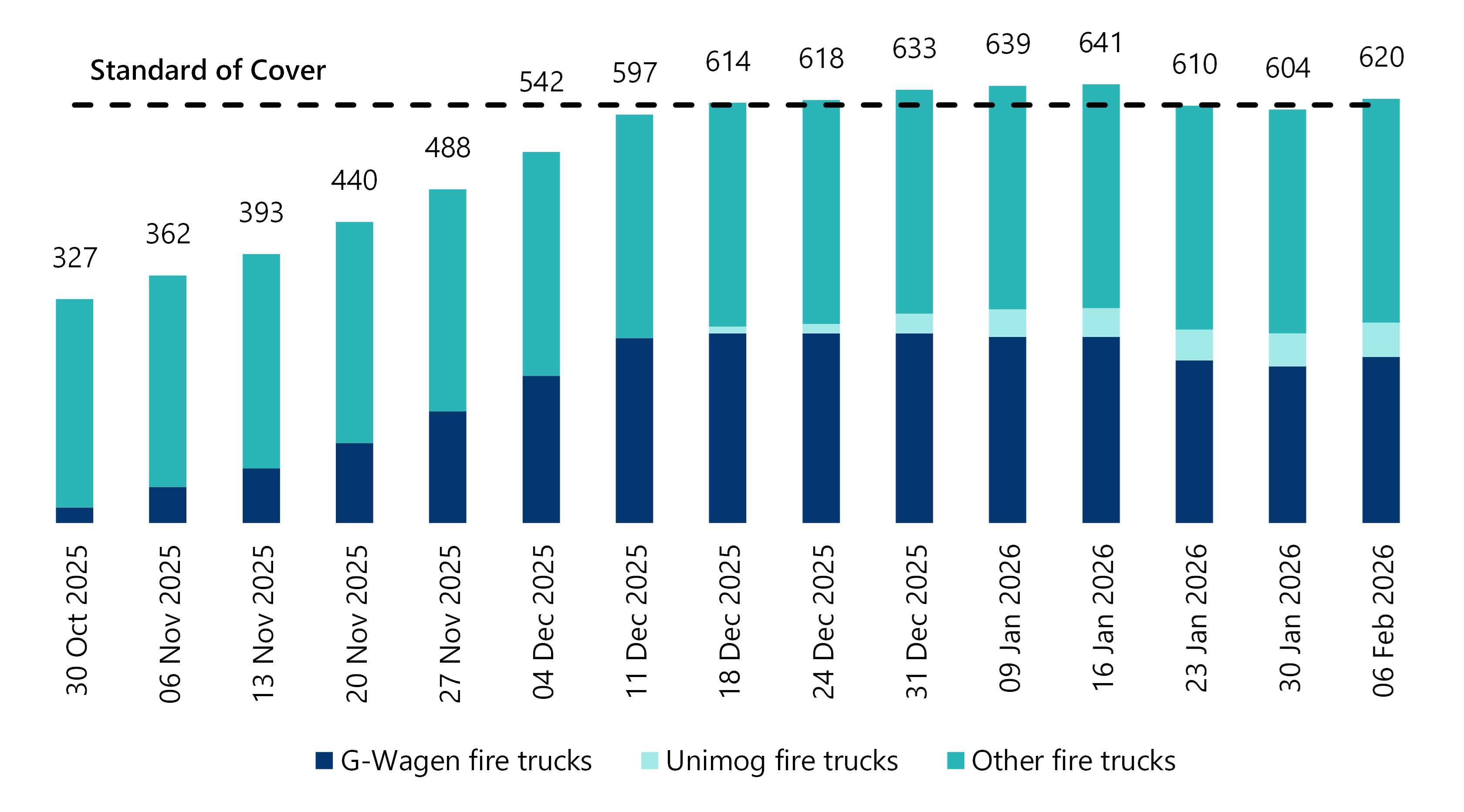
DEECA does not have a response time target. But the Standard of Cover requires it to have 611 fire trucks available for effective bushfire response. Despite widespread cracking across its fleet, it was able to deliver its Standard of Cover in January 2026 (peak fire season), as Figure 19 shows.
Figure 19: DEECA's available fire trucks against the Standard of Cover
Note: ‘Other fire trucks’ includes DEECA vehicles such as LandCruisers and fire trucks that DEECA used from other fire authorities, including authorities in other states. Copilot was used to extract data from PDFs and PowerPoint files.
Source: VAGO, based on information from DEECA.
This highlights the effectiveness of DEECA's fleet remediation program for the 2025–26 fire season.
But DEECA’s post-fire season assessment found that repairs to its G-Wagen fire trucks were compromised because of high operational use and heavy loads during the fire season.
Its certification for these repairs only covered temporary use over summer. This means DEECA will need to do more repair work to keep these fire trucks roadworthy each season until it replaces them.
Unlike FRV and DEECA, CFA has not had the same increase in unplanned repairs or unavailable fire trucks.
Fire authorities have gaps in condition and performance monitoring
Gaps in condition and performance monitoring
The AMAF requires agencies to regularly monitor how their assets are performing and act where needed.
There is no consistent set of performance measures or reporting data to monitor the condition of Victoria's combined firefighting fleet.
Without standard measures, we assessed whether fire authorities have key performance indicators, and if they regularly report on them.
As shown in Figure 20, FRV has the most mature fleet monitoring approach, but all fire authorities have gaps. This limits their ability to assess their fleets’ condition and performance, and address issues as they emerge.
DEECA has set few measures to monitor its fleet performance. This has limited its ability to identify and respond to fleetwide issues.
Figure 20: Analysis of whether fire authorities have fleet monitoring measures
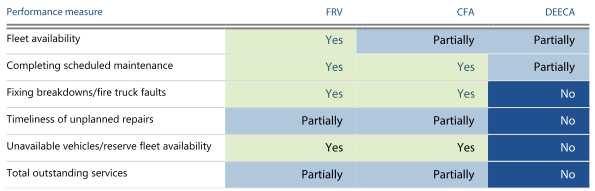
Note: ‘Yes’ means the fire authority has key performance indicators and regularly reports on them, ‘partially’ means the fire authority has key performance indicators but does not regularly report on them, and ‘no' means the fire authority does not have key performance indicators for the measure.
Source: VAGO, based on information from fire authorities.
5. Fleet replacement
Fire authorities collectively need around $1.5 billion from 2024–25 to 2033–34 to make sure their fire trucks are fit for purpose, reliable and safe. But they only have around $390.4 million identified in current funding and future grants.
As part of the state Budget process, FRV and CFA have reduced the scope of their funding proposals and prioritised fleet replacement according to the highest service risks.
DEECA has sought only a small share of the funding it needs to replace its fire trucks, despite longstanding defects and safety risks.
Covered in this section:
- Fire authorities need $1.5 billion to address replacement and upgrade needs
- Fire authorities have not always asked for or secured sufficient fleet funding
Fire authorities need $1.5 billion to address replacement and upgrade needs
Fleet replacement estimates
Fire authorities need $1.5 billion from 2024–25 to 2033–34 to address critical replacement and upgrade needs, such as replacing complete fire trucks.
| needs ... | to ... | |
|---|---|---|
CFA
| $962.5 million
|
|
| FRV | $297.3 million | replace 153 fire trucks that are more than 15 years old. |
| DEECA | $216.6 million | replace 676 fire trucks, including those that have cracking. |
These figures are based on FRV's and CFA's strategic asset planning and our estimates of DEECA's needs.
DEECA has not worked out the full cost to replace its cracked fire trucks. Because of this, we used costs from previous contracts to estimate replacement costs, excluding leasing costs. Actual costs may differ depending on replacement timing, supply chain conditions, industry capacity and financing or leasing costs.
Figure 21 shows fire authorities’ estimated investment needed to replace and upgrade their fire trucks.
Figure 21: Estimated total investment needed for fire trucks, 2024–25 to 2033–34
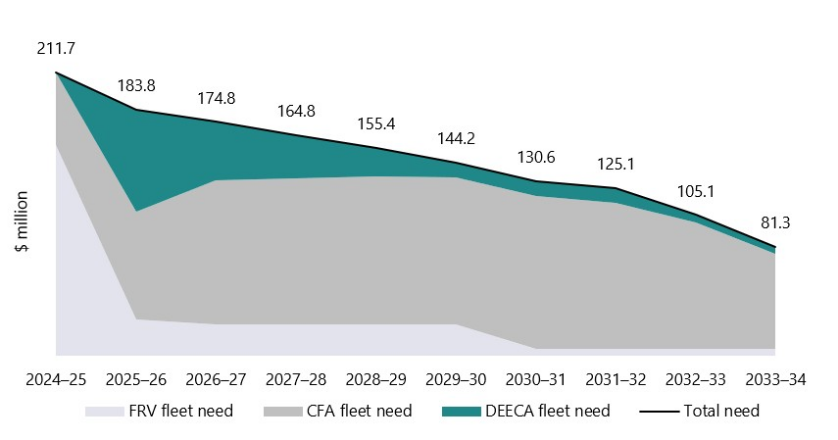
Note: Total investment need is based on fire authorities’ estimates, which do not factor inflation. DEECA's replacement need is estimated and does not include leasing costs. Estimates may underestimate total replacement costs for fire authorities in future years. Actual replacement costs depend on fleet strategies, business cases, funding proposals, industry capacity and endorsed replacement requirements.
Source: VAGO, based on information from the fire authorities.
Fire authorities have not always asked for or secured sufficient fleet funding
Advising the government of funding needs
FRV and CFA have told the government how much funding they need to replace their older fire trucks:
- FRV put forward initial funding requests that reflect a large share of its estimated funding needs through funding notifications for 2024–25 and 2025–26
- CFA has communicated a smaller share of its needs, but it has given the government a plan that outlines its fire truck replacement and upgrade needs to 2033–34 and referenced it in recent business cases.
But DEECA has sought a very low share of the funding it needs to replace and upgrade its fire trucks. It has not told the government how much it will cost to replace fire trucks with cracking.
DEECA’s recent funding proposals provide little information on:
- its fleet’s condition and maintenance needs
- risks linked to the fleet’s condition
- the number of fire trucks that need replacing.
As a result, the government does not have complete information about the level of investment needed to restore DEECA’s fleet and ensure it can meet the Standard of Cover.
Fire authorities’ proposals
In 2025–26, DEECA sought $2.9 million to design and build new-generation slip-on units as a first step in replacing its G-Wagen fire trucks.
But DEECA did not follow up with a funding request for a full fleet replacement program in 2026–27. It only sought $17.9 million to replace falling object protection systems and slip-on units. This is because it does not have an asset replacement plan and has not resolved design and weight issues for its G-Wagen fire trucks.
This delays DEECA replacing its fire trucks and means:
- it has to rely on fire trucks with cracking, weight and availability issues for longer
- its repair and maintenance costs will be higher until the cracked fire trucks are replaced.
FRV and CFA reduced the scope of their funding proposals between 2024–25 and 2026–27 in response to instruction from the Treasurer to all ministers to limit funding requests in line with the government’s fiscal strategy. The Department of Justice and Community Safety reinforced this message to FRV and CFA.
Figure 22 shows each fire authority’s initial funding request and final proposals, with the proportion of truck replacement needs that the funding covers.
Figure 22: State Budget funding proposals for fleet capital
| Year | Initial request | Proportion of need | Final proposal | Proportion of need |
|---|---|---|---|---|
| FRV | ||||
| 2024–25 | $158.9m | 52.7% | $14.1m | 4.7% |
| 2025–26 | $167.5m | 55.6% | $19.3m | 6.4% |
| 2026–27 | $19.8m | 7.2% | $20.7m | 7.5% |
| CFA | ||||
| 2024–25 | $8.9m | 1.2% | $16.8m | 2.2% |
| 2025–26 | $35.3m | 4.8% | $103.0m | 14.0% |
| 2026–27 | $65.5m | 8.9% | $72.0m | 9.8% |
| DEECA | ||||
| 2025–26 | - | - | $2.9m | 1.3% |
| 2026–27 | - | - | $17.9m | 8.3% |
Note: Figures only include funding requested for fire trucks. ‘-‘ means the authority did not provide a request. DEECA did not request funding for fire trucks in the 2024–25 Budget.
Source: VAGO, based on information from fire authorities.
Prioritising funding proposals
As part of the state Budget process, agencies can submit funding proposals that reflect their capital, operational and program investment needs.
However, because of instruction from the Treasurer to all ministers, FRV and CFA have limited their funding proposals to their highest-priority fleet needs in recent years:
- FRV has prioritised replacing older fire trucks with low availability, as Case study 3 describes.
- CFA has prioritised replacing older single-cab fire trucks that require firefighters to travel on the back of trucks, which places them at risk of smoke inhalation and injury. Many of these trucks are well beyond their service life and are increasingly unreliable and costly to maintain. They also do not include modern safety and accessibility features, such as antilock braking systems and stability control, which are important features under emergency response conditions to meet workplace safety legislation.
Case study 3: FRV's Budget prioritisation approach
FRV’s 2026–27 state Budget proposal to replace fire trucks critical to its operations
In FRV’s 2024–25 and 2025–26 state Budget funding proposals, it planned to seek funding for a high share of its fire truck needs. But it scaled back its proposals due to instruction from the Treasurer to all ministers that agencies should limit funding requests for new initiatives in line with the government’s fiscal strategy.
In 2026–27, FRV did not submit an initial bid for the $222.5 million it needed in fire truck funding. Instead, it submitted a smaller bid of $20.7 million. This reflects just 7.5 per cent of its fire truck needs from 2024–25 to 2033–34.
FRV focused on replacing its older fire trucks, which face limited availability of spare parts and are more than 2 generations behind the latest operational and safety technology. If older trucks break down and do not have spare parts, they can be unavailable for lengthy periods, as Figure 23 shows.
Figure 23: Availability of FRV's operational fire trucks by age
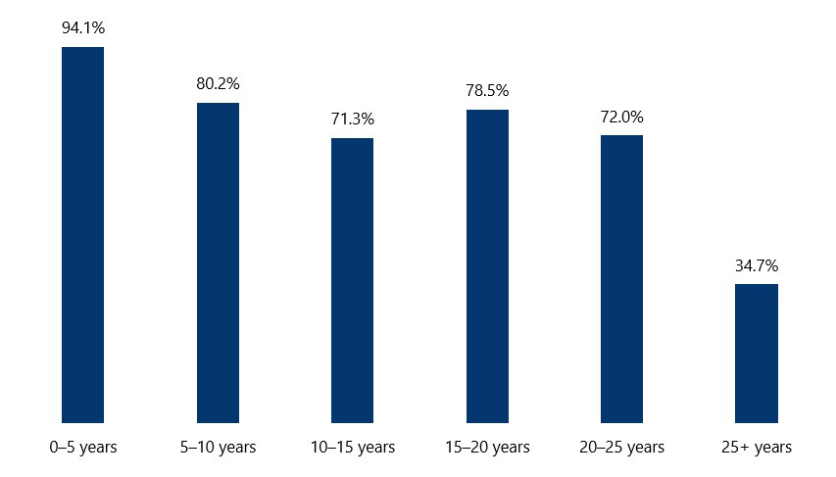
Note: This figure shows the average availability of operational fire trucks from 1 January 2025 to 2 February 2026. Work bans have affected how consistently FRV recorded maintenance data, including labour and maintenance costs.
Source: VAGO, based on information from FRV.
FRV’s internal documents say its fire trucks:
- should be replaced once they reach 15 years
- should have at least 85.0 per cent availability
- are identified for replacement 2 to 3 years before replacement is due to start planning.
Figure 24 shows all the fire trucks that FRV included in its 2026–27 state Budget proposal, and how it allocated them in the context of tight funding restrictions.
All but one it prioritised for replacement were:
- older than 15 years
- had been available less than its 85.0 per cent benchmark for extended periods
- were well beyond the point that FRV says replacement planning should have started.
Source: VAGO.
Figure 24: Fire trucks FRV sought to replace in its 2026–27 state Budget proposal
| Fire truck | Age | Availability July 2021 to June 2025 | Availability January 2025 to January 2026 |
|---|---|---|---|
| Car 27 | 19 years | 86.9% | 76.4% |
| Car 28 | 19 years | 85.4% | 94.5% |
| Car 29 | 19 years | 66.6% | 59.0% |
| Car 30 | 19 years | 78.2% | 78.1% |
| Car 31 | 19 years | 74.1% | 86.2% |
| Car 32 | 19 years | 84.6% | 69.8% |
| Car 33 | 19 years | 77.4% | 86.4% |
| Cars 475, 476 and 477 | 18 years | Not available | Not available |
| Car 391 | 31 years | 73.1% | 22.4% |
| Car 392 | 23 years | 84.1% | 100.0% |
Note: FRV’s recommended replacement age is 15 years and its availability benchmark is 85.0 per cent. FRV has taken cars 475, 476 and 477 off frontline service and uses these for training. FRV does not record availability data for these trucks.
Source: VAGO, based on information from FRV.
Funding allocations
In their final Budget proposals from 2024–25 to 2026–27, fire authorities requested a total of $266.6 million in funding for new fire trucks.
The government allocated $178.5 million to 2033–34. This is:
- 67.0 per cent of the total amount in authorities’ final proposals
- 12.1 per cent of the estimated total funding fire authorities need to address issues across their fleets.
In addition to Budget funding, fire authorities also receive:
- grant funding (CFA only)
- capital funding (CFA and FRV only).
Including Budget, grant and capital funding, fire authorities only have 26.7 per cent of their estimated total funding needs, as Figure 25 shows.
Figure 25: Total fire truck investment needs and funding, 2024–25 to 2033–34
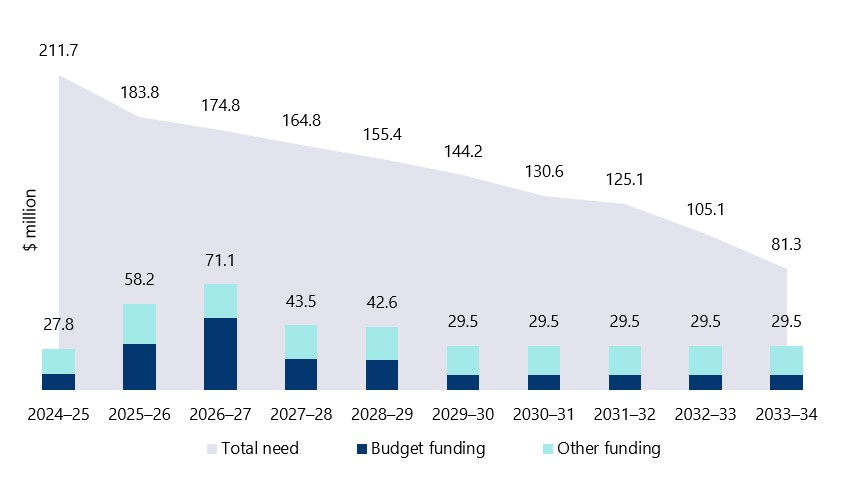
Note: ‘Other funding’ includes grant funding and capital funding. DEECA's capital replacement need is estimated and does not include lease costs. Total investment need is based on fire authorities’ estimates, which do not factor inflation. This means estimates may underestimate total replacement costs in future years.
Source: VAGO, based on information from fire authorities.
FRV receives $2.2 million each year in capital funding to help build and fix its assets and equipment. Fire trucks represent around 11 per cent of all FRV’s assets, which means it has on average around $200,000 per year in capital funding for fire trucks. This means FRV depends on annual state Budget funding to replace its trucks.
FRV will receive $61.0 million from 2024–25 to 2033–34 in state Budget funding to purchase new fire trucks. This includes:
- $10.0 million per year in fleet replacement funding to 2028–29, announced in the 2025–26 state Budget
- an additional $21.0 million, announced in the 2024–25 state Budget ($13.7 million) and
2026–27 state Budget ($7.3 million).
But this is just 21.2 per cent of FRV's estimated fire truck replacement and upgrade needs.
CFA will receive an estimated $306.6 million from 2024–25 to 2033–34 to purchase new fire trucks. This includes:
- $12.6 million per year in fleet replacement funding from the government
- $10.0 million per year in additional replacement funding, announced in the 2026–27 state Budget
- grants through the government’s Volunteer Emergency Services Equipment Program.
But this is just 31.8 per cent of CFA's estimated fire truck replacement and upgrade needs.
DEECA has depleted its Plant and Machinery Fund. This means all its fire truck and operational costs need to be funded from the state Budget or under annual fire season preparedness funding. This includes the cost of DEECA's fleet remediation program, which has increased the annual cost of maintaining DEECA's fleet by $8.6 million per year.
Delays seeking funding, combined with the time needed to replace fire trucks, increase the risk that DEECA will operate unreliable and potentially unsafe fire trucks for several more fire seasons.
Delaying fleet replacement can create future liabilities, including funding and replacement challenges that may not be reflected in state Budgets or forward estimates. This can increase future costs as faults accumulate, fire trucks become less reliable and fleet availability declines.
Appendix A: Submissions and comments
Download a PDF copy of Appendix A: Submissions and comments.

Appendix B: Abbreviations, acronyms and glossary
Download a PDF copy of Appendix B: Abbreviations, acronyms and glossary.
Appendix C: Audit scope and method
Download a PDF copy of Appendix C: Audit scope and method.
Appendix D: G-Wagen fire truck load list
Download a PDF copy of Appendix D: G-Wagen fire truck load list.