
Reducing the Harm Caused by Distracted Drivers
Audit snapshot
Is the distracted driver and seatbelt detection camera program contributing to road safety?
Why we did this audit
Using a mobile device while driving significantly increases the risk of road accidents. Not wearing a seatbelt increases the risk of serious injuries or death if an accident happens. Both are illegal in Victoria.
The distracted driver and seatbelt detection camera program (the program) aims to improve road safety by:
- raising awareness of the risks and laws around using mobile devices and not wearing a seatbelt
- increasing enforcement of these laws
- reducing behaviours that raise the risk of road accidents, serious injuries and death.
Information about the number of road deaths from using a mobile device or not wearing a seatbelt is not separated from other behaviours, but since the program began, the number of deaths from road accidents in Victoria has increased.
We did this audit to look at how the program is being delivered and if it is improving road safety.
Key background information
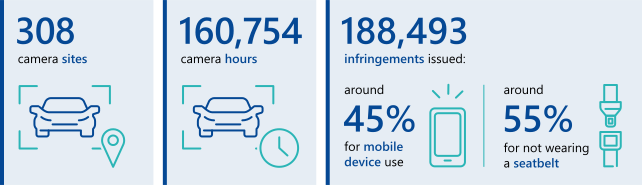
Note: Figures cover the period from July 2023 to September 2025. Camera sites and hours are for planned deployment locations and scheduled hours, so actual figures may vary. Each lane of traffic is counted separately, so a camera covering 2 road lanes for one hour counts as 2 camera hours.
Source: VAGO, based on data from the Department of Justice and Community Safety and Jenoptik Australia.
What we concluded
It is not clear how much the program is contributing to road safety.
The Department of Justice and Community Safety (the department) does not know if or how the program is reducing road accidents, serious injuries and deaths. It does not have a clear approach for how it will measure this.
The department did not gather data about the number of accidents, serious injuries and deaths linked to mobile devices and seatbelts before the program started to compare results against. Linking accidents to specific behaviours is complex, and the department will not work out how to get this data until at least mid-2026.
The department has also changed the benefits it expects the program to achieve and has not consistently reported on its performance. This makes it difficult to assess how well the program is working over time.
The department, its contractor Jenoptik Australia and Victoria Police’s process to verify images of offences and issue infringements is working as intended. But Victoria Police does not always record evidence when it identifies potential camera sites. This means it cannot always show that camera locations are based on sound evidence.
The department’s administration of the program could be improved, particularly for meeting privacy requirements in the Road Safety (General) Regulations 2019 and independently verifying Jenoptik Australia’s performance data.
Video presentation
1. Our key findings
What we examined
Our audit followed 2 lines of inquiry:
1. Are the Department of Justice and Community Safety (the department) and Victoria Police managing the distracted driver and seatbelt detection camera program (the program) appropriately?
2. Is the department evaluating the program's contribution to road safety?
To answer these questions, we examined:
- the department
- Victoria Police
- Jenoptik Australia (Jenoptik).
Identifying what is working well
In our engagements we look for what is working well – not only areas for improvement.
Sharing positive outcomes allows other public agencies to learn from and adopt good practices. This is an important part of our commitment to better public services for Victorians.
Identifying changes made during our audit
Agencies sometimes make changes while we are auditing them.
This shows that agencies take action based on our work without waiting until we have fully completed our report.
Terms used in this report
Distracted driver
A distracted driver is someone who is not paying full attention while driving a vehicle. In this report, we use this term for drivers who are distracted because they are using a mobile device.
Infringements
Infringements are fines and demerit points issued by Victoria Police when someone is found to have broken the law.
Mobile devices
Mobile devices are portable devices such as mobile phones, tablets, laptops, media/game players and cameras. Drivers are not allowed to hold or touch them while driving.
Serious injuries
Serious injuries are injuries that require someone to be treated at hospital.
Background
The program’s road safety objectives
In 2021, the then Department of Transport developed the Victorian Road Safety Strategy 2021–2030 to address deaths and serious injuries on Victorian roads.
Its main objective is to halve road deaths and significantly reduce serious injuries by 2030. One of the ways it aims to do this is to run targeted initiatives to improve road safety.
The program is one of these initiatives. The program aims to improve road safety and contribute to reducing death and serious injuries by:
- raising awareness of the risks and laws around distracted driving and not wearing a seatbelt
- increasing enforcement
- reducing behaviours that can increase the risk of road accidents, serious injuries and death.
How the program works
The program started on 31 March 2023 with a 3-month trial period. During this time, people committing an offence received advisory letters.
Full enforcement began on 1 July 2023 for an initial period of 2 years, that is until July 2025. In December 2024, the government extended the program to June 2030. People committing an offence receive infringements, which include fines and demerit points.
The program uses distracted driver and seatbelt road safety cameras (cameras), which are mounted in mobile trailers.
Jenoptik places the cameras in different locations across Victoria. Victoria Police and Jenoptik work together to create a list of agreed camera sites, known as the ‘master list’. Victoria Police creates a monthly roster that tells Jenoptik which sites from the master list it should place cameras.
Each camera has image recognition software, referred to in the program as artificial intelligence (AI). Cameras take images of every vehicle that passes by on the road. The AI then scans and analyses images to find:
- drivers who are using mobile devices
- people who are not wearing seatbelts properly.
| If the AI finds someone who ... | it ... | then ... |
|---|---|---|
| appears to be committing an offence | sends the image to Jenoptik for several stages of human review | Victoria Police decides whether to issue an infringement. |
| does not appear to be committing an offence | rejects and automatically deletes the image | no further action is taken. |
Jenoptik's AI
Jenoptik’s image recognition software scans images and uses built-in rules to decide if an offence appears to have been committed. While it is called AI, it is different from generative AI models (such as ChatGPT) that create new information.
See Section 4 for more details about the program’s camera rostering and image verification process.
Roles and responsibilities
The program is jointly delivered by the department, Victoria Police and Jenoptik. Figure 1 shows the roles and responsibilities for the program.
Figure 1: Roles and responsibilities for the program
| Organisation | Roles and responsibilities |
|---|---|
The department
|
|
Victoria Police
|
|
Jenoptik
|
Jenoptik manages some of these activities through a subcontractor, including part of the verification process. |
Source: VAGO.
What we found
This section focuses on our key findings, which fall into 3 areas:
1. The department does not know if the program is reducing road accidents, serious injuries and deaths.
2. Victoria Police’s process for identifying camera sites is not well designed and it does not record its decisions consistently.
3. There are gaps in how the department administers the program, including privacy and data assurances issues.
The full list of our recommendations, including agency responses, is at the end of this section.
Consultation with agencies
When reaching our conclusions, we consulted with the audited agencies and considered their views.
You can read their full responses in Appendix A.
Key finding 1: The department does not know if the program is reducing road accidents, serious injuries and deaths
The department started its evaluation later than it first planned
The program’s business case expected the department to confirm, within 12 to 24 months of enforcement starting, whether the program was reducing road deaths and accident costs. The department did commission an independent evaluation of the program to measure its contribution to road safety. But the evaluation started in early 2025, which is 2 years into the program. The evaluation plan now calls for 4 years of data before it can assess whether the program is reducing accidents, serious injuries and deaths.
The department did not collect complete data at the start of the program and does not have a clear method to do this
It is not clear if the department will be able to assess if and how the program is contributing to road safety over time.
The department did not collect baseline data on accidents, serious injuries and deaths linked to distracted driving or not wearing a seatbelt before the program started. Current available data does not show if road accidents are caused by these specific behaviours. The department does not have a clear method for getting this information and will not develop one until at least mid 2026.
This means the department cannot be sure it can:
- get the data needed to fully understand the program’s contribution to road safety
- track the program’s impact on road accidents, serious injuries and deaths since it started.
Another way the program aims to improve road safety is to educate the public on the risks and laws around distracted driving and not wearing a seatbelt. But the department also did not collect baseline data about people’s knowledge or attitudes towards this.
Baseline data
Baseline data is information about a situation before a program starts. It can provide a starting point to measure if the program is working as intended by allowing comparisons of data before the program started with data after.
The department changed how it will measure the program’s contribution to road safety
The department has changed the benefits it expects the program to deliver.
In 2022 before the program started, the department developed a business case that outlined the benefits and targets it expected the program to achieve. In 2026 the department released a new benefits management plan (the new plan) to replace the 2022 business case.
| But the new plan ... | which means ... |
|---|---|
| has fewer expected benefits than the 2022 business case | the program’s benefits are not consistent, so it is difficult to assess how it is performing over time. |
| is still being refined. The plan does not have targets or measures against all of its benefits (including road accidents, serious injuries and deaths) which the department is still finalising | the department cannot track whether the program is delivering these benefits. |
The department does not consistently report on the program's performance
The department has not consistently or completely reported on how the program is performing since it started.
In August 2025 the department set up a governance committee to oversee the program. The department is reporting to the committee on the program’s performance. But its reporting has not been regular and information has been limited or incomplete. This is because of:
- changes to the program’s benefits and gaps in how the department measures them
- a lack of available data to support its reporting (such as data for accidents, serious injuries and deaths linked to distracted driving and not wearing a seatbelt).
This makes it difficult for the department to assess how well the program is performing since it began.
Addressing this finding
To address this finding, we made one recommendation to the department about:
- improving how it measures and reports on the program’s contribution to road safety.
Key finding 2: Victoria Police’s process for identifying camera sites is not well designed and it does not record its decisions consistently
Victoria Police does not always have enough evidence to assess potential camera sites
Victoria Police’s procedures say that camera sites must meet at least one of 4 criteria. But the data Victoria Police needs to assess potential sites against these criteria is not always available.
For example, the most-used criterion says a site should have a history of accidents that involve distracted driving or not wearing a seatbelt. But available data does not always show if those behaviours have contributed to accidents.
There is also one criterion that requires information about road characteristics, but that data does not currently exist.
This means Victoria Police cannot reliably use its criteria when identifying where camera sites should be.
Victoria Police also does not use site information to assess if there are road conditions or characteristics that make offences more or less likely. This is a missed opportunity for Victoria Police to collect and use the program’s information to improve its criteria and make sure it selects camera sites consistently.
Victoria Police does not always keep complete records when selecting camera sites
Victoria Police mainly uses accident data to identify camera sites. But it does not have records of this data for some sites in its rostering system. This means Victoria Police cannot show that it always considered a location’s relevant accident history before selecting it as a camera site.
Victoria Police does not always assess camera sites against the program's 4 criteria correctly. For example, it sometimes says that a member of the public referred the site, when it was referred by a police officer. It does not keep complete records of how it makes its decisions during its site-selection process.
Addressing this finding
To address this finding, we made 2 recommendations to Victoria Police about:
- reviewing and updating its site selection criteria
- improving its record-keeping.
Key finding 3: There are gaps in how the department administers the program, including privacy and data assurances issues
The department and Jenoptik kept images for longer than regulations allow
Under the Road Safety (General) Regulations 2019 (the regulations), the department and Jenoptik must delete images that do not show an offence being committed within:
- 24 hours after being taken, if rejected by the AI
- 30 days after being taken, if rejected later in the review process
- 6 months after being taken, if the department and Jenoptik need them for monitoring purposes.
But the department held some images for longer than allowed in 2025 when it was assessing the AI’s accuracy. It has now deleted those images. The department also held some images for longer than allowed when it was reviewing Jenoptik’s processes.
The department has procedures that say it can keep some images indefinitely as part of its contract management processes. But this creates a risk that it will continue to breach the regulations’ privacy rules.
We also found that Jenoptik archived images for 7 years as part of its data backup processes. Jenoptik fixed this issue in February 2026 because of this audit.
The department does not verify data that Jenoptik uses to report on its own performance
The department uses 21 key performance indicators (KPIs) to measure Jenoptik's performance. The KPIs are in Jenoptik’s contract. They include the time it takes to give images to Victoria Police and how accurately it finds potential offences.
For some of the KPIs, the department relies on Jenoptik to provide self-reported data. But it does not verify that this data is accurate and complete. This means the department is not fully managing the risk that Jenoptik’s data may be inaccurate or its results may be unreliable for those KPIs.
Addressing this finding
To address this finding, we made 2 recommendations to the department about:
- complying with the regulations for keeping images
- verifying the data that Jenoptik uses for self-reported KPIs.
2. Our recommendations
We made 5 recommendations to address our findings. The relevant agencies have accepted 4 recommendations in full and one recommendation in part.
| Agency response(s) | ||||
|---|---|---|---|---|
| Finding: The Department of Justice and Community Safety does not know if the distracted driver and seatbelt detection camera program is reducing road accidents, serious injuries and deaths | ||||
Department of Justice and Community Safety
| 1
| Improve how it assesses the distracted driver and seatbelt detection camera program’s contribution to road safety by establishing:
| Partially accepted
| |
| Finding: Victoria Police’s process for identifying camera sites is not well designed and it does not record its decisions consistently | ||||
Victoria Police
| 2
| Review and revise its camera site selection criteria to make sure they are evidence-based, including by:
| Accepted
| |
3
| Strengthen its documentation and quality assurance processes to make sure it can demonstrate how it identifies camera sites, including by:
| Accepted
| ||
| Finding: There are gaps in how the Department of Justice and Community Safety administers the distracted driver and seatbelt detection camera program, including privacy and data assurances issues | ||||
Department of Justice and Community Safety
| 4
| Review its procedures to make sure it does not keep images for longer than allowed under the Road Safety (General) Regulations 2019 (see Section 4).
| Accepted
| |
5
| Independently verify Jenoptik’s data where Jenoptik self-reports on its key performance indicators (see Section 4).
| Accepted
| ||
3. Improving road safety
The department commissioned an independent evaluation of the program in early 2025, 2 years after it began. But the department did not collect baseline data about road accidents, serious injuries and deaths linked to distracted driving or not wearing a seatbelt, or on public attitudes.
Existing data does not reliably identify which accidents, injuries and fatalities are caused by distracted driving or not wearing a seatbelt. The department will not establish a method to get this information until at least mid-2026.
In 2025, the department changed its plan for how it will measure the program’s benefits. But the new plan has fewer benefits than the one it replaced, and the department is still continuing to refine it. The department has also not consistently reported on the program’s performance.
These issues mean the department cannot fully measure how well the program is performing against its expected benefits, or if it has contributed to road safety.
Covered in this section:
- It is not yet clear how the program is contributing to road safety
- The department does not have complete baseline data to assess the program
- The department is still developing how it will measure the program’s contribution to road safety
- The department has not consistently reported on the program’s performance
It is not yet clear how the program is contributing to road safety
Challenges to measuring contributions to road safety
There are many behavioural, environmental and technological factors that influence road safety.
Attributing a reduction in road deaths and serious injuries to a specific program is inherently difficult. An increase in overall road trauma does not mean the program is having no effect.
But this difficulty was known from the start of the program, and one of the program’s main expected benefits is a reduction in road accidents, serious injuries and deaths. The department has not yet been able to measure this.
Contributing to road safety
The department cannot yet show that the program is contributing to reducing accidents, serious injuries and deaths.
In 2022 the department prepared a business case that identified benefits it expected the program to deliver.
| The department expected the program to ... | Since it started ... |
|---|---|
generate $81 million from infringements between April 2023 and June 2025.
| we estimate the program has generated around $89 million in fines revenue from July 2023 to June 2025.
|
reduce accidents, serious injuries and deaths.
|
|
reduce distracted driving and seatbelt non compliance over time, halving approximately every 12 months.
| evidence about if this is happening is mixed, for example:
|
Figure 2: Surveyed drivers and passengers reporting using a mobile phone and improper seatbelt use
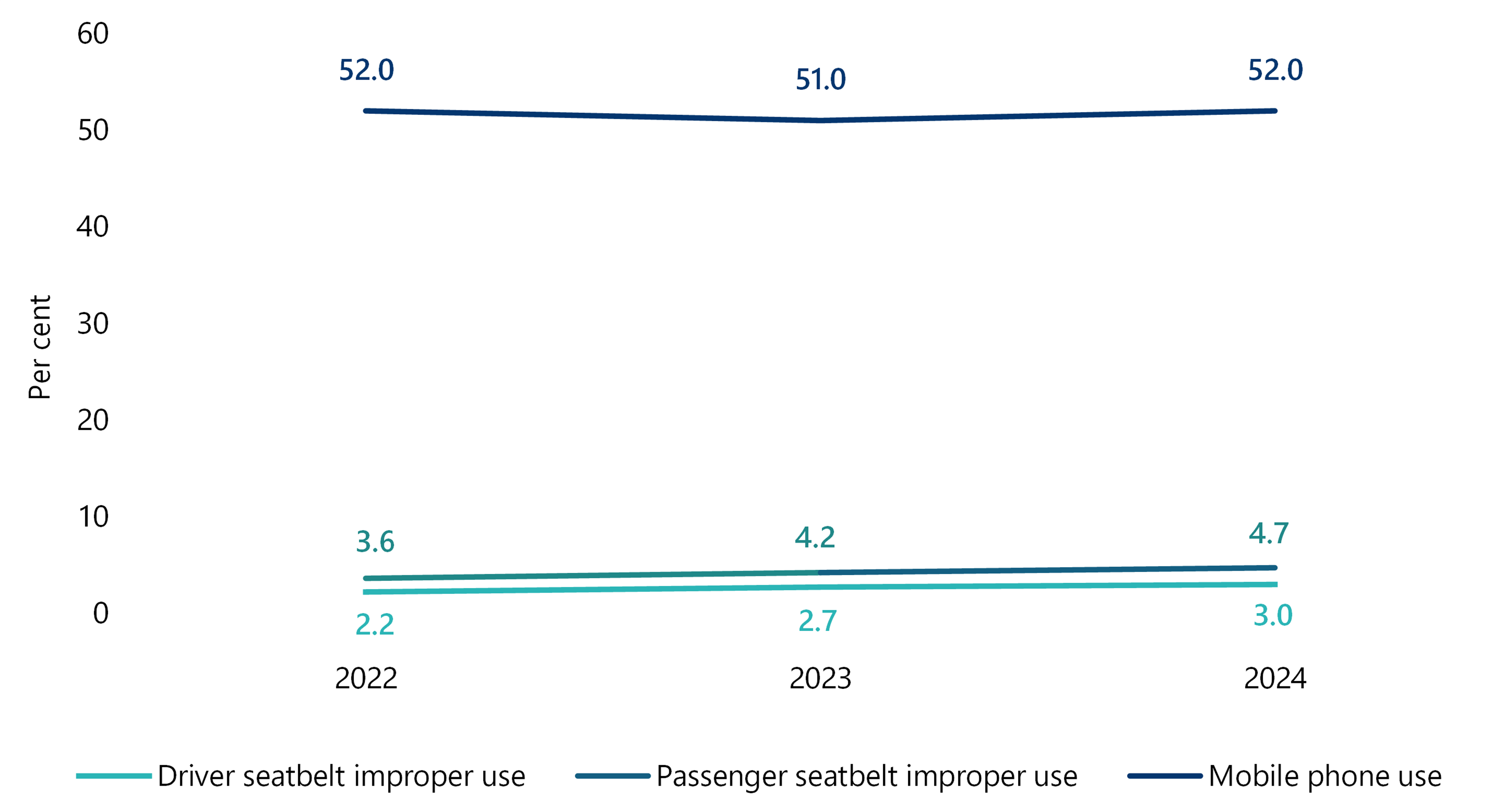
Note: Figures show the percentage of drivers and passengers of the total surveyed by the Transport Accident Commission.
Source: VAGO, based on Transport Accident Commission data.
Evaluation timing
The 2022 business case said that the department would confirm whether the program had reduced crashes, injuries and deaths within 12 to 24 months of enforcement starting (that is, by late 2024 or 2025). If this had happened, the impact of the program on accidents, injuries and deaths would have been evaluated before the program’s initial funding ended in July 2025.
The department commissioned an external agency to evaluate the program in February 2025.
The department has shown good practice by appointing an independent evaluator. However, the evaluation was not commissioned until well into the initial funding period, and later than the department planned in its 2022 business case. Evaluation of whether the program has reduced accidents, injuries and deaths has not yet been done.
Progress to date
The department commissioned the external evaluator to complete the evaluation in 2 phases.
Phase 1 of the evaluation is complete. It looked at the number and patterns of infringements since before the program started, and re-offending rates. It found that the program:
- is effective at catching offences on a large scale, given the volume of images and checks it can process
- is less effective at changing individual offenders’ behaviour compared to receiving an infringement directly from a police officer or by going to court
- may not achieve long term changes in driver and passenger behaviour by itself. The evaluation report suggested the department could increase the program’s effectiveness by combining it with:
- other types of enforcement, for example police officers on highway patrol
- more public education and awareness campaigns.
Phase 2 of the evaluation is due to finish in May 2027. It will assess the program’s overall impact, including:
- whether cameras are deployed fairly across regional and metropolitan areas
- how road safety results compare to initial forecasts
- if the program has reduced the number of road accidents, serious injuries and deaths.
The department does not have complete baseline data to assess the program
Missing baseline data
The department could have established an evaluation approach from the start of the program using the measures and targets from its original business case. This would have allowed it to gather baseline data to report against later.
But it did not do this. Instead, it developed an evaluation approach while the program was already running and commissioned the evaluation 2 years into the program.
The department’s evaluator has baseline data about infringements that goes back to 2018. But other critical baseline data is missing. This impacts the quality of the evaluation.
| The evaluation ... | This means ... |
|---|---|
| did not survey the public’s attitudes and behaviours before the program started because it was not commissioned to do the evaluation until 2 years into the program. | it will be more difficult to know if attitudes and behaviours have changed because of the program. |
| will not start working out how to measure the number of accidents, serious injuries and deaths caused by distracted driving or not wearing a seatbelt until mid-2026. | it will not be able to track this information since the start of the program and fully understand the program’s impact. |
Complete and accurate baseline data to evaluate if road accidents, serious injuries and deaths are caused by distracted driving or not wearing a seatbelt does not currently exist. The department has acknowledged this.
The department is still developing how it will measure the program's contribution to road safety
The 2022 business case
The department’s 2022 business case for the program:
- identifies the benefits it expected the program to deliver, including behavioural changes and road safety benefits
- includes measures and targets to track progress against these benefits
- says the department would work with a research organisation to confirm reductions in road deaths and accident costs within 12 to 24 months after the program started.
This set an expectation that the program’s contribution to road safety would be measurable, including the program’s contribution to reducing serious injuries and deaths.
Although the business case did not quantify the expected reductions, research referenced in the business case suggested that large-scale rollout of cameras could avoid up to 95 accidents per year.
The research also indicated that the program could result in up to $21 million per year in cost savings relating to accidents. The department has not identified cost savings relating to accidents as a benefit.
The new plan
In 2025 the department decided that the program’s benefits, measures and targets from the 2022 business case were no longer appropriate.
It told us this was because of changes to the program, including the government’s decision to extend the program in late 2024.
In January 2026 it released the new plan for the program, which describes:
- the benefits the department expects the program to achieve that will contribute to road safety
- how and when the department will measure if the benefits are being achieved.
The department’s external evaluator will review and refine the new plan to confirm that its benefits are:
- measurable and reportable (for example, relevant data is available)
- ready for reporting from July 2026.
Until it has done this, the department will not know if baseline data exists to measure progress against the new plan’s benefits. The department has acknowledged this.
As of April 2026, the department is still refining the new plan. It is due to complete this in June 2026. But this means the department does not have a final set of benefits, measures and targets to assess how much the program is contributing to road safety.
Comparing the new plan to the 2022 business case
The department has changed the benefits it expects the program to deliver and the department’s new plan has less benefits than the 2022 business case.
| For example, the 2022 business case included … | But the new plan does not … |
|---|---|
| targets for reducing offence rates and using offence rate data from early 2023 as the baseline. | include targets for some of its benefits and will not get baseline data until the program evaluation is complete. |
| plans to track the number of infringements issued between 2023 and 2025. | plan to measure infringement numbers. |
| expected fines revenue generated by the program. | discuss fines revenue. |
| expected cost savings from accidents prevented by the program. | discuss savings from prevented accidents. |
These changes to the program’s benefits mean that:
- the department is not assessing as much of the program’s contribution to road safety than it originally planned
- it is difficult for the department to measure the program’s contribution to road safety between 2023 (when it started) and 2026 (when the benefits measures changed) because some of the 2022 business case measures will no longer be used
- the department has a limited view of how well the program is delivering its expected benefits until the evaluator’s results are available and a baseline is established.
While there are fewer benefits in the new plan, the department has identified benefits that align with the program’s broader objectives and focus on its contribution to road safety. For example, the new plan includes benefits such as ‘A reduction in distracted driving and seatbelt non compliance related fatalist and serious injuries’ and ‘Improvement in compliance with driver seatbelt and passenger seatbelt use’. This means the new plan’s benefits are useful to assess the program’s contribution to road safety, if the department can measure and report against them.
The department has not consistently reported on the program's performance
Operational data reporting
The department has operational data that measures the program’s activities, including:
- KPI data for Jenoptik’s activities
- the number of infringements issued through the program, including where and when
- fines revenue generated by the program.
The department reports some of this data to external stakeholders, including other agencies involved in delivering the Victorian Road Safety Strategy 2021–2030. Some data is also published quarterly on the Cameras Save Lives website.
The department’s internal reporting has focused on how Jenoptik is performing against its KPIs. This can show how the program is being delivered, for example whether cameras are operating for the required number of hours per month.
But this operational data is not designed to give a full picture of how the program is performing or contributing to road safety.
New governance committee and reporting
The department is reporting to its governance committee, but reporting has not been consistent and has limitations.
When the program was first established, it was funded from July 2023 to June 2025. In December 2024 the government extended the program to June 2030. To support the program over this extension, the department created a new governance committee in August 2025.
Its role is to oversee the program and make sure that its benefits are being delivered. The committee has representatives from the department, Victoria Police and other road safety stakeholders such as the Traffic Accident Commission.
In March 2026, the department reported to the committee against operational metrics, including the number of:
- camera hours delivered
- infringements issued.
It also reported against one of its performance measures around road-user behaviour change and compliance.
The department’s reporting in March 2026 shows improvements from its previous reports to the committee, which did not include this detail. But:
- the March 2026 report was the first that contained this type of information, so we cannot confirm this is going to be a regular, standard approach
- there are still gaps and limitations in the department’s reporting because of the known issues around baseline data and incomplete targets.
This lack of consistent reporting makes it difficult for the department and other stakeholders to fully understand how the program is contributing to road safety.
4. Delivering the program
Victoria Police does not consistently use evidence when it identifies camera sites. This is because its criteria for identifying camera sites cannot always be supported by evidence. It also does not always keep complete records during this process.
Jenoptik and Victoria Police’s processes to capture images, verify offences and issue infringements work well. But the department and Jenoptik breached the regulations’ privacy requirements by keeping images for longer than allowed.
The department does not validate Jenoptik’s self-reported KPI data, which means it cannot be sure the results are accurate.
Covered in this section:
- Victoria Police’s process for identifying camera sites is not always supported by evidence
- Camera rostering and image verification processes reduce the risk of incorrect infringements
- There are gaps in how the department administers the program
Victoria Police's process for identifying camera sites is not always supported by evidence
Criteria for camera sites
Victoria Police has 4 criteria to assess, prioritise and identify locations for camera sites, as Figure 3 shows. A site can meet more than one criteria. The department and Victoria Police developed the criteria before the program started.
Figure 3: The 4 criteria to identify camera sites
| Criteria | Requirement |
|---|---|
| 1 | Documented history of collisions or road trauma within the previous 3 years that can be linked to driver distraction or illegal seatbelt wearing. |
| 2 | Validated complaints of drivers using portable devices illegally, or with the improper wearing of seatbelts. For example, through feedback from the general public or local councils. |
| 3 | Anywhere deemed necessary by Victoria Police for the effective enforcement of distracted driving or seatbelt offences and the overall improvement to driver behaviour and road safety. |
| 4 | The road environment and physical characteristic is likely to encourage a higher frequency of driver distraction or improper wearing of seatbelts behaviour. |
Source: VAGO, based on Victoria Police's information.
Issues with the criteria
There are issues with the criteria that make it difficult for Victoria Police to assess a location or gather the evidence needed to recommend it as a camera site.
The issues are:
- Available data cannot always link accidents to specific behaviours (such as distracted driving and not wearing a seatbelt), which is needed for criterion 1.
- Victoria Police does not know the type of road environment or physical characteristics that increase the likelihood of distracted driving or seatbelt offences. This means a location cannot be assessed against criterion 4, which has never been used.
- When the department initially developed the criteria it did not outline what evidence is needed to support Victoria Police’s decision-making. Without this guidance, Victoria Police does not have a standard of evidence to help it decide if the criteria apply to potential sites.
Because of these issues, Victoria Police cannot show it is prioritising camera sites based on the likelihood or risk of distracted driving and seatbelt offenses taking place.
Issues with how Victoria Police uses and records evidence
When Victoria Police identifies a camera site, it records the site in its rostering system with the criteria it used to make its decision. But Victoria Police does not always include enough information to show why it recommended a site or how the site meets the criteria.
Between July 2023 and September 2025, Victoria Police marked 90 per cent of its recommended camera sites as meeting criterion 1.
This criterion requires Victoria Police to check if a location has a history of accidents linked to distracted driving or seatbelt offences. Victoria Police uses mapping software to find locations with a history of road accidents to do this. It then records this information in the rostering system. But:
- out of 33 sites we sampled, 15 did not have accident records against them. This means Victoria Police cannot show it always considered a site’s accident history before recommending it
- available data does not always directly attribute accidents to distracted driving or seatbelt offences. This means Victoria Police may not have enough evidence to show a site has a history of these offences.
We also found 8 cases where Victoria Police did not correctly classify a site under the criteria. For example, it marked a site as meeting criterion 2 (a referral from the public) when it was referred by a police officer (which is criterion 3).
This inaccurate record-keeping means that Victoria Police's decisions may not always be based on sound evidence.
Victoria Police told us that it reviewed how it documents it camera site decisions in 2025. But we still found that evidence was not sufficient for the sites we looked at.
Results not used to improve site selection
Victoria Police is not using data from the program to plan for or improve how it selects sites.
Victoria Police does not review camera information to get insights about sites or its criteria. For example, it does not know if there are road conditions or characteristics that make a particular site more or less effective at finding distracted driving or seatbelt offences. This particularly affects criterion 4, which asks for this information to assess a site.
This is a missed opportunity for Victoria Police to collect and use information to improve its criteria and make sure that it is consistently selecting sites.
Camera rostering
When Victoria Police has identified a potential camera site, it passes it on to Jenoptik to assess if the site is practically suitable. This includes whether:
- it is safe for staff to put up and take down the camera on the site
- there is any suitable parking space nearby.
Victoria Police records all sites onto the master list in the rostering software. It uses the master list to create a monthly roster of ‘sessions’ for Jenoptik to set up cameras.
Session
A specific location and time that a camera is operating. Cameras are mobile and move between sites, according to the monthly roster.
If Jenoptik finds that a session on the monthly roster is not feasible (for example, because of roadworks or bad weather) it notifies Victoria Police that it cannot follow the roster and uses another site on the master list instead.
To avoid delays to camera deployment, Jenoptik can swap unsuitable sites for another site without waiting for approval from Victoria Police. Victoria Police approves these changes later, checking that Jenoptik has relocated to a valid site that is on the master list.
Working well: Finalising site selection and rostering
Once Victoria Police has identified a potential camera site, the rest of the site selection and rostering processes work well.
Jenoptik makes consistent decisions about whether a proposed site is suitable. Victoria Police's monthly rostering process is effective to produce workable plans for Jenoptik to set up cameras.
Jenoptik and Victoria Police work well together to dynamically manage camera deployment when Jenoptik cannot use a site on the roster and must use an alternative site.
Work in progress: The department has updated the Cameras Save Lives website
The Cameras Save Lives website is the public portal for Victoria's whole camera safety program, including for this program. It has a form for the public to recommend where cameras should be located.
We identified that the website did not accurately describe how public suggestions for potential camera sites were managed.
In December 2025, the department updated the website and it now correctly describes the process.
Camera rostering and image verification processes reduce the risk of incorrect infringements
Verifying images
Jenoptik’s process for verifying images is identifying offences effectively.
Jenoptik makes sure multiple staff independently verify images through different stages of its process. This is to cross-check decisions and confirm that images have enough detail and clarity to be enough evidence of a potential offence.
Victoria Police then makes the final decision about whether an offence has been committed. If it has, Victoria Police issues an infringement.
Figure 4 shows this process.
Figure 4: Overview of the program's image verification process
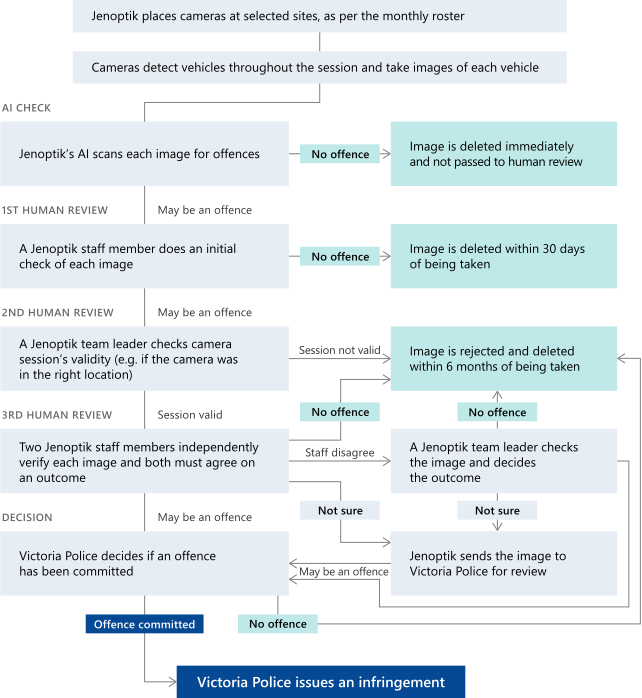
Source: VAGO, based on Jenoptik and Victoria Police's processes.
Between July 2023 and September 2025, the program’s cameras photographed 31,437,979 vehicles. Of these, Victoria Police issued 188,493 infringements for distracted driving and seatbelt offences.
Figure 5 shows the proportion of vehicles photographed that progressed through each stage of the process.
Figure 5: The proportion of vehicles photographed that resulted in infringements between July 2023 and September 2025
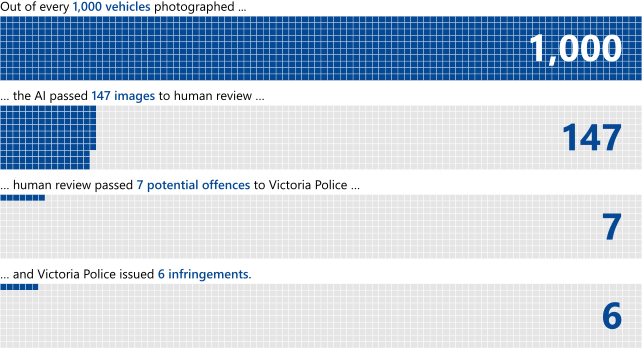
Source: VAGO, using data from the department.
Low-confidence images
If Jenoptik staff are not sure whether an image shows an offence being committed, they can reject the image during the verification process. These images are known as low-confidence images.
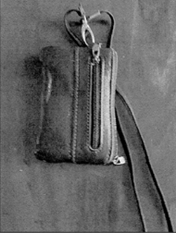
An image may be low-confidence when, for example, it does not clearly show if a driver is holding a mobile device or something else. Figure 6 shows an image Jenoptik gave us as an example of an object that could be a mistaken for a mobile device.
This approach helps to make sure Jenoptik does not incorrectly say an offence may have been committed
Figure 6: Example of an object that could be mistaken for a mobile device
Source: Jenoptik.
Working well: Jenoptik and Victoria Police working together to improve verification
Jenoptik and Victoria Police work well together to improve Jenoptik's verification processes based on review of low-confidence images.
This is done systematically, including through joint meetings between Jenoptik and Victoria Police to review trends in images that Jenoptik has sent to Victoria Police.
Jenoptik uses Victoria Police's decisions about low-confidence images to improve its verification procedures.
Issuing infringements
Victoria Police decides whether to issue an infringement. Its approach to decision-making is effective and reduces the risk of it issuing an incorrect infringement.
Victoria Police uses the same team, procedures and processes to issue infringements for:
- distracted driving and seatbelt offences
- other road safety camera infringements.
This makes sure that Victoria Police is consistent across all its road camera safety programs.
Staff who make decisions on whether to issue infringements get assistance from their supervisors for images they are unsure about.
People who receive an infringement can contest it in court. In these cases, Victoria Police carries the cost and risk of legal proceedings. This gives Victoria Police an incentive to make sure its decision-making is accurate when assessing whether to issue an infringement.
There are gaps in how the department administers the program
The regulations' privacy requirements breached
The department routinely checks images from Jenoptik’s verification process as part of its contract and performance monitoring.
The regulations allow Jenoptik and the department to keep images for up to 6 months for those purposes (regulation 40C).
We found cases where the department breached the regulations:
- The department shares images with Jenoptik as part of its performance management process. For example, the department emails rejected images to Jenoptik to check how it made its decisions. We found examples of documents and emails with images that the department had kept for longer than 6 months. The department has since deleted these images. But we have not seen evidence that it has processes to routinely delete images from its email databases or internal filing systems.
- The department has a procedure to check how Jenoptik’s AI is performing. It retrieves images from the cameras and reviews them for accuracy. The procedure says when the department uses the images to check the AI’s performance, it must delete them within 6 months. But:
- the procedure also allows the department to keep images indefinitely when it uses them to improve the AI’s performance. This creates an exception that results in the department breaching regulation 40C
- the department did not fully follow the procedure and held some images it was using to check the AI’s performance for longer than 6 months. The department has since deleted these images.
The department told us that it had kept images relating to the AI’s performance for longer than allowed because it needed them to comply with an information request in a different VAGO audit. That audit was assessing the department's processes for validating fines revenue.
But the department did not inform VAGO that the information request would result in it holding images for longer than 6 months. The department told us that it was not aware it could decline VAGO’s request. But we have not seen any evidence that the department considered regulation 40C requirements when responding to VAGO’s request.
These examples show that the department needs to strengthen its administrative processes to make sure it meets regulatory requirements on how it retains images.
Work in progress: Jenoptik has changed its archiving software so that it no longer breaches the regulations
Jenoptik archives files in a cloud storage system. This provides a storage and recovery process in case Jenoptik's data, including any images, are lost or corrupted. The system’s retention period for all data is 7 years. This means that by including images in this archive, Jenoptik was breaching the regulations.
As a result of our audit, Jenoptik changed how its system archives images. Jenoptik deleted older images and new images will no longer be retained for longer than 6 months. This means that Jenoptik now complies with the regulations.
The department does not validate all of Jenoptik’s KPIs
The department uses 21 KPIs to make sure Jenoptik is delivering the program as expected. Jenoptik must meet targets for each of them. Figure 7 shows the types of KPIs used.
Figure 7: Program KPIs
| Type of KPI | Number of KPIs | Example |
|---|---|---|
| Timeliness How quickly Jenoptik processes images before passing them to Victoria Police. | 3 | KPI 2.2: Jenoptik must send images it verifies to Victoria Police within 10 business days. |
| Performance How accurately the cameras, AI and human review decide if images show offences being committed or not. | 8 | KPI 1.3: Jenoptik's cameras must capture clear and usable images for at least 95% of cars passing through. |
| Compliance How well Jenoptik manages its operations to deliver the program. | 10 | KPI 3.4: Jenoptik must follow its Disaster Recovery requirements and procedures. |
Note: There are 22 KPIs in the contract between the department and Jenoptik. But KPI 1.2 measures the performance of fixed-point cameras, which are not currently part of the program. The department does not use this KPI.
Source: VAGO, based on the contract.
The department cannot be sure that results against all its KPIs are accurate. This is because for some KPIs, it relies on Jenoptik to self-report results and does not verify them.
The department receives monthly reports on all of Jenoptik’s KPIs. It checks Jenoptik is meeting them differently, depending on the KPI.
| For some KPIs, the department ... | which means these KPIs, it ... |
|---|---|
directly samples Jenoptik's data and checks whether it is meeting its targets
| can be sure results are reliable.
|
relies on Jenoptik reporting its own performance data and does not verify Jenoptik’s data
| cannot be sure:
|
This shows that the department needs to strengthen its administrative controls over Jenoptik’s performance.
AI performance improvement
If the AI can effectively identify and reject images that do not show an offence being committed, fewer images will need human review.
As human review is time and labour-intensive, this means upgrading the AI can improve the program’s efficiency.
The department uses a third-party company to test changes to the AI and see if it can improve performance. This is good practice as it separates AI testing from Jenoptik, which operates the AI.
In March 2024, the department approved a change to the AI software as a result of the company's testing. Jenoptik then trialled the changes with 2 cameras. But the department does not have records to show what happened after May 2024.
This lack of record-keeping means the department could not be certain of the version of the AI software that was deployed from March 2024.
This situation was remedied in December 2025, when the department approved a new version of the AI software as a result of this testing. Jenoptik rolled out the software to all cameras and the department monitored these changes.
It is too soon to assess if these changes improved the performance of the AI as intended.
Appendix A: Submissions and comments
Download a PDF copy of Appendix A: Submissions and comments.

Appendix B: Abbreviations, acronyms and glossary
Download a PDF copy of Appendix B: Abbreviations, acronyms and glossary.
Appendix C: Audit scope and method
Download a PDF copy of Appendix C: Audit scope and method.