
Results of 2024–25 Audits: Local Government
Report snapshot
About this report
This report sets out the results of our financial and related audits of Victoria’s local councils and related entities. It also provides our independent view on sector‑wide financial outcomes, emerging risks, and common internal control and reporting issues.
Audit outcomes
Report users can rely on councils' financial reports and performance statements. We provided clear audit opinions on 2024–25 reports. All council audits are complete, with audits for one council-controlled entity and 3 associated entities still in progress.
Councils can improve reporting timeliness, strengthen quality assurance processes, and better understand their legislative obligations.
More than half of councils did not provide draft financial reports for audit within required timeframes, and 14 councils did not meet their legislative annual report obligations. We also identified an increase in errors in draft financial reports and performance statements this year. While councils corrected these errors before finalising their reports, late submissions and errors delay providing reliable annual reports to users.
Positively, 39 councils have commenced streamlining their financial reports, up from 16 last year. Streamlining improves report readability and reduces the reporting burden for preparers. We encourage all councils to commence or continue streamlining their financial reports.
Financial outcomes
The timing of financial assistance grants continues to significantly affect councils reported financial results. In 2024–25, the Australian Government paid half a year's financial assistance grants in advance, leading 75 councils to report a surplus, compared to 50 last year. Excluding the advance payment, 14 councils would have reported a loss, instead of 4.
Revenue and income from rates, user fees and other sources grew by 4.4 per cent, while expenses also continued to grow, and at a rate higher than last year.
Councils increased their cash reserves and debt levels remain low. The value of property, infrastructure assets, plant and equipment increased by $12.019 billion (from $141.025 billion to $153.044 billion), largely due to a $9.392 billion asset revaluation adjustment.
Councils can improve their capital budgeting processes and how they manage and deliver capital projects. In 2024–25, the sector’s actual capital expenditure totalled $3.370 billion, an underspend of $0.820 billion, or 19.6 per cent. Over the past 5 years, many councils have not generated operating surpluses to contribute to their capital programs, instead relying on capital grant funding and existing reserves.
Some small councils continue to face financial pressure, with deteriorating financial outcomes pointing to potential structural deficits. These pressures reflect a limited rate base and heavy reliance on government funding. Without ongoing support, small councils may struggle to deliver capital programs and face longer-term financial sustainability risks.
Internal controls and financial reporting issues
Councils can strengthen their internal controls to better support the preparation of reliable reporting. Each year, we continue to identify control weaknesses. A number of high and moderate‑risk issues identified in past audits also remain unresolved.
Senior management and audit and risk committees need to strengthen their oversight, so councils implement agreed recommendations on time. Unresolved issues expose councils to ongoing financial and operational risks.
Data dashboard
View the dashboard full screen
Dashboard data
Download CSV copies of the following datasets:
Our recommendations
We consulted with audited agencies and considered their views when reaching our conclusions.
We made 2 recommendations to address our findings, noting a number of recommendations from prior reports remain relevant and unresolved.
This year's recommendations
| Recommendation | Agency response | |||
|---|---|---|---|---|
Councils
| 1
| That councils undertake a review of their capital expenditure budgeting process to understand why the underspend is occurring, whether key assumptions require enhancement and adjust future asset management plans accordingly. (see Section 2).
|
| |
Local Government Victoria
| 2
| That Local Government Victoria, in addition to reminding councils of their annual reporting obligations under the Local Government Act 2020:
| Accepted
| |
Follow-up on prior-year recommendations
Status of recommendations from our Results of 2023–24 Audits: Local Government report
| Recommendation | Status | ||
|---|---|---|---|
Councils
| 1
| For councils that did not prepare draft financial reports or performance statements by the timelines agreed with their auditor:
| In progress See Appendix H for details
|
2
| Councils take the lead in the formation of a ‘developer non-cash contribution’ working party to create guidance materials that will strengthen internal processes. Councils could also consider hosting workshops to support the sector in applying the guidance effectively.
| In progress See Appendix H for details
| |
3
| Councils resolve the open recommendations from the Results of
| In progress See Appendix H for details
| |
4
| Councils that have not yet done so:
| In progress See Appendix H for details | |
Local Government Victoria
| 5
| Formally advise and remind the councils of their annual reporting obligations.
| Completed
|
Municipal Association of Victoria
| 6
| Develop and deliver the intended councillor development program with input from Local Government Victoria, as applicable.
| In progress See Appendix H for details
|
Status of recommendations from our Results of 2022–23 Audits: Local Government report
| Recommendation | Status | ||
|---|---|---|---|
Councils
| 1
| We recommend that all councils:
| In progress See Appendix H for details
|
2
| We recommend that finance teams:
| In progress See Appendix H for details
| |
3
| We recommend that audit and risk committees:
| In progress See Appendix H for details
| |
4
| We recommend that councils:
| In progress See Appendix H for details | |
Local Government Victoria and the Municipal Association of Victoria
| 5
| We recommend that Local Government Victoria or the Municipal Association of Victoria, or both in partnership, deliver a governance training program, which may include tailored resource material, to support councillors and their audit and risk committee members throughout their term of appointment.
| In progress See Appendix H for details |
1. Audit outcomes
Snapshot
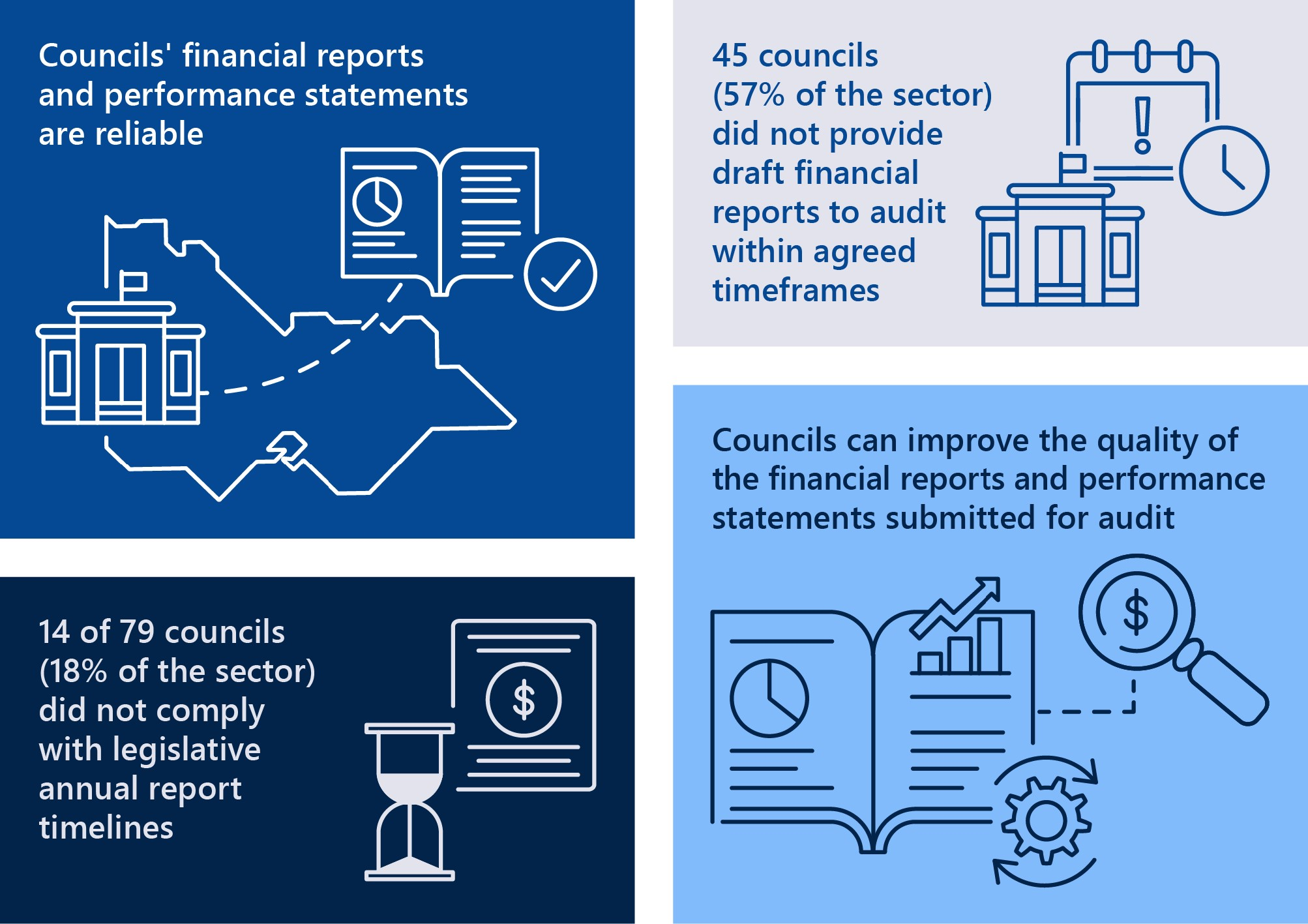
Report users can rely on councils' financial reports and performance statements. We provided clear audit opinions on 2024–25 reports. All council audits are complete, with audits for one council-controlled entity and 3 associated entities still in progress.
Councils can improve reporting timeliness, strengthen quality assurance processes, and better understand their legislative obligations. More than half of councils did not provide draft financial reports for audit within required timeframes, and 14 councils did not meet their legislative annual report obligations.
We also identified an increase in errors in draft financial reports and performance statements this year. While councils corrected these errors before finalising their reports, late submissions and errors increase the risk of delays in providing reliable annual reports to support informed decision-making.
Positively, 39 councils have commenced streamlining their financial reports, up from 16 last year. Streamlining improves report readability and reduces the reporting burden for preparers. We encourage all councils to commence or continue streamlining their financial reports.
Financial reports and performance statements are reliable
Reporting requirements
The Victorian local government sector consists of 104 agencies, including 79 councils.
Each council prepares a financial report and performance statement. We audit these financial reports and performance statements. See Appendix C for more information about the local government sector, including an overview of the annual reporting timelines and requirements.
Clear audit opinions
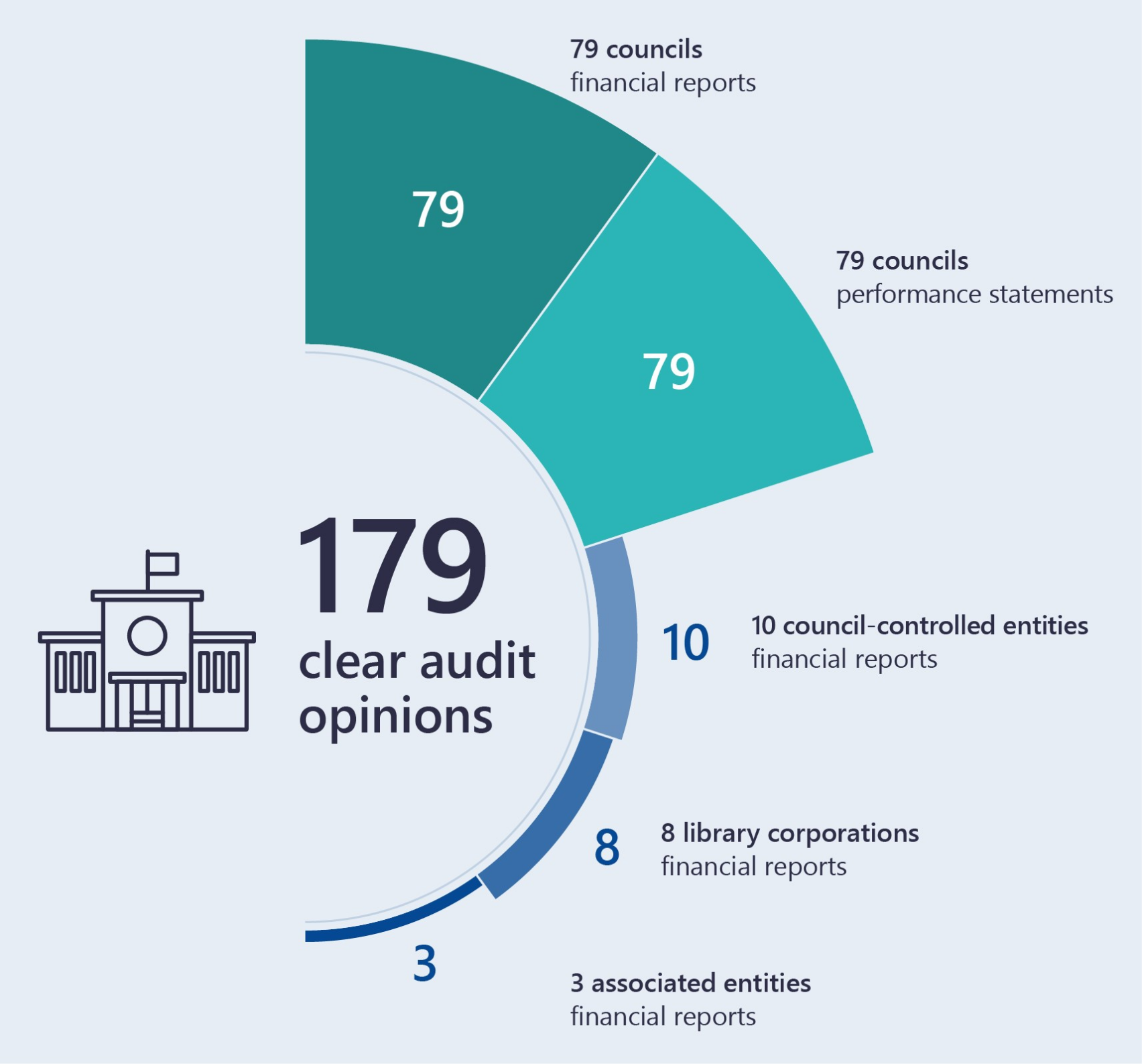
We issued 179 clear audit opinions. This means Parliament and the community can confidently use these reports.
Figure 1: Clear audit opinions issued 2024–25
Source: VAGO.
Audits in progress
On 27 February 2026, the following audits were still in progress:
- Mildura Tourism and Economic Development Limited
- MomentumOne Shared Services Pty Ltd
- Regent Management Company Pty Limited
- Wimmera Southern Mallee Development Limited
See Figure E2 in Appendix E for more information about these audits.
Opportunities remain to strengthen reporting timeliness
Why audit readiness matters
We agree key dates with each council, including the submission dates for their draft financial reports and performance statements, so we can schedule audit visits and allocate audit resources effectively. When councils submit required information – such as audit requests and draft financial reports and performance statements – by these agreed dates, audits progress smoothly as planned.
Delays can disrupt audit delivery and cause audits to become stop-start. Delays across multiple audits can also create sector-wide backlogs, increasing the risk that legislative timelines are not achieved for individual councils and across the sector. Submitting high-quality information on time supports a smoother and more efficient audit process.
Efficient audits, in turn, enable councils to release audited financial and performance information sooner. This gives councillors, ratepayers, government and other stakeholders access to current, reliable data to support sound decision‑making and accountability for public funds. Audit delays postpone the release of audited information, reduce confidence in its reliability, and limit users’ ability to assess, understand and benchmark councils’ performance.
Draft financial report and performance statement delays
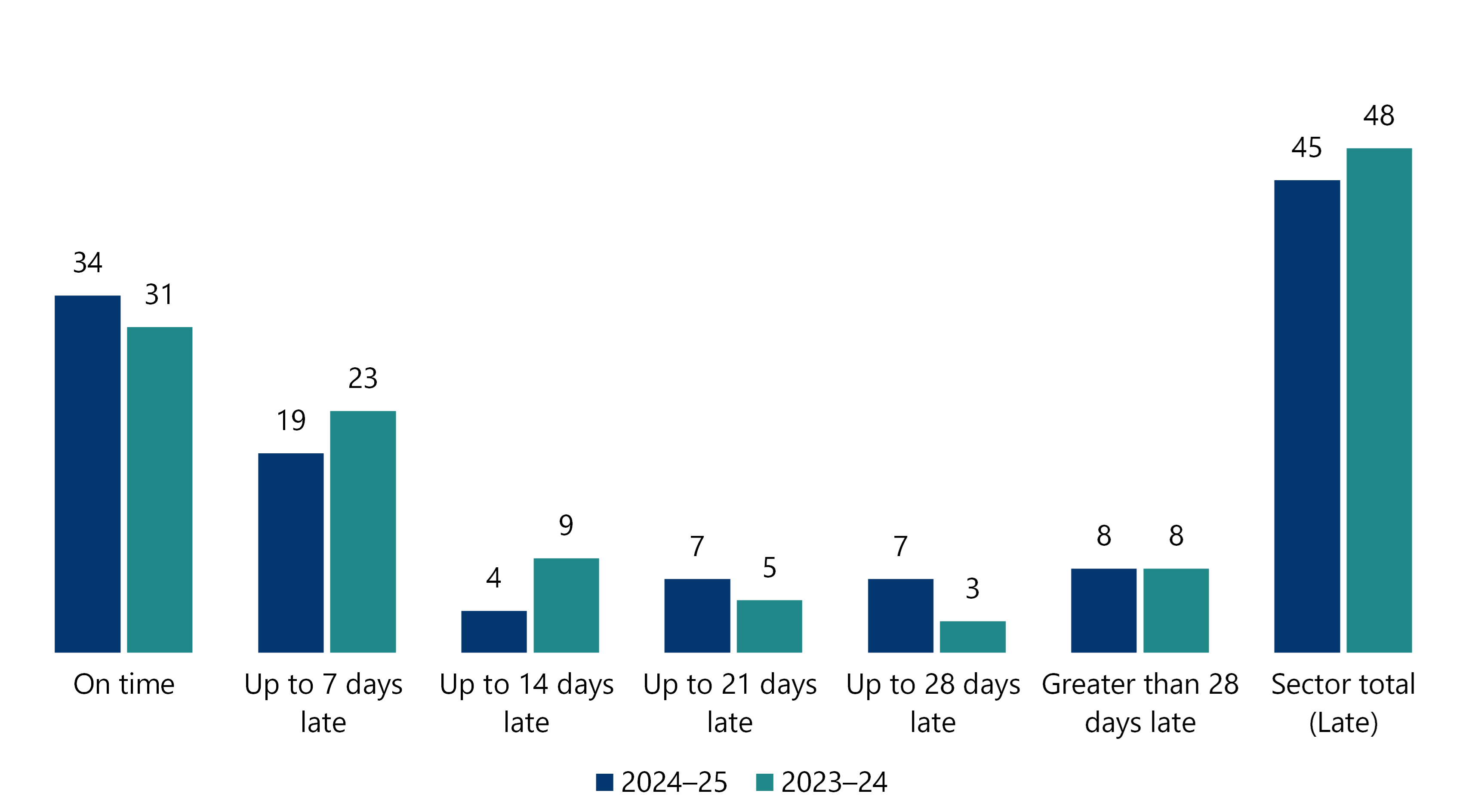
In 2024–25, only 34 of the 79 councils (43 per cent) submitted their draft financial report and performance statement for audit within agreed timelines. A slight improvement from the previous year where 31 councils (39 per cent) did so.
Figure 2: Number of councils submitting their draft financial reports and performance statements on time or late, by days late compared to the prior year
Source: VAGO.
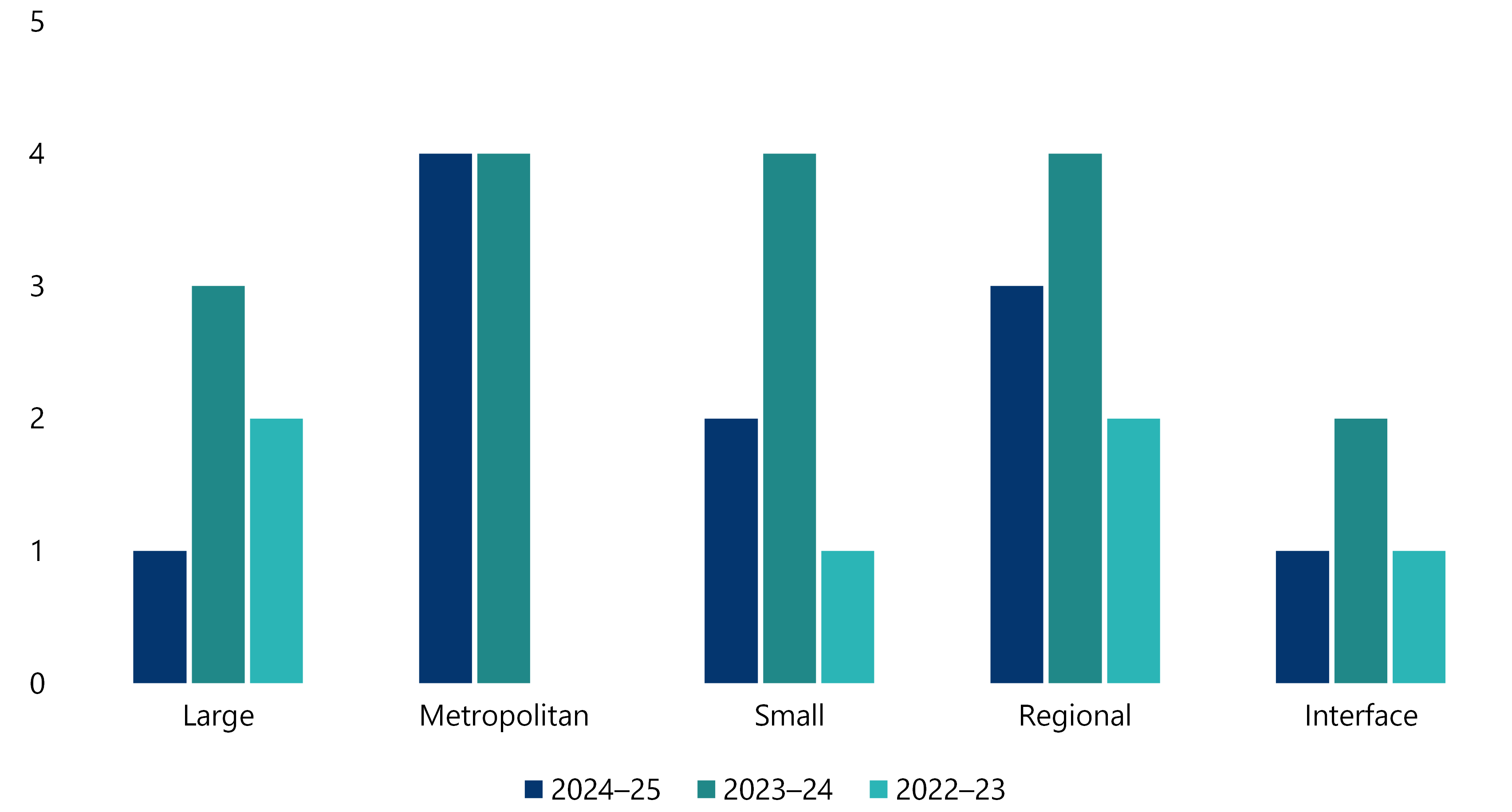
The delays indicate internal processes are not as mature as they need to be, or that resourcing capacity issues exist. Over the past 2 years, 32 councils have been late both years, represented by:
- 12 small councils
- 8 large councils
- 7 metropolitan councils
- 3 regional councils
- 2 interface councils.
In our Results of 2023–24 Audits: Local Government report we recommended councils prepare a financial reporting plan and assess their resources’ adequacy to improve timeliness. The trends identified in 2024–25 show that this recommendation remains relevant for councils that did not meet their timelines.
Legislative deadline
Councils are required to present their annual report at a public council meeting within 4 months of the end of the financial year (by 31 October in a non-election year). The report must include:
- a report of operations
- an audited financial report
- an audited performance statement
- associated audit opinions.
Sixty-five councils met this timeframe in 2024–25, an improvement on 61 in 2023–24. All metropolitan councils met the requirement.
Councils' compliance
Fourteen councils did not present a compliant annual report at an open council meeting by 31 October 2025. We noted instances where:
- financial reports were finalised after 31 October 2025
- councils presented draft annual reports
- councils presented signed annual reports that:
- included draft financial reports and performance statements instead of signed versions
- contained blank pages where the audit opinions should have appeared
- included the prior year’s audit opinions
- did not include the financial report, performance statements or audit opinions.
When councils omit audited statements and audit opinions from their annual reports, they do not meet their statutory obligation to provide transparent, audited information to the public. These omissions indicate gaps in understanding annual reporting requirements and weaken the effectiveness of the audit function in supporting public accountability.
Local Government Victoria (LGV) should review councils’ annual report compliance, and work directly with councils that did not comply with the requirements in 2024–25 to support a return to full compliance.
Report quality has declined
Errors in financial reports
We identified 259 financial report audit adjustments in 2024–25, up from 189 in 2023–24. This represents a 37 per cent increase.
Dollar differences were steady in number identified, but increased in size by 184 per cent, to $531 million of adjustments being made. This was predominantly due to adjustments arising from updated accounting guidance on fair value measurement.
Disclosure differences increased by 56 per cent. Disclosure differences are corrections to the narrative and explanatory notes in financial reports that help users understand the financial information presented.
Figure 3: Number of adjusted errors we found in councils’ financial reports
| Dollar differences adjusted | Disclosure differences adjusted | ||
|---|---|---|---|
| Year | Errors | Size ($ million) | Errors |
| 2024–25 | 59 | 531 | 200 |
| 2023–24 | 61 | 187 | 128 |
| 2022–23 | 58 | 843 | 122 |
Note: Size is an aggregation of net adjustments for revenue, expenses, assets, liability and equity.
Source: VAGO.
Increases in both the number and size of financial report adjustments indicate ongoing issues in the planning, preparation, supervision and review of councils’ financial reporting processes, and point to weaknesses in internal quality assurance.
Common areas where we identified adjustments
We continued to find the most issues with:
- the quality of disclosures, as we identified either inaccurate, incomplete or missing content
- errors in property, infrastructure assets, plant and equipment balances.
Figure 4: Adjusted errors by category from 2021–22 to 2024–25
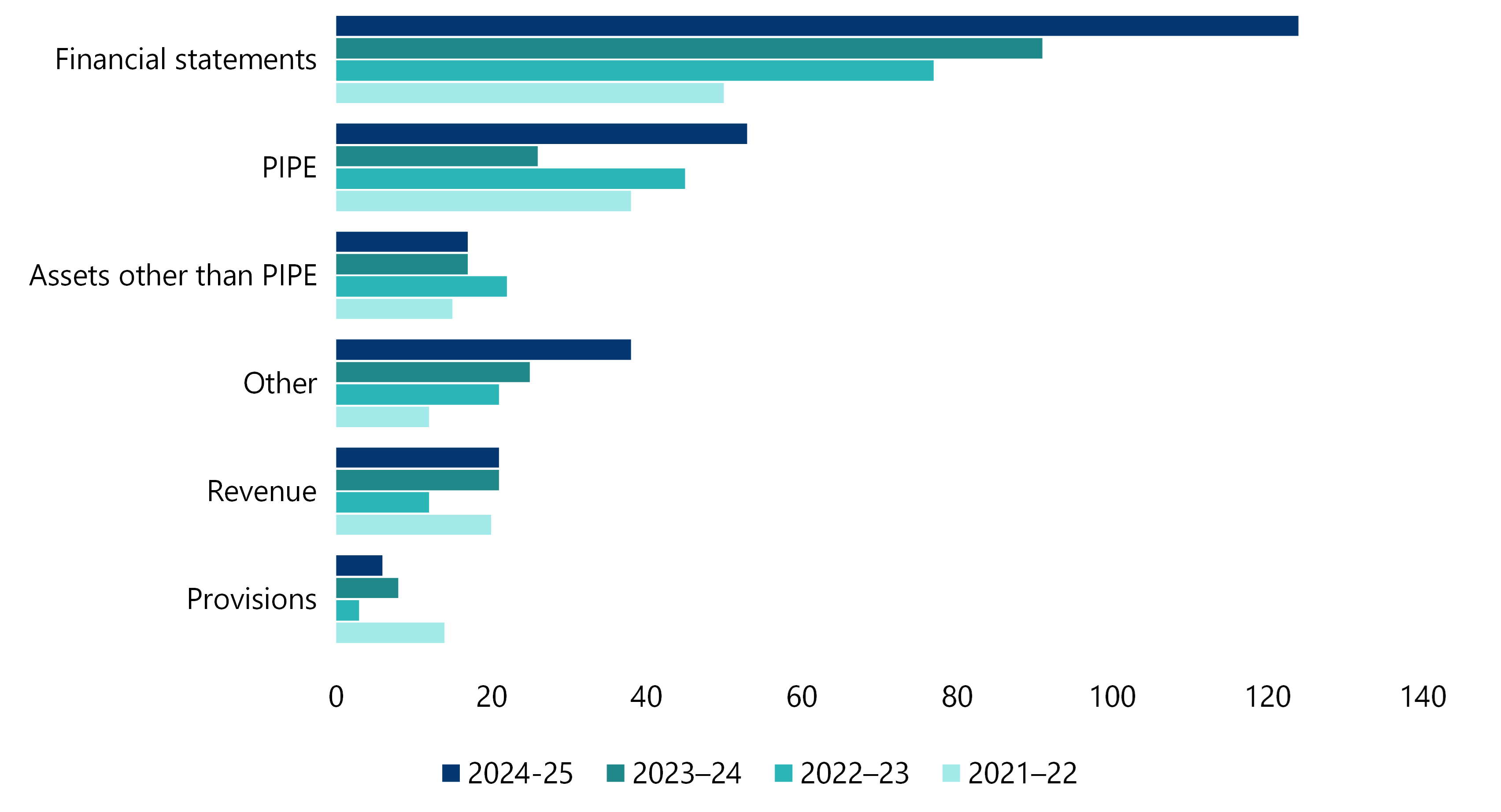
Note: PIPE refers property, infrastructure assets, plant and equipment.
Source: VAGO.
Errors in performance statements
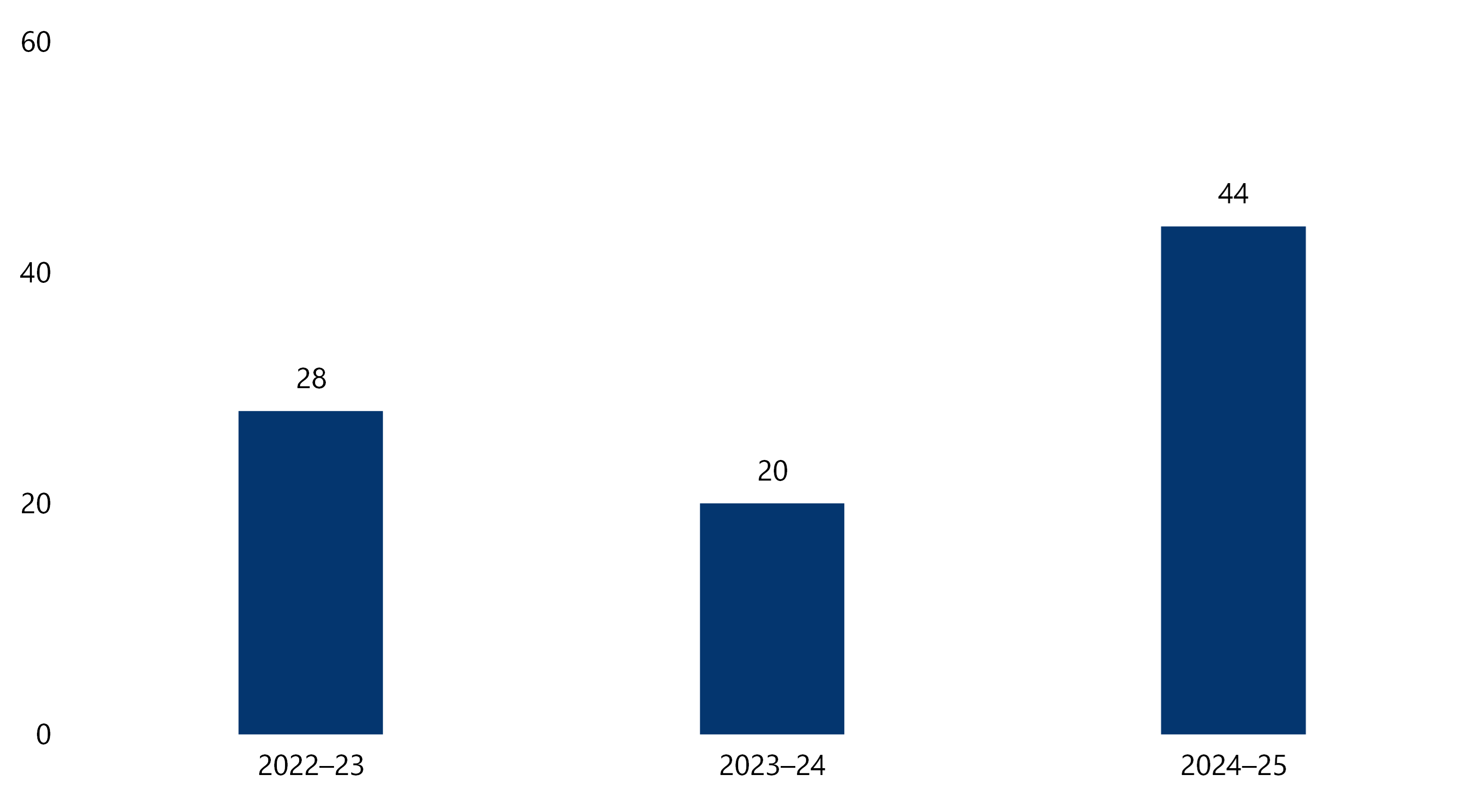
We identified errors in the performance statement at 44 councils this year – more than double the previous year.
Figure 5: Number of councils with an adjusted performance statement error between 2022–23 and 2024–25
Source: VAGO.
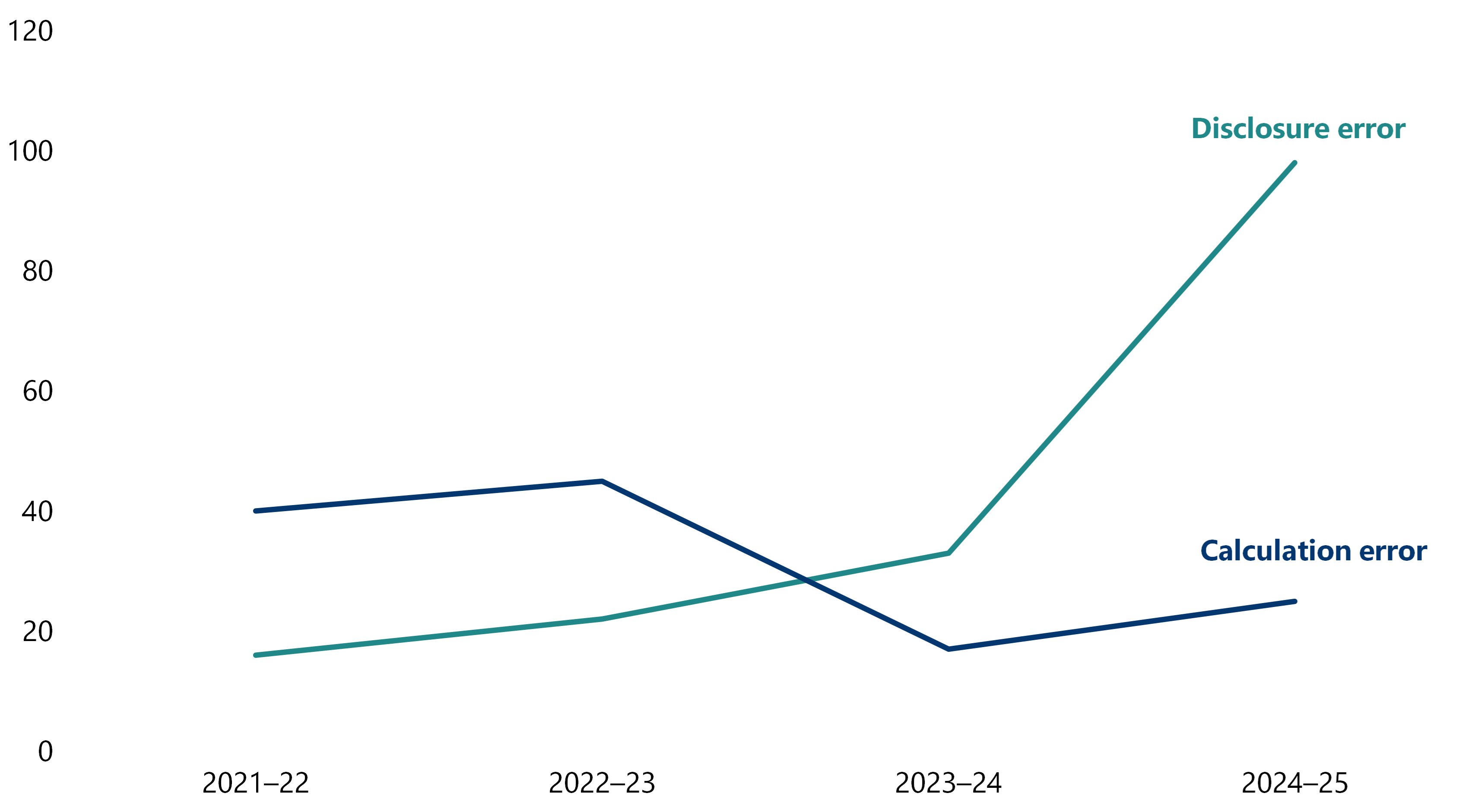
Calculation errors increased by 47 per cent, with 25 errors adjusted in 2024–25. There were 17 calculation errors adjusted in 2023–24. The errors were mainly caused by weak internal quality assurance processes.
Disclosure errors increased significantly (by 197 per cent), with 98 adjusted in 2024–25 up from 33 in 2023–24. The errors were due to fairly consistent root causes:
- misalignment of forecasts with council's approved budget
- weak internal quality assurance processes
- inadequate or unclear variance analysis explanations.
Calculation errors versus disclosure errors
We classify performance statement errors as either calculation or disclosure errors, depending on whether to correct them would adjust numbers in the performance statements themselves (or primary statements), numbers or words in the commentary and variance analysis.
Figure 6: Adjusted errors in performance statements from 2021–22 to 2024–25
Source: VAGO.
Material prior period errors
Eleven councils had a financial report with prior-period errors in 2024–25. This is an improvement on the 17 in 2023–24.
Prior-period errors
Prior-period errors are omissions from, and misstatements in, the entity’s financial report for one or more prior periods arising from a failure to use, or misuse of, reliable information that:
- was available when financial reports for those periods were authorised for issue
- could reasonably be expected to have been obtained and taken into account in the preparation and presentation of those financial reports.
Such errors include the effects of mathematical mistakes, mistakes in applying accounting policies, oversights or misinterpretations of facts and fraud.
Figure 7: Number of councils by cohort that disclosed a prior-period error from 2022–23 to 2024–25
Source: VAGO.
Of the 11 financial reports with prior-period errors, we consider only 4 of the adjustments to be material. The other 7 were immaterial, but councils elected to make the changes. These errors predominantly relate to the recognition of property, infrastructure assets, plant and equipment. This remains an area of persistent weakness, with ongoing issues in asset record‑keeping and asset valuation, as discussed in Section 3 of this report.
Material
We define materiality as the point at which omissions or misstatements in financial information could influence users’ decisions. We establish both quantitative and qualitative criteria to determine whether a transaction, balance or event is material. When items exceed these thresholds, councils must make the necessary adjustments to ensure we can issue an unmodified audit opinion.
Simplified financial reports
Each year, LGV releases a model financial report and performance statement to help councils meet their financial reporting requirements.
LGV, together with Local Government Finance Professionals (an incorporated association known as FinPro), consider feedback from various stakeholders to enhance the model financial report and performance statement.
Model accounts provide comprehensive guidance and are designed to cover all potential disclosures a council might need. Councils can tailor their financial report by not including disclosures that are not material to their specific circumstances. This approach helps create more concise and relevant reports that are easier to understand.
Over the years, councils’ financial reports have grown longer and more complex. This can make it difficult for readers to find key information.
We have recommended that councils streamline their financial reports to better cater to stakeholders' needs and improve overall readability and transparency. In 2024–25, 39 of 79 councils have taken steps in streamlining their financial report up from 16 in the prior year.
Simplifying the content, focusing on material information and ensuring compliance with laws, regulations and accounting standards helps reduce the reporting burden and clarify key insights for decision-makers.
Councils should use each reporting season as an opportunity to simplify financial reports.
Materiality should be set from council's perspective, with the stakeholders and primary users in mind. This means councils should tailor the financial reports to reflect only the material balances and transactions.
The Australian Accounting Standards require only material disclosures to be included in financial reports, so annually reviewing materiality and ensuring the reports are suitably tailored is not just best practice but required. See our checklist on simplifying financial reporting in Appendix I.
Recommendations
Local Government Victoria
We recommend that Local Government Victoria, in addition to reminding councils of their annual reporting obligations under the Local Government Act 2020:
- provide targeted education sessions for council management, finance teams, audit and risk committees and councillors to strengthen their understanding of the reporting requirements
- actively monitor councils' compliance with annual reporting requirements
- work with councils where non-compliance occurs to identify the root cause and develop appropriate remediation plans.
2. Financial outcomes
Snapshot
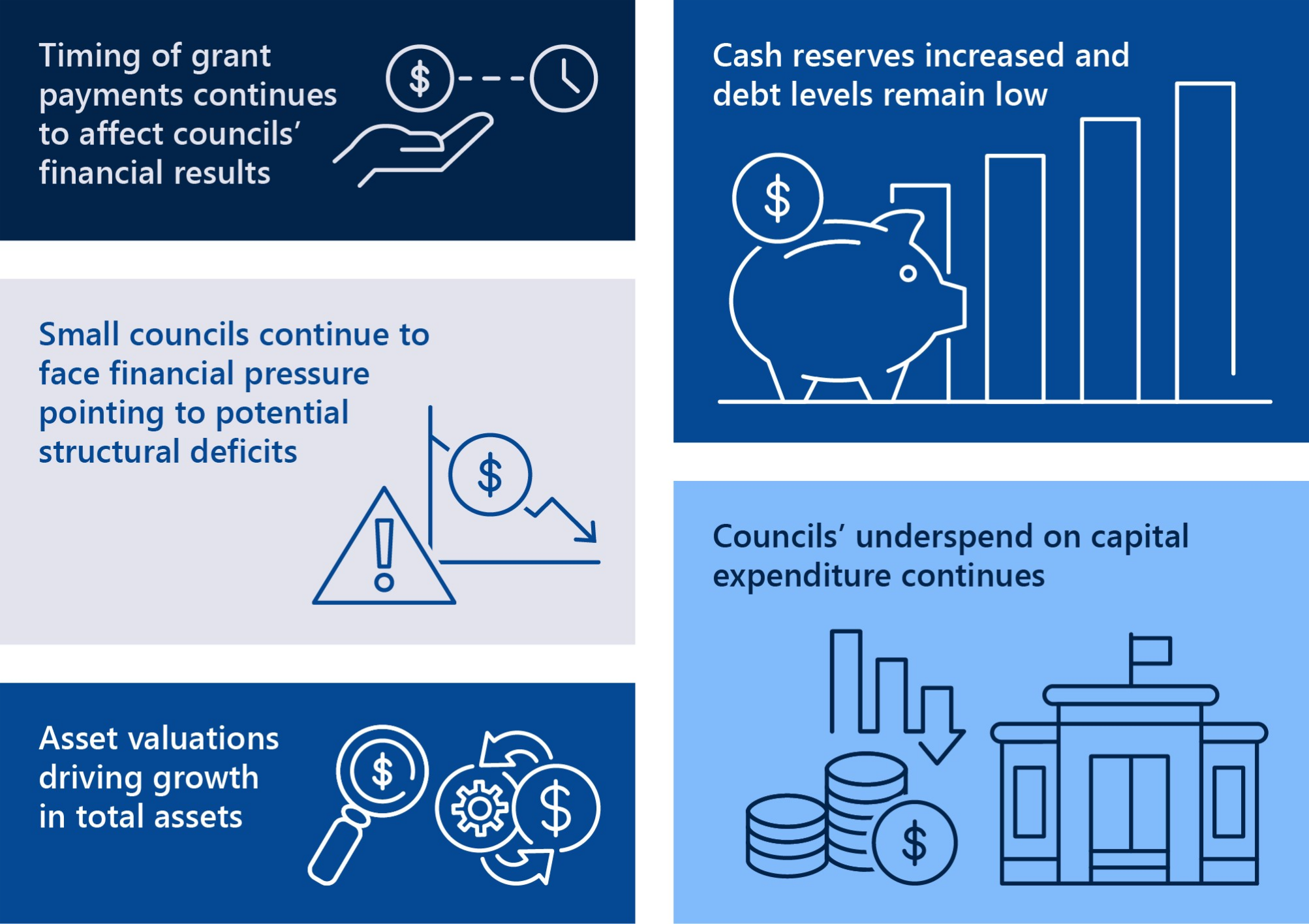
The timing of financial assistance grants continues to significantly affect councils' reported financial results. In 2024–25, the Australian Government paid half a year's financial assistance grants in advance, leading 75 councils to report a surplus, compared to 50 last year. Excluding the advance payment, 14 councils would have reported a loss instead of 4.
Revenue and income from rates, user fees and other sources grew at 4.4 per cent, while expenses also continued to grow, and at a rate higher than last year.
Councils increased their cash reserves and debt levels remain low. The value of property, infrastructure assets, plant and equipment increased by $12.019 billion, largely due to a $9.392 billion asset revaluation adjustment.
Councils can improve their capital budgeting processes and how they manage and deliver capital projects. In 2024–25, the sector’s actual capital expenditure totalled $3.370 billion, an underspend of $0.820 billion or 19.6 per cent. Over the past 5 years, many councils have not generated operating surpluses to contribute to their capital programs, instead relying on capital grant funding and existing reserves.
Some small councils continue to face financial pressure, with deteriorating financial outcomes pointing to potential structural deficits. These pressures reflect a limited rate base and heavy reliance on government funding. Without ongoing support, small councils may struggle to deliver capital programs and face longer-term financial sustainability risks.
Timing of Australian Government funding continues to drive volatility in councils' reported net results, reducing comparability over time
Financial performance snapshot
A council generates a surplus when total revenue and income exceed total expenses, or a loss when total revenue and income is lower than total expenses. The surplus or loss is referred to as the net result in a council’s financial report.
In 2024–25, Victorian councils reported a combined surplus of $2.921 billion, an increase of 58.8 per cent compared to the previous year.
| In 2024–25 the sector reported ... | which is a ... | from ... |
|---|---|---|
| $15.286 billion in revenue and income | 12.2 per cent increase | $13.629 billion in 2023–24 |
| $12.365 billion in expenses | 4.9 per cent increase | $11.789 billion in 2023–24 |
| $2.921 billion surplus | 58.8 per cent increase | $1.840 billion in 2023–24. |
Financial assistance grants impacts
Each council receives financial assistance grants from the Australian Government, though the amount and timing vary annually. Under accounting standards councils record grant revenue in the year they receive it, instead of the year that it pertains to.
In 2024–25 councils received:
- 100 per cent of their 2024–25 financial assistance grants
- 50 per cent of their 2025–26 financial assistance grants in advance.
As a result, 75 councils recorded a surplus. The 4 councils that recorded a loss in 2024–25 are all small shire councils.
The 2024–25 financial outcome is similar to the 2021–22 and 2022–23 financial years when councils also received financial assistance grants equivalent to a period greater than 12 months.
In 2023–24 councils received no financial assistance grants, as the funding was paid in full in advance in 2022–23. This contributed to 29 councils reporting a loss.
Figure 8 shows how the variability in government financial assistance grants affects the financial results.
Figure 8: Number of councils to generate a surplus or loss from 2020–21 to 2024–25
| 2024–25 | 2023–24 | 2022–23 | 2021–22 | 2020–21 | |
|---|---|---|---|---|---|
| Surplus | 75 | 50 | 74 | 74 | 68 |
| Loss | 4 | 29 | 5 | 5 | 11 |
| Total number of councils | 79 | 79 | 79 | 79 | 79 |
Source: VAGO.
If we allocate financial assistance grants to the financial year to which they relate, rather than the year in which councils receive them, 14 councils would report a loss in 2024–25 instead of 4, and 8 councils would have reported a loss in 2023–24 instead of 29.
For 2024–25 the 14 would comprise:
- 9 small shire councils
- 4 large councils
- an interface council.
Adjusted underlying result improves
To remain financially sustainable, councils must meet current and future expenditure requirements from revenue earned, absorb foreseeable changes and materialising risks and manage the impact from these factors to changing revenue and expenditure requirements. Councils must generate enough money to deliver community services and required infrastructure.
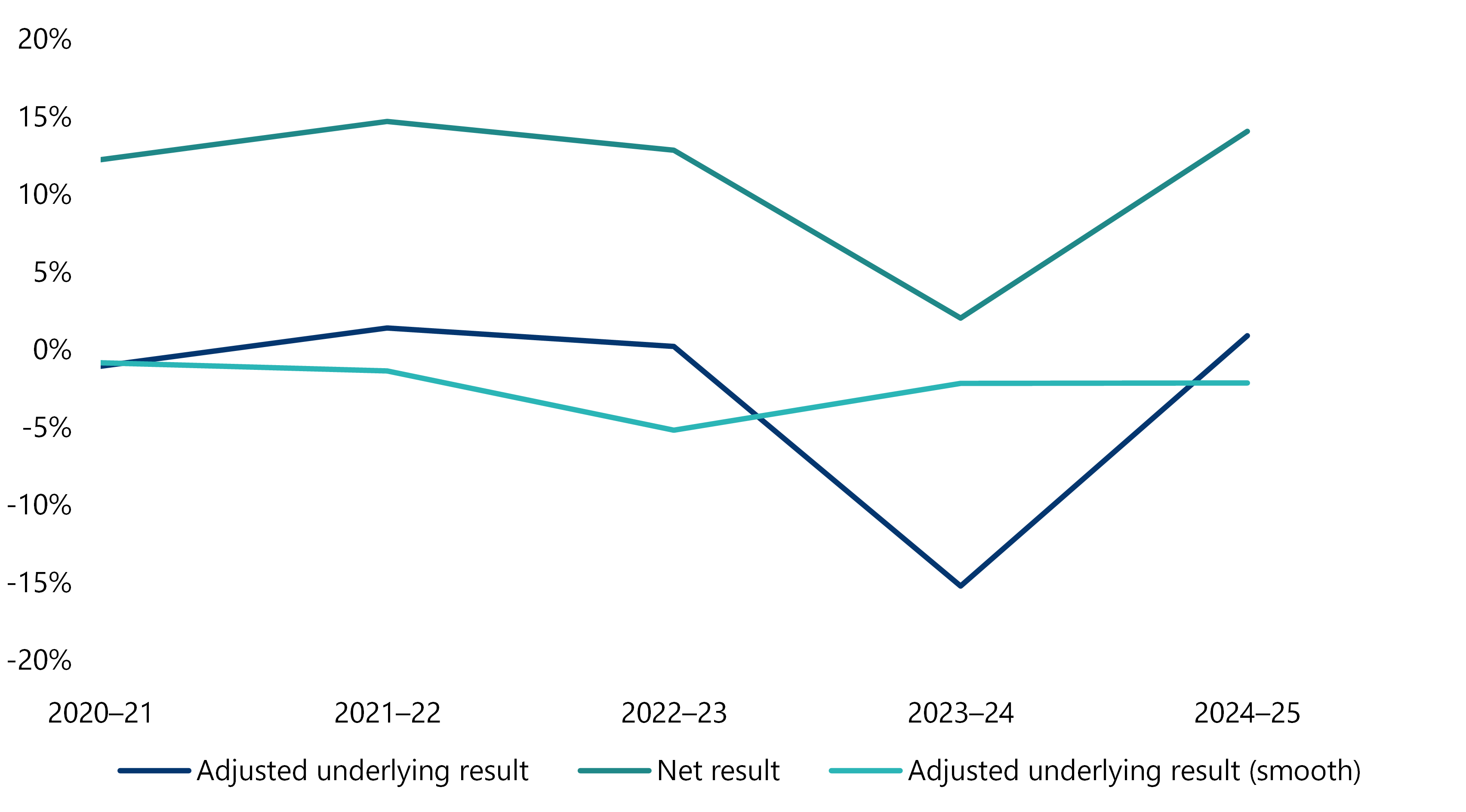
In 2024–25, the sector’s adjusted underlying result was 0.9 per cent, compared to negative 15.2 per cent in the prior year. Over the past 5 years, with the exception of 2023–24, the adjusted underlying result has fluctuated between negative 1.1 per cent to 1.4 per cent.
The timing of government financial assistance grants affects this trend, especially when the grants are received in advance. If we allocate the financial assistance grants to the financial year to which the funding was intended to support the councils, rather than record it as income in the financial year it was actually received, there is less variability in the adjusted underlying result, referred to as the adjusted underlying result (smooth) at Figure 9. However, the result is negative every year.
This indicator suggests that, over the past 5 years, councils have not generated sufficient operating surpluses to fund capital expenditure or service debt. As a result, many councils have had limited capacity to fund capital programs from surpluses, increasing longer‑term risks to financial sustainability.
Adjusted underlying results
The adjusted underlying result indicator measures a council’s ability to generate a surplus from its ordinary course of business (excluding capital receipts) to fund its capital spending.
Figure 9: Councils' adjusted underlying results, net results and smoothed adjusted underlying results from 2020–21 to 2024–25
Source: VAGO.
The number of councils with a positive or negative adjusted underlying result has remained relatively stable over the past 5 years, except for 2023–24.
Figure 10: Number of councils with a positive or negative adjusted underlying result from 2020–21 to 2024–25
| Adjusted underlying result | 2024–25 | 2023–24 | 2022–23 | 2021–22 | 2020–21 |
|---|---|---|---|---|---|
| Positive | 46 | 14 | 42 | 44 | 39 |
| Negative | 33 | 65 | 37 | 35 | 40 |
| Total number of councils | 79 | 79 | 79 | 79 | 79 |
Source: VAGO.
In 2024–25, 12 of 19 large councils and 12 of 19 small councils (representing 63 per cent of each cohort) had a negative adjusted underlying result (less than zero).
An analysis of the adjusted underlying result (smoothed) reveals a deteriorating position over time. For 2024–25, only 10 councils would report a positive result, comprising 9 metropolitan and one interface council.
Figure 11: Number of councils with a positive or negative adjusted underlying result (smoothed) from 2020–21 to 2024–25
| Adjusted underlying result (smoothed) | 2024–25 | 2023–24 | 2022–23 | 2021–22 | 2020–21 |
|---|---|---|---|---|---|
| Positive | 10 | 36 | 35 | 37 | 42 |
| Negative | 69 | 43 | 44 | 42 | 37 |
| Total number of councils | 79 | 79 | 79 | 79 | 79 |
Source: VAGO.
Revenue and income from user fees, government grants and rates increased
Revenue and income snapshot
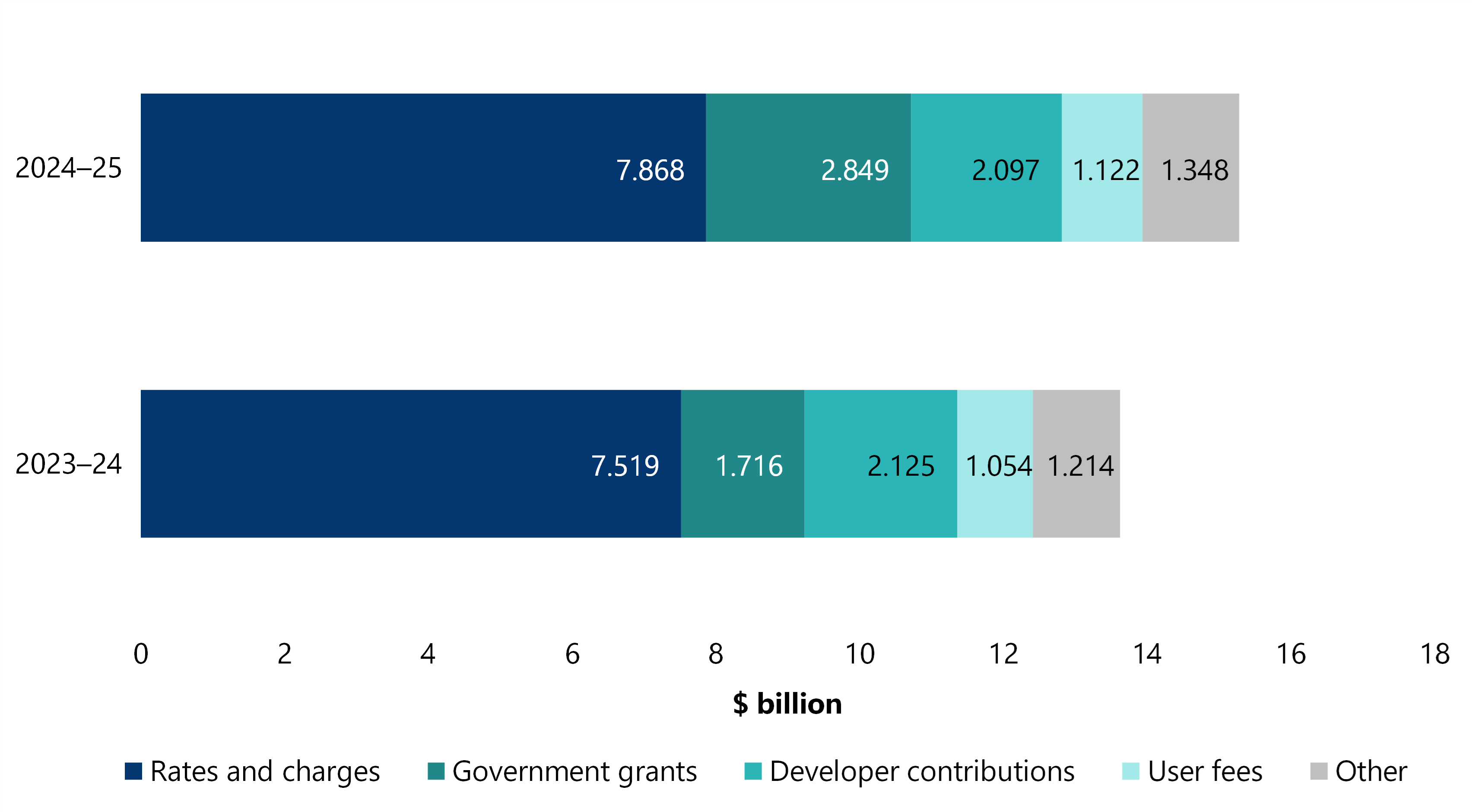
In 2024–25 all revenue and income categories, except for developer contributions, were higher than the prior year, growing by $1.656 billion or 12.2 per cent.
Rates and charges revenue continue to account for at least 50 per cent of the sector’s total revenue and income each year.
Figure 12 provides a breakdown of revenue and income by category.
Figure 12: Breakdown of revenue and income by category for 2023–24 and 2024–25
Source: VAGO.
Analysis of rates and charges revenue over the past 5 years shows that it accounts for more than 60 per cent of total revenue and income for metropolitan councils, but generally less than 50 per cent for all other council cohorts each year.
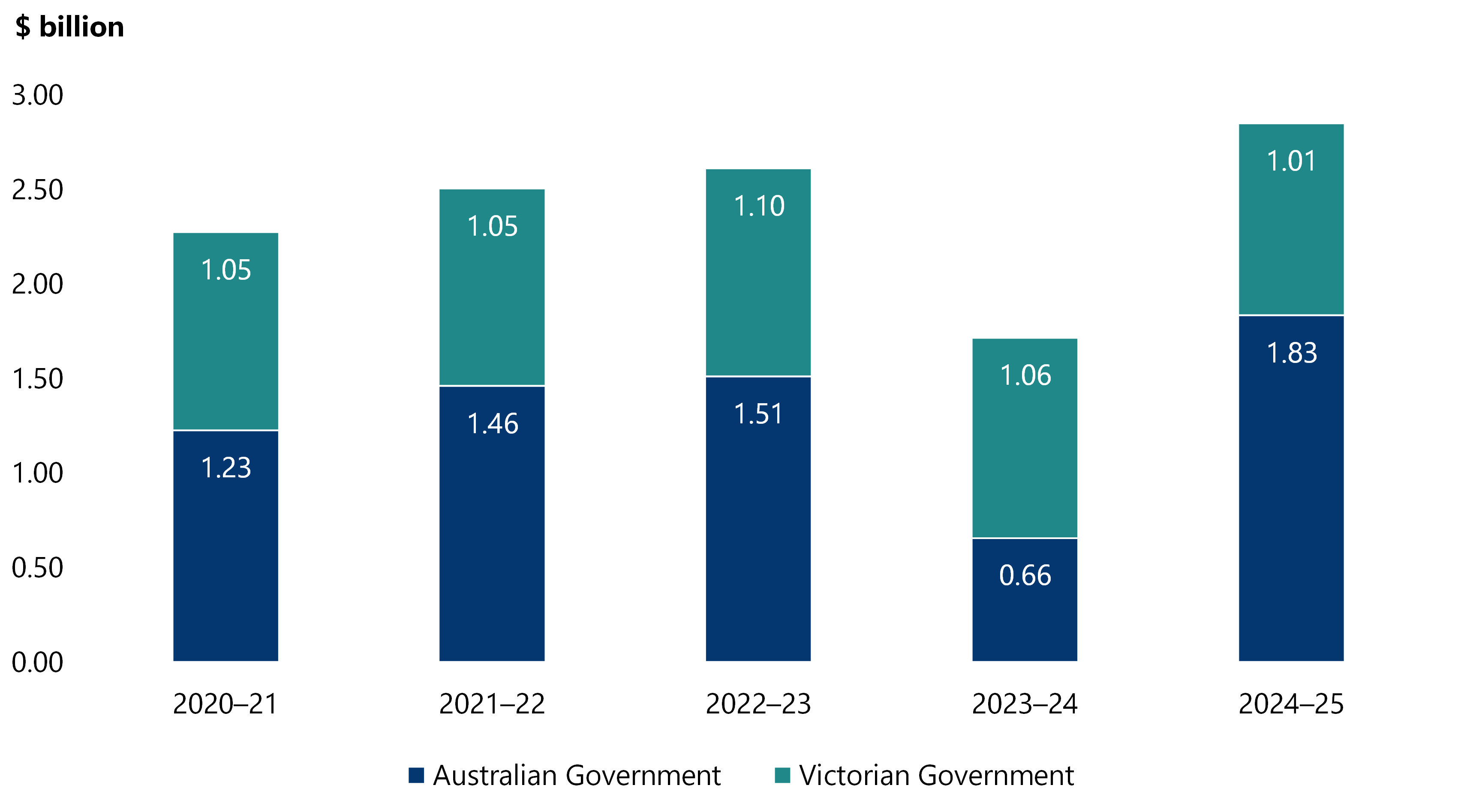
The jump in government funding in 2024–25 is predominantly due to timing of financial assistance grants received from the Australian Government.
User fee revenue has increased steadily over the past 4 years, reaching $1.122 billion in 2024–25, which is 56 per cent higher than 2020–21.
Revenue and income
Total revenue and income increased by $1.656 billion (12.2 per cent) in 2024–25, following a decrease of $0.221 billion (1.6 per cent) in the prior year.
| In 2024–25 … | increased by ... | due to … |
|---|---|---|
Rates and charges
| $0.349 billion (4.6 per cent)
|
|
Government grants
| $1.133 billion (66.0 per cent)
|
|
Advance financial assistance funding significantly increased government grant income
Government funding
Councils get annual funding from the Australian and Victorian governments. How much they receive and when varies each year, depending on the governments’ program initiatives or capital projects they support. Figure 13 shows funding trends over the past 5 years from the:
- Victorian Government, which has remained relatively stable
- Australian Government, where funding levels fluctuate due to the timing of financial assistance grant payments received by councils, rather than underlying changes to funding levels.
Figure 13: Source of government funding from 2020–21 to 2024–25
Source: VAGO.
Under Australian Accounting Standards, Australian Government financial assistance grants are treated as income when received. Figure 14 shows the variability in funding, including the percentage paid in advance, over the past 5 years.
Figure 14: Percentage of financial assistance grants paid in the year to which the funding relates and paid in advance by year
| 2024–25 (%) | 2023–24 (%) | 2022–23 (%) | 2021–22 (%) | 2020–21 (%) | |
|---|---|---|---|---|---|
| Percentage of funding paid in the year to which the funding relates | 100 | 0 | 25 | 50 | 50 |
| Percentage of funding paid in advance of the financial year to which the funding relates | 50 | 0 | 100 | 75 | 50 |
| Total | 150 | 0 | 125 | 125 | 100 |
Source: VAGO.
In June 2024, the Australian Government paid 85 per cent of the 2024–25 financial assistance grants to the Victorian Government for transfer to the 79 Victorian councils. However, the Victorian Government did not transfer the $0.669 billion to councils until 5 July 2024. Councils also received 50 per cent of their 2025–26 funding of $0.417 billion in June 2025, meaning half of the following year’s funding was also recognised in 2024–25.
Small councils’ funding
Smaller councils tend to rely more heavily on the financial assistance grants as they have a smaller ratepayer base to drive rate revenue compared to the metropolitan or interface councils. Changes to the timing and amount paid in advance requires these councils to have effective cash management processes in place throughout the reporting period.
Government grants represented more than 50 per cent of total revenue and income at 6 (31.6 per cent) small councils in 2024–25.
Expenses continue to grow, with the rate of increase higher than last year
Expense snapshot
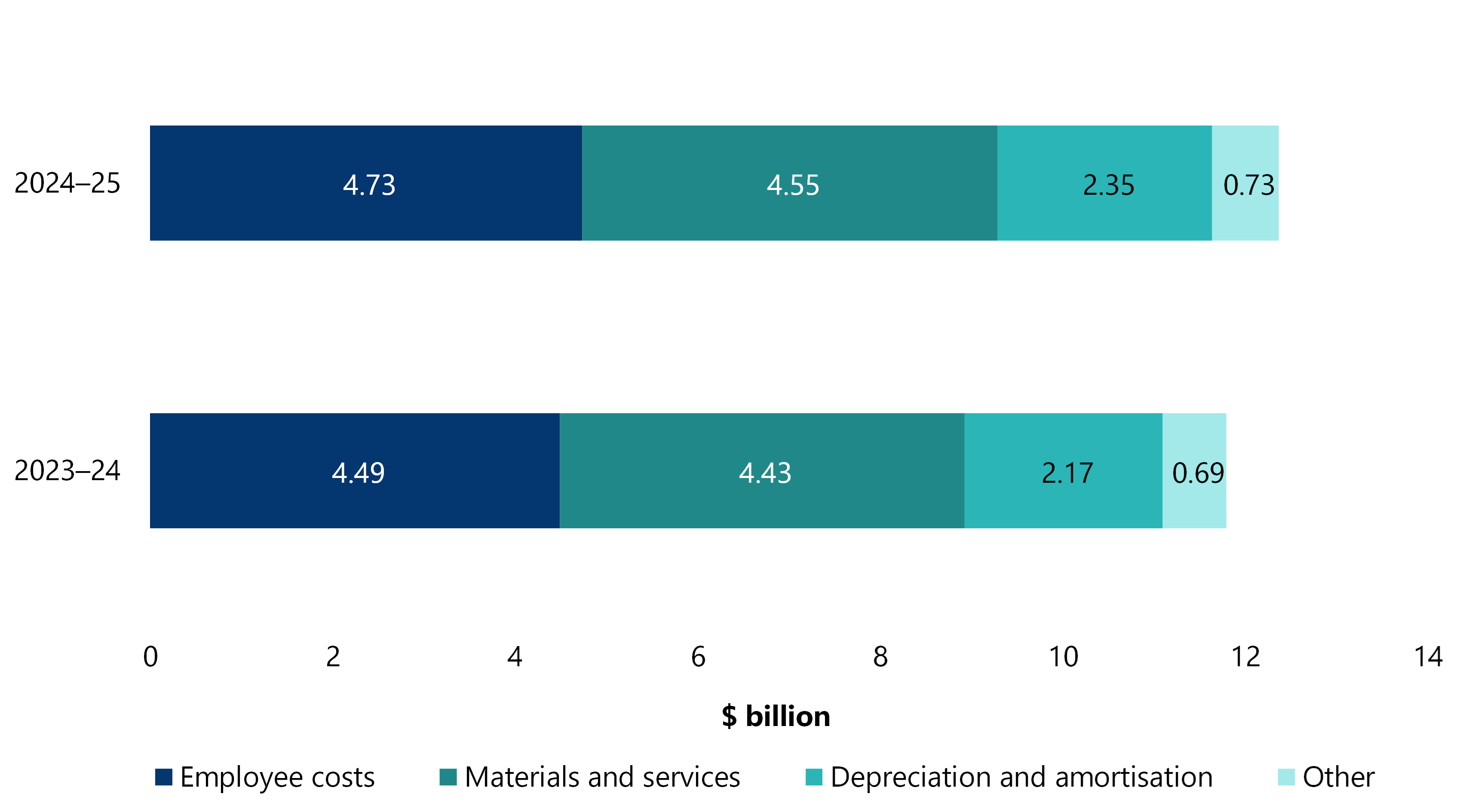
As Figure 15 shows, the 3 main council expenses are employee costs, materials and services, and depreciation and amortisation.
Figure 15: Breakdown of councils' expenses by category for 2023–24 and 2024–25
Source: VAGO.
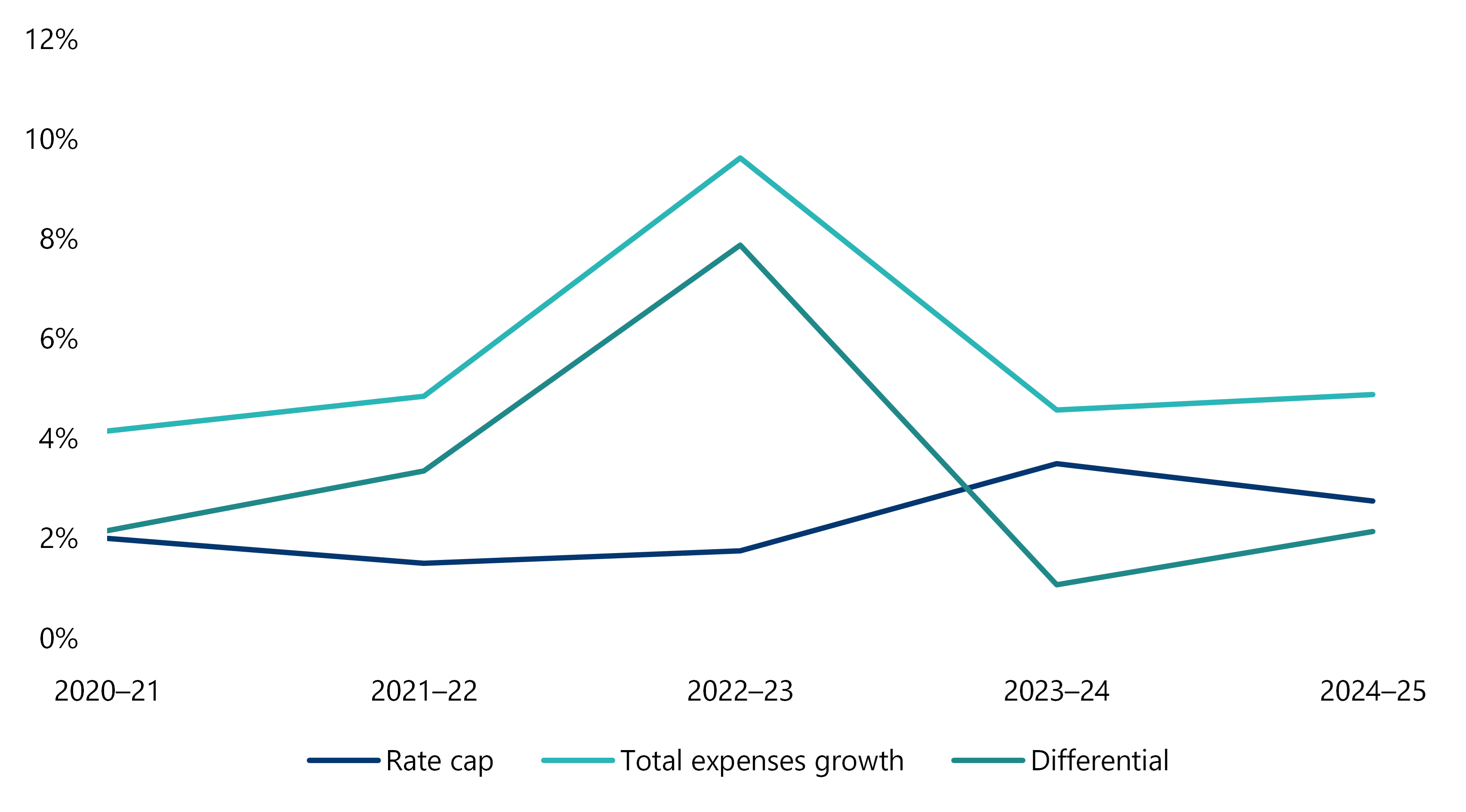
Total expenses grew by 4.9 per cent in 2024–25, which was higher than the prior year, when expenses increased by 4.6 per cent.
Over the past 5 years total expenses have increased at a rate above the annual rate cap increase. In 2024–25 the difference was 2.1 per cent. In 2022–23 the difference was at 7.9 per cent as councils experienced a high inflationary period post the height of COVID-19 pandemic.
Figure 16: Growth in total expenses compared to approved rate cap increase from 2020–21 to 2024–25
Source: VAGO.
While expense growth has been greater than the annual rate cap, councils rely on a mix of revenue and income sources, including financial assistance grants that are intended to support the provision of services to the community.
As rates and charges revenue represent less than 50 per cent of total revenue and income for most councils, they need to actively manage both expenditure and broader revenue strategies. In particular, councils should:
- regularly review their service offerings and fees levied to ensure they remain affordable and aligned with community priorities
- review and strengthen plans for own-source revenue generation
- assess whether the planned use of financial assistance grants aligns with priorities and actively manage cashflows and reserves to manage volatility in government funding
- consider the impact of developer cash contributions and contributed assets on future capital and asset maintenance expenditure
- ensure financial planning considers and demonstrates how ongoing service levels and asset management planning will be funded
- consider whether a higher rate cap may be required.
No councils applied for a higher rate cap for the period 2020–21 to 2024–25.
Two councils had their application for a higher 2025–26 rate cap approved. While the rate cap was set at 3 per cent for 2025–26:
- Hepburn Shire Council rates and charges will increase by 10.0 per cent
- Indigo Shire Council rates and charges will increase by 7.54 per cent.
Rate cap
Rate capping has been in place since the 2016–17 financial year. Rate capping limits the maximum amount a council can increase its average rates in a year without seeking approval for a higher cap.
Each year the Minister for Local Government sets the average rate cap for the following rating year by general order.
A council may apply to the Essential Services Commission for a higher cap. Councils have until 31 March to apply for a higher cap with respect to the next rating and financial year.
The total amount shown on an individual rate notice includes general rates, municipal charges, and other charges and levies. The rate cap only applies to general rates and municipal charges.
A council is able to increase other charges and levies at a percentage higher or lower than the rate cap percentage.
The sector increased its total assets while its liabilities remain steady
Net assets
Net assets refer to the total value of a council's assets after subtracting all its liabilities.
At 30 June 2025 the 79 councils' net assets totalled $157.989 billion, an increase of $12.736 billion (8.8 per cent) from the prior year.
| In 2024–25 the sector reported ... | which is a ... | from … |
|---|---|---|
| $163.546 billion in total assets | 8.5 per cent increase | $150.716 billion in 2023–24. |
| $5.557 billion in total liabilities | 1.7 per cent increase | $5.463 billion in 2023–24. |
The increase in net assets was largely driven by:
- higher cash reserves at 30 June 2025
- the acquisition and construction of property, infrastructure assets, plant and equipment during the year, as well as changes in the fair value of these assets.
Cash reserves increased while debt levels remain low
Cash assets and investments
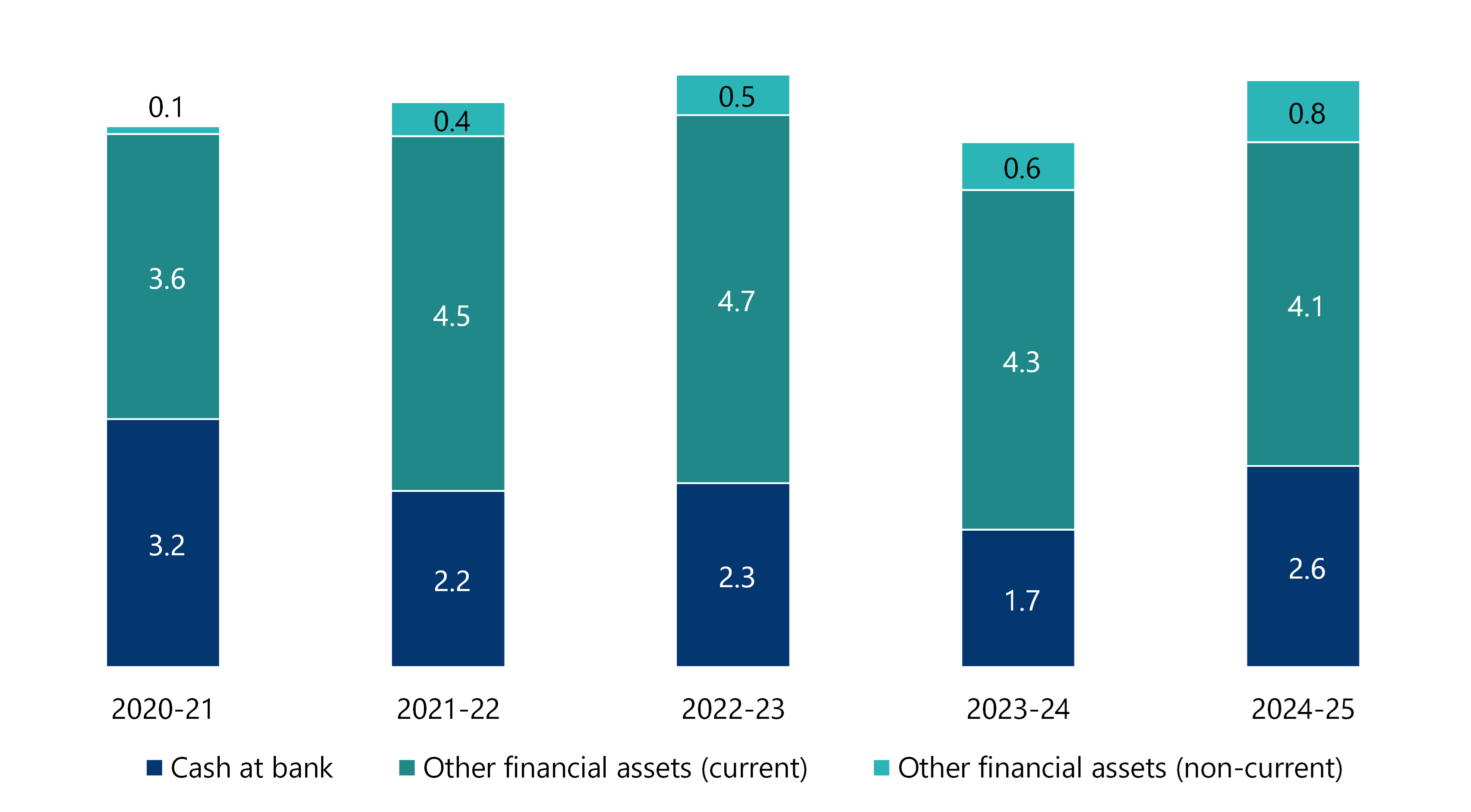
At 30 June 2025 the 79 councils' cash assets and other investment balances (for example, term deposits) totalled $7.483 billion, an increase of $0.790 billion (11.8 per cent) from the prior year.
The increase is due to:
- the receipt of $0.417 billion just prior to 30 June 2025, being 50 per cent of the 2025–26 financial assistance grants
- the generation of cash inflows from operations
- capital expenditure being less than what councils intended to spend.
Consistent with prior years the majority of the cash reserves are highly liquid, held in day-to-day operating bank accounts or invested for the short-term.
Figure 17 summarises councils’ cash assets and other financial assets balances at 30 June 2021 to 30 June 2025.
Figure 17: Breakdown of cash balances from 2020–21 to 2024–25 ($ billion)
Source: VAGO.
A large proportion of interface councils continue to receive developer‑contributed cash, which they hold to fund future infrastructure development. This contributes to the high cash balances held by these councils.
Borrowing levels
Total liabilities remain stable at $5.557 billion at 30 June 2025, compared to $5.463 billion at 30 June 2024.
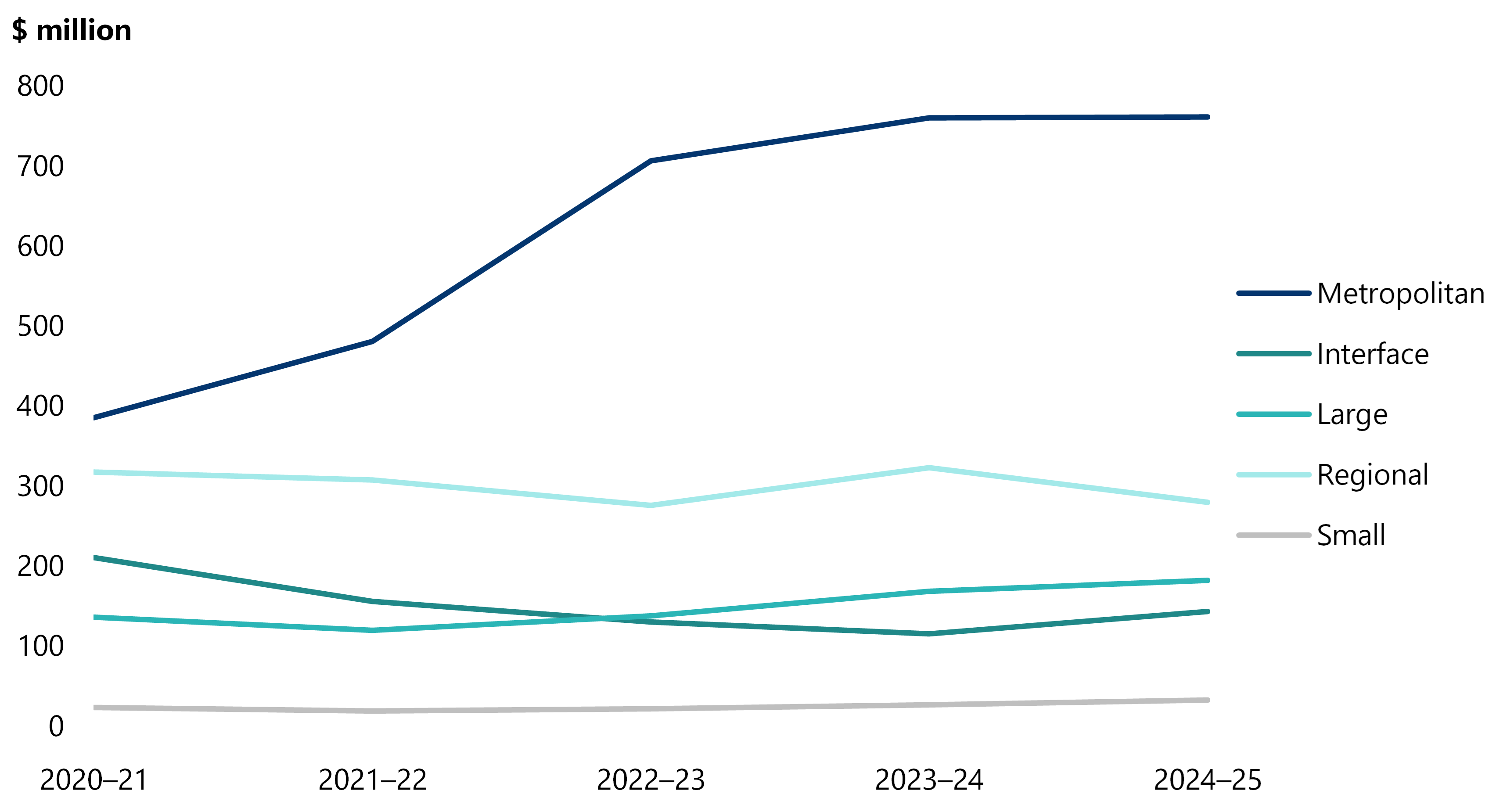
The 79 councils had total combined borrowings of $1.398 billion, an increase of $0.006 billion (0.4 per cent) compared to the prior year. The sector’s total borrowings represented 0.9 per cent of its total assets, consistent with the prior year.
Over the past 4 years, the metropolitan councils have increased their total borrowings by $0.376 billion (97.7 per cent) from $0.385 billion at 30 June 2021 to $0.761 billion at 30 June 2025. Melbourne City Council borrowed $0.110 billion in 2022–23 and accounts for 29.3 per cent of the overall increase over the past 5 years.
Figure 18: Total borrowings by cohort from 2020–21 to 2024–25
Source: VAGO.
The sector continues to maintain low levels of debt. The debt ratio remains at 0.01, reflecting a stable financial position.
Debt ratio
This is a longer-term measure that compares all current and non-current interest-bearing liabilities to total assets. It complements the liquidity ratio, which is a short‑term measure.
A low ratio indicates less reliance on debt to finance the assets of an organisation.
Liquidity
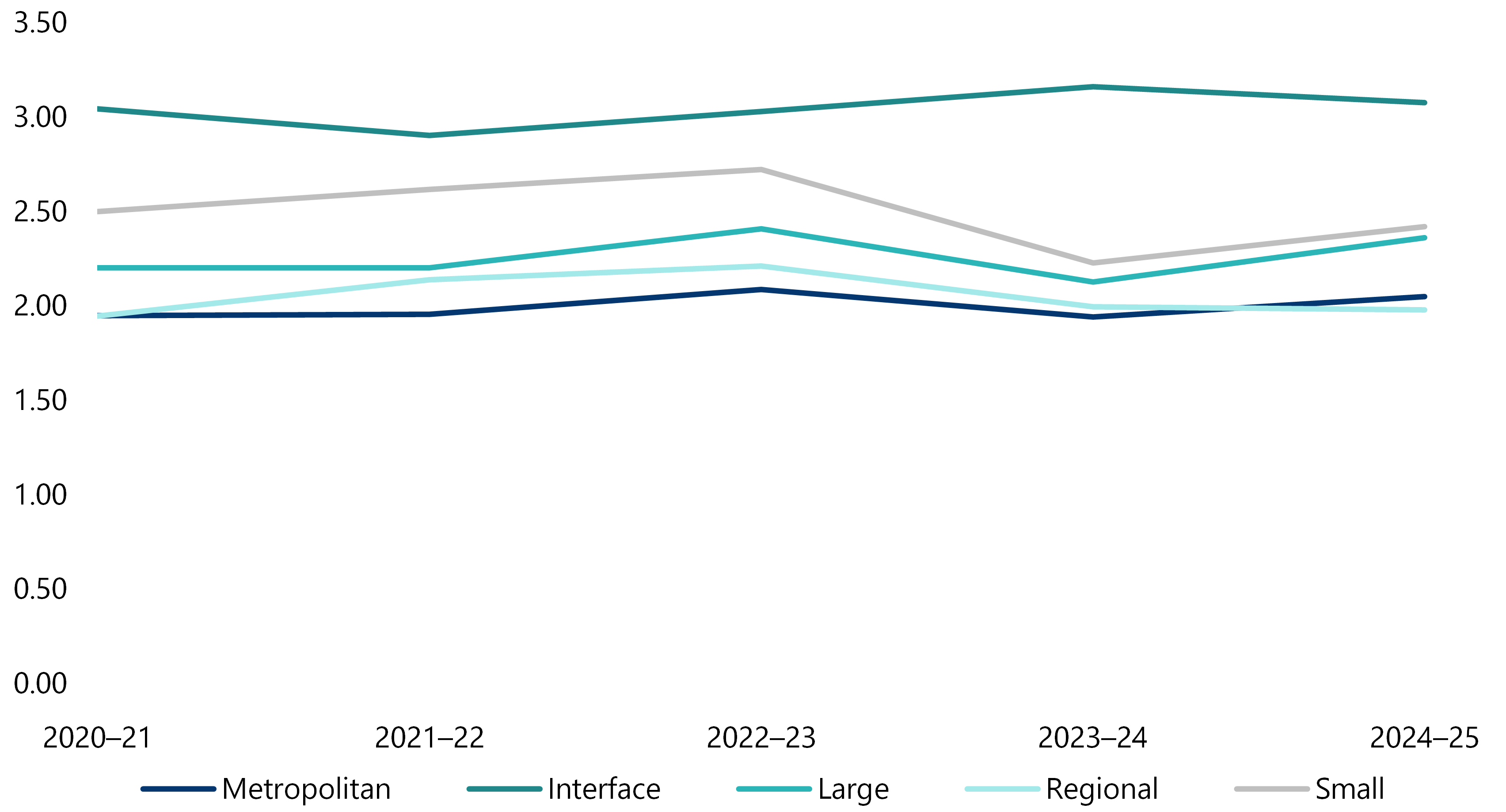
At 30 June 2025, the sector’s liquidity ratio remained positive at 2.36:1, slightly above 2.30:1 in the prior year. This means the sector’s cash and other liquid assets are more than double its short term liabilities.
Figure 19 details the liquidity ratio by cohort from 2020–21 to 2024–25.
Figure 19: Liquidity ratio by cohort from 2020–21 to 2024–25
Source: VAGO.
An analysis of the liquidity ratio at a council level reveals 4 councils had a ratio less than 1:1 at 30 June 2025 compared to 6 councils in the prior year.
If the 2025-26 financial assistance grants were excluded the sector's liquidity would be 2.24:1 and 8 councils rather than 4 would have a ratio less than 1:1.
Given the variability in financial assistance grants year-on-year, councils, especially the small shire council cohort who are more dependent on government funding, need to actively manage their cash reserves.
Liquidity ratio
This measures an entity’s ability to pay existing liabilities in the next 12 months.
A ratio of one or more means that an entity has more cash and liquid assets than short-term liabilities.
Cashflow analysis
All councils generated positive net cash inflows from operations in 2024–25. This remained the case even when excluding the early receipt of 2025–26 financial assistance grants.
In the prior year, 6 small shire councils reported net cash outflows from operating activities, but these councils would have reported net cash inflows from operating activities had they received financial assistance grants in advance, as occurred in earlier years.
If we remove cashflow items related to capital income inflows, such as capital grants and developer contributed cash (as these will be spent on capital items in the future), all councils were cashflow positive in 2024–25. In contrast, 23 councils reported net cash outflows in the prior year due to the timing of financial assistance grants receipts.
Internal financing and indebtedness
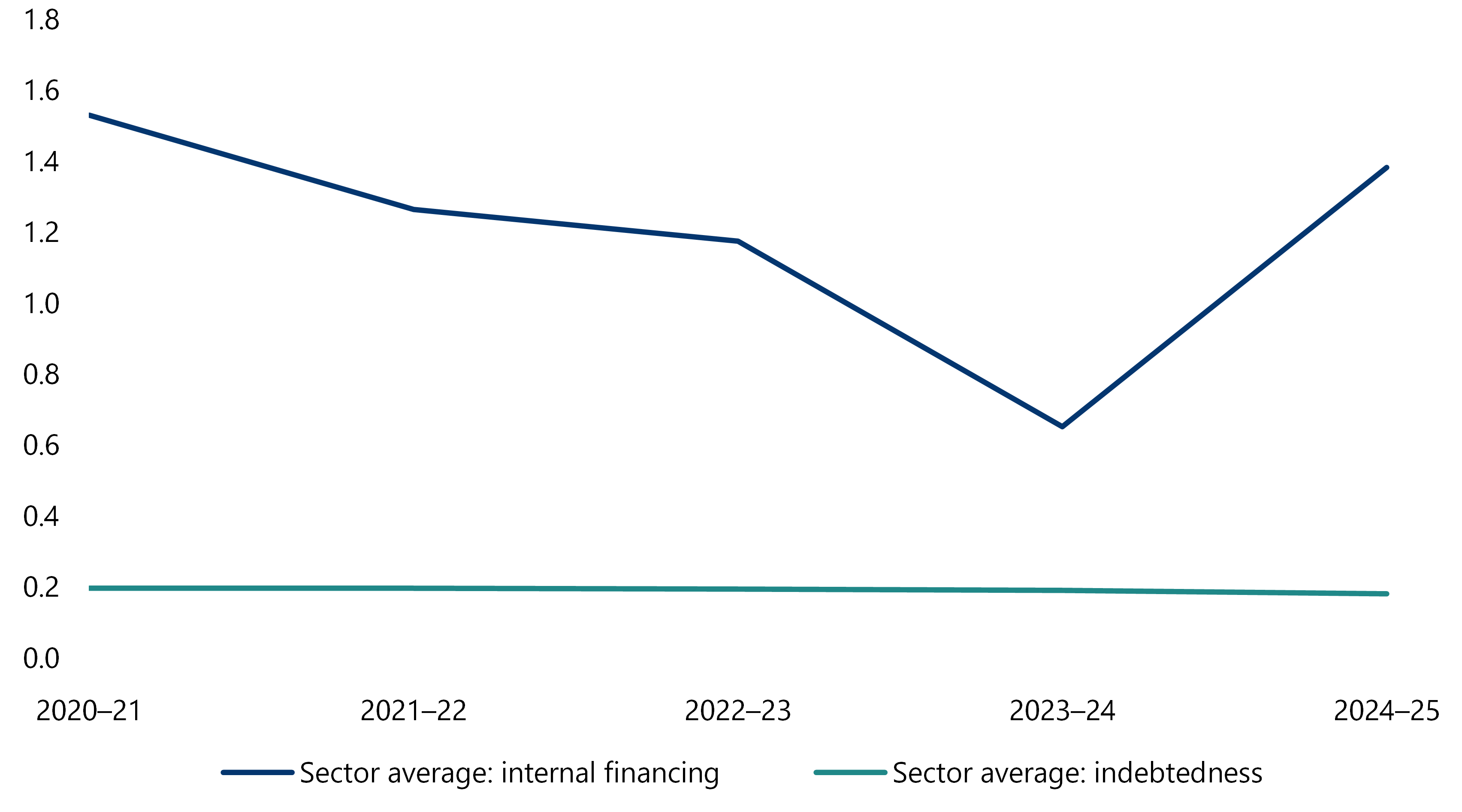
The internal financing indicator measures a council’s ability to finance capital works from its operating cashflows. The higher the percentage, the greater the ability for the council to finance capital works from its own funds.
The indebtedness indicator assesses whether councils can service their debts and meet their repayment obligations using their own-source revenue. The lower the ratio, the less revenue the council is required to use to repay its total debt.
Own-source revenue
Own-source revenue takes total revenue and income and excludes income streams over which councils have limited control. These are government grants and developer contributions.
Figure 20: The sector's internal financing and indebtedness indicator results from 2020–21 to 2024–25
Source: VAGO.
Figure 20 indicates councils should be able to service and repay their debts from own source revenue and income. The improved internal financing ratio is due to the timing of the financial assistance grants, the increase does not necessarily mean councils have a greater ability to fund capital expenditure from operating cashflows.
Asset valuations are driving an increase in the value of total assets
Property and infrastructure assets fair value
Property, infrastructure assets, plant and equipment increased by $12.019 billion (from $141.025 billion to $153.044 billion) or 8.5 per cent in 2024–25. This followed an increase of $7.827 billion (or 5.9 per cent) in the prior year.
While there has been capital investment by the councils each year, asset valuations are resulting in significant fair value adjustments and driving significant growth in the sector's total assets.
Figure 21: Key factors impacting growth in property, infrastructure assets, plant and equipment in 2023–24 and 2024–25
| Key factors | 2024–25 $ billion | 2023–24 $ billion |
|---|---|---|
| PIPE increase mainly driven by … | ||
| Capital expenditure | 3.370 | 3.479 |
| Fair value adjustments | 9.392 | 4.939 |
| Developer contributed assets | 1.479 | 1.492 |
| And mainly offset by … | ||
| Annual depreciation expense | 2.250 | 2.058 |
Note: PIPE refers property, infrastructure assets, plant and equipment.
Source: VAGO.
From the 2024–25 financial year, Australian Accounting Standards Board (AASB) 13 Fair Value Measurement introduced amendments that provide authoritative guidance for not‑for‑profit public sector entities. The amendments focus on the application of fair value using the current replacement cost valuation technique, which councils use to value material asset classes such as infrastructure.
The updated guidance clarified how entities should apply the current replacement cost approach and permits additional costs to be incorporated into fair value estimates where those costs affect the amount required to replace an asset with a modern equivalent. This approach aligns with the objective of fair value measurement under AASB 13 for assets held for service delivery rather than for generating profit.
As a result, costs that may not have been considered in past valuations were now included, such as:
- disruption costs
- site preparation costs
- costs to restore other entities’ assets that will be affected by replacing an existing asset.
The resulting fair value adjustment of $9.392 billion for the sector reflects higher current replacement costs and market price adjustments driven by construction cost inflation.
The increase does not represent growth in the form of new assets. However, the higher values have implications for councils' budgeting and asset management decisions, particularly when determining the planned level of asset expansion, renewal, upgrade or replacement works.
Councils continue to underspend their capital budgets
Capital expenditure
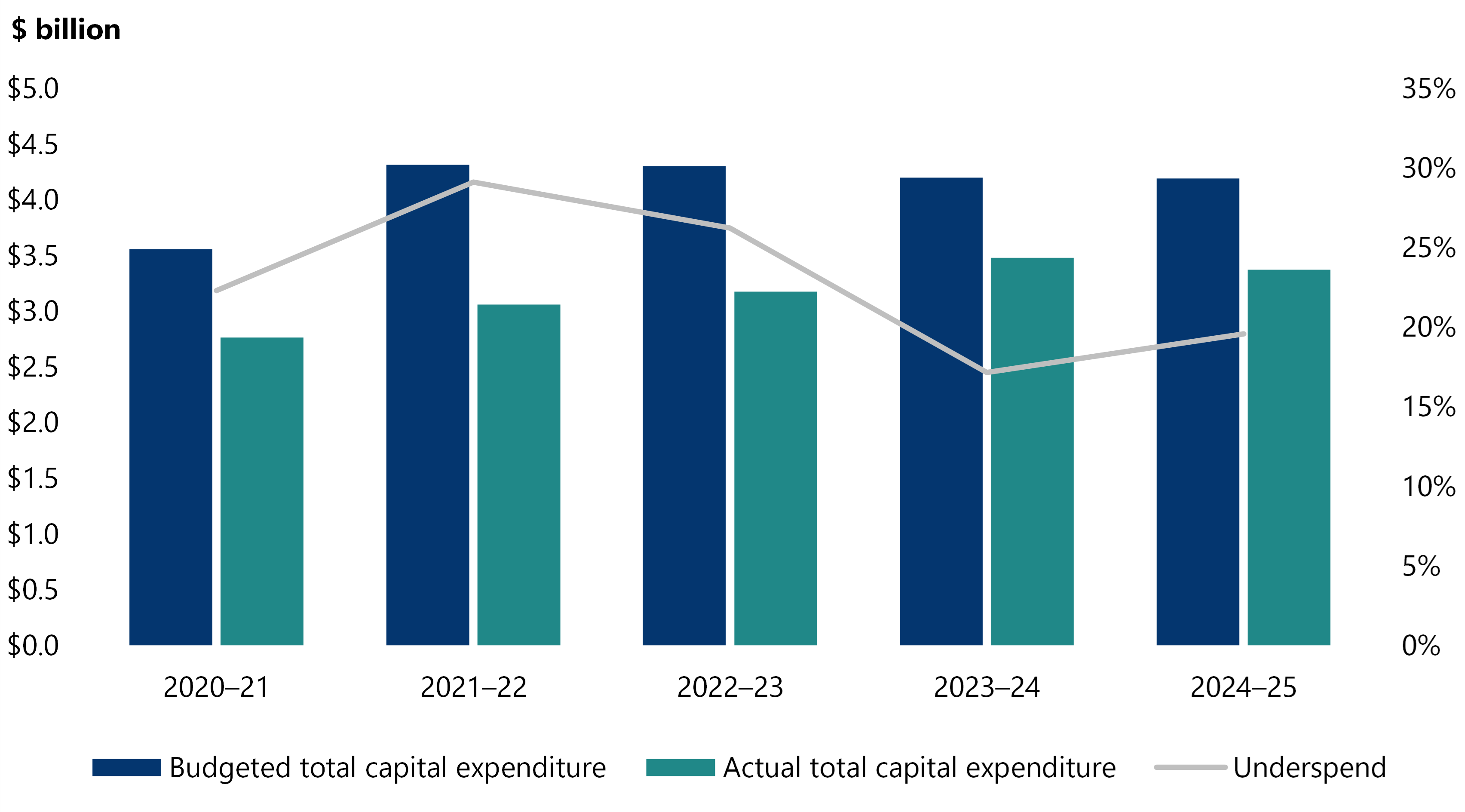
Councils continue to set capital expenditure targets that are not being achieved year-on-year.
In 2024–25, the sector’s capital expenditure totalled $3.370 billion, which was 19.6 per cent ($0.820 billion) below budgets set by councils. In the prior year the underspend was 17.1 per cent ($0.720 billion).
Figure 22 reveals a trend of underspend over the last 5 years.
Figure 22: A comparison of councils' budgeted and actual capital expenditure and underspend percentage from 2020–21 to 2024–25
Source: VAGO.
As highlighted in our past reports, councils can improve their capital budgeting processes and how they manage and deliver projects.
Prior to finalising capital budgets each year, management and councillors should, where applicable, consider:
- why the underspending is occurring
- the council's past delivery performance when assessing whether it can deliver proposed capital projects within the indicated timeframes
- the nature and number of carry-forward projects and their impact on delivery of the capital works program
- current market conditions and their impact on estimated project costs, particularly the availability of contractors and supply chain developments
- project commencement and completion dates, taking into account required procurement activities including environmental conditions and planning approvals
- how the project is being funded (that is, rates and charges, government capital grant, new borrowings) and whether funding depends on a successful grants application
- whether the council should phase project funding across more than one financial year.
The bushfire events from December 2025 to February 2026 damaged a number of councils’ property and infrastructure assets, particularly road networks. As a result, several councils are unlikely to deliver their approved 2025–26 capital works program, as affected councils focus on clean-up and recovery activities.
Small councils’ capital projects
Small shire councils rely on government funding for capital projects given their small ratepayer base.
In 2024–25, capital grants equated to over 50 per cent of capital expenditure at 11 small councils. Without ongoing capital grants from either the Australian or Victorian governments, small councils may be unable to construct new assets, upgrade, replace or renew their assets.
Capital replacement and renewal gap ratios
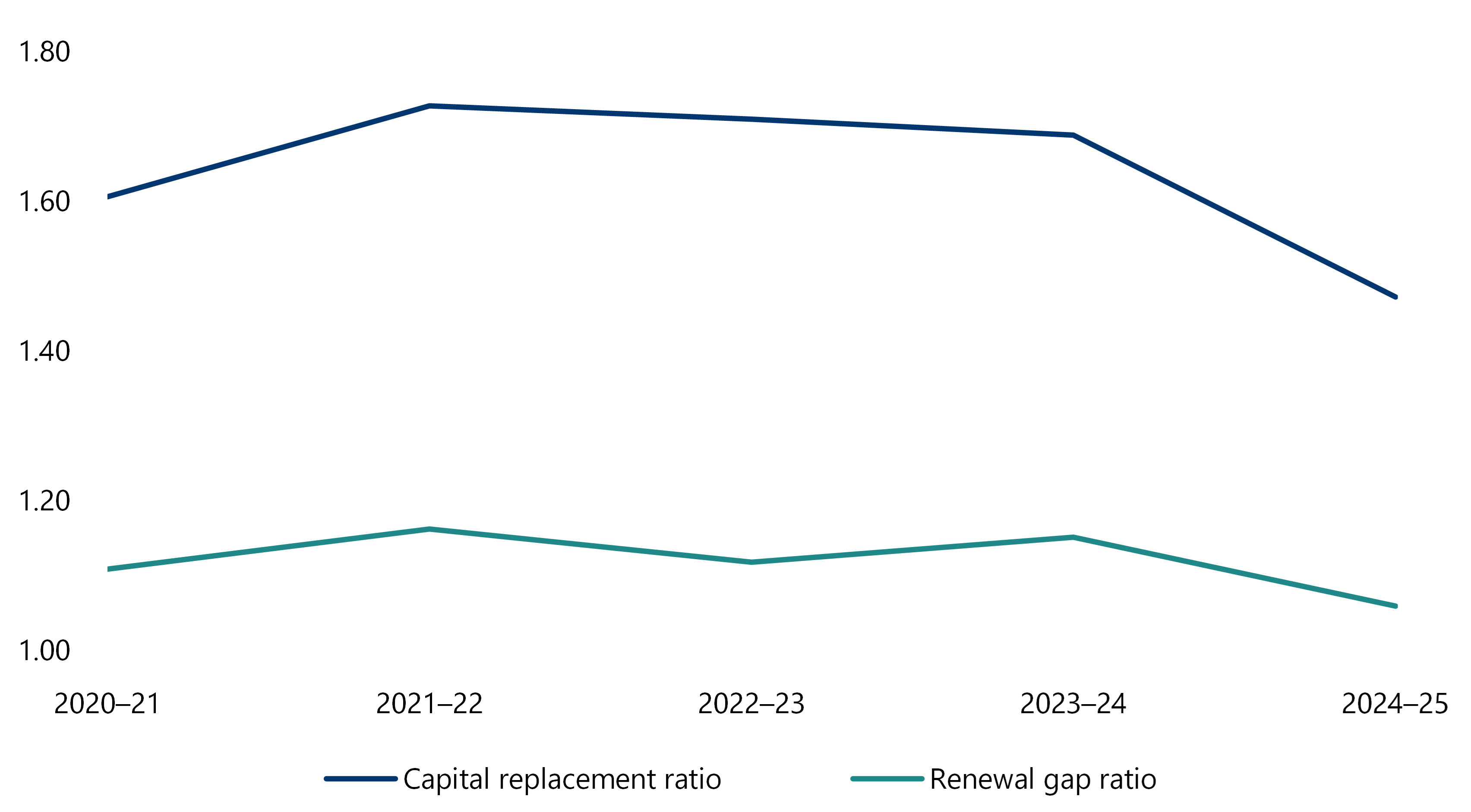
Capital replacement and renewal gap ratios are longer-term measures that assess the sector’s spending on infrastructure assets compared to depreciation. A result higher than one indicates that spending is faster than depreciation rates.
Capital renewal gap ratio
This ratio focuses on how well the council is renewing its assets to keep them in good condition. It compares how much the council actually spends on renewing or repairing assets versus how much it should be spending based on the condition of those assets.
If the ratio is high, it means the council is doing a good job of renewing assets. A lower ratio means the council is falling behind in keeping up with needed repairs and renewals, which can lead to increased maintenance costs and asset failures in the future.
Capital replacement ratio
This ratio indicates if a council is investing enough in asset replacement. A ratio above one means spending exceeds asset wear, a positive sign. Below one suggests insufficient investment, risking aging infrastructure.
The sector’s average capital replacement ratio and renewal gap ratio over the last 5 years remained above one (see Figure 23). But this indicator does not consider councils’ planned capital expenditure.
The underspend indicates spending on asset expansion, renewal, upgrade or replacement may not be keeping pace with community needs.
At 30 June 2025 the sector’s:
- average capital replacement ratio was 1.47 (2023–24: 1.69)
- average capital renewal gap ratio was 1.06 (2023–24: 1.15).
Figure 23: The sector's average capital replacement and renewal gap ratios from 2020–21 to 2024–25
Source: VAGO.
Recommendations
Councils
That councils undertake a review of their capital expenditure budgeting process to understand why the underspend is occurring, whether key assumptions require enhancement and adjust future asset management plans accordingly.
3. Internal control and financial reporting issues
Snapshot
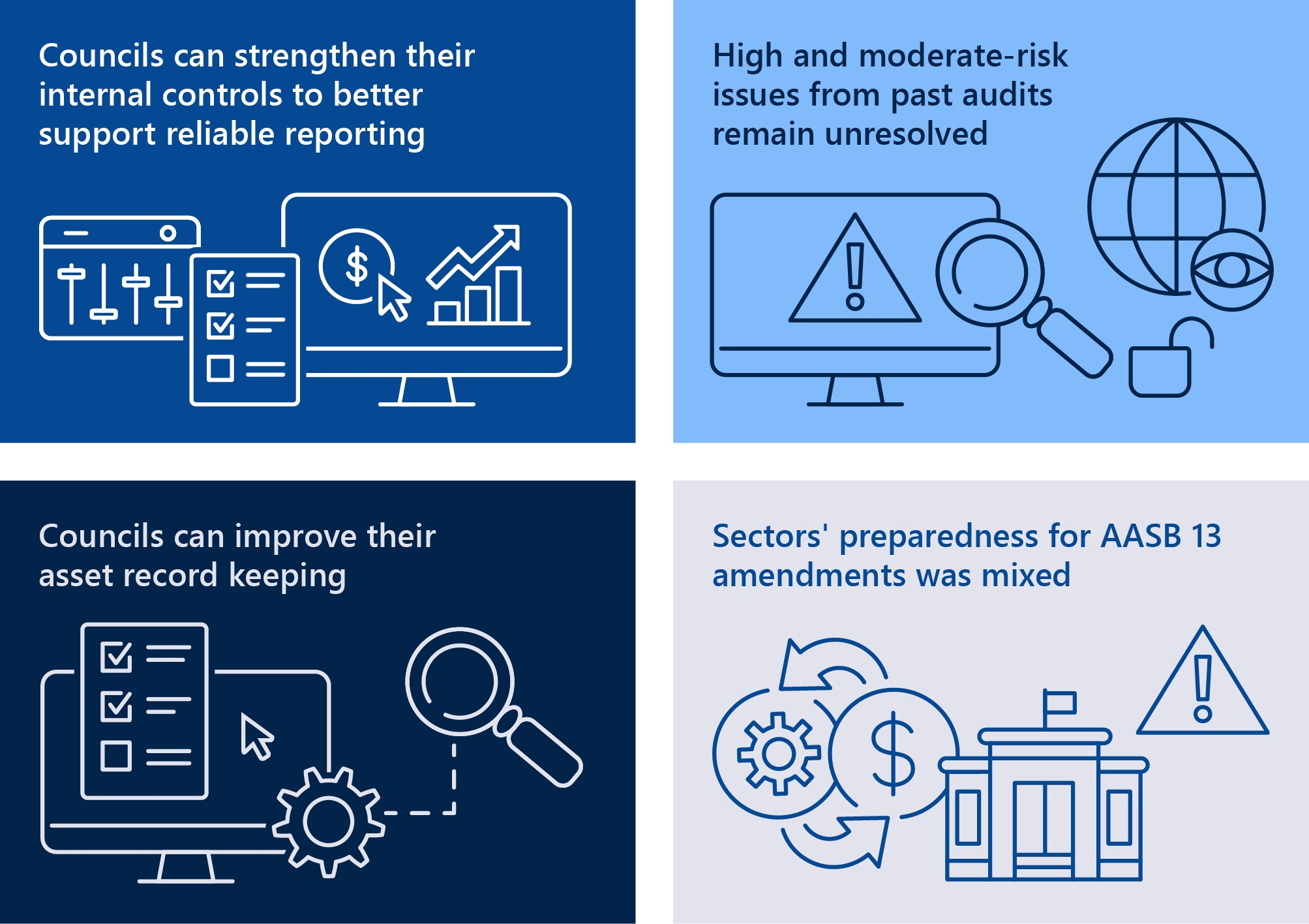
Councils can strengthen their internal controls to better support the preparation of reliable reporting. Each year, we continue to identify weaknesses in financial reporting controls, IT controls and asset management and valuation. A large number of high and moderate‑risk issues identified in past audits also remain unresolved.
Senior management and audit and risk committees need to strengthen oversight so councils implement agreed recommendations on time. Unresolved issues expose councils to ongoing financial and operational risks.
Preparedness for the amendments to AASB 13 Fair Value Measurement was mixed across the sector, with 36 councils not fully implementing our prior-year recommendations.
Councils can strengthen their internal controls to better support reliable reporting
Internal control snapshot
Councils must have an effective internal control system to keep proper accounts and records.
We assessed if councils' internal controls, which include people, systems and processes allow them to prepare reliable financial reports and performance statements.
Overall, councils can strengthen their internal controls to better support the preparation of reliable reports. Persistent year-on-year issues in financial reporting, IT controls, asset management and the oversight of asset valuations highlight specific areas for improvement.
Communicating issues
Where we find internal control and financial reporting issues, we bring these to the attention of management and those charged with governance in line with the requirements of the Australian Auditing Standards. This includes:
- raising new issues
- providing updates on unresolved issues we raised in a prior period.
We do this as part of our audit approach, but not to form an opinion on the operating effectiveness of the internal controls.
Councils can strengthen their internal controls and financial reporting processes by promptly addressing issues we raise, with a focus on prioritising higher-risk matters.
When we bring matters to the attention of management and those charged with governance we assign a risk rating to each issue and recommend a timeframe within which councils should address these weaknesses.
High and medium risk issues are required to be actioned and resolved in 1 and 3–6 months respectively (see Appendix F for more details).
Fewer open new issues, with many prior-year issues unresolved
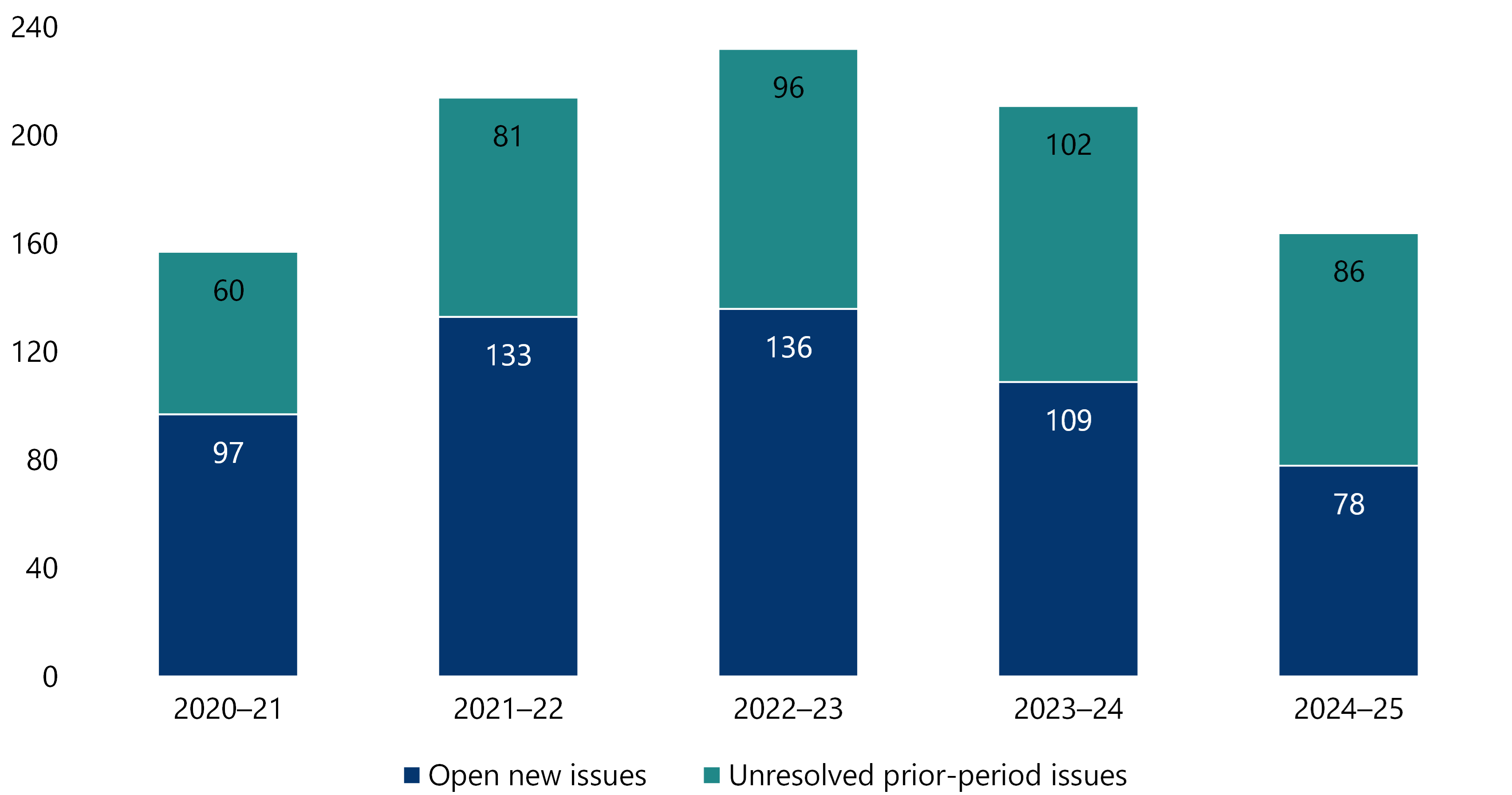
There has been an overall reduction in open issues, rated high or medium risk, with 164 in 2024–25 compared to 211 in the previous year. This is the second straight year where there has been a reduction in open issues.
Figure 24 shows:
- 78 new internal control and financial reporting issues remain unresolved in 2024–25 down from 109 in the previous year
- 86 unresolved issues from prior year audits in 2024–25 down from 102 in the previous year.
While the reduction in open issues is positive, a large number of high and moderate‑risk issues identified in past audits remain unresolved this year. Senior management and audit and risk committees need to provide stronger oversight to ensure timely implementation of accepted recommendations. Until councils address these issues, they remain exposed to financial and operational risks.
Where an issue is no longer relevant or cannot be implemented due to practical barriers, we encourage councils to identify alternative actions to manage the risk and engage with audit and risk committees and their audit teams accordingly.
Figure 24: Number of open new issues and unresolved prior period issues from 2020–21 to 2024–25
Note: High and moderate issues have been reported. We have excluded low-risk issues because we consider these minor issues.
Source: VAGO.
Common issues identified across reporting periods
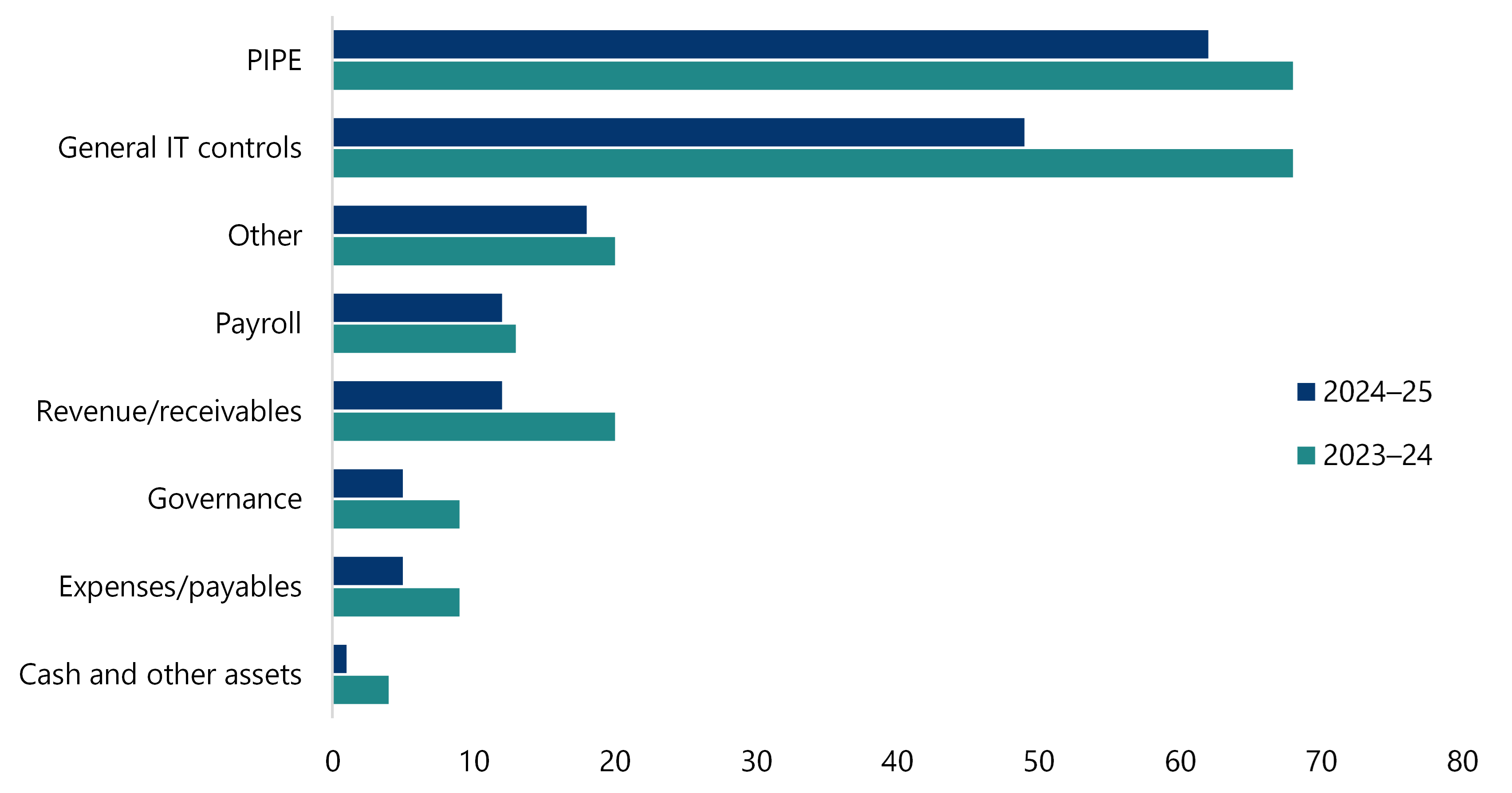
Each year, we continue to identify weaknesses in IT controls, as well as issues in the controls and processes that support the accounting for, and record-keeping of property, infrastructure assets, plant and equipment. Figure 25 provides a breakdown of open issues by category.
Figure 25: Number of open high and medium-risk issues by category for 2023–24 and 2024–25
Note: High and moderate-risk issues have been reported. We have excluded low-risk issues because we consider these minor issues. PIPE refers to property, infrastructure assets, plant and equipment.
Source: VAGO.
These areas require a greater level of focus and oversight by councils in order to:
- reduce the number of open issues
- support timely and reliable financial reporting.
We discuss these areas in further detail below.
Councils have made progress in resolving IT issues; however, recurring sector wide weaknesses remain
Importance of IT controls
IT systems support critical business processes and store sensitive data.
Effective IT controls reduce the risk of unauthorised access and changes to systems, fraud, error, data manipulation and information theft. They also help protect councils’ data integrity and support reliable financial reports preparation.
Fewer open IT issues
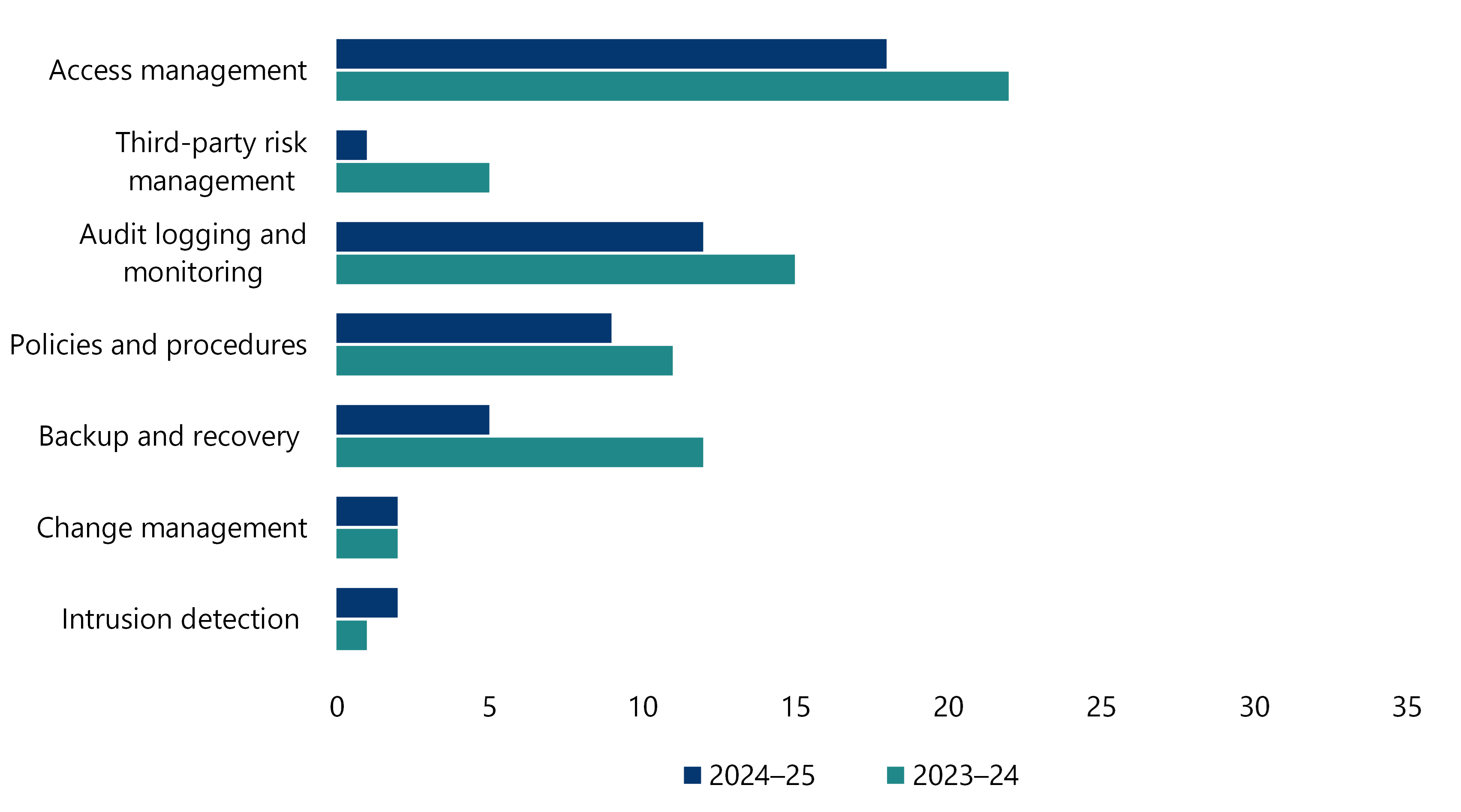
At the completion of the 2024–25 audits there were 49 open IT control issues compared to 68 in the prior year.
IT-related issues can take time to resolve, especially if a council needs to work with a system’s supplier to address them. But it is important that they resolve these issues as soon as possible, to ensure the protection and reliability of the data in these systems.
Common IT control issues
Figure 26 details common IT control issues identified at councils.
Figure 26: Number of open IT control issues by category for 2023–24 and 2024–25
Source: VAGO.
| IT control deficiencies include … | meaning ... | which may result in … |
|---|---|---|
| access management | inadequate user access reviews, failure to implement role-based access control, inconsistent or delayed termination of system access and granting of access without proper request or approval were identified | poor management of user accounts, which can give individuals more access than needed, increasing the risk of accidental or intentional misuse of systems and data. |
| audit logging and monitoring | system-generated audit logs were not always enabled to track critical and sensitive activities, including but not limited to changes to system user access, configurations, reports and master data. Where audit logging is enabled, we observed instances where there is no active monitoring of these logs | unauthorised or suspicious activities going unnoticed or undetected that may impact the integrity of financial reports. |
| policies and procedures | there are weaknesses or gaps with policies and procedures put in place to effectively manage day-to-day operations | key internal controls not operating as intended or effectively in preventing or detecting errors or fraud in a timely manner, and policies and procedures being absent or not updated regularly for operational guidance. |
| backup and recovery | processes for backing up critical data and recovering it in the event of an incident, such as a system failure, data corruption, or a disaster (for example, fire, flood, cyberattack) are not documented, tested or the backup is irregular or incomplete | loss of critical data, prolonged system downtime, operational disruptions and reputational damage. |
Asset record keeping and valuation require stronger controls and oversight
Asset record keeping
As property, infrastructure assets, plant, and equipment make up at least 85 per cent of total assets at every council, it is vital to maintain accurate records supported by a robust asset management system with strong oversight.
We continue to identify the following issues:
- failure to capitalise new assets in time, causing delays in applying depreciation and resulting in lower depreciation expense
- delays in recognising developer-contributed assets, leading to:
- lower income
- lower depreciation expenses
- underreported assets.
- failure to identify assets the council controls but has not yet accounted for
- inconsistent application of internal controls and procedures, increasing the risk of errors in asset data
- irregular updating of the fixed-asset registers and delayed account reconciliations, causing inaccuracies in financial information.
These issues can also affect the asset valuation process. Inaccurate data may lead management to incorrectly include or exclude assets from valuations, affecting their financial report accuracy.
Asset valuations
Councils may measure their property, infrastructure assets, plant, and equipment at cost or fair value in accordance with AASB 116 Property, Plant and Equipment. Councils have elected to record these assets at fair value, as defined by AASB 13 Fair Value Measurement, which outlines acceptable valuation techniques.
Determining fair value is complex and requires significant judgement by management. Councils must make a range of assumptions about their assets and often rely on valuation experts or industry indices to support their assessments. Strong governance, documentation and oversight are therefore critical to ensure valuations are accurate, consistent and compliant with accounting standards.
We continue to identify common asset valuation issues across the sector, including:
- inadequate documentation of key assumptions underpinning valuations and fair value assessments
- failure to conduct regular fair value assessments for all asset classes
- anomalies in valuation working papers and a lack of quality assurance reviews
- inappropriate inclusion or exclusion of assets from valuations
- a concentration of knowledge in a limited number of individuals
- failure to obtain or accurately apply condition information
- incorrect accounting for valuation movements, contrary to the requirements of AASB 116
- varied understanding and application of the AASB 13 amendments, contributing to valuation errors.
As reported in previous reports, councils need to improve their asset valuation practices.
Follow-up on prior-year recommendations
Amendments to AASB 13 became effective from 1 July 2024 and applied for the first time to the 2024–25 financial year.
The amendments primarily affect fair value measurements using the current replacement cost valuation technique. They allow councils to refine how they value property, infrastructure assets, plant, and equipment improving asset accounting, budgeting and asset management.
In our Results of 2023–24 Audits: Local Government report, we recommended that councils ensure they understand and appropriately implement the AASB 13 amendments by updating valuation policies, aligning valuation methodologies with the revised standard, engaging with valuers and auditors where needed, and strengthening governance, documentation and disclosures. Appendix H outlines the recommendation in more detail.
For 2024–25, 36 councils have not fully addressed our recommendation. We observed:
- asset policies were not updated to reflect AASB 13 amendments
- inadequate evidence to demonstrate how the amendments were adopted or to support change in assumptions
- accounting position papers were not developed or presented to audit and risk committees
- valuation assumptions were often not supported by appropriate data
- finance teams were not sufficiently familiar with the valuation methodologies and assumptions applied.
As reported in previous years, councils need to improve their asset valuation practices by strengthening governance, documentation and oversight to ensure compliance with accounting standards and the reliability of financial reporting.
This is important because reasonable asset valuations ensure council financial reports reflect the true economic cost of delivering public services. Accurate fair value information also strengthens accountability and supports more informed decision‑making in asset management, budgeting, and long‑term financial planning.
Appendix A: Submissions and comments
Download a PDF copy of Appendix A: Submissions and comments.

Appendix B: Abbreviations, acronyms and glossary
Download a PDF copy of Appendix B: Abbreviations, acronyms and glossary.
Appendix C: Sector context
Appendix D: Audit context
Appendix E: Audit opinions
Appendix F: Internal control and financial reporting issue risk ratings
Download a PDF copy of Appendix F: Internal control and financial reporting issue risk ratings.
Download Appendix F: Internal control and financial reporting issue risk ratings
Appendix G: Financial sustainability indicators
Download a PDF copy of Appendix G: Financial sustainability indicators.
Appendix H: Prior-year recommendations
Download a PDF copy of Appendix H: Prior-year recommendations.
Appendix I: Checklist for simplifying financial reports
Download a PDF copy of Appendix I: Checklist for simplifying financial reports.
Download Appendix I: Checklist for simplifying financial reports