
Free TAFE
Audit snapshot
Is the Free TAFE initiative providing training for priority skills and delivering benefits to Victorians?
Why we did this audit
In 2019 the Victorian government introduced Free TAFE, an initiative that removes tuition fees from some vocational educational and training courses for eligible Victorians. Free TAFE has since expanded to cover over 80 courses. But despite the scale and cost of the initiative, there is little publicly available information on:
- the total cost of Free TAFE since 2019
- how well Free TAFE has performed against its publicly stated objectives (including teaching people skills for jobs in industries with demand and helping priority cohorts access training)
- Free TAFE participation rates, including how many students started courses
- how the government selects courses for Free TAFE.
We conducted this audit to determine whether the Free TAFE initiative is providing training for priority skills and delivering benefits to Victorians.
Key background information
Source: VAGO.
What we concluded
The Free TAFE initiative is providing training for priority skills. It is delivering some benefits to Victorians, including increasing participation in TAFE courses the government has prioritised and saving students’ tuition fees. However, the proportion of students in most cohorts identified as 'priority' by the government has not significantly changed.
Free TAFE costs the government more per enrolment than comparable government-subsidised training. Students studying Free TAFE courses have similar outcomes to students in other TAFE courses and students who studied the same courses at private providers.
The Department of Jobs, Skills, Industry and Regions (the department) uses evidence-based frameworks to select courses for Free TAFE aligned with skills it considers priorities for Victoria's workforce. The department monitors and reports on various aspects of Free TAFE, but it could do more to expand this and evaluate the initiative against its objectives. This would allow the department to demonstrate how well Free TAFE is achieving its goals, including teaching people skills that are in demand and improving access to training for priority cohorts.
We made 2 recommendations to the department and the Victorian Skills Authority (the skills authority) to document agency expectations and evaluate achievement of overall objectives.
1. Our key findings
What we examined
Our audit followed 2 lines of inquiry:
1. Is the Free TAFE initiative enabling Victorians to access training for priority skills?
2. Can the department demonstrate that the Free TAFE initiative is performing as expected?
To answer these questions, we examined:
- Department of Jobs, Skills, Industry and Regions (the department)
- Victorian Skills Authority (the skills authority)
- Bendigo Kangan Institute
- Box Hill Institute
- Chisholm Institute
- South West TAFE
- Wodonga TAFE.
Identifying what is working well
In our engagements we look for what is working well – not only areas for improvement.
Sharing positive outcomes allows other public agencies to learn from and adopt good practices. This is an important part of our commitment to better public services for Victorians.
The vocational education and training system in Victoria
Vocational education and training (VET) is post-compulsory education that helps people gain practical skills. This enables them to enter the workforce with new skills or go onto further VET study or higher education at university. The registered training organisations (RTOs) that deliver VET courses comprise:
- TAFEs
- private providers
- community-based organisations.
Skills First
The Education and Training Reform Act 2006 (Victoria) guarantees each eligible Victorian a subsidised training place for a VET course. The department funds RTOs to deliver these courses through the Skills First program.
The government introduced Skills First in 2017 to reform Victoria’s training and TAFE system. It aims to provide:
- access to targeted, relevant training for all Victorians
- training aligned to workforce needs
- additional funding for students who may require extra support, such as Aboriginal and Torres Strait Islander students and eligible young people, and for training providers that operate in regional areas.
The Free TAFE initiative
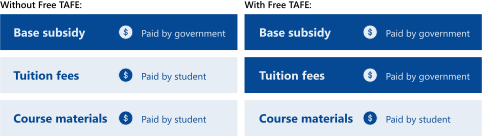
The Free TAFE initiative sits within the Skills First program. It aims to help Victorians access qualifications and short courses that teach skills Victoria's workforce needs and that are priorities of the government. Free TAFE students do not pay the tuition fees students usually pay at TAFE.
Figure 1: Costs of going to TAFE
Source: VAGO.
Internal department briefings have described the government objectives of the Free TAFE initiative as:
- responding to skills in demand in priority industries in Victoria
- supporting participation in training for under-represented and priority cohorts by reducing financial barriers
- positioning TAFEs at the centre of the Victorian training and skills system.
Timeline of the Free TAFE initiative
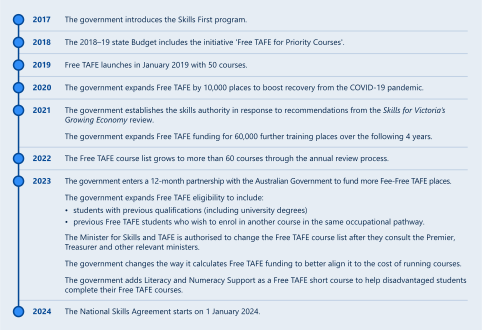
Free TAFE has gone through different changes since it was introduced.
Figure 2: Timeline of the Free TAFE initiative
Source: VAGO, based on department information.
National agreements
When Free TAFE was introduced in 2019, it was the first initiative of its kind in Australia. In 2023, the Australian Government partnered with the states and territories to establish the Fee-Free TAFE Skills Agreement. Through this agreement, the Australian Government provides funding to the states and territories to support their delivery of fee-free TAFE.
In January 2024, the Australian Government introduced the National Skills Agreement with the aim to strengthen Australia’s VET sector. It is a 5-year agreement between the Australian, state and territory governments, outlining 8 national priorities for aligning training with jobs to support Australia's economy.
Under this agreement, the department must work to improve student outcomes, with particular focus on priority cohorts. It must also ensure students can access foundation skills training, including for literacy and numeracy, among other requirements. The department reports back to the Australian Government on participation metrics each quarter. Free TAFE contributes to the department’s actions in achieving the National Skills Agreement's objectives.
Roles and responsibilities
| Body | Role |
|---|---|
| The department | Responsible for supporting and overseeing subsidised VET in Victoria. The Skills and TAFE group is the division of the department that does this. |
| The skills authority | Advises on matching the Free TAFE course list to labour market needs and also manages student and employer satisfaction surveys. |
| TAFEs | The TAFE network delivers VET. It includes 12 technical and further education institutes and 4 dual-sector universities which deliver training in Victoria. |
For more information about the scope of this audit and our methods, please see Appendix C: Audit scope and method).
What we found
This section focuses on our key findings, which fall into 2 areas:
1. Free TAFE costs the government more per enrolment than comparable government-subsidised training, yet it delivers similar student outcomes.
2. The department selects Free TAFE courses that teach priority skills and monitors costs and outputs, but it could do more to evaluate whether the initiative is achieving its intended outcomes.
Consultation with agencies
When reaching our conclusions, we consulted with the audited agencies and considered their views.
You can read their full responses in Appendix A.
Key finding 1: Free TAFE costs the government more per enrolment than comparable government-subsidised training, yet it delivers similar student outcomes
Free TAFE costs the government more per student and a growing proportion of available Skills First funding is going towards Free TAFE students
As a result of waiving student tuition fees, Free TAFE has cost the government between 33.4 and 94.2 per cent more per eligible enrolment than the same courses at non-TAFE providers.
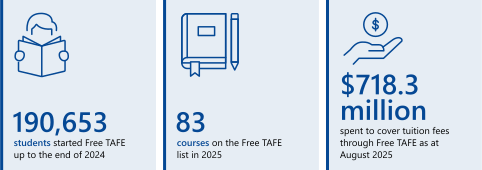
While broader TAFE funding has remained relatively stable since Free TAFE began, more of that funding is used per eligible Free TAFE student. As of August 2025, the department has paid TAFEs more than $700 million to cover tuition fees for Free TAFE students.
Students in Free TAFE courses had similar outcomes to the equivalent courses at non-TAFE providers
Changes in reported outcomes for students in Free TAFE courses are similar to those in non-Free TAFE courses at TAFEs, before and after Free TAFE begun.
Changes in outcomes for students in Free TAFE courses are also similar to those studying equivalent courses at private providers. This suggests students in Free TAFE courses are having similar outcomes to those in other courses, and to those in equivalent courses at private providers.
Free TAFE has not led to a significant increase in the proportion of students from priority cohorts
The overall proportion of students from priority cohorts in Free TAFE courses has not increased since the initiative started. Proportions of most priority cohorts within Free TAFE courses have not significantly changed, but the proportion of women in Free TAFE courses increased by 2.3 percentage points.
Working well: More students are starting priority TAFE courses
Since its introduction, Free TAFE courses have seen increased commencements while commencements in other courses have decreased over the same time. There has been a high take-up of Free TAFE for eligible students.
Key finding 2: The department selects Free TAFE courses that teach priority skills and monitors costs and outputs, but it could do more to evaluate whether the initiative is achieving its intended outcomes
The department uses a consistent and logical process to monitor and update Free TAFE courses that align with the initiative's objectives
The department uses consistent and logical processes to monitor and update the Free TAFE course list. This includes an annual assessment and consulting with other departments to determine if a course sufficiently meets the objectives of Free TAFE to secure funding.
The department understands which priority skills need to be addressed through close consultation with the skills authority, which uses evidence-based systems to understand Victoria's skills demands. Priority skills are not the only thing that determines if a course is funded through Free TAFE. But we found that all Free TAFE courses have a link to an area of need because the courses derive from the list of Skills First courses.
The department and the skills authority collaborate effectively to produce the modelling used to understand Victoria's skills demand. However, there is an opportunity for the skills authority to document the expectations of timing and delivery of the department's modelling outputs.
The department monitors and reports on cost and output measures for Free TAFE but could do more to evaluate the achievement of the initiative's objectives
The department has internal monitoring and reporting systems and cost and output measures for Free TAFE, but it has conducted limited evaluation of the initiative as a whole.
In 2020 Deloitte evaluated the initiative one year into its implementation. But this evaluation had limited ability to assess student outcomes and the overall cost and benefit of Free TAFE because there was not yet enough data to do so.
The department does not have a framework or plan for evaluating Free TAFE. It cannot demonstrate the extent to which the initiative as a whole is meeting its overall objectives of increasing TAFE participation and responding to skills demand. The department has plans to expand its budget paper performance statement reporting measures to include more Free TAFE-specific measures.
Key issue: The department has conducted limited evaluation of the Free TAFE initiative as a whole
While the 2020 Deloitte report gave a limited evaluation of early performance of the Free TAFE implementation, the initiative has not been evaluated as a whole since. It is important to evaluate Free TAFE against its original objectives and intended outcomes to determine the value of the initiative and understand if the public resources that fund it are being used effectively.
Addressing our findings
We have made 2 recommendations to the department and the skills authority about:
- documenting overarching expectations and duties within the priority skills identification process
- evaluating how well Free TAFE has achieved overall objectives.
See the next page for the complete list of our recommendations, including agency responses.
2. Our recommendations
We made 2 recommendations to address our findings. The relevant agencies accepted both recommendations in full.
| Agency response(s) | ||||
|---|---|---|---|---|
Victoria Skills Authority, in collaboration with the Department of Jobs, Skills, Industry and Regions
| 1
| Establish an overarching, documented understanding for delivering the employment projections that contribute to identifying priority skills, that:
| Accepted
| |
Department of Jobs, Skills, Industry and Regions
| 2
| Develop and implement a plan to evaluate the Free TAFE initiative that:
| Accepted
| |
3. Free TAFE funding and outcomes
Free TAFE has cost the government between 33.4 and 94.2 per cent more for each eligible enrolment than it would have if not for the initiative. The department has paid TAFEs more than $700 million to cover tuition fees, which represent savings for Free TAFE students accessing training.
Changes in reported outcomes for students in Free TAFE courses were similar to those in other courses at TAFEs and to those in comparable courses at private providers, before and after Free TAFE started.
There has been a high take-up of Free TAFE for eligible students. However, proportions of priority cohorts participating in Free TAFE courses have not significantly changed.
Covered in this section:
- The amount of Skills First funding used for Free TAFE has increased over time
- The cost to the government per Free TAFE student is higher than that of comparable courses delivered by non-TAFE providers
- Outcomes for students in Free TAFE courses were similar to those in comparable courses
- Overall commencements increased, with more students starting Free TAFE courses than other courses at both TAFEs and private providers
- The proportion of students from priority cohorts in Free TAFE courses has not significantly increased
- About 40 per cent of students in Free TAFE courses went into associated priority occupations
- Despite changes to the Free TAFE funding model, the financial sustainability of TAFEs could still be at risk
The amount of Skills First funding used for Free TAFE has increased over time
Skills First funding has remained relatively stable
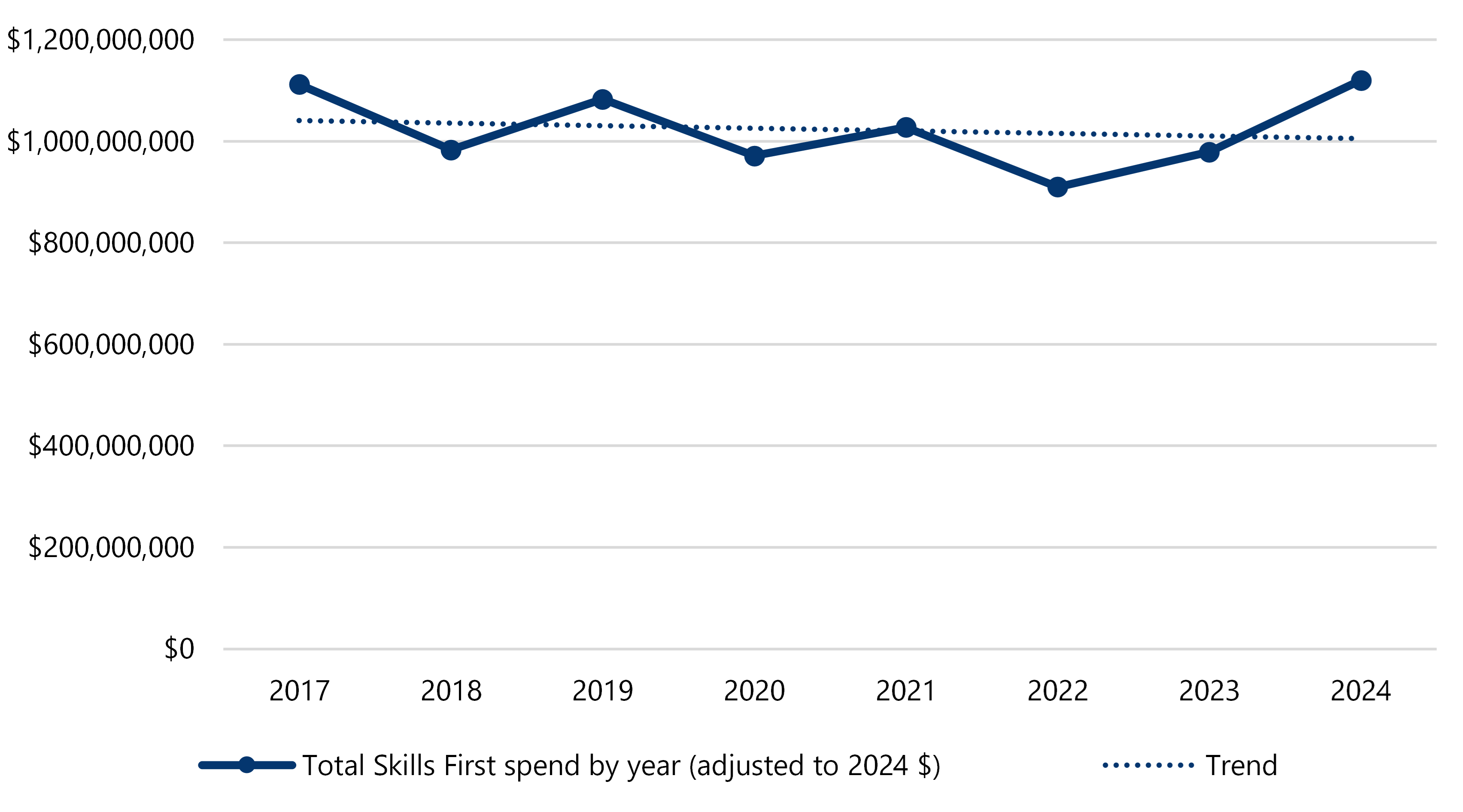
Under Skills First, the government funds TAFEs to deliver subsidised training in over 600 courses and skillsets to eligible Victorians. When adjusted for inflation, the funding allocated to Skills First has been relatively stable since 2017 and did not increase significantly after the government introduced Free TAFE, as Figure 3 shows.
Figure 3: Skills First funding by year adjusted to 2024 dollars
Source: VAGO, based on department information.
More of the available Skills First funding is used for Free TAFE
The department pays TAFEs to deliver Free TAFE via fee waiver reimbursements, which are a subset of Skills First funding and replace the tuition fees they would have received from students. Each year the department determines a Free TAFE budget for each TAFE based on the money it gets in the state Budget.
The base subsidy and fee waiver together subsidise Free TAFE students, so they do not have to pay any tuition fees for their courses. They may still need to pay for course materials such as books, equipment, amenities fees, excursions or placements.
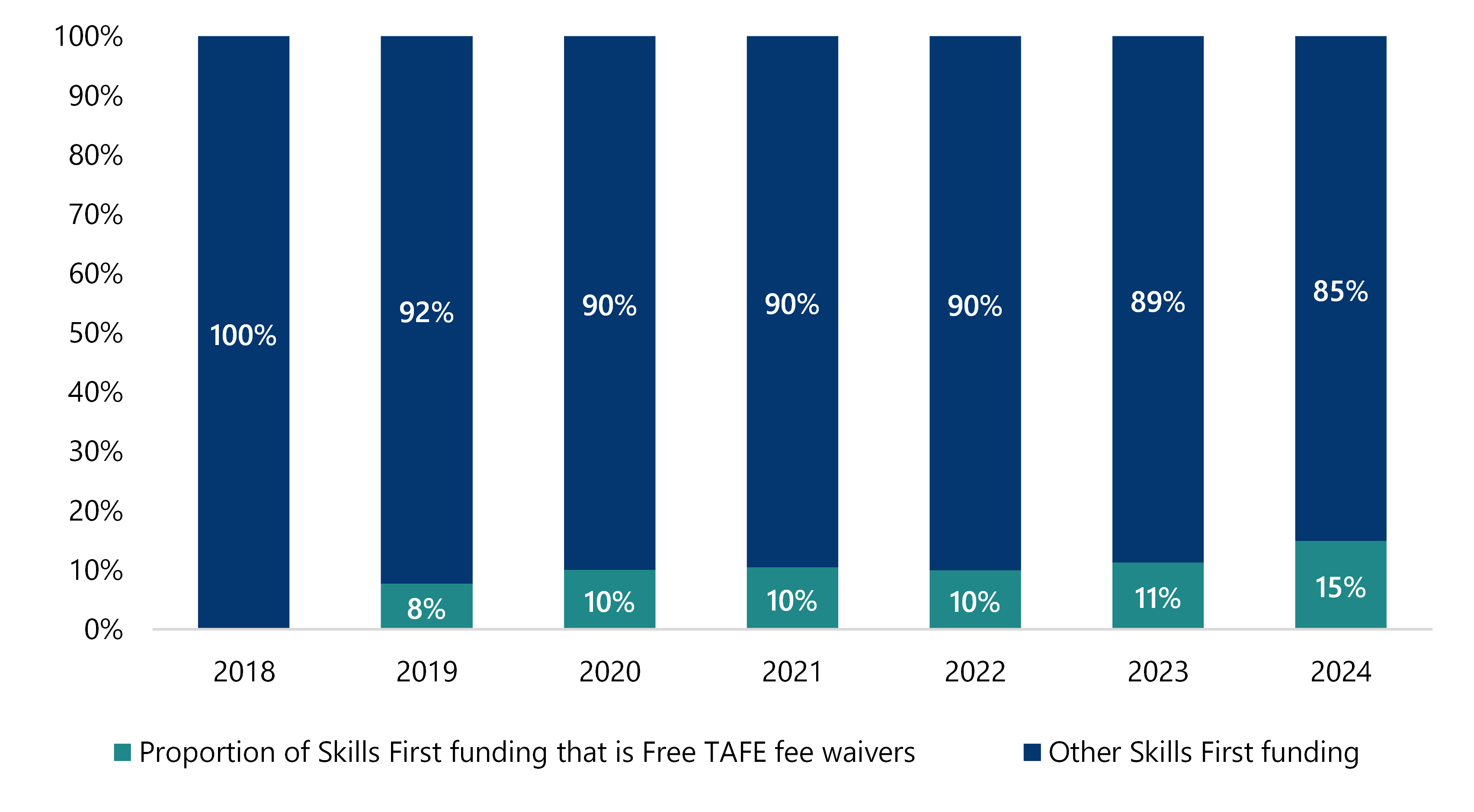
In the years since 2019, an increasing proportion of Skills First funding has been directed toward Free TAFE fee waivers, as Figure 4 shows.
Figure 4: Proportion of available Skills First funding used for Free TAFE fee waivers
Source: VAGO, based on department data.
The funding allocated per Free TAFE student is higher than that per non-Free TAFE student. Consequently, an equal amount of overall funding available for Skills First can now support fewer students. This is inherent in the policy decision to introduce Free TAFE.
The cost to the government per Free TAFE student is higher than that of comparable courses delivered by non-TAFE providers
Cost of the Free TAFE initiative
As of the end of August 2025, the Victorian Government has spent $718.3 million on fee waiver payments for students participating in Free TAFE, which has provided savings in tuition costs for students accessing training at TAFE.
In the years since Free TAFE started, Free TAFE enrolments have made up 14.4 to 19.2 per cent of all TAFE enrolments subsidised by the government through Skills First.
Government paid more per eligible Free TAFE student
Free TAFE has increased the amount of funding the government gives TAFEs per student. It gives more per student to TAFEs for Free TAFE students than to:
- TAFEs for non-Free TAFE students
- private providers that offer the same course.
This is because those students are eligible for base subsidies but not Free TAFE fee waivers.
We analysed the differences between the base subsidy rates and the fee waiver rates for all courses on the Free TAFE list over the time the initiative has been in place.
Each year, the department revises each course's base subsidy and fee waiver rates. From when Free TAFE started in 2019 until 2023, it set separate fee waiver rates for each TAFE based on how much that institution had historically charged for each course. This meant that in each year, each of the up to 83 courses had up to 16 different fee waiver rates.
Due to the fee waiver reimbursements, the department paid more per Free TAFE student enrolment than it would have if not for the initiative:
| In ... | the department paid an average of ... |
|---|---|
| 2019 | between 33.4 and 76.0 per cent more |
| 2020 | between 36.4 and 79.9 per cent more |
| 2021 | between 37.7 and 81.7 per cent more |
| 2022 | between 55.4 and 87.1 per cent more |
| 2023 | between 62.7 and 90.9 per cent more* |
| 2024 | 94.2 per cent more. |
*In mid-2023, the department revised Free TAFE fee waiver rates and applied a uniform rate for each course across all TAFEs.
Note: These results have been weighted for the representation by enrolment numbers of each Free TAFE course within each year.
Outcomes for students in Free TAFE courses were similar to those in comparable courses
Measuring student outcomes
To examine whether Free TAFE is providing benefits we compared the outcomes students in Free TAFE courses reported to:
- students in non-Free TAFE courses
- students studying equivalent courses at private providers.
This information comes from the Student Satisfaction Survey which is administered by the skills authority. You can find information about our analysis approach in Appendix D.
Student Satisfaction Survey
The skills authority administers Student Satisfaction Surveys to Victorian students who completed or discontinued VET. The surveys capture information on student outcomes after training including employment status, further study and occupation after training. As the survey is not compulsory, it does not capture outcomes for all students.
Student outcome performance metrics
We used 4 key performance metrics to assess Free TAFE outcomes, as Figure 5 shows.
Figure 5: Performance metrics used to assess Free TAFE outcomes
| Performance metric | What it captures |
|---|---|
Improved employment status
| Improvements include:
|
Went on to further study at a higher level
| Continuing study in VET or higher education.
|
Students achieved their main reason for training
| Reasons include:
|
Improved outcomes (our aggregated metric)
| A student has experienced improvement in at least one of the metrics above after their training.
|
Source: VAGO based on the skills authority Student Satisfaction Survey.
*Note: While an improved employment status can be a result of training, it also depends on labour market conditions including interest rates, inflation and labour force participation rates.
Free TAFE courses
In our analysis, the term ‘Free TAFE courses’ refers to the specific courses that were offered on the Free TAFE course list in 2023 and older, superseded versions of those courses. Superseded courses may have had different engagement hours, units or vocational outcomes but are still broadly equivalent to a course on the 2023 list.
The Free TAFE course list changes every year, as we discuss in Section 4. When we refer to ‘Free TAFE courses’ in other years, including before the initiative started, we are referring to courses that would later be, or were, on the 2023 list. We have chosen to focus on this particular set of courses to illustrate how the initiative has impacted vocational training over time both at TAFEs and at private providers in equivalent courses.
It is important to note that not every government-subsidised student who does a course on the Free TAFE list is eligible for Free TAFE funding, and some still pay tuition fees.
Outcomes for students in Free TAFE courses and non-Free TAFE courses
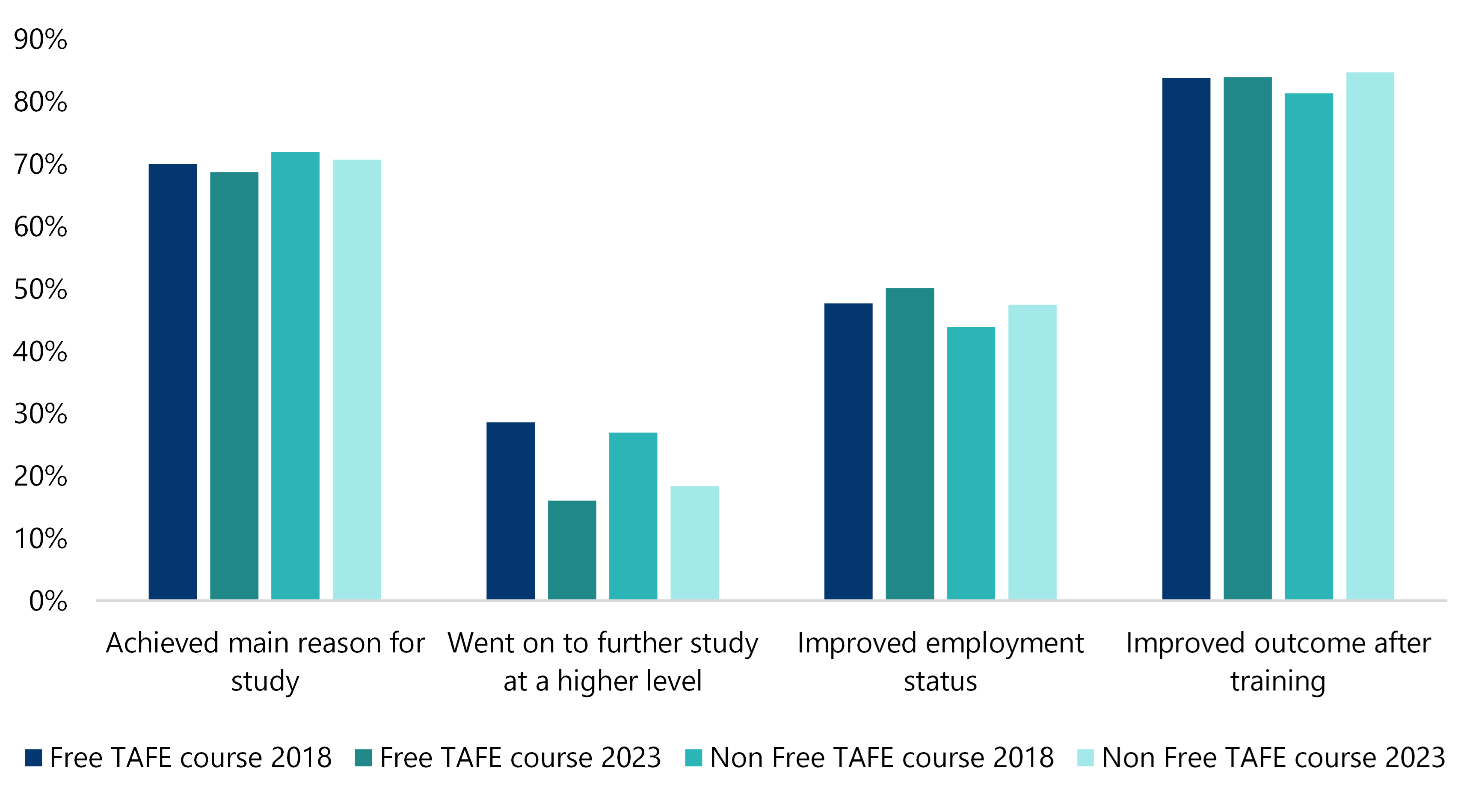
We examined changes in performance measures for courses on the 2023 Free TAFE list from 2018, before Free TAFE began, to 2023. Students in Free TAFE courses reported similar outcomes in most measures before and after Free TAFE started.
Notably, we saw similar results for students in non-Free TAFE courses. Each measure had similar changes for students in both Free TAFE courses and non-Free TAFE courses, as Figure 6 shows.
Figure 6: Student-reported outcomes of training at TAFE
Source: VAGO, based on department and skills authority data.
This suggests students in Free TAFE courses are having similar outcomes to those in other courses.
Outcomes for students in Free TAFE courses compared to private providers
We also examined changes in performance measures from 2018, before Free TAFE, to outcomes in 2023. We compared results for students in Free TAFE courses with students in the equivalent courses at private providers.
We again observed similar results across the survey metrics between these 2 groups. Results for both groups generally decreased, as Figure 7 shows.
Figure 7: Student-reported outcomes – Free TAFE versus private providers
| Provider type | Measure | 2018 | 2023 | Change |
|---|---|---|---|---|
| TAFE | Achieved main reason for training | 70.3% | 64.6% | −5.7% |
| Private | Achieved main reason for training | 79.6% | 76.7% | −2.9% |
| TAFE | Went on to further study | 23.7% | 14.4% | −9.3% |
| Private | Went on to further study | 17.6% | 10.7% | −6.9% |
| TAFE | Improved employment status | 48.1% | 44.8% | −3.3% |
| Private | Improved employment status* | 36.6% | 56.4% | +19.9% |
| TAFE | Improved outcome (VAGO aggregate metric) | 84.0% | 81.3% | −2.7% |
| Private | Improved outcome (VAGO aggregate metric) | 88.8% | 86.6% | −2.2% |
Source: VAGO, based on department and skills authority data.
*Note: Improved employment status outcomes for students commencing study at private providers in 2018 were unusually low. The average from 2016 and 2017 is 47.1%, for an increase of 9.4% by 2023.
Numbers have been rounded.
In 2023, Free TAFE courses had an 'improved outcome' result of 81.3 per cent, a 2.7 per cent decrease from 2018. Meanwhile, private providers of equivalent courses had a result of 86.6 per cent, a 2.2 per cent decrease from 2018.
We note that though TAFEs and non-TAFE training providers often provide similar courses with equivalent qualifications, the department told us that the service delivery of training at TAFEs differs from that at other training provider types, including in facilities, contact hours and delivery mode (online versus in person).
Overall commencements increased, with more students starting Free TAFE courses than other courses at both TAFEs and private providers
Context for analysis of TAFE participation
Through Free TAFE, the government seeks to increase participation in training, particularly for priority cohorts, by removing the financial barrier that tuition fees may present. We assessed the impact of the initiative on training participation by analysing the changes in number of commencements in Free TAFE and 'non-Free TAFE' courses before and since the introduction of Free TAFE. We also compared commencements at TAFE to private providers in equivalent courses.
For further information on our methodology for analysing TAFE data, please see Appendix D.
Increased commencements in Free TAFE courses
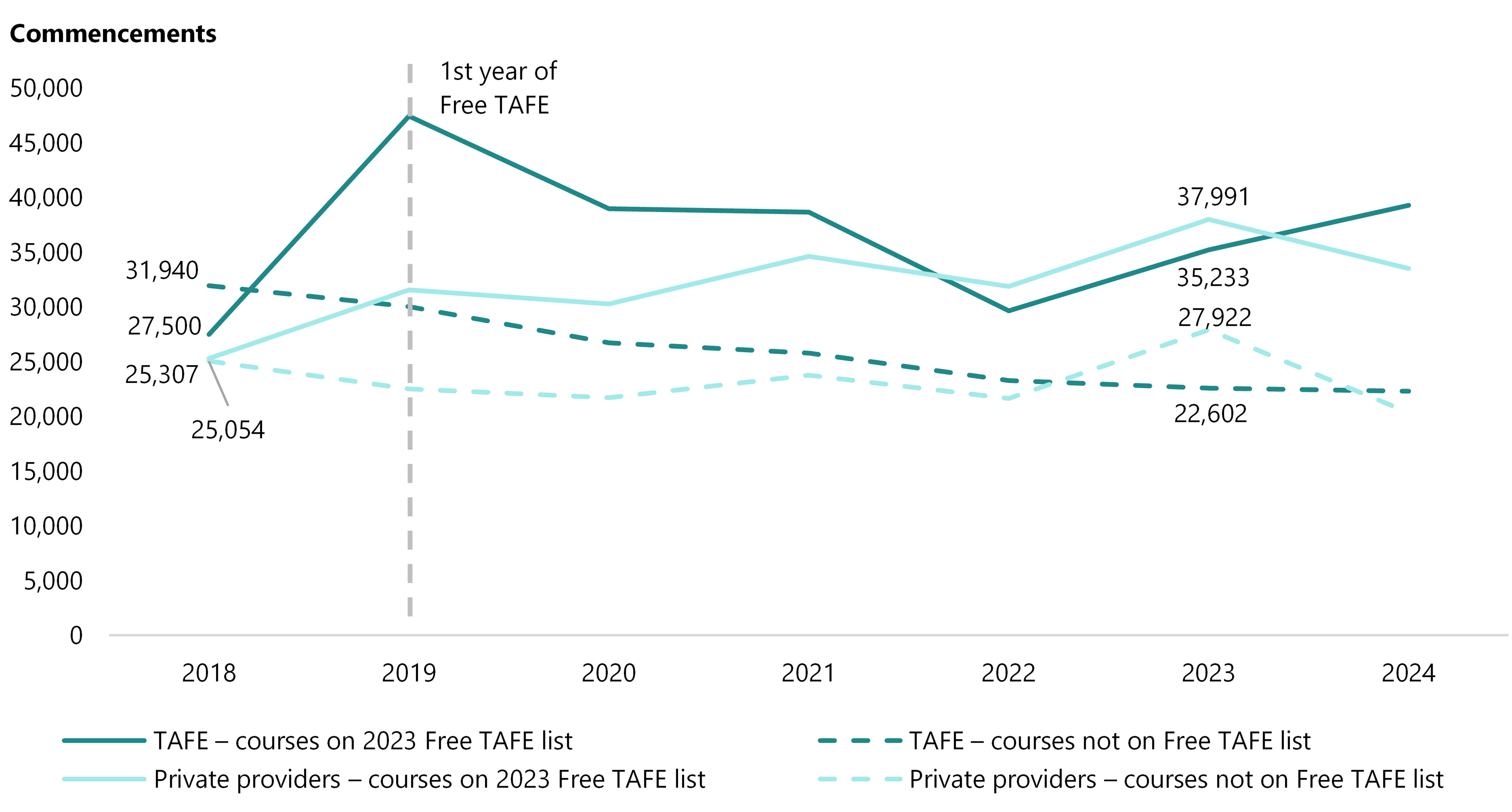
We compared government-funded TAFE commencements between 2018 and 2023, as shown in Figure 8.
In 2018, 109,801 students started government-subsidised training at TAFEs and private providers. In 2023, 123,748 students started, an increase of 12.7 per cent.
| Our analysis showed … | which could mean … |
|---|---|
| more students overall started government-subsidised training at TAFEs and private providers | the department is achieving its objective of increasing participation in training. |
| more students started courses on the Free TAFE list at TAFEs and private providers | Free TAFE has incentivised students to choose courses the government has identified as providing skills in demand over other courses. |
| students starting non-Free TAFE courses at TAFEs declined over the same period |
Figure 8: Government-funded student commencements in TAFE
Source: VAGO, based on department data.
Observations and limitations
| As shown in Figure 8, from 2018 to 2023, government-funded commencements in ... | courses at TAFE … | This suggests that after Free TAFE started more students have … |
|---|---|---|
| Free TAFE | increased by 28 per cent. | chosen courses that teach priority skills than other courses. |
| non-Free TAFE | decreased by 29 per cent. |
We also found that 86 per cent of government-subsidised students who started courses on the Free TAFE list in 2023 received Free TAFE funding. This indicates a high take-up of Free TAFE within the cohort of eligible government-subsidised students.
These commencement rates could show Free TAFE is contributing to increasing participation in VET courses the government has prioritised. But Free TAFE may not be the only reason for the changes. The economic factors that led the government to add certain courses to the Free TAFE list (such as demand in certain fields of work) could also be driving students to choose these courses regardless of the initiative.
The proportion of students from priority cohorts participating in Free TAFE courses has not significantly increased
Representation of priority cohorts
Free TAFE aims to give all Victorians access to education and training by removing financial barriers. It particularly aims to support disadvantaged and under-represented people, including:
- women
- Indigenous Australians
- jobseekers/people unemployed before training
- young people (we categorise this as people aged 24 or under when they start training, consistent with the Australian Institute of Health and Welfare)
- people living with a disability.
We looked at the TAFE commencement trends for people in these groups to see if there had been any change since Free TAFE started.
Students from priority cohorts in Free TAFE courses
Most students at TAFE are in at least one priority cohort. More students both in and not in priority cohorts have started Free TAFE courses.
| Government-funded students starting courses on the 2023 Free TAFE list … | in 2018 numbered … | in 2023 numbered … |
|---|---|---|
| in priority cohorts | 23,050 | 28,164 |
| not in priority cohorts | 4,267 | 6,511 |
| with unknown priority status | 183 | 547 |
We found that between 2018 and 2023 priority cohort commencements increased by 22.2 per cent and non-priority cohort commencements increased by 52.6 per cent.
Priority cohort participation rates broadly stable
We also investigated whether the proportion of students from priority cohorts starting Free TAFE courses has changed.
| The proportion of students who were ... | in courses on the 2023 Free TAFE list ... |
|---|---|
| in at least one priority cohort | decreased. |
| young | did not increase. |
| unemployed before training | did not increase. |
| living with disability | increased, but also increased in non-Free TAFE courses, so we cannot say that Free TAFE caused the change. |
| Indigenous Australians | is too small to detect changes.* |
| women | increased by 2.3 percentage points, the only priority cohort to do so. |
*These students also have access to tuition-free training at all Skills First TAFE and training providers under a separate initiative called the Aboriginal Access Fee Waiver.
These results show that while training participation for priority cohorts has grown under Free TAFE, participation by other cohorts had a higher rate of growth in most cases.
We acknowledge that disadvantage is not limited to these attributes. In particular, socioeconomic disadvantage related to income or wealth is not captured in enrolment data.
Additionally, some students may choose not to disclose that they are in some of these cohorts.
About 40 per cent of students in Free TAFE courses went into associated priority occupations
Priority skills occupation outcomes
Based on student satisfaction survey data for Free TAFE students who left TAFE in 2022 and 2023, we found that 41.7 per cent of Free TAFE students are going into priority skills occupations. A further 36.7 per cent go into other occupations while 21.6 per cent remained unemployed at the time of the survey.
Of the top 9 occupations that Free TAFE students became employed in, all were on the training needs list, and 8 out of 9 were priority occupations associated with Free TAFE courses.
Data limitations
There is not much available data about employment outcomes in priority skills areas after training. We were not able to do a comparison over time because the data capturing student-reported courses and jobs for earlier years had not been mapped to the standardised industry occupation codes. We therefore had no baseline or target for comparison.
The student survey data we do have has limits, which we discuss in Appendix D. For example:
- the surveys are voluntary, so not all students complete them
- not all students are offered a chance to complete a survey for every Free TAFE course they complete
- there is complexity in aligning students' responses about their occupation with defined career pathways.
Despite changes to the Free TAFE funding model, the financial sustainability of TAFEs could still be at risk
Fee waiver rate changes
In 2023, the department found that the way it was calculating fee waiver rates did not always align with the cost of delivering courses as enrolments grew. This meant TAFEs were not incentivised to grow Free TAFE courses.
In mid-2023, the department implemented a new method of calculating fee waiver rates. It now estimates the average cost of delivering each Free TAFE course and sets a uniform rate for each course for all TAFEs. Rates still vary between courses because some cost more to deliver than others.
Result of changes to Free TAFE fee waiver rates
The department told us the 2023 increase to fee waiver rates had incentivised TAFEs to deliver Free TAFE to more students, as the government intended.
In 2024, the first full year the new rates were in place, Free TAFE course commencements increased by 15 per cent. In comparison, overall commencements in government-funded training were stagnant, falling by 0.8 per cent from 2023 to 2024.
The department also says the waiver rate changes have made TAFEs more financially viable and better able to implement the initiative. In recent years, fewer TAFEs have needed:
- top-up funding during the year
- letters of support from the government because auditors expressed concern that they may not have enough money to remain viable.
Need for extra support services
We asked the 5 TAFEs we audited about how changes to the fee waiver rates had impacted them. They generally agreed that the new fee waiver rates helped reduce the gap between subsidies and the cost of delivering courses. However, most TAFEs were concerned that rates may not stay in line with enrolment growth and rising delivery costs, including staff costs.
Most TAFEs told us that since Free TAFE started, they have observed that students’ need for extra support services has significantly increased. These include various services outside of the classroom such as:
- disability support
- career counselling
- interpreters.
Free TAFE has made training more accessible for students who might not otherwise have been able to participate. These cohorts often need more support.
Delivering this additional support has come at an extra cost to TAFEs. TAFEs were not aware of any work that they or the department had done to specifically quantify this additional cost but believed that analysing these costs would demonstrate the increase.
Financial sustainability of TAFEs
Our 2025 report Results of 2024 Audits: TAFEs and Universities found that TAFEs grew their own source revenue, which is key to financial sustainability.
However, we also found that while the TAFE sector reported a net surplus in 2024, this was mostly because of one-off capital grants. Eight TAFEs reported a net surplus, but without these grants, only 5 TAFEs would have done so and the sector would have had a $53.1 million net deficit.
These results are consistent with recent years. Our report found that in 2019 to 2023, 9 of the 12 TAFEs reported a net surplus for 3 or more years, but without capital grants, only one TAFE would have achieved this result. This suggests that since Free TAFE started, TAFEs' financial sustainability has not significantly improved.
Our report highlighted that cost pressures for TAFEs persist. TAFEs are not set up to make large surpluses or fund capital costs completely on their own. However, even with the changes to fee waiver rates, the long-term financial sustainability of TAFEs could be at risk if they do not effectively manage their expenses or increase their own-source revenue.
4. Managing and improving Free TAFE
The department and skills authority use effective systems to understand Victoria's priority skill demands. This contributes to the department's annual assessment of course performance, which determines which courses should be funded through Free TAFE. While the agencies work together effectively, there is an opportunity to create an overarching procedure to coordinate this work.
The department has internal monitoring and reporting practices to understand components of Free TAFE cost and outputs. However, its monitoring and evaluation of Free TAFE focus primarily on course performance. It has not conducted an evaluation of the overall program since 2020. This means it cannot demonstrate the extent to which Free TAFE is meeting its objectives and intended outcomes to respond to priority skill areas and improve access to training for priority cohorts.
Covered in this section:
- The department and the skills authority use evidence-based modelling to identify Victoria’s priority skills but do not have an overarching procedure to coordinate some parts of this work
- The department follows a consistent and logical process to add, retain and remove Free TAFE courses to ensure they align with the initiative's objectives
- The department monitors components of Free TAFE using different internal systems but it does not have an overarching plan for evaluating the overall initiative
- The department publicly reports on the cost and performance of Free TAFE and has opportunities to be more transparent
- There has been limited overarching evaluation of the Free TAFE initiative
The department and the skills authority use evidence-based modelling to identify Victoria’s priority skills but do not have an overarching procedure to coordinate some parts of this work
Free TAFE and priority skills
Since Free TAFE was announced in 2018, one of its key objectives has been to give people skills that key industries in Victoria most need. The department does this by funding courses associated with job demand across Victoria. The department needs effective processes to understand which skills it should prioritise in order to select the right courses.
The skills authority is responsible for monitoring and reporting workforce demand across Victoria. It advises the government through its Victorian Skills Plan and employment projections dashboard. The department uses these to understand the priority skills.
Identifying priority skills
The skills authority uses a framework of evidence-based economic models to:
- predict the future picture of employment across different industries, occupations and regions in Victoria
- estimate the movement of workers by industry (for example through people retiring or changing industries)
- determine the difference between the current and future employment levels and the number of training commencements needed to address this
- match priority skills with course qualifications.
The outputs of these models help the government understand the employment and skills needs in Victoria.
Matching Free TAFE courses with priority skills
The department understands VET demand and supply capacity through the skills authority's modelling processes. The department uses the skills authority's work to determine the training needs list, which it then selects the Free TAFE courses from.
The training needs list includes all courses and skillsets which are subsidised through the Skills First funding. To be subsidised through Skills First, courses must align with:
- industry and occupation demands
- strong job outcomes
- social needs which prepare students with foundational skills
- government priorities.
In 2025 there are over 600 courses or skillsets on the training needs list. Over 80 of these are funded through Free TAFE.
Responsibilities for identifying priority skills
The skills authority is responsible for analysing the skill needs of Victoria's workforce, including identifying priority skills. It uses a system of economic modelling to do this.
While the skills authority is responsible for the modelling overall, it works in partnership with other groups in the department for some parts of its analysis. All sectors of the government and industry use the outputs of this modelling to plan their workforces.
Employment projections are a key input to workforce analysis
A key input into the skills authority's analysis of Victoria's workforce is the employment projections. The employment projections estimate how many people will work in different occupations in the future.
In 2024 the department's Economic Policy, Projects and Coordination group (now the Economic Policy, Programs and Services group) became responsible for this analysis work.
The skills authority cannot complete its work identifying employment and skills needs and other key analysis of Victoria's workforce without the employment projections.
Coordination between the skills authority and the department
While the skills authority and the department understand their roles in identifying priority skills, there is no overarching document that describes how they should collaborate, including how and when they are expected to deliver key inputs.
Without this, there is a risk that the skills authority may not receive the employment projections when it needs them. This could impact the work it does to understand Victoria's workforce.
There is an opportunity for the skills authority and the department to document an understanding which describes the procedure and expectations for delivering the employment projections. This would include:
- recognising the employment projections as a key input in producing skills demand and supply analysis
- when they need to deliver this work
- the teams involved
- who they should consult with
- how they should transfer information.
A written procedure would reduce the risk of variance in carrying out their functions to identify priority skills and promote efficiency in their collaboration.
The department follows a consistent and logical process to add, retain and remove Free TAFE courses to ensure they align with the initiative's objectives
Types of Free TAFE courses
Free TAFE offers different types of courses that enable students to either upskill in their existing occupation or enter a new industry.
Figure 9 shows the types of courses offered through Free TAFE.
Figure 9: Types of courses offered through Free TAFE
| Course type | Definition | Examples |
|---|---|---|
Nationally accredited qualifications
| Comprehensive, nationally recognised credentials each made up of a program of units. They are designed to deliver a broad range of skills and knowledge within a specific industry or occupation. This enables a student to enter a new industry.
|
|
Pre-apprenticeships
| Entry-level qualifications that provide a pathway to an Australian apprenticeship. They offer foundational skills and work experience in a chosen trade or industry, which can make it easier to secure a full apprenticeship and potentially shorten its duration.
|
|
Short courses
| Smaller programs that deliver targeted training for a skill in a specific training area. Also referred to as a skillset. They enable students to upskill in their current occupation. |
|
Source: VAGO, based on department information.
Process for annual assessment of courses
The department follows a consistent and logical assessment process to review the performance of Free TAFE courses and determine if they are suitable to keep receiving Free TAFE funding. This annual assessment helps the department to work towards its objective to address priority skills and deliver outcomes for priority cohorts.
The annual assessment is guided by a process map that outlines a set of performance measures to assess Free TAFE courses against. The department uses the outcome of this assessment to:
- inform its consultation with stakeholders on Free TAFE courses
- support its advice to the government on whether a course should be retained on, added to, or monitored for removal from the Free TAFE course list.
Course performance indicators
The department uses 5 indicators to assess course performance.
| The department assesses each course based on … | this means the course must … |
|---|---|
| whether it is linked to a government priority | align with the Skills First objectives and/or align with state or federal commitments to investing in a priority area. |
| an outcomes indicator | demonstrate positive TAFE learning outcomes. |
| student demand and supply activity | demonstrate that students want to do the course and the TAFEs have the capacity to deliver it. |
| labour market demand | address a labour market area which has an estimated shortage of VET graduates. |
| a social score | be considered a higher cost to students to reduce financial barriers for priority student cohorts. |
Assessing course performance
The department assesses each course against a set of performance indicators to determine whether to add, retain or remove them from the Free TAFE course list.
| If a course meets … | then the department will advise the government to ... |
|---|---|
| 4 or 5 of thresholds | add it to, or retain it on, the Free TAFE course list. |
| 3 or fewer thresholds | monitor it on the Free TAFE course watchlist. |
If a course is on the watchlist for 2 consecutive years it is removed from the Free TAFE course list.
Free TAFE course watchlist
The Free TAFE course watchlist was introduced in 2022 to monitor courses which have been flagged as underperforming. The list was created to avoid courses being removed prematurely due to a one-off volatility. This gives the department and the TAFE network the chance to investigate underperformance.
Stakeholder consultation and advice to the government
After it has assessed courses against the performance indicators, the department consults other departments and TAFEs to support its advice to the government. This consultation ensures that Free TAFE courses align with:
- government priorities
- industry demand
- the capacity of the VET sector to deliver training.
The department's annual assessment process informs its advice to government on which courses are likely to deliver Free TAFE's stated objectives of addressing priority skills and participation of priority cohorts. The Free TAFE course list is updated following approval from the government.
The annual course assessment is a mechanism that helps the department work towards delivering the program's intended outcomes.
The department monitors components of Free TAFE using different internal systems, but it does not have an overarching plan for evaluating the overall initiative
The department's expectations for monitoring and evaluation
The department regularly monitors and reports on components of Free TAFE, but it does not have an overarching monitoring and evaluation plan for the initiative.
Without this, there is a risk that the department will not be able to promptly and consistently identify and respond to issues that could affect its ability to achieve its intended outcomes for Free TAFE. It also means that the department cannot demonstrate the impact of the Free TAFE investment.
The department's process map provides a framework for evaluating courses with indicators based on the initiative's objectives. The result of this evaluation supports the department's advice on which courses align with the overall objectives and therefore should get Free TAFE funding. This assessment is one part of the department's actions towards delivering the intended outcomes, but it does not evaluate the initiative as a whole.
The department's monitoring policy
The department's Monitoring and Evaluation Policy and Standards outlines how the department should oversee its programs and initiatives. This policy acknowledges that the department needs to perform monitoring and evaluation to:
- make evidence-based and strategic decisions
- know if it is making progress towards its goals
- demonstrate its initiatives, strategies, policies, programs and projects have delivered expected outcomes for Victorians.
The department's policy sets the expectation that the department should systematically and continuously monitor its initiatives while it implements them. It should also provide a more formal, deeper, independent judgement of each initiative and deliver a report on the findings and recommendations.
While the department's evaluations of components of the initiative, such as the annual course review, helps it ensure courses align with Free TAFE's objectives, these evaluations do not show how the initiative is performing overall.
Range of monitoring and reporting systems and processes
In addition to its annual course review process, the department actively monitors and reports on expenditure and outputs for Free TAFE internally through its systems and processes for reporting across VET.
We found that the department uses a range of systems and processes that provide monitoring of expenditure and output measures related to VET. These include some measures for Free TAFE. This reporting gives information to multiple stakeholders including TAFEs, different areas of the department, and decision-makers such as the Minister for Training and Skills.
Internal systems capture information related to Free TAFE but reports could contain more specific Free TAFE metrics
The department's internal systems include some monitoring of indicators that are specific to Free TAFE.
For instance, TAFEs need to set their own targets for Free TAFE commencements in consultation with the department. They then report commencements and other training data through a reporting system that flows through to a dashboard that the department monitors. This dashboard also captures priority cohort participation and the costs students have saved through Free TAFE.
While it is good that commencements and student savings are monitored internally, internal reports do not as consistently or comprehensively include metrics on:
- completions
- participation of specific student cohorts
- costs to TAFEs related to delivering Free TAFE.
This means the department is not reporting a holistic picture of the overall impact of the initiative.
The department publicly reports on the cost and performance of Free TAFE and has opportunities to be more transparent
Budget paper output initiatives
The department reports on output initiatives in the Victorian state Budget papers. Various output initiatives have been attached to Free TAFE in the years since its introduction, including:
- Supporting Free TAFE for priority courses (2019–20)
- TAFE and training driving economic recovery (2020–21)
- Boosting access to Free TAFE and training services (2024–25 and 2025–26).
However, it is not always clear based on the Budget output initiative descriptions what component of an initiative is specifically for Free TAFE. Some of the initiatives list the output funding as 'including' Free TAFE but also as funding other partially subsidised training.
The department does on occasion publish information on the cost and performance of Free TAFE in media releases, including the number of students accessing Free TAFE, and the cost-savings to students (which are equal to aggregate fee-waiver expenditure).
A March 2025 media release on the Premier’s website stated that 'Since its launch in 2019, Free TAFE has saved students over $600 million in tuition fees … for the 200,000 Victorians who have enrolled.'
However, the government does not regularly and consistently publish Free TAFE expenditure publicly. This makes it harder to track how much money is spent on the initiative.
While this is not an explicit requirement, the initiative is a significant policy platform for the Victorian government and was a considerable shift from previous subsidy arrangements. Clearer and more consistent reporting on its cost and performance would enable the public to interpret whether the initiative is providing a net benefit to Victorians.
Budget paper performance reporting
Since 2021–22, Victorian government Budget papers have contained an output measure capturing the ‘number of enrolments in the Free TAFE for priority courses initiative’.
The department is currently exploring adding further performance measures to include in the next Budget papers that show Free TAFE outcomes, including:
- retention and completion rates
- employment outcomes, especially in targeted areas of skills shortages.
This is in response to a recommendation from the Public Accounts and Estimates Committee during Budget estimates hearings for 2024–25.
The department intends to propose new measures for the government to consider as part of the 2026–27 state Budget process. Measures currently under consideration include:
- the 4-year completion rate for commencements in Australian Qualifications Framework qualifications in the Free TAFE for priority courses initiative
- the proportion of VET completers with better employment status after training in the Free TAFE initiative.
These outcomes-focused metrics are existing Budget paper measures for VET participants overall.
Potentially adding Budget paper performance measures for Free TAFE that capture outcomes is a positive move towards better understanding how the program is performing.
There has been limited overarching evaluation of the Free TAFE initiative
Early evaluation conducted by Deloitte
In 2020, one year into the implementation of Free TAFE, the department procured Deloitte to conduct an early evaluation of the initiative. The scope of Deloitte's formative assessment focused on:
- awareness and the decision-making motivators of participants
- student demographics
- initial student experience following the introduction of the initiative.
The Deloitte evaluation found:
- Free TAFE was almost universally seen in a positive light. It was commonly a catalyst in participants’ decisions to enrol in courses they had considered but never thought achievable or affordable. It was reported as particularly important for financially vulnerable groups
- Free TAFE had significantly increased enrolments, with students almost doubling in 2019
- student experience was inherently varied but benefitted from flexible student support services
- administrative processes, student support services and classroom and teacher availability were facing capacity issues and were reportedly under strain from the influx of students
- some perverse incentives and outcomes had emerged including some participants having less 'buy-in' and not taking courses seriously.
Given this evaluation was conducted in the early stages of implementation, it was limited in its assessment of student outcomes and the factors influencing participation. It also could not provide an evaluation of the overall cost and benefit of the Free TAFE initiative to the state.
Evaluating Free TAFE outcomes has been limited to course performance
While the department does regular monitoring of course performance, it does not equate to monitoring the performance of the overall initiative.
The department's position is that Free TAFE has not been in place for sufficient and uninterrupted time to have reliable data on student outcomes. This is because COVID-19 impacted TAFE and VET participation and completion, making the data within the 2020 and 2021 years incomparable.
However, the program has been in place for 4 years since 2021 and still does not have a monitoring and evaluation plan which would outline the department's intention for an overall assessment of Free TAFE's performance.
An effective monitoring and evaluation plan for Free TAFE would set out how the department intends to comply with its own Monitoring and Evaluation Policy and Standards, and:
- describe the initiative and its background, activities, objectives and intended outcomes
- define the expected performance of the initiative
- set specific and appropriate performance measures for objectives and outcomes, including sources of data and data collection methods
- consider the value for money of the initiative with respect to government expenditure versus the broader economic, social and individual benefits.
Key issue: The department has not evaluated Free TAFE as a whole since 2020
While the 2020 Deloitte report gave a limited evaluation of early performance of the Free TAFE implementation, the initiative has not been evaluated as a whole since. It is important to evaluate Free TAFE against its original objectives and intended outcomes to determine the value of the initiative and understand if the public resources that fund it are being used effectively.
Current and future evaluation plans
The department advised us that it has a series of evaluations for Free TAFE underway, planned or recently completed. These are:
- an evaluation of the Free TAFE Literacy and Numeracy Support course to gather early insights on its impact on student engagement and completion (this is a literacy and numeracy support course the department added to the course list in July 2023 to help students gain the capabilities to help them complete their training)
- a holistic funding reform report and an independent evaluation of expanded eligibility for Free TAFE and Skills First in response to the government's request
- a draft evaluation framework is currently in its initial stages of consultation to develop its reporting and evaluation of Free TAFE (this is required under the department's partnership with the Australian Government).
Our analysis
Given the 7-year period the Free TAFE initiative has now been in place in Victoria, we have been able to conduct further analysis than the initial Deloitte evaluation. This includes differentiating between students who are and are not fully subsidised by a Free TAFE place in some cases. We also considered student-reported outcomes and the impact on private providers of fee-free TAFE.
However, there are still some limitations to our analysis. Our work does not substitute the need for the department to develop a plan for, and conduct, a full evaluation of the Free TAFE initiative in line with the focus areas in the department's Monitoring and Evaluation Policy and Standards.
Appendix A: Submissions and comments
Download a PDF copy of Appendix A: Submissions and comments.

Appendix B. Abbreviations, acronyms and glossary
Download a PDF copy of Appendix B: Abbreviations, acronyms and glossary.
Appendix C: Audit scope and method
Download a PDF copy of Appendix C: Audit scope and method.
Appendix D: Data analysis approach and limitations
Download a PDF copy of Appendix D: Data analysis approach and limitations.