
Enhanced Maternal and Child Health Program Performance
Audit snapshot
Does the Enhanced Maternal and Child Health program support families experiencing challenges?
Why we did this audit
A child's brain grows quickly in the first years of life, laying the foundation for future learning, behaviour and health.
Local governments deliver the free Maternal and Child Health (MCH) Service to support Victorian families during this crucial time. The Enhanced MCH program (EMCH) is available to families with children aged 3 or under who need and want additional, targeted support.
We assessed whether the Department of Health (the department) oversees EMCH delivery and outcomes, and targets funding to families with the greatest need. We also assessed if councils enrol eligible families and have the data they need to monitor program performance.
Key background information
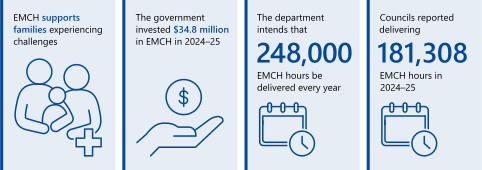
Source: VAGO.
What we concluded
EMCH is supporting families experiencing challenges. But the department and councils cannot show that only eligible families receive EMCH support, that it is reaching everyone who needs it, or that its intended outcomes are being achieved.
Most councils report delivering fewer than their funded hours and the reported service hours each family receives vary widely.
The department does not have the information it needs to fully understand and align EMCH funding to demand.
The department does not monitor or report on whether EMCH is achieving its performance and outcome measures. This is partly because the department’s client management system does not capture accurate, timely or fit for purpose EMCH data. The department is replacing its client management system and plans to address all but one issue we identified. Design work is ongoing.
We made 3 recommendations to the department to improve how it:
- enables data to be captured and used
- aligns the EMCH funding model to demand
- monitors and reports on EMCH performance and outcomes.
Video presentation
1. Our key findings
What we examined
Our audit followed 2 lines of inquiry:
1. Is the Enhanced Maternal and Child Health program (EMCH) being accessed by families experiencing challenges?
2. Is EMCH meeting its performance and outcome measures?
To answer these questions, we examined:
- Bayside City Council (Bayside)
- Central Goldfields Shire Council (Central Goldfields)
- Darebin City Council (Darebin)
- Department of Health (the department)
- Melton City Council (Melton)
- Mildura Rural City Council (Mildura)
- Whittlesea City Council (Whittlesea).
Terms used in this report
Councils
We use 'councils' in this report to refer to all 79 local government providers of the Maternal and Child Health (MCH) Service (including EMCH). This includes councils that directly employ nurses to deliver the MCH Service and service providers contracted by councils, such as regional health services.
We have used the department’s EMCH funding model council classifications, which recognise 22 metropolitan Melbourne councils, 10 interface councils and 47 rural councils. A full list of councils and their classifications is in Appendix D.
Interface councils
The fast-growing councils that form a ring around (or ‘interface with’) metropolitan Melbourne. Of the councils we audited, Melton and Whittlesea are interface councils.
Rural councils
All non-metropolitan councils in Victoria. Of the councils we audited, Central Goldfields and Mildura are rural councils.
Background information
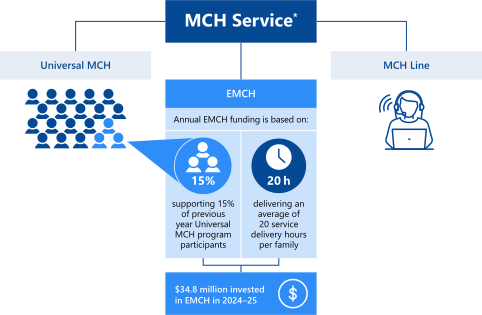
MCH Service
The MCH Service is a free primary health service. It is available to Victorian families with children from birth until they start school.
The MCH Service focuses on identifying and supporting families to manage the physical, emotional and social factors that affect young children and their families. The service aims to be comprehensive.
It includes:
- 24-hour telephone support, called the MCH Line
- EMCH
- the Universal MCH program.
Figure 1: The MCH Service
Note: *The MCH Service also includes the Aboriginal MCH program and other supports, workforce initiatives and foundational resources and systems.
Source: VAGO.
About EMCH
EMCH is available to families with 2 or more risk factors (such as infant sleep and settling issues or maternal or child health issues). Families are considered as high risk when they also have an absence of protective factors (such as positive social connections and financial resources). Families can access EMCH multiple times in a financial year.
The government invested $34.8 million in EMCH in 2024–25 to support 15 per cent of families with children aged 3 or under. The department allocates funding to each council. Allocations are based on EMCH supporting 15 per cent of children aged 3 or under who were enrolled in the Universal MCH program in that council the previous year.
EMCH is funded on a model that provides each family an average of 20 service delivery hours (22.67 for families in rural areas). But councils should use funding flexibly to meet families’ needs.
Children aged 3 or under in a council
For EMCH, the total number of children aged 3 or under in a council is calculated based on council-reported data about children that were enrolled in the council’s Universal MCH program in the previous year. It is the sum of enrolments for children aged:
- zero to one year
- one to 2 years
- 2 to 3 years.
EMCH service delivery hours
Councils annually report to the department on their total EMCH service delivery hours, split into 3 types of program delivery.
| Time spent on … | includes … |
|---|---|
| direct activities | interactions with families, usually in person but sometimes over the phone. |
| indirect activities | time spent supporting a family when the family is not present. |
| travel | time taken for EMCH professionals to travel to provide support to families. |
The former Department of Education and Training expanded EMCH in 2018 as part of the Victorian Government’s Early Childhood Reform Plan.
EMCH's guiding principles are that it:
- is child-centred and maternal- and family-focused
- promotes connection with parents as partners
- is a health service that promotes early intervention and preventative health
- provides equitable and inclusive service
- values coordination, collaboration and partnership with local services and professionals.
EMCH performance and outcome measures
The department has a service agreement with each council to deliver EMCH in line with the 2019 Enhanced Maternal and Child Health Program: Program Guidelines (2019 guidelines). The 2019 guidelines require councils to use a specific client management system called the Child Development Information System (the system) for EMCH.
We assessed whether the department and councils monitored and reported against the performance and outcome measures in the 2019 guidelines.
Performance measures
Performance measures track the quantity of activities delivered. EMCH performance measures included the number of EMCH hours families received and the number of families supported in each council.
Outcome measures
Outcome measures track an activity’s impact. EMCH outcome measures included being up to date with childhood immunisations and establishing connections to other community supports.
In July 2025, the department updated its 2019 guidelines. The 2025 Enhanced Maternal and Child Health Program: Program Guidelines (2025 guidelines) revised the EMCH performance and outcome measures to establish 2 performance measures and 11 priority outcome measures.
What we found
This section focuses on our key findings, which fall into 3 areas:
1. EMCH may not be reaching everyone who needs it.
2. The department does not understand EMCH demand enough to inform its funding allocations.
3. The department does not monitor or accurately report on EMCH performance or outcome measures.
The full list of our recommendations, including agency responses, is at the end of this section.
Consultation with agencies
When reaching our conclusions, we consulted with the audited agencies and considered their views.
You can read their full responses in Appendix A.
Key finding 1: EMCH may not be reaching everyone who needs it
The department does not know the program's reach or hours delivered
The department funds councils using a model that provides for 15 per cent of children aged 3 or under enrolled in the Universal MCH program to receive EMCH support. But the department does not know if it is reaching that many children because it captures service delivery data per family, not per child.
The department funds councils using a model that provides families an average of 20 hours of EMCH support per child (22.67 hours for children in rural areas). The amount of support councils reported that families received varied significantly between councils, from one hour per family in one council to 27 hours per family in another council.
Councils cannot demonstrate that only eligible families access EMCH
No audited council could show that its cohort of families accessing EMCH is fully eligible.
We could not assess if all families in the councils we audited were eligible. This is because the system councils are using to capture EMCH program data is not set up to consistently record if families meet the eligibility criteria.
Reported service delivery hours do not align to funding or the statewide target
The department funds councils every year based on an estimated number of service delivery hours the council should provide in that year.
Councils report on the number of service delivery hours provided in the previous year to the department. We found this data is not accurate because:
- the system is not fit for purpose
- of data entry errors and inconsistencies in how MCH professionals allocate their service delivery across direct, indirect and travel time.
The department is aware that EMCH data is not accurate. It cannot rely on the data for decision making. The department is replacing the system and addressing data accuracy issues caused by system design issues, in consultation with MCH professionals.
Between 2022–23 and 2024–25, most councils reported delivering less than 90 per cent of their funded hours. But 12 of 79 councils delivered more than 110 per cent of their funded hours.
Reported service delivery fell short of the department's statewide 248,000 hours target by 37 per cent in 2022–23 and 27 per cent in 2024–25.
Addressing this finding
To address this finding, we made one recommendation to the department about addressing all known data quality issues in the new system.
Key finding 2: The department does not understand EMCH demand enough to inform its funding allocations
The department is not accessing all available information to improve its understanding of EMCH demand
The department does not own or have access to EMCH data in the system. And it does not collect detailed information from councils about service delivery. For example, it does not know the:
- most common EMCH referral reasons, which would tell it who needs support
- average number of hours EMCH professionals spend with families, which would tell it how much support families need.
EMCH’s funding allocations may not align to demand
The department’s EMCH funding model allows the department to allocate funding using:
- the number of children aged 3 or under in a council
- a council’s socioeconomic status and rurality.
The model does not use past years' EMCH service delivery data. This means the department’s funding allocations may not reflect actual demand and councils may be receiving more or less funding than they need to support families experiencing challenges. The department does not consider system data to be accurate enough to use as a basis for funding calculations. But the department does use this data for its annual performance reporting to Parliament.
We found that the challenges faced by families receiving EMCH support were broad and not confined to socioeconomic disadvantage.
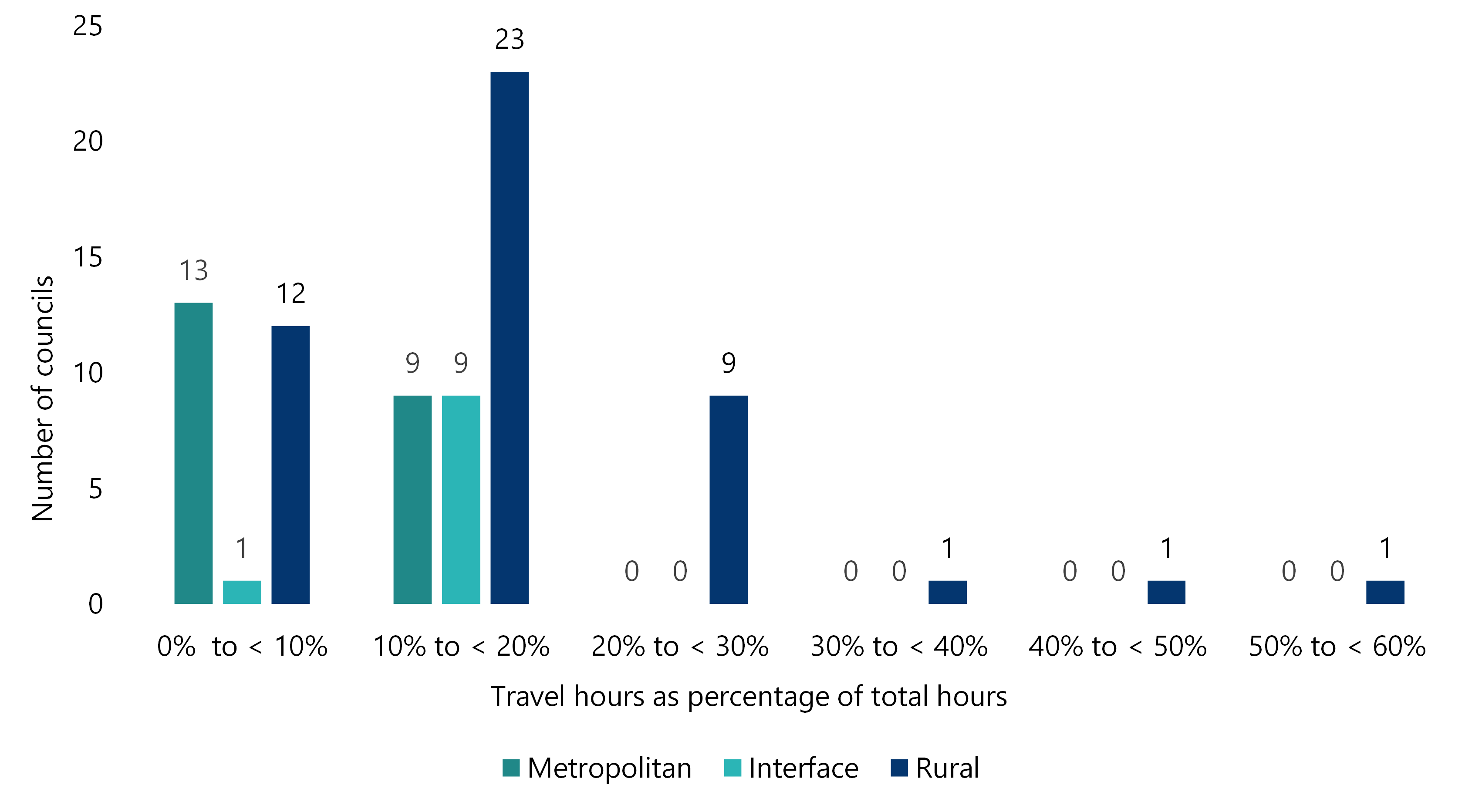
We also found that, while rural councils receive additional funding for travel, only a small number reported more travel than metropolitan councils. Only 12 out of 47 spent more than 20 per cent of their total hours on travel. This means the department may need to consider aligning funding allocations more closely to demand.
Addressing this finding
To address this finding, we made one recommendation to the department about improving its understanding of EMCH demand and reviewing the funding model.
Key finding 3: The department does not monitor or accurately report on EMCH performance or outcome measures
The department reports on only one of 5 performance measures and does not monitor or report on outcome measures
The department does not monitor or accurately report on EMCH's performance (quantity of activities delivered) and outcome (program impact) measures. It does not have access to EMCH data in the system and does not check if councils are meeting the measures as required.
The system is not fit for purpose for monitoring and reporting on the EMCH program because it does not capture data on all the performance and outcome measures. Some data cannot be entered into the system in a way that allows it to be reported on. This means councils cannot easily monitor or report on performance or outcome measures.
The department's new system should address the data quality issues we identified. System design work was ongoing during this audit.
The department's performance reporting is inaccurate and was materially inaccurate in 2022–23
The department reports publicly against the annual number of EMCH service delivery hours performance measure. It uses system data for this despite the known data quality issues. The department did not note the known data accuracy issues in its reporting.
The department reported materially inaccurate figures against this measure to Parliament in 2022–23. The department reported it delivered its full 248,000 target hours, but the data it received from councils showed they only delivered about 156,000 hours. The department told us this was because it reported preliminary figures instead of actual results. But it did not note that in its reporting.
In 2023–24 and 2024–25, the department again reported inaccurate figures, but it over-reported only by 0.6 per cent from actual hours councils reported delivering.
New outcome measures are not consistently measurable or time-bound
The updated outcome measures in the 2025 guidelines are not consistently measurable or do not have target dates for completion. This limits the department and councils' ability to accurately monitor and measure program performance.
The department does not report against the new performance and outcome measures.
Addressing this finding
To address this finding, we made one recommendation to the department about reviewing, monitoring and reporting its performance and outcome measures.
See the next section for the complete list of our recommendations, including agency responses.
2. Our recommendations
We made 3 recommendations to address our findings. The relevant agency has accepted the recommendations in full or in principle.
| Agency responses | ||||
|---|---|---|---|---|
| Finding: The Enhanced Maternal and Child Health program may not be reaching everyone who needs it | ||||
Department of Health
| 1
| In consultation with Maternal and Child Health Service providers:
(See Section 3) | Accepted
| |
| Finding: The department does not understand Enhanced Maternal and Child Health program demand enough to inform its funding allocations | ||||
Department of Health
| 2
|
(See Section 4) | Accepted in principle
| |
| Finding: The department does not monitor or accurately report on the Enhanced Maternal and Child Health program's performance or outcome measures | ||||
Department of Health
| 3
|
(See Section 5) | Accepted
| |
3. Program delivery
EMCH funding is based on supporting 15 per cent of children aged 3 or under enrolled in the Universal MCH program and providing 20 service hours per family on average. The department does not know whether EMCH service delivery aligns to this.
No council could show that they only provided EMCH support to eligible families. This is mainly because the system limits MCH professionals' ability to effectively record data and monitor eligibility.
Between 2022–23 and 2024–25, most councils reported delivering less than 90 per cent of their funded hours. Some used more than 110 per cent. In these years, councils reported delivering 27 to 37 per cent fewer hours than the department's 248,000 hours target.
Covered in this section:
- The department does not know the program's reach or hours delivered
- Councils cannot demonstrate that only eligible families access EMCH
- Reported service delivery hours do not align to funding or the statewide target
The department does not know the program's reach or hours delivered
Intended reach and hours
The department's funding for EMCH is based on the program supporting 15 per cent of children aged 3 or under who were enrolled in the Universal MCH program the previous year.
The department allocates funding annually to councils based on an assumed number of service delivery hours for each age cohort. These are shown in Figure 2.
Figure 2: Service hours allocation for each age cohort
| Age cohort | Service hours allocation (metropolitan and interface) | Service hours allocation (rural) |
|---|---|---|
| 0–1 year olds | 10 hours | 11.33 hours |
| 1–2 year olds | 5 hours | 5.67 hours |
| 2–3 year olds | 5 hours | 5.67 hours |
Source: VAGO, using information from the department.
Although this is the funding model’s basis, the department tells councils that they should use funding flexibly to meet families’ needs. In its EMCH funding factsheet and other written communications, the department advises councils to use professional judgement when offering EMCH support so that no families who need and want it miss out. Even if a family does not meet EMCH’s eligibility criteria, if the council has capacity to support the family and can see a role for EMCH, the family may be offered EMCH support.
Program reach
From 2022–23 to 2024–25, the department did not monitor EMCH reach. The department advised that this is because the system does not capture or cannot report all relevant data.
EMCH is intended to support 15 per cent of families with children aged 3 or under. The department allocates EMCH funding to councils based on the number of children aged 3 or under in a council. It does not know if EMCH supported 15 per cent of families or children.
This means the department might be funding services that are not being delivered to as many families or children as intended across the state.
We were unable to assess this because the department does not have data on the number of families enrolled in the Universal MCH program (it only knows the number of children), or on the number of children supported by EMCH (it only knows the number of families), in any given year.
Service hours
The department does not monitor if EMCH service delivery aligns to the hours of service assumed in the funding model. This includes if:
- families are receiving an average of 20 hours of EMCH
- children aged zero to one year old receive an average of 10 hours (11.33 hours in rural areas)
- children aged one-to-2 and 2-to-3 years old receive an average of 5 hours (5.67 hours in rural areas).
While the funding model includes this information about average hours of service delivery, the department does not have a target number of hours that should be delivered to each family receiving EMCH support.
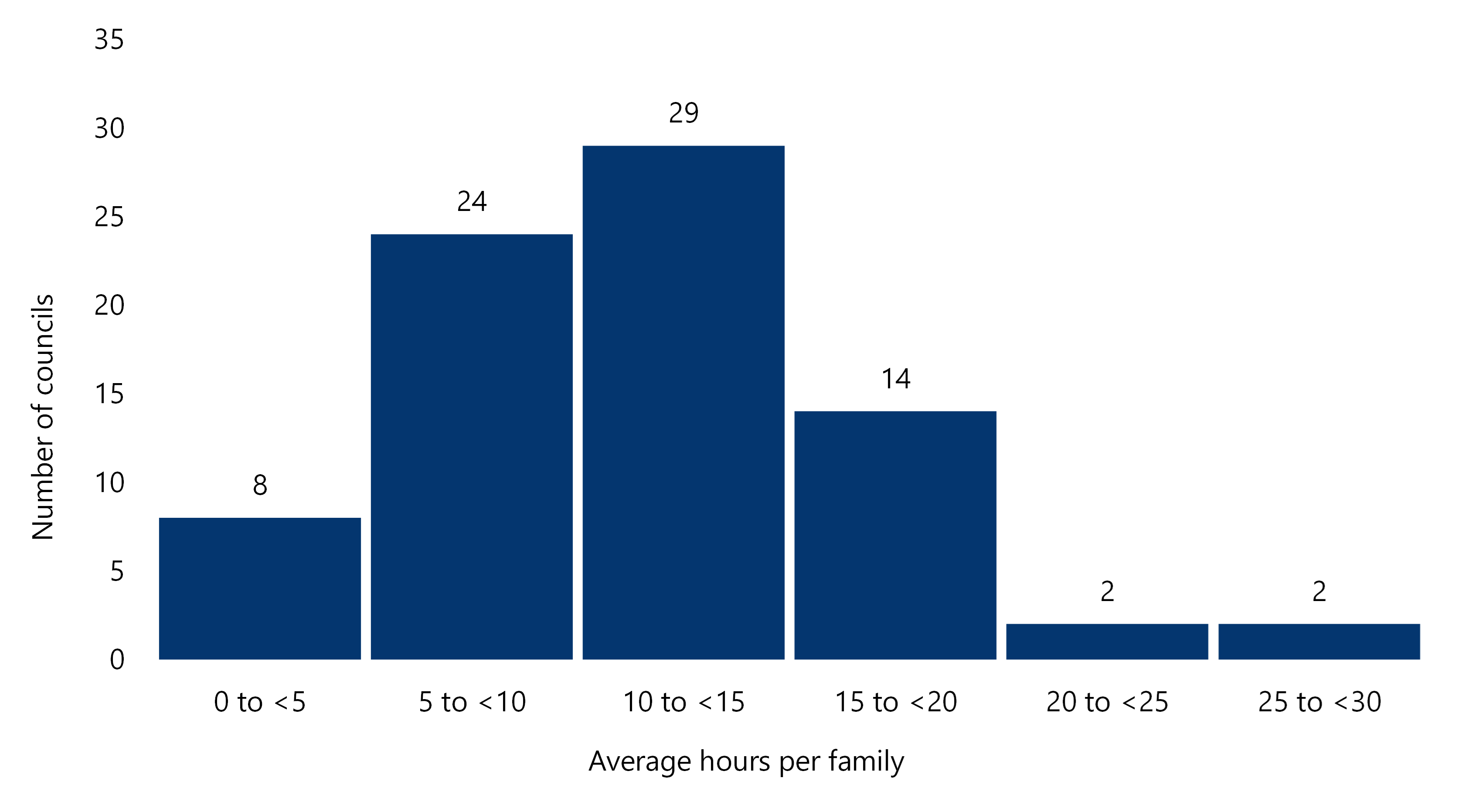
But as Figure 3 shows, in 2024–25 most councils reported providing fewer than 20 hours to families. On average, families received around 10 hours.
The amount of support councils reported that families received varied significantly between councils, from one hour per family in one council to 27 hours per family in another council.
This variation means the department may be funding EMCH that is not being delivered in quantities that maximise positive outcomes for families.
Figure 3: Councils' average EMCH hours delivery per family in 2024–25
Note: < means less than.
Source: VAGO, based on council-reported data provided by the department.
Councils cannot demonstrate that only eligible families access EMCH
Program eligibility
Referrals into EMCH commonly come from nurses delivering the Universal MCH program and other professionals including child protection practitioners, hospital staff or social workers.
The 2019 guidelines require councils to check that families meet 3 eligibility criteria before enrolling them into EMCH:
- the child is aged 3 years or under
- families have an appropriate level of need, presenting with 2 or more risk factors
- EMCH can respond effectively.
Data on eligibility
The department does not oversee whether councils apply the eligibility criteria. Councils do not formally monitor or report on whether their families met the eligibility criteria.
The system does not allow a consistent way to record if each family meets the eligibility criteria. This is because:
- no data is captured for referrals that do not proceed to program entry
- for criteria 1 and 3, referral forms that contain relevant information are completed outside the system
- for criterion 2, risk factors are captured as ‘referral reasons’ in the system, but these referral reasons include multiple risk factors. This means a family could have only one referral reason recorded in the system, but still fulfil criterion 2 by having more than one risk factor. The 2019 guidelines and EMCH referral form template list the many risk factors that may fall under a single referral reason.
| If the referral reason relates to ... | the family may present with one or more risk factors listed in the 2019 guidelines including ... |
|---|---|
| an infant or child with complex growth, health and development issues |
|
| concern on the part of the assessing nurse |
|
| trauma or mental health concerns impacting parenting capacity |
|
All 6 audited councils told us that they use their professional judgement when enrolling a family into EMCH to make sure no families that need and want EMCH miss out.
Some councils use flexible approaches such as running group sessions or ‘holding’ a family in the Universal MCH program for extra time until they can transition them into EMCH. This can occur even if a family does not meet one or more of the eligibility criteria. For example, if a council has capacity to accept a family into EMCH and the family needs support but has only one risk factor, the family may still be accepted. This may not happen if the council’s EMCH staff are at capacity.
Council compliance with family need
We assessed if families receiving EMCH support from the 6 audited councils met eligibility criterion 2 (families have an appropriate level of need, presenting with 2 or more risk factors). This is the only criterion that councils have reportable data on. It is captured in the system as referral reasons.
As Figure 4 shows, no council showed that all families were meeting criterion 2. This is mainly because the system limits MCH professionals' ability to effectively record data and monitor eligibility.
In Bayside, 29 per cent of families had no referral reason recorded. In Bayside and Mildura, less than 63 per cent of their families had 2 or more referral reasons.
Figure 4: Eligible EMCH referrals per criterion 2, 1 July 2022 to 30 June 2025
| No reason | One reason | 2 or more reasons | Total | |
|---|---|---|---|---|
| Bayside | 32 (29.4%) | 16 (14.7%) | 61 (56%) | 109 |
| Central Goldfields | 1 (0.6%) | 4 (2.5%) | 154 (96.9%) | 159 |
| Darebin | 48 (8.6%) | 102 (18.2%) | 409 (73.2%) | 559 |
| Melton | 61 (4.6%) | 96 (7.2%) | 1,173 (88.2%) | 1,330 |
| Mildura | 32 (7.2%) | 134 (30.2%) | 278 (62.6%) | 444 |
| Whittlesea | 61 (4.9%) | 122 (9.9%) | 1,053 (85.2%) | 1,236 |
Source: VAGO, based on data provided by the 6 audited councils.
Reported service delivery hours do not align to funding or the statewide target
Actual statewide program delivery
The department’s EMCH program output measure has an annual service delivery target of 248,000 hours. In 2024–25, the department funded 261,195 hours.
Despite this, councils reported to the department that they delivered only 181,308 hours that year, which is:
- 27 per cent less than the annual service delivery target
- 31 per cent less than the total hours funded.
For 2024–25, the gap in reported hours equates to about $11 million of the total funding the department gave councils for EMCH service delivery.
Councils reported delivering significantly fewer hours than their annual targets in all years, delivering between 63 and 73 per cent. Councils also reported delivering significantly fewer hours than they were funded for in all years, delivering between 58 and 69 per cent, as shown in Figure 5.
Figure 5: Program delivery from 2022–23 to 2024–25 compared to funding (actual hours compared to funded hours) as a percentage
| Reported actual hours delivered | Funded hours | Percentage of funded hours reported as delivered | |
|---|---|---|---|
| 2022–23 | 155,787 | 266,786 | 58.4% |
| 2023–24 | 176,068 | 260,254 | 67.7% |
| 2024–25 | 181,308 | 261,195 | 69.4% |
Source: VAGO, based on data provided by the department.
Service delivery oversight
Despite councils consistently delivering less hours overall than they are funded to deliver, the department has continued to fully fund all councils. The department does not reduce councils’ future year funding based on the prior years’ service delivery hours. It also does not actively engage with councils to understand the reasons contributing to under-delivery or to support them to lift their performance.
The department’s oversight of EMCH service delivery lacks key elements of contract management such as performance monitoring and engagement with councils to make sure funded services meet expected standards. This means the department cannot show that it is achieving value for money from EMCH.
We discuss EMCH funding in chapter 4 and EMCH performance monitoring in chapter 5.
Service delivery against funded hours
Most councils reported to the department that they delivered either substantially more or fewer hours than they are funded for.
| In 2024–25, of the 79 councils … | reported delivering … |
|---|---|
| 52 councils | less than 90 per cent of funded hours. |
| 7 councils | between 90 and 100 per cent of funded hours. |
| 5 councils | between 100 and 110 per cent of funded hours. |
| 15 councils | more than 110 per cent of funded hours. |
Most councils (17 of 20 councils) that reported delivering more than their funded hours also reported delivering fewer than 20 hours of support to a family. This shows that they supported more families than they were funded for.
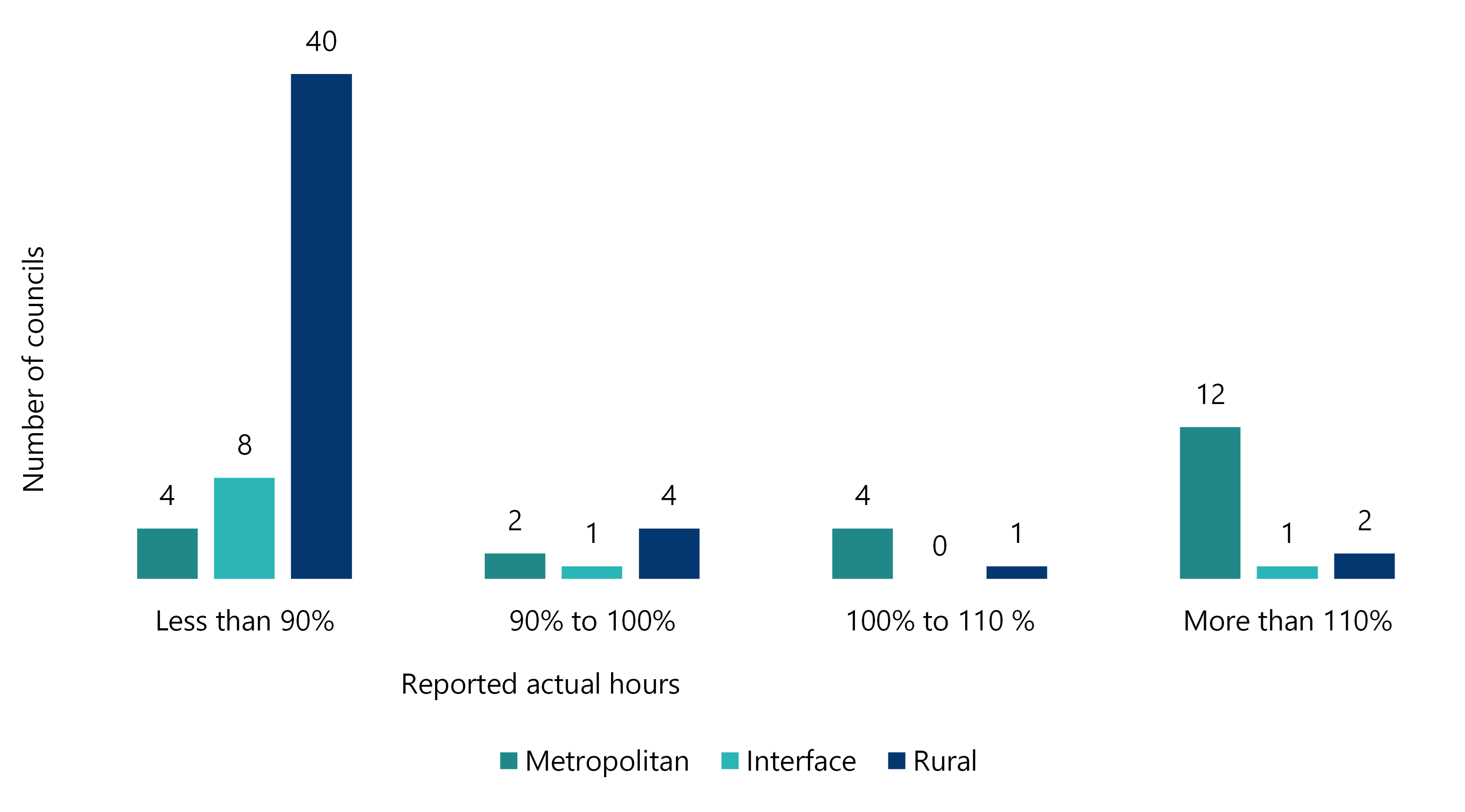
Fifteen of the state’s 79 councils reported delivering 110 per cent or more of their funded hours. The majority of these (12 councils) were metropolitan councils. By contrast, 52 councils reported delivering 90 per cent or less of their funded hours. The majority of these (40 councils) were rural councils, as Figure 6 shows.
Figure 6: Councils' reported actual EMCH hours as a percentage of funded hours, 2024–25
Source: VAGO, based on data provided by the department.
Of the councils we audited, from 2022–23 to 2024–25, Bayside and Darebin (both metropolitan councils) delivered more than their funded hours. Both councils subsidise the department's EMCH funding.
Three of the 4 audited councils that delivered fewer than their funded hours experienced staff shortages over the audit period and said this affected their ability to achieve full service delivery. Two of these councils had plans approved by the department that outlined short term strategies to supplement their workforces and support families during periods of staff shortages.
Councils told us that reported service hours may be less than actual hours delivered because of issues such as data entry inaccuracy and inconsistency.
Data accuracy
Data accuracy
The Victorian Government's Data Quality Guideline advises that accurate data correctly portrays the real world situation it was designed to measure.
We found that the data councils reported to the department was not accurate. The reasons for this include that:
- nurses record time spent on program delivery inconsistently
- the system cannot capture time spent in support of a family before they have agreed to receive EMCH support or after their case file has been closed
- errors entered into the system are difficult to correct once saved.
The department is aware that EMCH data is not accurate. We saw evidence of the department reinforcing to councils the need for data accuracy.
Case study 1: Data accuracy issues in a sampled audited council
Inaccuracies in all 4 EMCH case files reviewed
We reviewed 4 EMCH family case files from a 4 month period in 2025 in one audited council. We found that:
- all 4 case files had inconsistencies in how time was captured
- one case file reflected 77 hours and 35 minutes of service delivery for one family, but this was a time allocation error in which 60 minutes had been incorrectly recorded as 60 hours, and the system prevented this from being corrected
- 3 different referral forms were used for the 4 families
- none of the case summaries of the 4 families had any time or notes against the option ‘case consultation/discussion’. This is despite the council advising us that MCH nurses would have spent time on this.
The prevalence of data accuracy issues in this small number of case files supports our finding that EMCH data is not accurate.
Source: VAGO, using case file information provided by a sampled audited council.
New system
The department is replacing the system used for the MCH Service, including EMCH. It is due to complete the new system in late 2026 and roll it out in 2026–27.
The new system’s specifications show that it will not capture general EMCH effort that is not related to an individual client, such as scheduling group sessions or discussing families that are referred to EMCH but do not proceed to become EMCH clients.
But the specifications show that the department:
- will address other data accuracy issues we identified
- would be doing further system design work in consultation with MCH professionals.
We saw evidence of plans for features in the new system that should contribute to a professional and smooth user experience. These improvements may help to address MCH professionals not always documenting their time accurately in the system.
Planned features include:
- intuitive, logical and flexible methods for a user to complete a task or workflow
- consistent design of features and formatting
- responsive design for all devices
- capability for a user to personalise the system
- help desk support available during business hours
- an always-available, in-built system support manual on how to use and navigate the system.
The department told us that alongside the system replacement project, it is also delivering a collaboration platform as a common site to share practice, guidelines and service updates with the MCH workforce.
4. Demand and funding
The department's EMCH funding model is based on the number of children aged 3 or under in each council, as well as each council’s socioeconomic status and rurality. But the model does not use past EMCH service delivery data. The department does not have a complete understanding of EMCH demand.
Despite being part of the funding model’s basis, we found that the challenges faced by families that are eligible for EMCH are not confined to socioeconomic disadvantage. It is also unclear whether all rural councils need additional funding for travel.
Covered in this section:
- The department is not accessing all available information to improve its understanding of EMCH demand
- EMCH’s funding allocations may not align to demand
The department is not accessing all available information to improve its understanding of EMCH demand
Understanding demand
The department knows how many children are born in Victoria each year. Councils also annually report the number of families accessing EMCH.
But this does not provide enough useful information for the department to have a strong understanding of EMCH demand. There is more information available in the system councils use that would improve the department’s understanding.
| Information on … | would help the department to understand … |
|---|---|
| the number of children (as opposed to families) receiving support from EMCH each year statewide and in each council | whether councils are delivering EMCH to 15 per cent of children aged 3 or under enrolled in the Universal MCH program, per the funding formula. |
| families’ most common goals | the types of issues families need support with most often. |
| the number of hours on average that MCH professionals spend with each family | whether the 20 hours average in the funding model aligns to actual reported service delivery. |
| the most common referral sources and reasons | the types of families needing EMCH the most. |
| the number of referrals from EMCH to external professionals or services | the types of services that families accessing EMCH need in the longer term. |
EMCH’s funding allocations may not align to demand
Aligning funding to demand
The department does not use EMCH data as an input to determine future funding allocations. This may mean that councils are over or underfunded to deliver EMCH.
The department uses a funding model to distribute funding to each council based on its:
- number of children aged 3 or under in the previous year
- number of recipients of the Australian Government’s Family Tax Benefit Part A (relative population size and socioeconomic disadvantage)
- rurality.
The department provides additional funding to interface councils to reflect their growing populations and a small additional funding component to all councils to assist with MCH nurses’ professional practice.
The former Department of Education and Training developed the EMCH funding model. The department has not confirmed if the funding model’s inputs allow it to target funding allocations to demand.
The department told us that one reason it does not use EMCH data as part of its funding model is that it is not accurate enough to use as a basis for funding calculations. But the department uses this data for its annual performance reporting to Parliament.
The department also told us that it does not know how efficiently councils use EMCH funding.
Socioeconomic disadvantage
The challenges experienced by families that are eligible for EMCH are broad and not only faced by those who are socioeconomically disadvantaged.
But the department does not know the most common challenges families receiving EMCH support face because they do not request this data from councils.
This means that the department’s funding allocations may not align with the challenges families receiving EMCH support face.
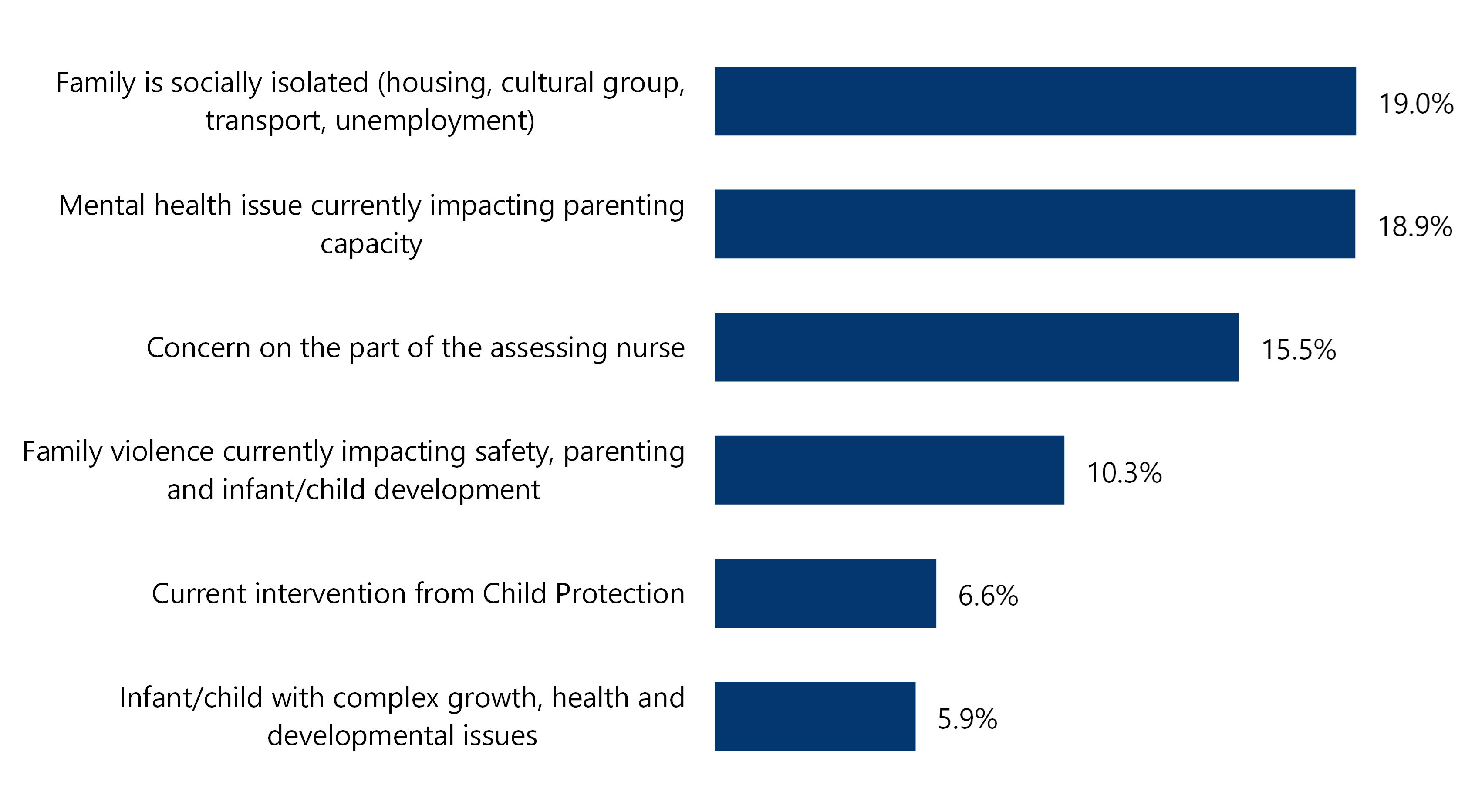
To understand the most common challenges faced by families receiving EMCH support in the audited councils, we looked at the reasons documented in the system for each family’s referral. This is shown in Figure 7.
Figure 7: Most common EMCH referral reasons, 2022–23 to 2024–25, in the 6 audited councils
Note: The referrals in the figure relate to families who agreed to receive EMCH support. The system does not allow councils to consistently capture information about referrals where the family did not go on to become an EMCH participant.
Source: VAGO, based on data provided by the 6 audited councils.
Rural councils' travel time
Rural councils receive additional funding to reflect that the distances they need to travel to visit families in their homes may be greater than the distances travelled by metropolitan councils.
But only a small number of rural councils reported travelling more than metropolitan councils.
In 2024–25, only 12 of the 47 rural councils, and no metropolitan councils, reported spending more than 20 per cent of EMCH service delivery time on travel. The remaining 35 rural councils reported spending less than 20 per cent of their total EMCH delivery time on travel, the same as all metropolitan councils. This is shown in Figure 8.
This suggests that not all rural councils may need the additional funding specifically to assist with more travel. We heard from Central Goldfields, a rural council, that some families in their local area prefer to receive EMCH support in an MCH centre in town rather than in their homes.
But some rural nurses who work across multiple MCH programs may not accurately capture their travel time across the various programs they deliver to a family in a single consultation. This means there may be more travel time spent on EMCH than is reflected in the data reported by councils.
The department expects that its new system will help MCH professionals more accurately report their time, including travel time.
Figure 8: Councils' travel hours as percentage of total hours reported for 2024–25
Note: < means less than.
Source: VAGO, based on data provided by the department.
5. Monitoring and reporting
The department does not have systems or processes in place to monitor and accurately report on EMCH performance and outcome measures. Councils are required to meet the measures, but the department does not ask them to report on progress.
EMCH program data is not accurate, timely or fit for purpose. The department is replacing the system and design work is ongoing.
The department has routinely reported inaccurately against its one public performance measure.
New program performance and outcome measures released in July 2025 are not all measurable or time-bound. This limits the department and councils' ability to accurately monitor and measure program performance into the future.
Covered in this section:
- The department reports on only one of 5 performance measures and does not monitor or report on outcome measures
- The department's performance reporting is inaccurate and was materially inaccurate in 2022–23
- New outcome measures are not consistently measurable or time-bound
The department reports on only one of 5 performance measures and does not monitor or report on outcome measures
EMCH
responsibilities
The 2019 guidelines set out EMCH responsibilities for the department and councils.
| The ... | responsible for ... |
|---|---|
| department is | leadership at the state level to facilitate the governance, direction and monitoring of EMCH. |
| councils are | meeting the performance targets in the guidelines and reporting information on EMCH outcome measures to the department. |
Department’s monitoring and reporting
The 2019 guidelines were in place until June 2025 and contained:
- 5 performance measures to track activity quantity, such as hours of service delivered
- 9 outcome measures to track activities directly tied to impact, such as improvements to immunisation rates or family connectedness within the local community.
The only EMCH performance measure the department regularly reports on is the number of hours councils deliver annually. This is included in the department's annual performance statement and annual report. The department has no publicly reported outcome measures relating to EMCH.
The department does not report to government on EMCH performance except for this one performance measure. It does not report to government on EMCH outcomes.
Councils' service agreements
Under the 2019 guidelines, 2 of the 5 performance measures should be set out in each EMCH service agreement between the department and a council. They are:
- the number of families to receive EMCH support
- the number of hours of service to be provided.
The service agreements between the department and the 6 audited councils for 2020–24 did not include these performance measures.
The 2025 guidelines require that service agreements only need to include the number of service hours to be provided. The service agreements the department now has with the audited councils for 2024–28 include this information.
Data timeliness
Data timeliness
The Victorian Government's Data Quality Guideline advises that timeliness refers to how quickly data can be made available when required, and the delay between the reference period (period to which data refers, such as a financial year) and the release of information.
The department does not have access to the system used by MCH professionals to capture EMCH data. Each council owns its MCH Service data.
The department can collect data to support activities and functions under the Health Services Act 1988, including to monitor performance. It collects a limited amount of system data from councils annually.
This raises the risk that the department is not aware of service delivery trends or risks until after the reporting period concludes.
It also causes a delay in public reporting. The department takes 11 months from the end of the reporting period to publicly publish final data against its one performance measure.
The department may have real-time access to the new system through future design or in future system enhancements. We saw that the department will own the new system and intends to have access to the de-identified data it needs to monitor and report on the MCH Service, including EMCH.
Data fitness for purpose
Data fitness for purpose
The Victorian Government's Data Quality Guideline advises that data is considered fit for purpose when it is appropriate for its intended use. The purpose could include decision-making, policy development, service delivery, reporting, and legislative or administrative requirements.
We found that EMCH data is not fit for purpose for the department to monitor and report on if it is meeting EMCH performance and outcome measures.
The system cannot capture complete, structured data on the performance and outcome measures. Data that is captured is not always structured to allow for reports to be run.
We found that the new system is likely to have functionality to capture data for monitoring and reporting on the full suite of performance and outcome measures. Some aspects of the new system design were still being developed at the time of our audit.
The department's performance reporting is inaccurate and was materially inaccurate in 2022–23
Performance measure reporting
2022–23 to 2024–25
The department reports to Parliament against one EMCH performance measure each year. This is the annual number of EMCH program hours delivered for the previous 12 months.
The department reported inaccurate figures against this measure in both its annual reports and the state Budget papers' performance statements.
As shown in Figure 9, council-reported data shows that from July 2022 to June 2024 councils delivered between 63 and 71 per cent of the target service hours. But the department reported that between 71 and 100 per cent of its hours were delivered.
In addition to these discrepancies, the department did not note the known, broader data accuracy issues in its reporting.
Figure 9: Public and internal data relating to the EMCH performance measure
| Year | Early estimate hours | Final reported delivery hours | Actual delivery hours | Final and actual hours variance |
|---|---|---|---|---|
| 2022–23 | 248,000 hours (100%) | 248,000 hours (100%) | 155,787 hours (63%) | −92,213 hours |
| 2023–24 | 248,000 hours (100%) | 177,105 hours (71%) | 176,068 hours (71%) | −1,037 hours |
| 2024–25 | 182,374 hours (74%) | Not yet available | 181,308 hours (73%) | −1,066 hours* |
Note: *This figure has been calculated as the difference between early estimate hours and actual hours as the final reported hours were not yet available.
Source: VAGO, using the department’s 2022–23, 2023–24 and 2024–25 annual reports and the 2024–25, 2025–26, 2026–27 state Budget papers, as well as publicly available information and data provided by the department.
The department told us that in 2022–23 and 2023–24 it reported early estimate hours as final hours due to limited data being available at the time.
In 2023–24 and 2024–25, the department over-reported hours delivered by 0.6 per cent. In its 2024–25 annual report, the department noted that the 2024–25 expected outcome was lower than the target because it estimated the target based on limited available data at the time. It said it would review the performance target in future years.
New outcome measures are not consistently measurable or time-bound
New measures
We assessed whether the 11 EMCH priority outcome measures in the 2025 guidelines are specific, measurable, achievable, relevant and time-bound.
We found that the measures are specific, achievable and relevant. But only:
- 8 of the 11 measures are measurable with targets
- 3 of the 11 are time-bound with a target period for completion.
None of the priority outcome measures can be reported on through the system. If councils want to measure their progress toward achieving these measures they would have to manually collate individual client data from the system.
This makes it difficult for the department and councils to assess whether the priority outcomes are being achieved.
Appendix A: Submissions and comments
Download a PDF copy of Appendix A: Submissions and comments.

Appendix B: Abbreviations, acronyms and glossary
Download a PDF copy of Appendix B: Abbreviations, acronyms and glossary.
Appendix C: Audit scope and method
Download a PDF copy of Appendix C: Audit scope and method.
Appendix D: Council classifications
Download a PDF copy of Appendix D: Council classifications.