
Planning and Managing Drainage Schemes in Melbourne's Growth Areas
Audit snapshot
Does Melbourne Water plan and manage drainage schemes in a way that supports development targets in growth areas?
Why we did this audit
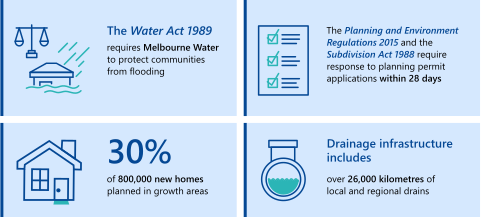
In 2023, the Victorian Government released Victoria's Housing Statement: The decade ahead 2024–2034, which aims to build 800,000 new homes by 2034. Thirty per cent of these homes are planned for Melbourne’s growth areas, where effective stormwater drainage is critical to managing flood risk.
Melbourne Water reviews drainage designs and plans from developers to make sure stormwater drainage infrastructure supports environmental health, water quality and flood protection.
Under the Water Act 1989, the Planning and Environment Act 1987 and the Subdivision Act 1988, it must prepare new plans for managing stormwater drainage and complete reviews on time to support residential development.
We examined whether Melbourne Water delivers its stormwater drainage responsibilities.
Key background information
Source: VAGO.
What we concluded
Melbourne Water's drainage scheme planning and management has partly supported progress towards Victoria’s greenfield housing targets over the period we examined.
Before 2025, Melbourne Water processed fewer than half the planning, drainage design and engineering applications it received on time. Operational changes introduced in 2024 have improved performance, but Melbourne Water needs to fully implement its strategy to maintain these improvements.
Melbourne Water aligns its drainage scheme planning with the Victorian Planning Authority's work program for new precincts. But it could provide clearer information about its draft drainage strategies. It could also refine how it reports its performance to better reflect its role in the precinct structure planning process.
Reviewing new drainage designs and checking existing designs more often would help it identify and respond to risks more effectively.
We made 5 recommendations to address our findings.
1. Our key findings
What we examined
Our audit followed 2 lines of inquiry:
- Does Melbourne Water process drainage scheme applications in a timely manner and support developers to meet requirements
- Can Melbourne Water demonstrate that it plans and delivers drainage schemes in a way that supports greenfield development?
To answer these questions, we examined:
- Melbourne Water, a Victorian Government-owned statutory authority.
Identifying what is working well
In our engagements we look for what is working well – not only areas for improvement.
Sharing positive outcomes allows other public agencies to learn from and adopt good practices. This is an important part of our commitment to better public services for Victorians.
Terms used in this report
Applications
Developers submit applications to Melbourne Water during the planning and delivery of drainage schemes. Depending on the relevant phase, we refer to these applications as:
- planning and development, which relates to whether development can proceed and the relevant drainage requirements
- design and construction, which relates to how the drainage infrastructure is built.
Greenfield
Previously undeveloped land in Melbourne’s growth areas.
Growth areas
We use growth areas in this report to refer to greenfield areas.
Drainage schemes
We use drainage schemes in this report to refer to Melbourne Water's plans for managing stormwater drainage in urban and residential developments. Melbourne Water calls these development services schemes.
A drainage scheme has 2 parts:
- a drainage strategy (or civil engineering plan) shows how the drainage system will meet environmental standards and service all developable land in the scheme boundary
- a pricing arrangement that sets the amount developers and landowners must pay Melbourne Water to help fund construction of the drainage infrastructure identified in the scheme. The amount paid is based on the size and type of development to ensure equitable contributions. We did not examine this part of drainage schemes.
Background information
Victoria’s housing statement
In 2023 the Victorian Government committed to building 800,000 new homes to address ongoing housing affordability issues.
In Victoria's Housing Statement: The decade ahead 2024–2034, the government said it would deliver these new homes over 10 years. It committed to building 30 per cent of them in Melbourne’s growth areas.
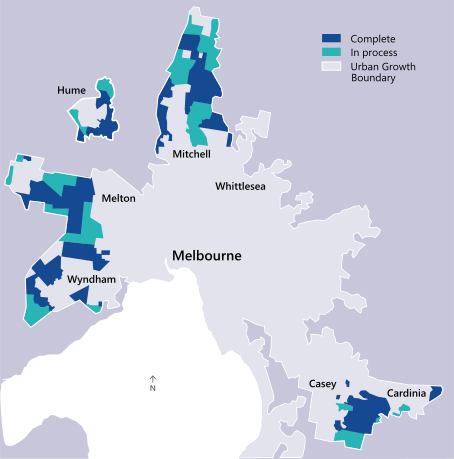
Melbourne's growth areas
In 2024, the Department of Transport and Planning published A 10-year plan for Melbourne’s greenfields.
It outlines 27 new precinct structure plans across Melbourne’s 7 growth areas:
- Cardinia
- Casey
- Hume
- Melton
- Mitchell
- Whittlesea
- Wyndham.
The Victorian Planning Authority (VPA), part of the Department of Transport and Planning since 2025, prepares land for new suburbs by creating precinct structure plans. These plans show how land will be developed and used, including the location of essential infrastructure such as drainage systems.
The VPA works with councils, government departments, Melbourne Water and other stakeholders to determine land requirements and when to build drainage infrastructure. Melbourne Water plans drainage schemes in line with the VPA's precinct planning schedule and milestones.
Figure 1: Greenfield areas where the VPA is planning new communities
Source: VAGO, based on the VPA Greenfields Planning Webmap.
Melbourne Water’s role and responsibilities
Melbourne Water is a statutory body under the Water Act 1989. It manages wholesale water, waterways, sewerage and drainage across greater Melbourne. It also manages all catchments and waterways in the Port Phillip and Western Port regions.
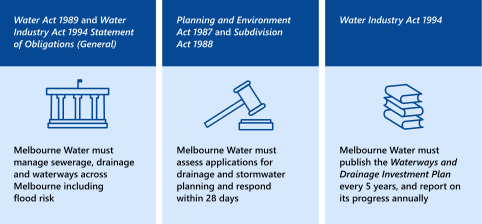
Figure 2: Melbourne Water's legal obligations
Source: VAGO, based on public documents.
Under the Water Act 1989 and Water Industry Act 1994 Statement of Obligations (General), Melbourne Water must protect waterways and manage flood risk.
Stormwater drainage relies on a system of natural and built features that manage how rainfall moves across the landscape. Without the right planning, excess stormwater from very heavy rainfall can overwhelm the stormwater drainage system. This can increase flood risks, damage waterways and reduce water quality.
To meet its obligations, Melbourne Water plans and builds stormwater drainage across Melbourne’s metropolitan and growth areas. Melbourne Water manages the main system components, including major drains, rivers, creeks, wetlands and retarding basins. Councils, transport agencies (such as VicRoads and VicTrack) and property owners manage local or site-specific elements.
Retarding basins
Retarding basins are low-lying areas that temporarily store stormwater during heavy rain.
In new suburbs, Melbourne Water and other agencies design drainage infrastructure to balance cost, community needs, flood protection and waterway health.
As shown in Figure 2, Melbourne Water is a referral authority under the Planning and Environment Act 1987 and the Subdivision Act 1988. In this role, Melbourne Water assesses statutory and non-statutory applications submitted by developers, landowners and councils.
This means councils are required to consult Melbourne Water on planning applications that may affect its assets, responsibilities or statutory interests.
Drainage schemes
Melbourne Water uses drainage schemes to reduce flood risk and protect waterways in urban areas. A drainage scheme can take up to 30 years to fully develop. For example, a drainage scheme may be 20 years old and still include land available for subdivision.
As of June 2025, Melbourne Water manages 263 drainage schemes, including 196 that are still actively developing.
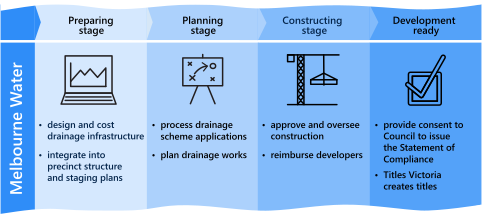
Melbourne Water prepares drainage schemes for new residential and industrial precincts. It works with the VPA, councils, developers and other government agencies to identify drainage requirements, manage flood risk and ensure new developments meet water quality standards (see Figure 3).
Priority urban planning and development applications, and design and construction applications, form part of this process.
Figure 3: Melbourne Water's role in supporting greenfield development
Source: VAGO, based on Melbourne Water documents.
Application response times
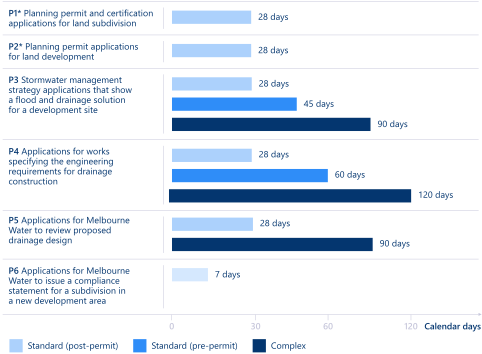
To show how it is performing in the housing supply chain, Melbourne Water publicly reports on 6 priority urban planning and development categories (see Figure 4).
These categories are made up of planning permit referrals and certifications, and technical approvals. These are assessed early in the planning process to enable development to proceed.
Figure 4: Melbourne Water's timeframes for priority urban planning and development applications
Note: * indicates statutory applications.
Source: VAGO, based on our analysis of Melbourne Water documents.
Statutory applications include planning permits and certifications for subdividing or developing previously undeveloped land in growth areas. Under the Planning and Environment Regulations 2015, Melbourne Water is required to respond to planning permit applications within 28 calendar days.
Developers also submit applications for technical advice, agreement or approval on stormwater management strategies, proposed drainage designs and engineering requirements. These applications support drainage scheme delivery and help resolve issues before or during development. Melbourne Water assesses these applications against industry-agreed service standards rather than legally mandated timeframes.
In its Service Standards for Planning and Development, Melbourne Water committed to responding to priority planning and development applications within agreed timeframes at least 90 per cent of the time.
Design and construction applications cover how drainage infrastructure is designed, built and handed over to Melbourne Water. Developers must receive Melbourne Water's approval before they build.
Developers and landowners apply directly to Melbourne Water, while councils or other planning authorities refer statutory planning permit applications to Melbourne Water as part of the planning process.
To assess developers' proposals, Melbourne Water reviews applications that include detailed design information. It also assesses how developers will manage environmental and cultural heritage risks during construction and checks that the construction is complete and operates as intended.
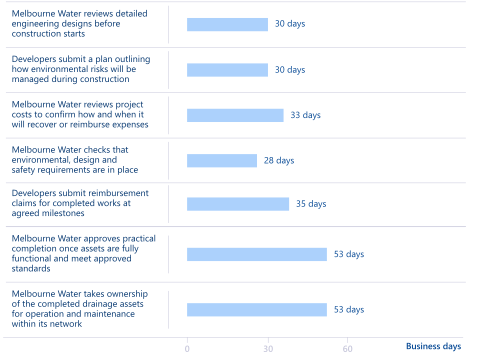
Melbourne Water assesses design and construction applications after planning approval. There are no statutory timeframes, but Melbourne Water uses internal service milestones, measured in business days, to monitor the timeliness of these applications (see Figure 5).
Figure 5: Melbourne Water's timeframes for design and construction applications
Source: VAGO, based on our analysis of Melbourne Water documents.
What we found
This section focuses on our 3 key findings:
1. Melbourne Water has improved its application review times, but has not fully implemented its strategy to maintain improvement.
2. Melbourne Water prepares drainage schemes in line with the VPA’s schedule, but its public reporting does not accurately reflect its role in the precinct structure planning process.
3. Melbourne Water addresses drainage issues as they arise, but should improve its engineering design and review processes to prevent issues from occurring.
Consultation with Melbourne Water
When reaching our conclusions, we consulted with Melbourne Water and considered its views.
You can read the full response in Appendix A.
Key finding 1: Melbourne Water has improved its application review times, but has not fully implemented its strategy to maintain improvement
Melbourne Water is now processing most planning and development applications on time but not design and construction applications
From 2019 to early 2025, Melbourne Water did not meet its service standards for reviewing priority urban planning and development applications. In 2025 Melbourne Water improved its performance for these applications, either meeting or falling slightly below its target of processing 90 per cent of applications on time.
But in 2025, it met its service level milestones only 65 per cent of the time across all design and construction applications. This includes only 49 per cent of developers' detailed engineering designs.
Delays in processing engineering designs can impact construction timing and development sequencing.
Melbourne Water has not fully implemented its strategy to maintain performance improvement
Melbourne Water has developed initiatives that support timely processing, including better assessment and monitoring, clearer decision-making roles, and improved technology systems and tools.
Working well: A phased strategy to address application processing delays
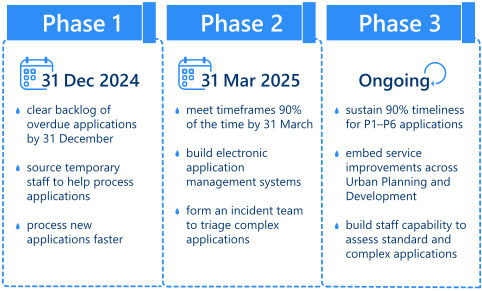
In 2024, Melbourne Water introduced a 3-phase strategy to improve service performance for priority urban planning and development applications.
- Phase 1 focused on clearing existing applications that had not been processed within timeframes.
- Phase 2 improved processing times across new applications to meet service standards more than 90 per cent of the time by 31 March 2025.
- Phase 3, since April 2025, is focused on maintaining the 90 per cent benchmark by embedding improved practices into daily operations and reviewing its projects to support future demand.
Melbourne Water’s short-term initiatives have led to improvements in how quickly it meets statutory and industry-agreed timeframes for reviewing planning and development applications.
But it has not yet fully implemented its strategy to address delays processing design and construction applications. It also does not have a plan in place to manage risks to long-term funding and workforce. This gap presents a significant risk to Melbourne Water's ability to continue meeting service standards.
Melbourne Water does not report specifically on greenfield applications
While Melbourne Water reports on its timeliness to the Minister for Water and on its website, it does not disaggregate its reporting to show information for greenfield applications.
Without this data, Melbourne Water cannot publicly demonstrate whether it is meeting its service standards for greenfield applications.
Addressing this finding
To address this finding, we made 2 recommendations to Melbourne Water about:
- fully implementing its strategy to embed performance improvements
- reporting specifically on its timeliness processing greenfield applications.
Key finding 2: Melbourne Water prepares drainage schemes in line with the VPA’s schedule, but its public reporting does not accurately reflect its role in the precinct structure planning process
Melbourne Water plans and delivers its work to match the VPA’s schedule
Melbourne Water supports greenfield development by aligning its drainage scheme planning with the VPA's precinct planning schedule and milestones. Melbourne Water prepares concept drainage strategies in time for public consultation for draft precinct structure plans. This is important because it helps ensure drainage designs are ready for when development proceeds.
Melbourne Water identifies high risk or complex drainage schemes during its annual planning but could improve its approach to risk assessment to show how prioritisation decisions inform its work programs and advice to the VPA on precinct planning.
Melbourne Water could also improve the consistency and detail of the drainage specifications it exhibits with draft precinct structure plans, to better ensure drainage strategies are resolved before planning panel hearings and approval of precinct plans.
Melbourne Water does not always meet or accurately report on its key performance indicator for preparing drainage schemes
Melbourne Water measures how well it performs preparing drainage schemes by whether it finalises preliminary developer contribution rates for drainage schemes before the planning panel hearing for new precincts.
Planning panel hearings
VPA panel hearings provide an independent and public forum to review and improve precinct structure plans before they are finalised. When the VPA exhibits a precinct structure plan, organisations and individuals can make submissions to show support, raise concerns or suggest changes.
Melbourne Water has not always met this key performance indicator (KPI) in recent years, despite publicly reporting that it has.
This is because Melbourne Water believes it met the KPI's intent to support the precinct structure planning process by completing the engineering and strategic planning needed to approve preliminary rates before the panel hearing. This includes budget forecasts for the drainage schemes.
Key issue: Melbourne Water's KPI does not reflect its role in the precinct structure planning process
Melbourne Water developed its KPI before the VPA introduced the current precinct structure planning process. The KPI focuses on the pricing arrangement part of a drainage scheme and does not measure delivery of the drainage strategy (or engineering plan), which shows how the drainage system will meet environmental standards and service all developable land within the drainage scheme boundary.
Since Melbourne Water cannot set a meaningful pricing arrangement until it resolves all drainage design issues with stakeholders and the planning panel, the KPI does not reflect Melbourne Water's key milestones in the current precinct structure planning process.
Addressing this finding
To address this finding, we made one recommendation to Melbourne Water about ensuring its KPI for implementing drainage schemes reflects the current precinct planning process and its role supporting that process.
Key finding 3: Melbourne Water addresses drainage issues as they arise, but should improve its engineering design and review processes to prevent issues from occurring
Melbourne Water works with stakeholders to resolve conceptual design issues
Melbourne Water identifies risks to effective drainage outcomes across a drainage scheme's lifecycle, such as inadequate land for flood protection and development starting upstream before downstream drainage is in place.
It then consults with the VPA and other agencies to try and resolve risks and other potential barriers to effective stormwater drainage during the drainage strategy design phase.
But it has limited influence on land allocations for drainage infrastructure and development sequencing because drainage competes with other land uses.
Working well: Melbourne Water consults with stakeholders to resolve conceptual design issues and reduce delivery risks
Melbourne Water shares information with stakeholders about risks and barriers to effective stormwater drainage. It works with stakeholders to fix these issues.
For example, it works with the VPA during the precinct structure planning process to address drainage risks and barriers as they arise.
This stage gives Melbourne Water an opportunity to negotiate with the VPA and other agencies to secure land in the right locations for drainage, before it finalises its drainage schemes.
Melbourne Water addresses drainage issues as they arise but should strengthen its functional design review processes
Melbourne Water works with developers and landowners to resolve drainage issues as they arise. Solutions often involve adjusting drainage designs, such as changing the size or layout of pipes, basins and wetlands, or adding new points where stormwater flows into the surrounding environment.
But many issues at the construction stage result from problems in the functional drainage design, and Melbourne Water misses key opportunities to identify these problems earlier.
Key issue: Melbourne Water does not always review drainage schemes to reflect changing land use and development needs
Under its Principles for Provision of Waterway and Drainage Services for Urban Growth, Melbourne Water has committed to regularly review drainage schemes to keep technical requirements up to date and reflect catchment changes. But it does not always undertake these reviews within the 5-year timeframe or update schemes when conditions change.
This risks drainage schemes becoming outdated and not adequately protecting future communities from flooding, especially where schemes are finalised many years before development finishes.
Melbourne Water can also strengthen its drainage designs by introducing independent expert review of draft designs to help it identify risks earlier.
Addressing this finding
To address this finding, we made 2 recommendations to Melbourne Water about:
- ensuring new drainage strategies are peer reviewed before they are finalised
- periodically reviewing completed drainage strategies' engineering designs to ensure they remain effective.
See the next page for the complete list of our recommendations, including agency responses.
2. Our recommendations
We made 5 recommendations to address our findings. Melbourne Water has accepted these recommendations.
| Agency response | ||||
|---|---|---|---|---|
| Finding: Melbourne Water has improved its application review times, but has not fully implemented its strategy to maintain improvement | ||||
Melbourne Water
| 1
| Fully implement its strategy for:
| Accepted
| |
2
| Monitor and publicly report its performance processing drainage scheme planning, design and construction applications specifically in growth areas (see Section 3).
| Accepted
| ||
| Finding: Melbourne Water prepares drainage schemes in line with the Victorian Planning Authority’s schedule, but its public reporting does not accurately reflect its role in the precinct structure planning process | ||||
Melbourne Water
| 3
| Update its key performance indicator for implementing drainage schemes to accurately reflect Melbourne Water's role in the precinct structure planning process and improve performance reporting. This includes being clear about when Melbourne Water should finalise drainage scheme engineering requirements and preliminary contribution rates (see Section 4). | Accepted
| |
| Finding: Melbourne Water addresses drainage issues as they arise, but should improve its engineering design and review processes to prevent issues from occurring | ||||
Melbourne Water
| 4
| Ensure an independent expert reviews all new drainage strategies before they are finalised (see Section 4).
| Accepted
| |
5
| Conduct periodic engineering reviews of drainage strategies in line with its Principles for Provision of Waterway and Drainage Services for Urban Growth so they remain current and reflect changes in land use, development and other catchment conditions (see Section 4).
| Accepted
| ||
3. Processing applications
Melbourne Water has recently improved how quickly it processes priority urban planning and development applications. Since March 2025, it has consistently met performance benchmarks for most application types due to a targeted improvement program.
But it is still missing targets for design and construction applications.
Melbourne Water has not yet fully implemented its strategy to embed performance improvements. Its current initiatives face resourcing and delivery vulnerabilities, which could affect how effectively it maintains its improved performance.
Covered in this section:
- Melbourne Water has improved how quickly it processes priority urban planning and development applications
- Melbourne Water has not yet fully implemented its strategy to maintain improvement
Melbourne Water has improved how quickly it processes priority urban planning and development applications
Public reporting
Melbourne Water publicly reports on application processing timeliness through its annual Waterways and Drainage Investment Plan performance reports. But these reports do not separately identify priority urban planning and development applications or design and construction applications from other planning and flood-related applications. This means that Melbourne Water cannot publicly demonstrate whether it is meeting its service standards.
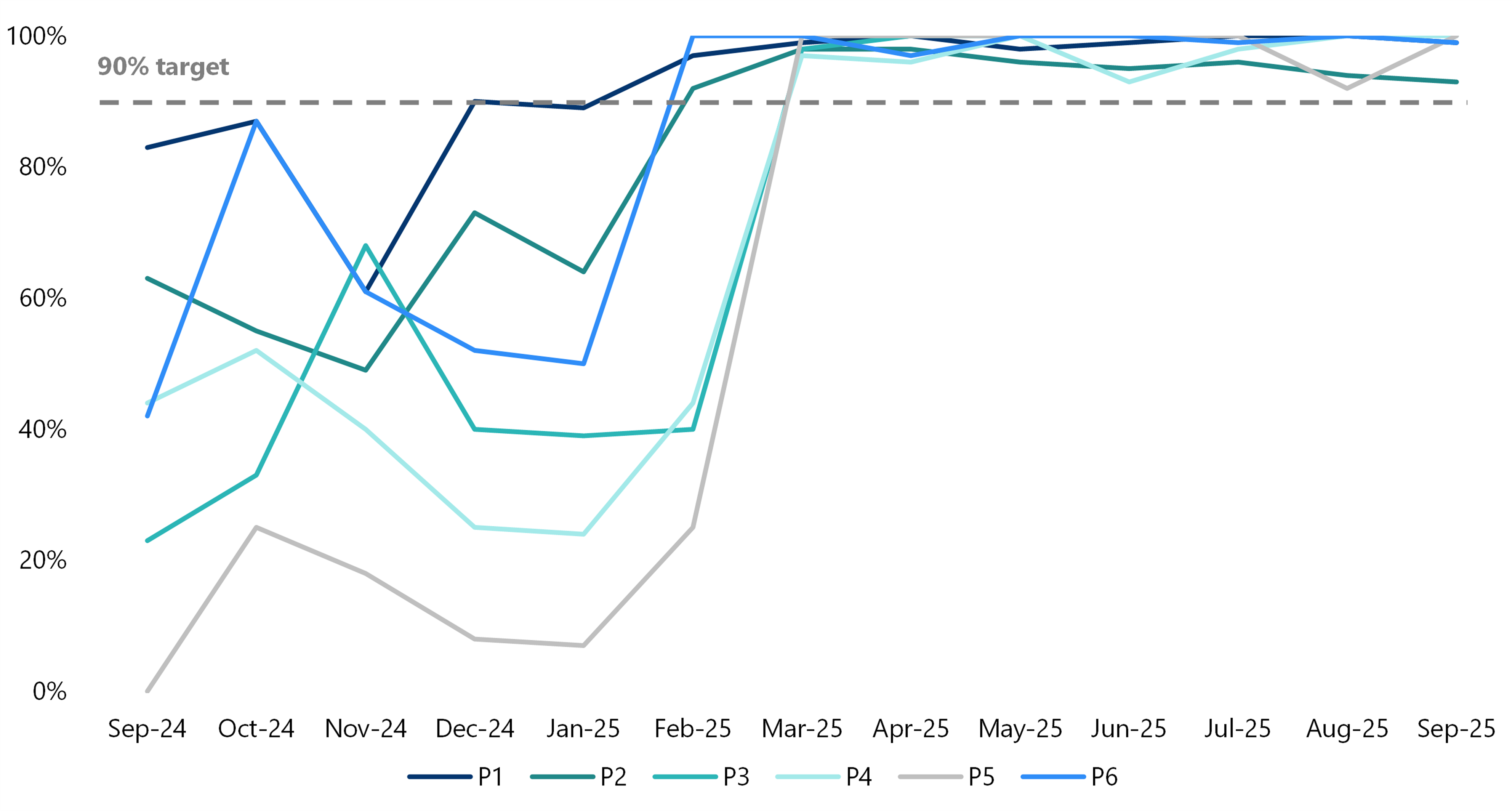
Since October 2024 Melbourne Water has provided monthly timeliness reports for priority urban planning and development applications to the Minister for Water. These reports show that Melbourne Water improved how quickly it processed priority urban planning and development applications from late 2024.
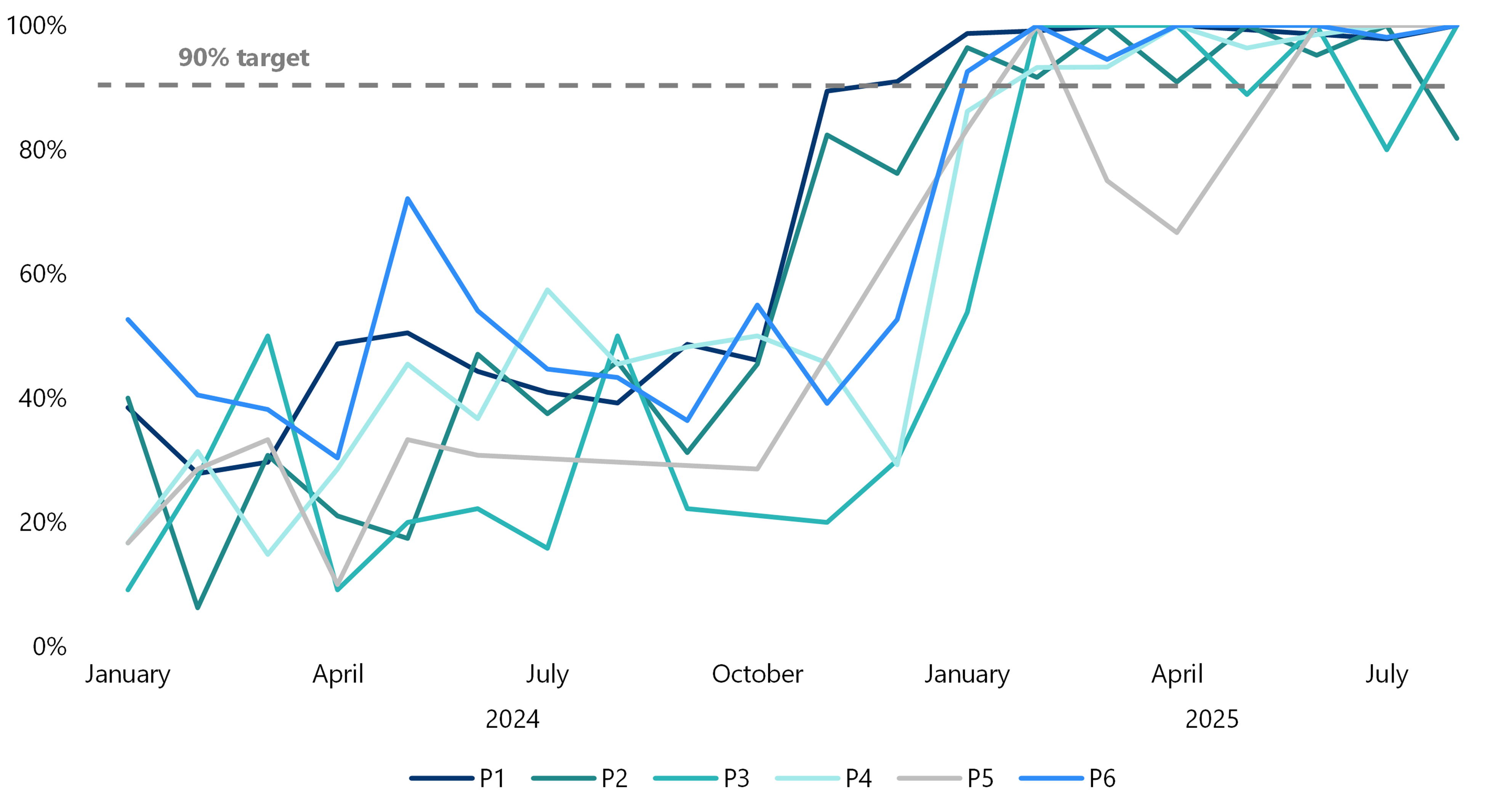
Between March and June 2025, it processed 98.3 per cent of these applications within service standards. Before February 2025, it was not meeting its 90 per cent target (see Figure 6).
Figure 6: Priority planning and development applications processing times between September 2024 and September 2025
Source: VAGO, based on data in Melbourne Water's ministerial reports from November 2024 to September 2025.
Melbourne Water’s 2024–25 annual report also includes timeliness performance for priority urban planning and development applications from July 2024 to June 2025.
But these reports do not separately present processing times for greenfield applications. This means that Melbourne Water does not publicly report its historical performance processing drainage scheme applications in growth areas.
Priority applications
We used Melbourne Water's application data to assess processing times in more detail.
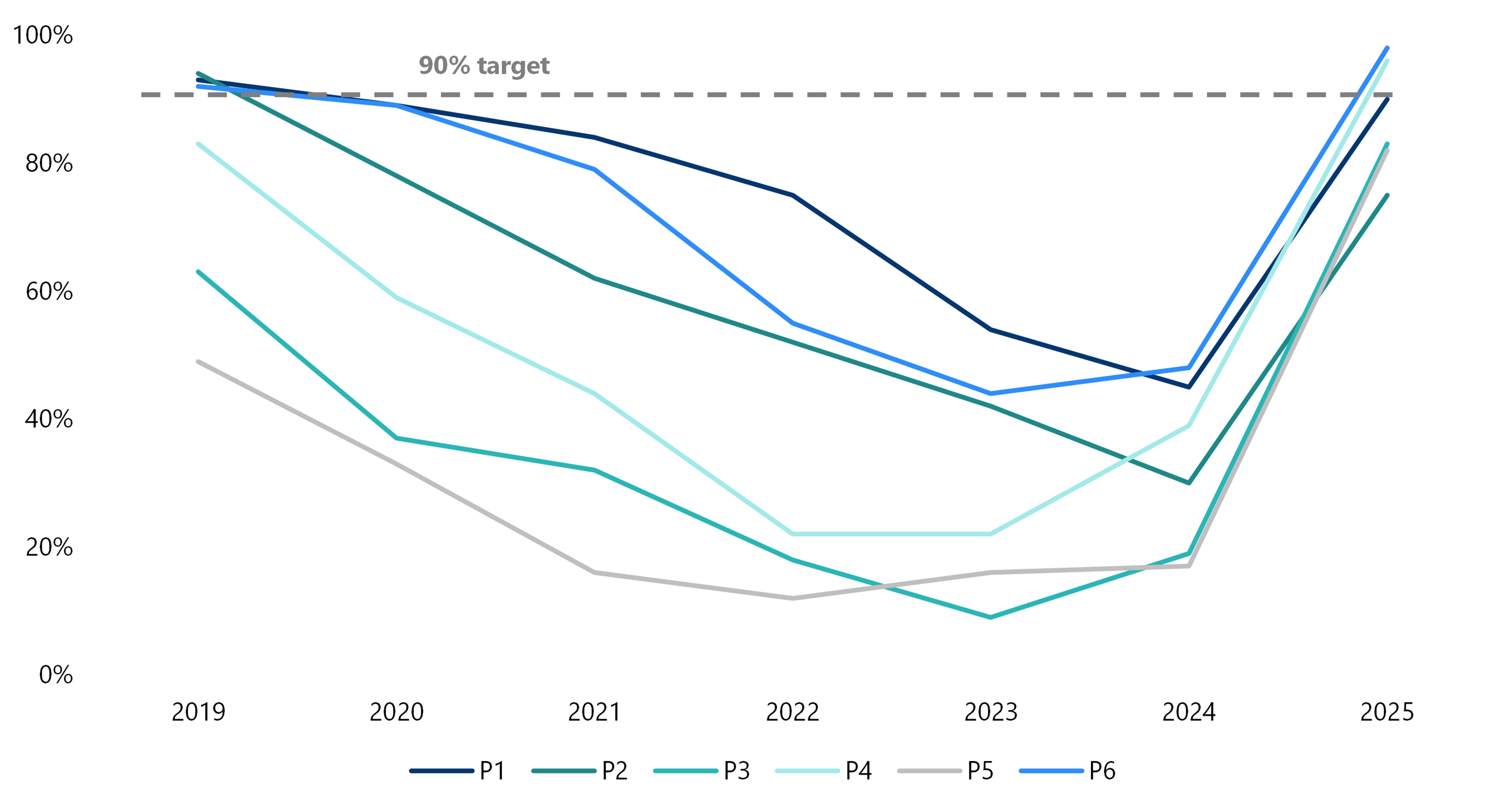
We found it mostly did not meet its service standards for priority urban planning and development applications in growth areas between 2019 and 2024 (see Figure 7).
Melbourne Water performed best assessing statutory planning permits (P1 and P2) and issuing statements of compliance (P6). Before 2025, Melbourne Water did not meet its service standards in any year for any other application type.
In 2025, Melbourne Water improved its performance for all priority urban planning and development application types, either meeting or falling slightly below its 90 per cent target.
Figure 7: Percentage of greenfield applications processed on time between 2019 and 2025
Note: Data for 2025 only includes applications from 1 January 2025 to 2 September 2025.
Source: VAGO, based on our analysis of Melbourne Water application data.
Figure 8 shows that Melbourne Water's improvement started from October 2024.
Since early 2025, it has mostly met or exceeded its service standards for all priority application types.
Figure 8: Percentage of greenfield applications processed on time by month in 2024 and 2025
Note: Data for 2025 only includes applications from 1 January 2025 to 2 September 2025.
Source: VAGO, based on our analysis of Melbourne Water application data.
Melbourne Water improved how quickly it processed applications over the audit period (see Figure 9). But processing times increased from 2021, peaking in 2022 and 2023, particularly for stormwater management strategy (P3) and design approval (P5) applications. From 2024, processing times decreased across all application types, with the greatest improvement in non-statutory applications, including stormwater management strategies, engineering requirements, and design approvals.
Figure 9: Median number of calendar days to process applications between 2019 and 2025
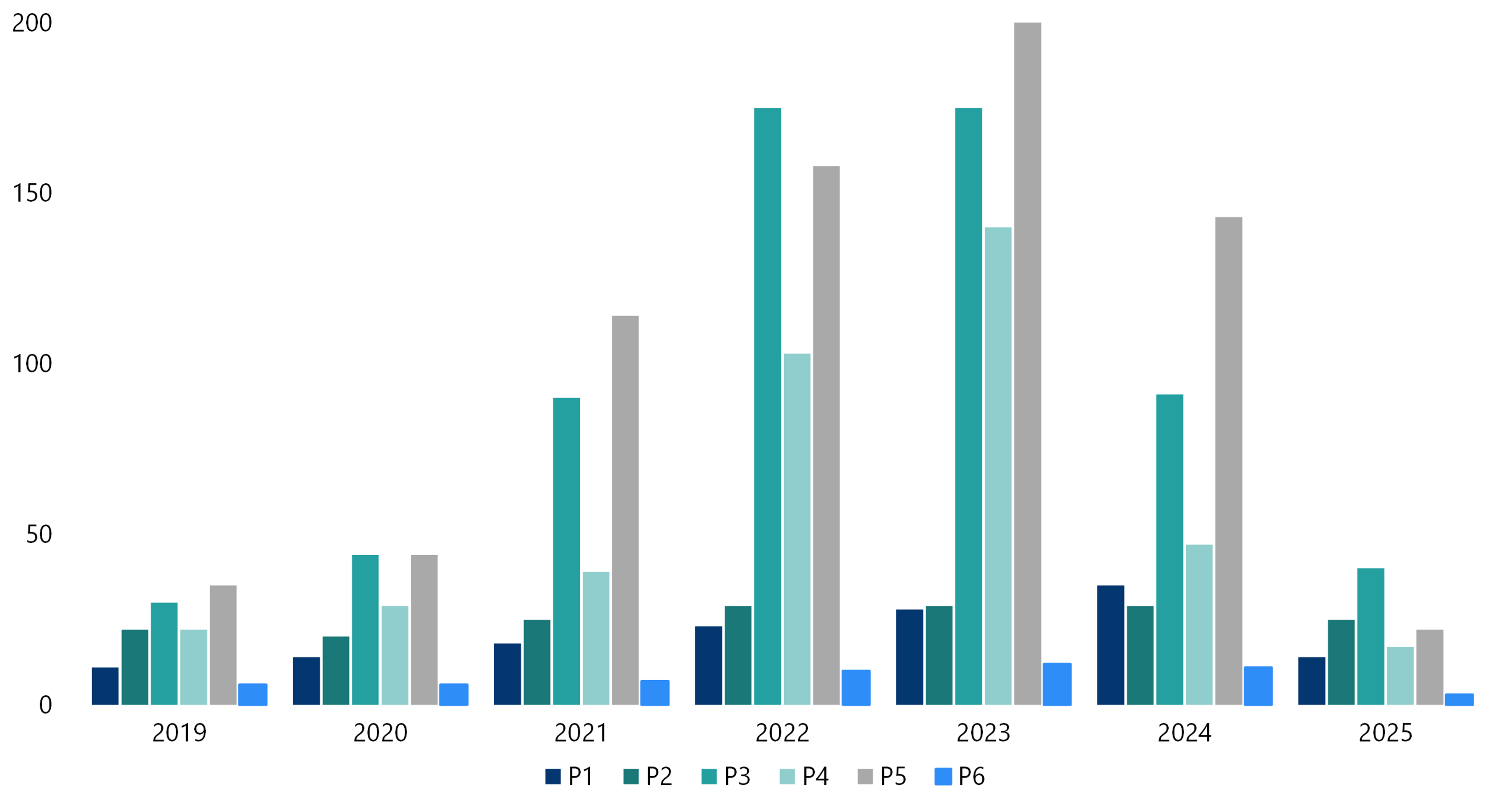
Note: Median number of calendar days is calculated using the applied date and the offer generated date. Data for 2025 only includes applications from 1 January 2025 to 2 September 2025.
Source: VAGO, based on our analysis of Melbourne Water application data.
Design and construction applications
We analysed Melbourne Water's design and construction application data from 1 January 2025 to 31 December 2025 to assess processing timeliness. Earlier data was not reliable enough to analyse.
Figure 10 shows that Melbourne Water did not meet its milestones for all design and construction applications in 2025. Performance varied by application type.
Melbourne Water performed best in assessing the practical completion of construction works. It processed 96 per cent of these applications within its 53-business day target.
But Melbourne Water did not process most other application types within its targets, including site environmental management plans from developers to manage risks from construction.
Melbourne Water's performance was weakest for reviewing finance and detailed engineering designs, only processing 27 per cent and 49 per cent within its target respectively. Melbourne Water’s median processing time for reviewing detailed engineering designs was 45 days.
Figure 10: Design and construction application processing times in 2025
| Application type | Service milestone (business days) | Median processing time (business days) | Processed within milestone |
|---|---|---|---|
| Detailed engineering designs | 30 days | 45 days | 49% |
| Site environmental management plan | 30 days | 26 days | 66% |
| Finance | 33 days | 67 days | 27% |
| Pre-commencement | 28 days | 7 days | 95% |
| Reimbursement claims | 35 days | 13 days | 95% |
| Practical completion | 53 days | 22 days | 96% |
| Final completion | 53 days | 33 days | 75% |
Note: The data includes applications from 1 January to 31 December 2025. It excludes in progress, new and withdrawn applications.
Source: VAGO, based on our analysis of Melbourne Water application data.
To strengthen its performance processing design and construction applications, Melbourne Water has added automated tracking of applications to monitor timeliness.
Melbourne Water has not yet fully implemented its strategy to maintain improvement
Melbourne Water’s strategy
In July 2024 Melbourne Water committed to restructure and streamline its application processes to reduce costs, delays and housing delivery impacts.
It developed a 3-phase strategy to improve how quickly it responded to drainage scheme applications (see Figure 11).
Melbourne Water first addressed the most urgent risks to application timeliness. It prioritised clearing 7,301 longstanding applications by December 2024. Of these 6,807 (92.3 per cent) were priority P1–P6 applications.
Once it reduced the backlog, Melbourne Water shifted its focus to meeting its service standards for new applications. By March 2025, it aimed to process and close applications within the service standards at least 90 per cent of the time.
From April 2025, Melbourne Water began to embed improved practices into daily operations and review its projects to support future demand.
Figure 11: Melbourne Water’s improvement strategy for priority planning and development applications
Source: VAGO, based on Melbourne Water's documents.
In May 2025, Melbourne Water also introduced a program to stabilise and improve how it manages its design and construction applications. The program focuses on addressing backlogs, improving timeliness and supporting more consistent service delivery.
Funding and workforce vulnerabilities
Recent initiatives as part of its 3-phase improvement strategy have reduced processing times and cleared longstanding applications. But they relied on temporary funding and short-term staff.
Melbourne Water uses contractors to fill around 40 per cent of roles in its urban planning and development area, which points to underlying workforce pressures.
Although Melbourne Water is reviewing its staffing needs, it could strengthen its workforce planning by setting clearer rules for the use of contractors and surge resources during peak periods. This would further support consistent resourcing decisions to manage higher workloads.
Sustaining performance improvements
Melbourne Water has not yet fully implemented its strategy to sustainably improve how it manages and processes drainage scheme applications.
While short-term actions have addressed immediate pressures, they do not address the underlying workforce issues that may affect performance over time.
Without implementing its improvement strategy, Melbourne Water risks not maintaining consistent service levels and support for greenfield housing growth.
Fully implementing its strategy would help Melbourne Water plan its workforce and align drainage scheme improvements with broader housing and infrastructure priorities.
Embedding changes early and sustaining them over time is critical as Melbourne Water plans for its next 5 to 10 years.
4. Preparing and implementing drainage schemes
Melbourne Water plans new drainage schemes in line with the VPA’s precinct structure plan schedule and consistently meets exhibition timelines for draft drainage strategies.
But it does not always meet its target to set preliminary developer contribution rates before planning panel hearings. Its reporting against this target is unreliable.
While Melbourne Water routinely collaborates with stakeholders to address risks early, its limited influence over other infrastructure owners reduces its ability to shape preferred drainage designs. This increases the risk that final designs will not deliver intended outcomes once development begins.
Melbourne Water addresses drainage issues as they come up, but it could avoid some through independent reviews of proposed strategies and by meeting its commitment to regularly review each drainage scheme.
Covered in this section:
- Melbourne Water prepares new drainage schemes in line with the VPA's schedule but could improve how it assesses risks during its planning
- Melbourne Water can improve communication and performance measurement
- Melbourne Water works with stakeholders to resolve drainage issues but could strengthen its review processes
Melbourne Water prepares new drainage schemes in line with the VPA's schedule but could improve how it assesses risks during its planning
VPA schedule
The VPA publishes its precinct structure plan schedule in its annual business plan. The Minister for Planning issues a statement of expectations to the VPA, which informs the annual schedule.
For example, in October 2024, the Minister directed the VPA to prepare a business plan that supports the Victorian Government's commitments and priorities outlined in Victoria's Housing Statement: The decade ahead 2024–2034 and the Plan for Victoria. It requires the VPA to:
- prepare precinct structure plans to enable new housing and employment opportunities in Melbourne and in key regional cities and towns
- maintain a forward pipeline of metropolitan greenfield precinct structure plans to provide zoned and sequenced land capable of accommodating 30 per cent of Melbourne's long-term dwelling growth.
The VPA's 2024–25 business plan included a work program to progress the first part of the 10-year plan for Melbourne's greenfields.
The VPA requires precinct structure plans to include infrastructure staging provisions to coordinate development with the provision of essential services.
An infrastructure and staging plan shows the preferred sequence for delivering infrastructure and development, including the drainage system.
Effective infrastructure sequencing to manage flood risk requires coordination across Melbourne Water, planning authorities and industry groups.
Infrastructure and development staging
Infrastructure and development staging refers to the order in which development should occur throughout a precinct. It is a way of achieving an organised and financially viable delivery of infrastructure within a precinct structure plan, avoiding out-of-sequence development and disconnected subdivision and preventing development occurring that compromises existing infrastructure.
Planning drainage schemes
Melbourne Water supports greenfield development through its approach to planning and preparing drainage schemes.
In 2023–24 and 2024–25, Melbourne Water worked on 44 drainage schemes linked to 22 precinct structure plans in the VPA's work program.
Melbourne Water's process to develop drainage schemes broadly matches the VPA's precinct structure plan preparation milestones (see Figure 12).
Figure 12: Precinct structure plan and drainage scheme preparation process
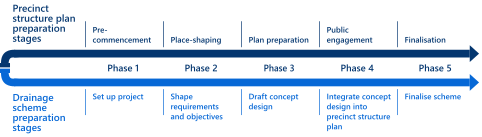
Note: Melbourne Water finalises the contribution rate and scheme map after the VPA finalises the precinct structure plans.
Source: VAGO, based on the VPA's precinct structure plans process and information from Melbourne Water.
Melbourne Water starts drainage infrastructure planning and design early, during the precinct structure plan development.
At the VPA's place-shaping stage, Melbourne Water defines drainage objectives and commissions background studies to help integrate precinct structure plans with drainage scheme planning.
Then, Melbourne Water starts to engage the public, including through community presentations and landowner meetings.
Place-shaping
Place-shaping is a stage in the VPA planning process which establishes a precinct's vision and purpose and identifies the land uses and infrastructure needed to deliver the precinct structure plan.
As part of its process, Melbourne Water identifies which schemes need more planning effort and resourcing. High-risk or complex drainage schemes can involve multiple stakeholders or need to use land outside the urban growth boundary.
Managing risks
Each year, Melbourne Water meets with the VPA to align priorities and share its risk rankings for upcoming precinct structure plans. This is to support early coordination and sequencing with the VPA and other agencies to meet required drainage outcomes.
But the VPA's schedule can change at short notice due to shifting development priorities. If the VPA brings forward precinct structure plans, Melbourne Water must reprioritise its work by redirecting staff and resources to support those precinct structure plans. This can delay or slow other planned drainage scheme work and affect delivery across the broader program.
Despite this, Melbourne Water does not have a documented and consistent approach for assessing risk and linking it to drainage scheme priority rankings. The records Melbourne Water shared with us do not always explain how its risk ratings and priority rankings relate to each other or how they inform its annual work program and implementation planning.
Documenting the rationale for drainage scheme risk assessments and prioritisation would support consistent and transparent risk-based planning. It could also aid discussions with the VPA around precinct structure plan sequencing and infrastructure staging.
Melbourne Water can improve communication and performance measurement
Preparing drainage designs
Melbourne Water needs to finalise a draft concept drainage strategy by the time the VPA exhibits its draft precinct structure plans. Melbourne Water prepares technical reports, briefing notes and design reports that present drainage design and engineering requirements for public consultation with the precinct structure plan.
This coordination ensures that a new suburb's layout, drainage infrastructure, flood protection and waterway corridors are planned together before the precinct structure plan is finalised. Exhibiting the concept strategy early also allows stakeholders, including developers, to comment on drainage requirements before the drainage scheme's funding is formalised.
Concept drainage strategy
A concept drainage strategy is a high-level engineering plan that shows a new suburb's drainage infrastructure requirements and placement. It does not include detailed construction plans. Developers complete detailed functional designs following confirmation of subdivision layouts and other key inputs such as proposed stormwater treatments.
Our analysis found that all precinct structure plans that the VPA exhibited between 2022 and 2025 included draft concept drainage designs and associated draft engineering specifications.
But these documents do not always explain the drainage design clearly. Information can be fragmented across several documents. The level of detail presented for different drainage schemes also varies. This reduces Melbourne Water's ability to confirm that its drainage design will sufficiently achieve drainage objectives and standards during public consultation and leading into planning panel hearings.
This could result in precinct structure plan approval before the drainage strategy is resolved, leaving uncertainty for stakeholders including developers and downstream landowners.
Melbourne Water's ability to prepare well-informed draft concept drainage designs in time for public exhibition depends in part on the timing and completeness of VPA-led background studies' for the precinct structure plan. These include environmental and cultural heritage studies.
Delays to those studies, as well as a high volume of stakeholder input, can result in changes to drainage designs and mean that Melbourne Water can only exhibit preliminary concept designs.
Measuring timeliness
Melbourne Water measures its performance in preparing and implementing drainage schemes under its Waterways and Drainage Investment Plan. Its KPI is intended to ensure drainage scheme planning meets the requirements of the VPA.
Melbourne Water reports against this KPI by the percentage of drainage schemes implemented before the VPA panel hearing deadline for a new precinct. The target is 100 per cent each financial year. It applies to all greenfield drainage schemes linked to precinct structure plans scheduled to progress to the planning panel stage that year.
The KPI considers a drainage scheme implemented when:
- the drainage scheme area study is complete and approved
- consultation has started with external stakeholders (e.g. councils and landowners)
- the preliminary contribution rate is approved.
Melbourne Water measures its performance based on approval of the preliminary contribution rate by the planning panel hearing deadline.
In practice, the KPI only applies to a small number of precinct structure plans per financial year. For example, in 2024–25, only 2 precinct structure plans progressed to the planning panel stage (Greenvale North Part 2 and Croskell Employment).
Performance reporting
Melbourne Water publicly reports its performance against its KPI in its annual Waterways and Drainage Investment Plan performance updates. In its 2024–25 update, Melbourne Water reported meeting its target every year from 2021–22 to 2024–25.
But an internal compliance report from July 2025 found that Melbourne Water did not meet the target in 2023–24 or 2024–25 because of unresolved challenges such as drainage asset location, cultural heritage assessments, stakeholder approvals and the need to split some drainage schemes into smaller schemes.
Melbourne Water told us that it reported meeting its KPI because it believed that it had met the intent of the KPI. It advised that the reasons why it does not always establish preliminary contribution rates by planning panel hearing deadlines are not in its control. For example, there can be a short time between public consultation on its draft drainage strategy and the hearing.
While Melbourne Water's reasoning is sound, the inconsistencies show that it does not always meet its KPI and that the public reporting does not always reflect actual performance.
It also suggests that the current KPI is not fit for purpose in that Melbourne Water cannot finalise preliminary contribution rates until a drainage scheme's engineering requirements are more certain.
Melbourne Water developed its KPI for internal and public reporting purposes before the VPA's current precinct structure plan process was in place.
Melbourne Water has since started reviewing its Waterways and Drainage Investment Plan performance targets so that its KPI better reflects the key milestones and interdependencies in the updated precinct structure plans and drainage scheme preparation processes.
Melbourne Water works with stakeholders to resolve drainage issues but could strengthen its review processes
Identifying risks
Melbourne Water identifies risks and barriers to achieving drainage outcomes and standards at every stage of preparing and implementing a drainage scheme.
Risks and barriers can come up for many reasons. For example:
- land set aside for drainage does not provide enough flood protection
- development starts upstream in a catchment or precinct before downstream drainage infrastructure is in place to manage the extra stormwater
- changes to roads increase stormwater run-off and place pressure on existing wetlands or retarding basins.
Addressing issues
Melbourne Water engages the VPA and other government agencies during the precinct structure plan design phase to identify and resolve barriers to implementing its preferred drainage design.
This includes advocating for the preferred development and infrastructure staging and negotiating the proposed drainage infrastructure’s design and location.
But Melbourne Water has historically had limited ability to influence staging, location and how much land is set aside for drainage. This is because drainage is one of many factors the VPA must balance when it plans precincts.
For example, Melbourne Water has limited influence over how much land will be set aside to protect environmental and cultural heritage, or rail and major road corridors. It also cannot influence whether downstream precincts in a catchment area are developed before upstream precincts.
This means that Melbourne Water may need to modify its preferred drainage designs to work around these challenges and develop a strategy that will deliver drainage outcomes and standards.
Melbourne Water is reducing the risk of drainage issues and changes once development starts by acting early. If not resolved early, development in a new suburb could stall and increase drainage scheme costs.
Issues during construction
Drainage issues in greenfield developments can emerge during construction. This happens when developers start to build the drainage infrastructure, but the original design assumptions no longer align with subdivision patterns.
For example, a retarding basin shown in the original drainage design may no longer be the right size or in the right location for how the development has progressed.
If not addressed, these issues can delay further development. Resolving these issues is often complex and may require changes to drainage flows or access to surrounding land.
Functional design
Following the completion and approval of concept designs, the next stage involves designing all functional elements of the system, including finalising pipe sizes and levels, hydraulic and water-quality modelling and refining the design to ensure the system works as intended and can be maintained over time.
Melbourne Water showed us several examples of how it has worked with landowners to address drainage issues as development progresses within a precinct. The solutions included:
- changing the size or layout of drainage pipes, retarding basins and wetlands
- adding new points where water from pipes or drains flows into the surrounding environment to manage unexpected stormwater.
Case study 1 shows how Melbourne Water has addressed drainage issues that emerged during construction in a precinct.
Case study 1: Addressing outflow issues
Thornhill Park Estate
Melbourne Water identified drainage issues caused by the lack of a natural or constructed drainage channel near the Western Freeway.
Thornhill Park Estate is located just north of the Western Freeway, in the suburb of Thornhill Park.
The natural catchment outflow is Kororoit Creek. Land not yet gazetted for development separates Thornhill Estate from Kororoit Creek.
With no adequate outlet from the retarding basin, there was a risk of excess stormwater flooding surrounding homes. This could have stalled further development upstream in Thornhill Estate.
When Melbourne Water took control of the retarding basin from the developer it implemented interim solutions including:
- monitoring water levels in the retarding basin
- pumping away excess stormwater
- working with landowners to construct a drainage channel ensuring excess stormwater runoff continued to flow away from the estate and freeway towards nearby wetlands.
This helped to manage appropriate water levels and allowed development to safely proceed.
Source: VAGO, based on our visit to the site and analysis of Melbourne Water documents.
Design issues
We also examined 6 examples where Melbourne Water worked with developers to overcome barriers to drainage outcomes, including addressing design issues. Our analysis found that drainage issues during construction often start with problems in the original drainage strategy.
In 5 of the 6 examples we reviewed, flaws in the original design created barriers during implementation.
| At ... | the ... | Melbourne Water … |
|---|---|---|
Brookfield Drive – Summerhill Rd (Brookfield) | original wetland treatment areas' design was not efficient, pipe connections were not adequate and a culvert was missing between 2 assets.
| changed the wetlands and pipes' configuration and added pipe culverts under the road to connect the assets.
|
Cardinia Industrial – Kaduna Business Park (Officer South) | original pipe design did not have capacity for predicted flows. The extra water could not safely flow along the existing road.
| determined the optimal size to accommodate flows and minimise the cost increase.
|
Muddy Gates Drain – Evergreen Estate (Clyde) | original plan to disperse stormwater overflow along a laneway was inadequate for the predicted volume of water.
| added a new outfall pipe node and increased planned pipe sizes to enable stormwater to drain out from a small catchment area.
|
Ryan Road – Canty Lane (Pakenham East) | developer needed access to a drainage easement on another property, but there was no agreement in place with the property owner.
| directly requested access to the property owner on the developer's behalf.
|
Woodstock West – Donnybrook Rd (Woodstock) | planned outfall was on private property outside the precinct structure plan boundary, with no existing agreement to access the land.
| redesigned the drainage strategy so stormwater would flow along the surface at the property boundary, removing the need for outfall works.
|
Source: VAGO, based on our analysis of Melbourne Water documents.
Although Melbourne Water works with stakeholders during the design phase to address challenges, it misses key opportunities to identify problems earlier in the process, including before it finalises the design.
Melbourne Water also does not carry out engineering reviews for each drainage scheme at least every 5 years, as it commits to in its Principles for Provision of Waterway and Drainage Services for Urban Growth.
It does not require its draft drainage designs to be peer reviewed by an expert outside the design team. It does require peer review of its financial contribution rates.
Melbourne Water provided us with an example from 2025 where it met with landowners and hydrology and drainage experts to review its drainage strategy for the Casey Fields South and Devon Meadows precinct structure plan.
This was in response to concerns raised after public exhibition. Landowners were concerned that downstream drainage capacity was inadequate to handle future flows. They were also concerned it would be difficult to reach agreement with multiple landowners outside of the precinct structure plan area for some drainage outfalls. Landowners questioned whether the location, size and alignment of some drainage assets optimised efficient land use.
This resulted in Melbourne Water updating aspects of its drainage design, such as consolidating retarding basins and seeking approval to increase the precinct structure plan’s public acquisition overlay to secure land for diverting waterways.
But Melbourne Water does not undertake this process routinely. Building expert review into its drainage strategy design process could help Melbourne Water identify and address drainage risks before they become an issue during construction.
Appendix A: Submissions and comments
Download a PDF copy of Appendix A: Submissions and comments.

Appendix B: Acronyms and glossary
Download a PDF copy of Appendix B: Acronyms and glossary.
Appendix C: Audit scope and method
Download a PDF copy of Appendix C: Audit scope and method.