
Preventing youth crime
Review snapshot
Does the Youth Crime Prevention Program reduce participants' offending?
Why we did this review
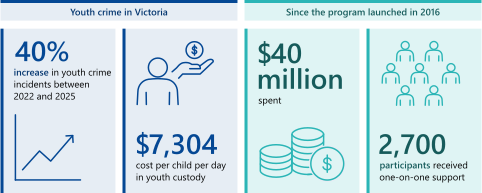
Youth crime incidents in Victoria increased by 40 per cent between 2022 and 2025, prompting the government to increase bail restrictions and impose adult sentencing on children who commit violent crimes.
In late 2025, the government announced funding for new youth crime prevention initiatives, including $27.5 million to set up a Violence Reduction Unit. As investment in this area increases, it is important the government learns from the experience of similar initiatives.
The largest and longest running of these is the Youth Crime Prevention Program (the program). The government delivers the program through grants it gives to local community organisations. It targets 14 areas of outer Melbourne and regional Victoria with higher levels of youth crime and socioeconomic disadvantage.
It is important to understand whether these community-based grants are effectively addressing the causes of youth crime and helping to make Victorian communities safer.
Key background information
Source: VAGO, based on Crime Statistics Agency, Productivity Commission and Department of Justice and Community Safety data.
What we concluded
We found no evidence to show the program is reducing offending.
The Department of Justice and Community Safety (the department) described the program as a 'proven' initiative. But its program evaluations have not measured what success in reducing youth offending looks like against a target or benchmark, so it cannot show the program works as intended. Of the participants who we matched to Victoria Police records, over two-thirds offended within 6 months of starting the program.
It is also unclear if the program reaches its intended recipients. At least half of program places go to young people who have offended or are alleged to have offended. But this varies widely between community organisations, from 18 per cent to 92 per cent. We do not know if the remaining participants are 'at-risk' of offending because program criteria are broad and record-keeping is poor.
The program's flexible guidelines allow community organisations to innovate but also raise the risk of performance and accountability gaps.
These issues mean it is not clear if or how effectively this model of community-based grants delivers services to young people to reduce youth crime.
1. Our key findings
What we examined
Our review followed 2 lines of inquiry:
1. Is the program delivering services to high-risk young people as intended?
2. Is the program contributing to reducing the incidence and severity of youth (re)offending?
To answer these questions, we examined:
- the Department of Justice and Community Safety (the department)
- 12 community organisations implementing the Youth Crime Prevention Program (the program).
Terms used in this report
Alleged offender or offender
In this report, offender means appearing in Victoria Police’s database as someone who has allegedly committed a crime, regardless of their charge or sentencing status.
Young people
In this report, young people refers to both children under 18 and young adults. We acknowledge that different organisations use these terms in different ways.
The program
This review focuses only on the department's Youth Crime Prevention Program. Other youth crime prevention initiatives are beyond the review's scope.
Background information
Increase in youth crime
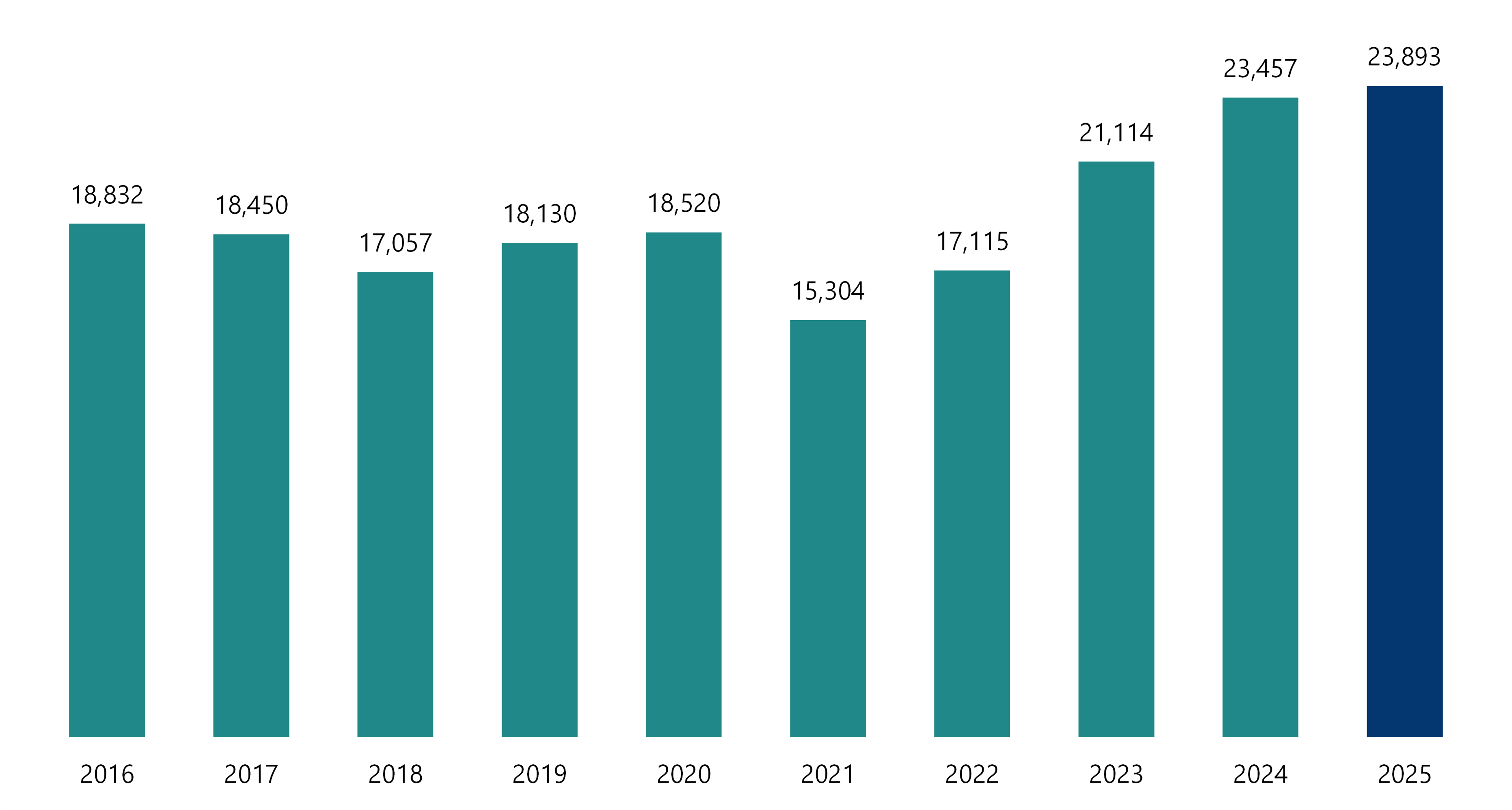
Based on Crime Statistics Agency figures, alleged youth offender incidents have increased by 40 per cent between 2022 (the end of COVID-19 lockdowns) and 2025.
The 2025 figure of 23,893 incidents is the highest since records began in 2016, as Figure 1 shows. According to the department’s analysis, a small group of repeat offenders committing serious crime is driving this increase.
Figure 1: Alleged offender incidents (ages 10 to 17) by calendar year, 2016 to 2025
Source: VAGO, based on Crime Statistics Agency (year to December) data.
Stricter bail and sentencing laws
The government introduced bail reforms in March 2025, which it said were in response to rising youth crime. The government says the changes prioritise community safety in bail decisions and remove the principle of 'remand as a last resort' for alleged youth offenders.
This was followed by 'Adult Time for Violent Crime' laws, which passed in Parliament in December 2025. Under the changes, children accused of committing crimes such as home invasion, aggravated carjacking or intentionally causing injury now face an adult court.
Costs of youth crime
In the 2025–26 state Budget the government allocated $1.6 billion over 4 years for youth justice custodial services.
According to the Productivity Commission, each person in youth detention in Victoria costs $7,304 per day, which is more than any other Australian state or territory. It also found that 56.6 per cent of young people reoffend and return to custody under sentence within one year of release.
A total of 236,727 Victorians, or 3.3 per cent of the state's population, were victims of crime (committed by offenders of all ages) between June 2024 and June 2025. This was 17 per cent more than the previous year.
About the program
Since 2016, the government has invested more than $40 million in the program. It is the main initiative targeting youth crime in the department’s crime prevention portfolio.
As of April 2026, over 2,700 people aged 10 to 24 have received individual case management or mentoring support. The program is currently delivered in 14 locations.
The department delivers the program in partnership with community organisations under a 'place-based approach.' This means that the program aims to invest in priority areas that have:
- higher levels of crime
- higher proportions of youth offending and reoffending
- socioeconomic disadvantage.
Program activities vary by location. They include intensive case management, mentoring and ‘pro-social activities’, which include sports, education and employment support.
| The program’s Melbourne locations are … | Its regional locations are … |
|---|---|
|
|
Program funding
The program’s funding was due to end in June 2026. The department submitted a business case for the 2026–27 Budget asking for $52.8 million over 4 years to expand the program across Victoria. The new Budget includes program funding of $5.1 million for 2026–27.
There are 15 funded projects covering 14 communities, run by 12 community organisations.
Youth Support + Advocacy Service (YSAS) covers 3 communities and gets the most program funding, as Figure 2 shows. The Youth Junction Inc covers 2 communities. The 10 other organisations cover one community each.
Figure 2: Total program grant contract value by organisation, 2024 to 2026
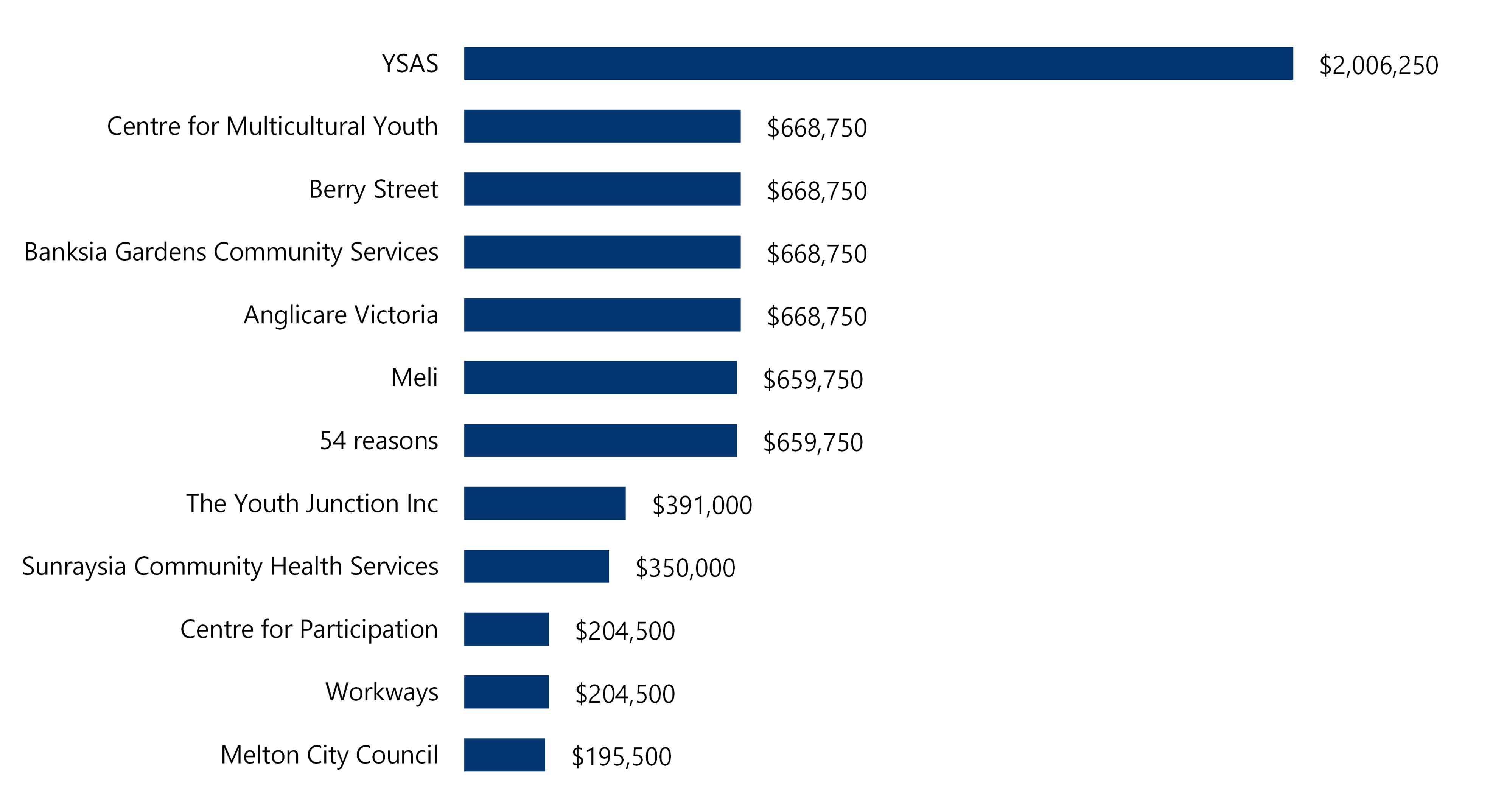
Note: YSAS provides services in 3 communities under a single contract with the department, while The Youth Junction Inc works in 2 communities under 2 separate contracts.
Source: VAGO, based on figures supplied by the department.
Violence Reduction Unit
In November 2025, the government announced an initial investment of $27.5 million to set up a Violence Reduction Unit, to 'stop crime before it starts'.
Major initiatives so far include $7.7 million for youth mentoring and $5.6 million for early intervention officers in 23 targeted schools.
Victoria's Violence Reduction Unit is not within the scope of this review, as it is too early to assess its effectiveness. However, applying learnings from the program could make the Violence Reduction Unit more effective.
What we found
This section focuses on our key findings, which fall into 3 areas:
1. While the department says that the program is proven to help reduce offending, we found no evidence of this.
2. Half of the program’s participants are alleged offenders, but it is unclear whether the remaining places reach the right recipients.
3. The program's flexible design raises the risk of variable performance and accountability gaps.
The full list of our recommendations, including agency responses, is at the end of this section.
Consultation with agencies
When reaching our conclusions, we consulted with the reviewed agencies and considered their views.
You can read their full responses in Appendix A.
Key finding 1: While the department says that the program is proven to help reduce offending, we found no evidence of this
A 2026 department business case describes the program as a 'proven, evidence-based, early intervention program that helps reduce offending and reoffending'.
It refers to a 2022 department evaluation that found the program reduced offending by 29 per cent. But the evaluation was based on data on offending during COVID-19 lockdowns, when crime rates generally fell.
As the department’s evaluations have not assessed the program’s performance against targets for reducing offending, it is unclear what success looks like. After our review had concluded, the department advised that it did set a target. But we saw no evidence that this target was used to inform the management of the program, or that the program area or community organisations were aware of it.
In our independent analysis, we matched program participant names to Victoria Police’s alleged youth offender records. We found that 70 per cent of participants offended (either for the first time or reoffended) within 6 months of starting the program. Participants who reoffended did not offend less often or commit less serious crimes.
For the program participants whose names did not match police records, we do not know why they did not offend. The program may have helped, or these young people may never have been at risk of offending.
The causes of youth crime are complex, and offending results may be influenced by a range of factors beyond program participation.
Key finding 2: Half of the program’s participants are alleged offenders, but it is unclear whether the remaining places reach the right recipients
The department’s eligibility criteria from the program include young people aged 10 to 24 who have either offended or have a ‘demonstrated risk’ of doing so.
But there are no specific requirements for documenting demonstrated risk, so in practice the nature and number of participants vary between organisations.
We found that half of young people participating in the program have allegedly committed offences. These participants clearly match the department’s eligibility criteria, but the proportion of them varies between community organisations.
For the remaining half, varying practices and gaps in record-keeping mean the department cannot assure itself that these participants meet the criteria of demonstrated risk.
This means the program may be wasting resources and missing opportunities to prevent youth crime.
Key finding 3: The program's flexible design raises the risk of variable performance and accountability gaps
The department’s guidelines for the program are flexible on the type, speed, length and amount of services delivered to each program participant. This leaves scope for community organisations to innovate. But it also raises risks, because the department does not specify minimum standards for when, how, and how often participants should attend the program.
We found that:
- program activities broadly align with department guidelines but it is unclear if they match needs
- 51 per cent of participants are recorded as completing the program, but there are no minimum requirements for the timeliness, service hours or duration of services
- data gaps limit the department's ability to effectively monitor the performance of the program.
See the next page for the complete list of our recommendations, including agency responses.
2. Our recommendations
We made 2 recommendations to address our findings. The agency has accepted the recommendations in full.
| Agency response(s) | ||||
|---|---|---|---|---|
Department of Justice and Community Safety
| 1
| Ensure the Youth Crime Prevention Program reaches its intended participants and reduces offending and reoffending by:
| Accepted
| |
2
| Identify the lessons learned from the Youth Crime Prevention Program and apply them both to the Youth Crime Prevention Program and similar youth crime prevention initiatives by:
| Accepted
| ||
3. Reducing offending
We found no evidence that the program is reducing offending.
The department described it as a ‘proven’ initiative. But its program evaluations have not used any targets or benchmarks to measure what success in reducing youth offending looks like, so it cannot show the program works as intended.
Our analysis found that more than two–thirds of the young people in the program who we matched to police records offended within 6 months after they started it. For reoffending participants, the frequency and severity of their alleged offending did not reduce in the 6 months after starting the program.
Covered in this section:
- The department’s monitoring and evaluation of the program have not proven if it works
- Our new analysis found no evidence that the program is reducing participants' offending overall
- Offending results vary by community organisation, with some potential bright spots
- Other intended outcomes include improving engagement in education, employment, family or community connection
The department's monitoring and evaluation of the program have not proven if it works
The 2022 program evaluation
The department's business case for expanding the program across Victoria describes it as a 'proven, evidence-based, early intervention program that helps reduce offending and reoffending'.
To support this statement, the department says that its 2022 evaluation found the program ‘has led to a 29 per cent reduction in offending and a 24 per cent reduction in the severity of offending for participants who completed the program’.
But the business case does not include the limitations stated in the original evaluation report. These include that the evaluation:
- analysed post-program offending up to June 2021 when, according to the evaluation report, ‘the timing of the COVID-19 pandemic and associated restrictions which reduced the opportunities for young people to commit crimes, should be considered when interpreting these results’
- did not attempt to attribute reduced offending rates to the program, noting that participants might have been in custody or receiving other youth justice interventions at the time.
While the 2022 evaluation report was transparent about these limitations, the 2026 business case overstated the evidence of program’s effectiveness.
Participant consent process
The department has measures to evaluate the program, but 2 factors have undermined these since 2022.
Firstly, the department introduced a participant consent process in response to privacy concerns. This led to community organisations no longer routinely sharing the names of program participants with the department.
The department could then only analyse the offending of a small sample of young people who had consented to share their details, and who may have not been representative of the program’s total participants. This means the department could not demonstrate that the program is effective in reducing participants' offending. In August 2026, the department told us it has amended program guidelines for 2026-27 to require organisations to do their utmost to obtain participant consent.
One program outcome measure was skewed
Secondly, the department used a skewed program outcome measure in its 2025 program guidelines. This measure is a ‘reduction in offending by previous offenders at 6 months of completing a planned or successful exit from the program’.
But this reoffending measure does not count 'unplanned' exits such as young people who drop out of the program. It also excludes those who have reoffended and returned to custody, because this is categorised as a ‘custodial exit’ under the program guidelines.
2024–25 performance results only looked at 26 participants
The participant consent process and skewed outcome measure filtered out all but a small sample of participants who had completed the program and consented to have their names shared.
This led to the department calculating its 2024–25 performance result for this measure using only 26 of the 511 program participants.
Of the 26 included in the measure, 11 reoffended. The department reported this result as the program achieving a 58 per cent reduction in offenders.
But this reduction is based on a small sample and the assumption that reoffending rate would have been 100 per cent if not for the program.
Our analysis found no evidence that the program is reducing participants' offending overall
Our approach
We obtained individual participant names from community organisations and matched these to police data on alleged youth offender incidents. We then compared the frequency and severity of participants' offending in the 6 months before and after starting the program.
The department’s performance measure for the program also uses a 6-month timeframe, but it does not include participants who are still in the program, or participants who have had an unplanned exit. Our analysis considers all program participants who matched Victoria Police records.
The department told us that we should only measure participants’ offending after completing the program. But this does not reflect overall program outcomes because:
- the department’s definition of program completion is not linked to the extent of service delivery and excludes some reoffending participants
- the program has no minimum requirements for timeliness, service hours or duration (which we discuss further in Section 5).
For the names that did not match police records, we cannot confirm if these participants were at risk of offending, or if program participation helped to avoid this risk.
The causes of youth crime are complex, and offending results may be influenced by a range of factors beyond program participation.
Overall results based on police records
We found no evidence that the program is reducing reoffending.
Two–thirds of participants reoffended, and the examples of program outcome reporting that the department shared with us did not apply any performance target or benchmark to measure what would have happened without the intervention. Instead, these program outcome reports (for 2023–24 and 2024–25) counted anything less than a 100 per cent reoffending rate as a reduction in offending, and a measure of program success.
After our review had concluded, the department advised that it did set a program target on reducing reoffending. We saw no evidence that this target was used to inform program management or evaluation reports, or that the program area or community organisations were aware of it.
Of the 258 program participants who we matched to Victoria Police records, and for whom offending data was available for 6 months before and after their program start date, 70 per cent offended after they started the program. This includes 66 per cent who reoffended.
We cannot provide assurance that more participants would have offended without the program.
| Of these 258 young people ... | or … | in the 6 months before starting the program ... | and in the 6 months after starting the program … | This … |
|---|---|---|---|---|
| 30 per cent | 77 | allegedly offended | did not offend. | is a good result for these participants, which the program may or may not have contributed to. |
| 12 per cent | 30 | did not offend | allegedly offended. | is a bad result in terms of offending but may or may not be related to the program. It suggests community organisations are targeting high-risk participants. |
| 59 per cent | 151 | allegedly offended | allegedly reoffended. | does not mean that the program is a factor in the continued offending. |
Overall results based on youth justice custodial records
We also compared the participant names to youth justice custodial data. Fifty-nine participants’ names matched these records and had available offending data for the 6 months before and after their program start date. Of these 59 participants, 69 per cent entered (or returned to) custody after starting the program.
| Of these 59 participants ... | in the 6 months before starting the program ... | and in the 6 months after the program … |
|---|---|---|
| 18 | had been in custody | did not return to custody. |
| 17 | had not been in custody | entered custody. |
| 24 | had been in custody | returned to custody. |
Offending results vary by community organisation, with some potential bright spots
Results by organisation
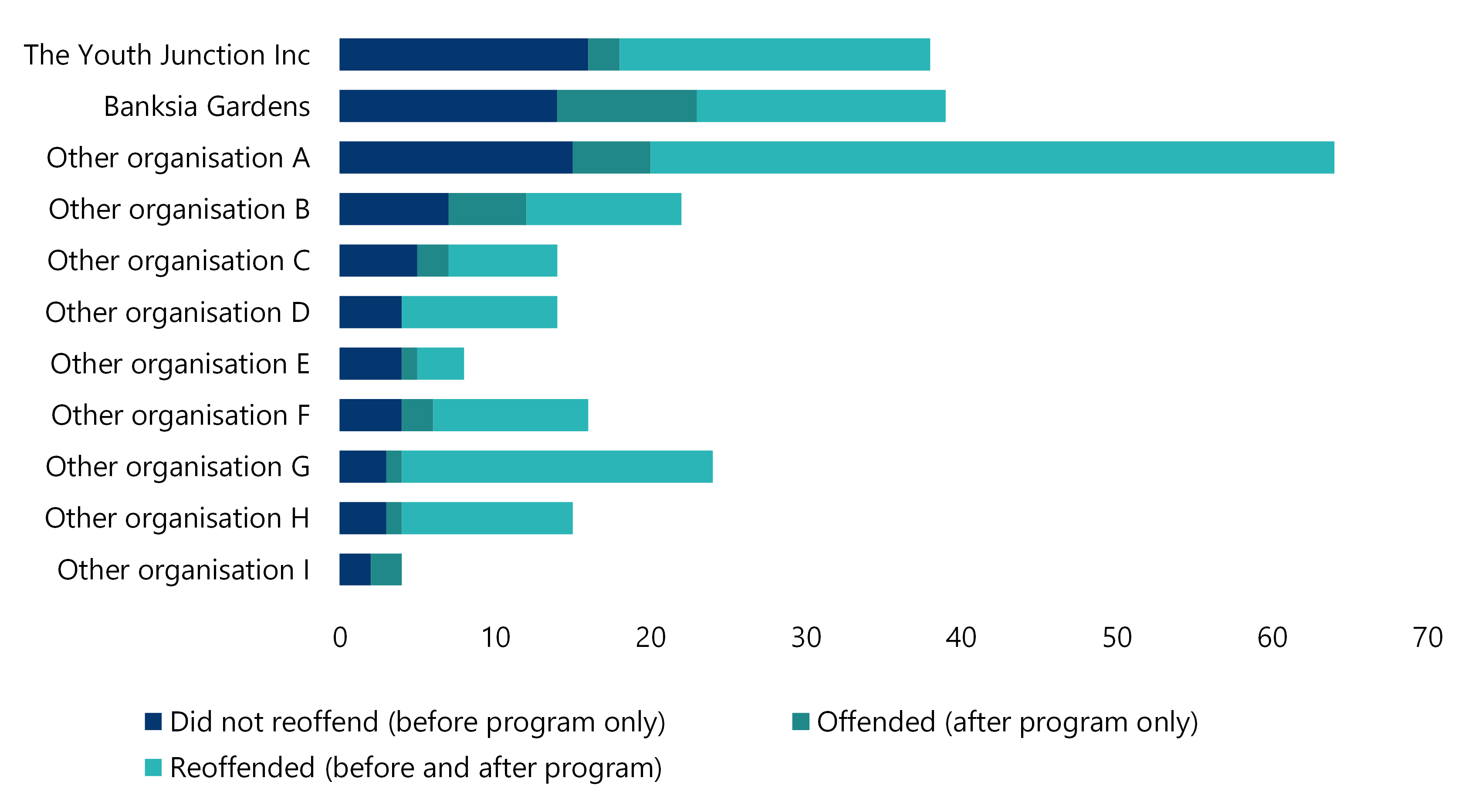
Offending results vary by community organisation, as Figure 3 shows.
Numbers for most organisations are too small to draw strong conclusions. But it is encouraging that 42 per cent of The Youth Junction Inc's police-matched participants, and 36 per cent of Banksia Gardens Community Services' (Banksia Gardens), did not offend in the 6 months after starting the program.
As participants' lives involve various influences beyond the program, offending outcomes may not be directly linked to service quality. For this reason, we have de-identified most organisations’ results in Figure 3.
Figure 3: Police-recorded participants' alleged offending by organisation
Source: VAGO, based on matching participant names supplied by community organisations with Victoria Police data.
For participants matched to youth justice custodial records, Centre for Multicultural Youth had the lowest post-program offending rate with 50 per cent.
Other intended outcomes include improving engagement in education, employment, family or community connection
Other participant outcomes
The department and community organisations told us that the program's impact should be measured beyond reoffending. They highlighted factors such as participants' improved engagement in education and strengthening family relationships.
While we cannot independently verify their content, most organisations have produced case studies showing shifts in participants' wellbeing and relationships.
The department’s evaluations and reviews have also reported positive feedback about program impact from stakeholders.
Outcomes for participants leaving the program
Organisations report outcome data to the department for participants leaving the program.
While the department does not cross-check this data with its original case files, results for participants exiting the program during 2025 show that 62 per cent engaged in education or employment through the program.
During a site visit to Banksia Gardens, we saw video testimonials from young people who credited the program with supporting them to gain the confidence and motivation to work and study.
4. Reaching high-risk participants
The department’s eligibility criteria for the program are broad. It includes children and young adults aged 10 to 24 who have either offended or have a ‘demonstrated risk’ of doing so. In practice, this means that the nature and number of participants vary between organisations delivering the program.
Half of participants are alleged offenders and therefore clearly match the department’s eligibility criteria. For the remaining half, varying practice and gaps in record-keeping mean the department cannot assure itself that these participants meet the 'demonstrated risk' criteria. This means that the program may be missing some opportunities to prevent youth crime, and may not be using all of its resources effectively.
Covered in this section:
- At least half of participants have offended and are the program's intended recipients
- The program's success in reaching alleged youth offenders varies by organisation
- The department’s broad eligibility guidelines lead to inconsistent participant targeting across communities
- Some organisations reach fewer participants and at a higher cost
At least half of participants have offended and are the program's intended recipients
Reaching the right participants
The department’s guidelines for the program define its target cohort as children and young people who have either offended or have a ‘demonstrated risk’ of doing so.
If program places are taken up with participants who are not at risk of offending, the program would be less likely to achieve its primary purpose of preventing youth crime. The program may miss some opportunities to prevent youth crime and may not be using all its resources effectively.
Reaching the right children and young people is critical, but challenging. Community organisations told us that it is often difficult to build trust and get young people who have offended to engage with services.
The department told us that community organisations are reporting that clients are becoming increasingly complex. During our site visit, Banksia Gardens told us that recent challenges include glorification of machetes on social media, and organised crime groups increasingly recruiting children through online 'CrimeTasker' platforms.
Half of participants are alleged offenders
Our comparison of program participant names with the latest-available Victoria Police data found that between 2022 and 2026, 50 per cent were alleged offenders, as Figure 4 shows.
This means that the program may only be directing half of its resources to the right people.
Figure 4: Overlap between program participants and alleged offenders in Victoria Police data
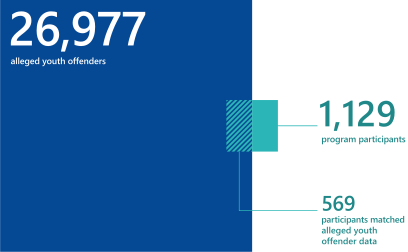
Note: Shows level of overlap between the program's participants (July 2022 to April 2026) with Victoria Police data (July 2022 to December 2025).
Source: VAGO, based on participant data received from community organisations and Victoria Police data.
The program is reaching 2 per cent of alleged offenders
Our analysis found that there were 26,977 alleged youth offenders in Victoria Police’s Law Enforcement Assistance Program (LEAP) database between 2022 and 2025. The program has reached 2 per cent of these.
While some alleged offenders among the remaining 98 per cent may be benefitting from other programs, this statistic suggests that there is a high level of unmet need.
The department’s 2026 program evaluation highlighted that two–thirds of the community organisations surveyed also reported that demand for services exceeded program capacity.
This level of need raises the question of whether all program places should be allocated to alleged offenders rather than those considered 'at risk.'
Youth justice custody
Most alleged offenders in the LEAP database have not spent time in youth justice custody.
We compared program participant names with youth justice custodial records from 2022 to 2026. We found that:
- 13 per cent of program participants have spent time in youth justice facilities (such as Cherry Creek and Parkville)
- the program has reached 146 (14 per cent) of the 1,023 children and young adults who have spent time in youth justice custody between 2022 and 2026.
There are several intensive interventions designed for children and young people during and after their time in youth justice facilities. This is different from the program, which is designed as a community-based prevention program. As such, the program's level of coverage among young people who have spent time in youth justice custody may be appropriate.
Program organisations usually start engaging with participants while they are in the community – except for Centre for Multicultural Youth, which often starts outreach with participants while they are still in custody.
The program's success in reaching alleged youth offenders varies by organisation
Offender cohorts by organisation
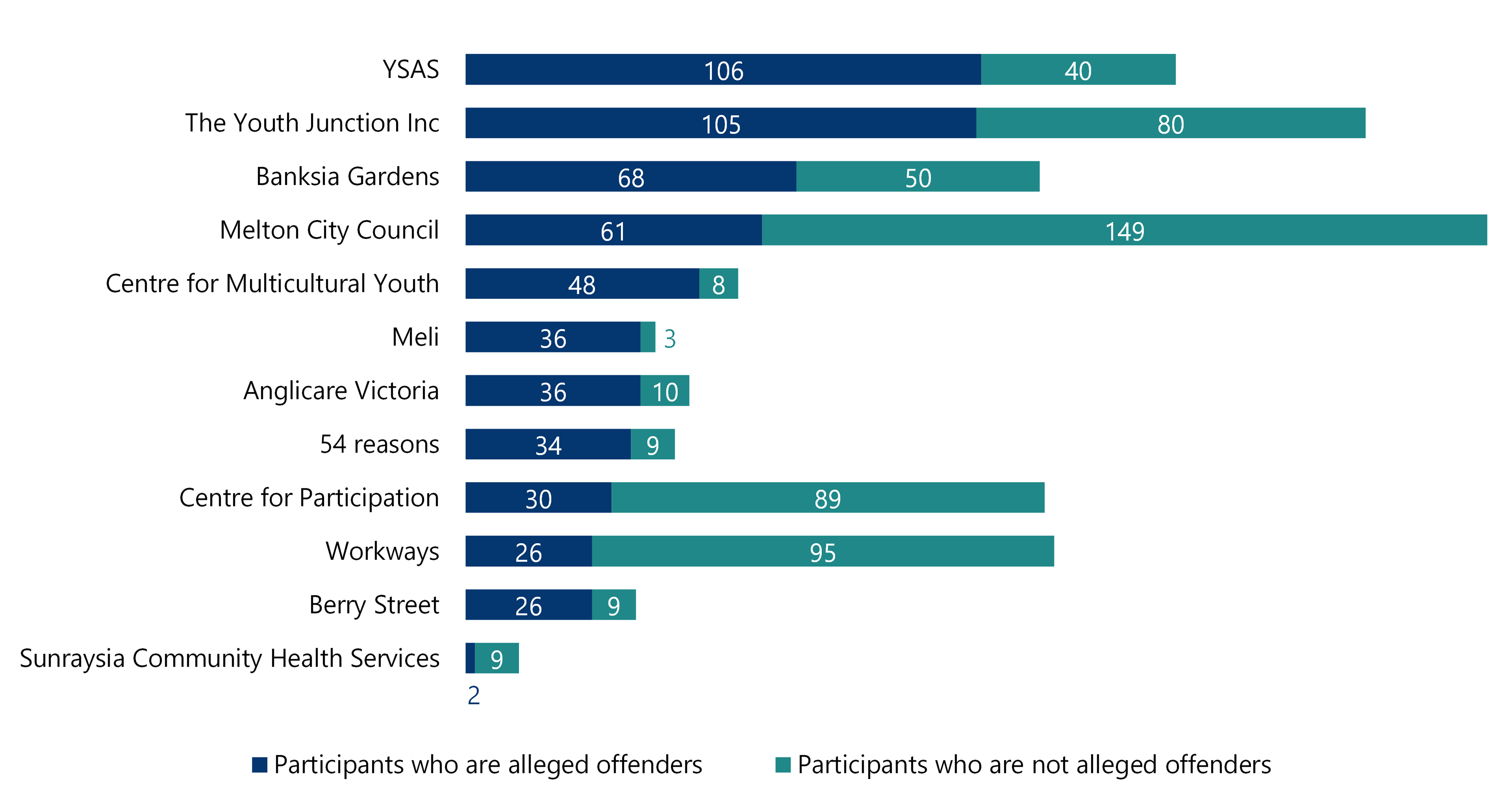
Community organisations vary significantly in both the number of alleged offenders they reach and the proportion of their participants who are alleged offenders, as Figure 5 shows.
Figure 5: Breakdown of number and proportion of alleged offenders reached by organisation
Source: VAGO, based on matching participant details supplied by community organisations with Victoria Police and youth justice custodial data.
The organisation reaching the most alleged offenders per funded community project was Banksia Gardens. It gave us 68 participant names that matched Victoria Police or youth justice custodial records. Melton City Council was the next highest with 61.
YSAS reached a total of 106 alleged offenders with its 3 community projects combined, while The Youth Junction Inc reached 105 across its 2 communities.
The lowest was Sunraysia Community Health Services, which joined the program in July 2025 and had only reached 2 alleged offenders so far.
The percentage of alleged offenders within each organisation's caseload varied widely.
The highest were:
- 92 per cent for Meli
- 86 per cent for Centre for Multicultural Youth.
The lowest were:
- 18 per cent for Sunraysia Community Health Services
- 21 per cent for Workways
- 25 per cent for Centre for Participation.
This wide variation between organisations' coverage of alleged offenders means that the department cannot assure itself that the program is consistently targeting its intended recipients across different communities.
The department told us that the variation shows that community organisations are targeting a cohort specific to local need, which may include varying numbers of alleged offenders.
The department's broad eligibility guidelines lead to inconsistent participant targeting across communities
Department program guidelines
The client eligibility section of the department's latest guidelines from 2025 says the program ‘supports young people aged between 10–24 years who have a “demonstrated risk” of becoming involved or who have been involved with the criminal justice system’.
Participants are not required to live in the same local government area as the organisation delivering the program, but they must have a connection to it such as family or school.
These requirements have not changed since the previous guidelines from 2023.
Community organisations do not need to use the same intake assessment tool. This means there is no consistent data across program communities about incoming participants' needs or profiles. The department told us that its new guidelines for 2026–27 require community organisations to report more information on participant targeting.
Participant selection in practice
The department commissioned a review in 2024 from an external consultant. It found that community organisations target participants with considerably varied age and offending profiles. The range of referral partners and support each organisation provides also varies.
For example:
- 4 of the 12 community organisations only work with participants who have had contact with the justice system (rather than also including those who are ‘at risk’ of offending)
- some community organisations such as Berry Street focus on a younger age range (10 to 17), others such as Centre for Multicultural Youth target only an older age range (16 to 24)
- only 6 of the 12 organisations take referrals from schools.
While the program's guidelines do allow for flexibility in participant selection, this creates a risk that the program might not be reaching at-risk children and young adults as intended.
As the department does not receive all participant names or complete profile data from community organisations, it cannot assure itself that all participants in the program are its target recipients.
While our analysis revealed that half of participants are alleged offenders, the question remains whether the other half of participants match the 'demonstrated risk' criteria.
The department told us that it relies on community organisations to ensure the other half of participants match the ‘demonstrated risk’ criteria in line with contract guidelines.
Assessing eligibility varies
All community organisations have different approaches for determining participant eligibility, with their own intake forms and assessment processes. Organisations focus on different ages, cultural groups, socioeconomic factors or levels of offending.
Three organisations define both 'eligible' participants and 'priority access' participants to help them decide who gets places when there is high demand. These examples demonstrate organisations' efforts to reach more high-risk cases, as well as adapt to local youth crime trends.
| For ... | priority participants are ... | who are … |
|---|---|---|
| Meli in Geelong | 10 to 15-year-old children | living in residential care homes. |
| Berry Street in Ballarat | 10 to 14-year-old children | not enrolled in school and have higher police contacts. |
| Melton City Council | 13 to 18-year-old males | from a Sudanese background with risk-taking behaviours. |
Consequences of inconsistencies
The variation in eligibility criteria between the 12 organisations, combined with lack of consistent record-keeping across the program on participant selection, means that the department cannot assure itself that community organisations are consistently directing program resources at children and young adults who are at risk of offending.
The department told us that the program is designed to allow organisations to adapt their participant selection to local needs, based on referrals and other information from local partners. But it is not clear to us to what extent the variation between organisations' participant selection approaches reflects an evidence-based assessment of local needs.
As the program is designed to have one organisation per community, this variation can also lead to coverage gaps. For example, younger or older age groups may receive program services in one community but not in another.
Some organisations reach fewer participants and at a higher cost
Cost per participant
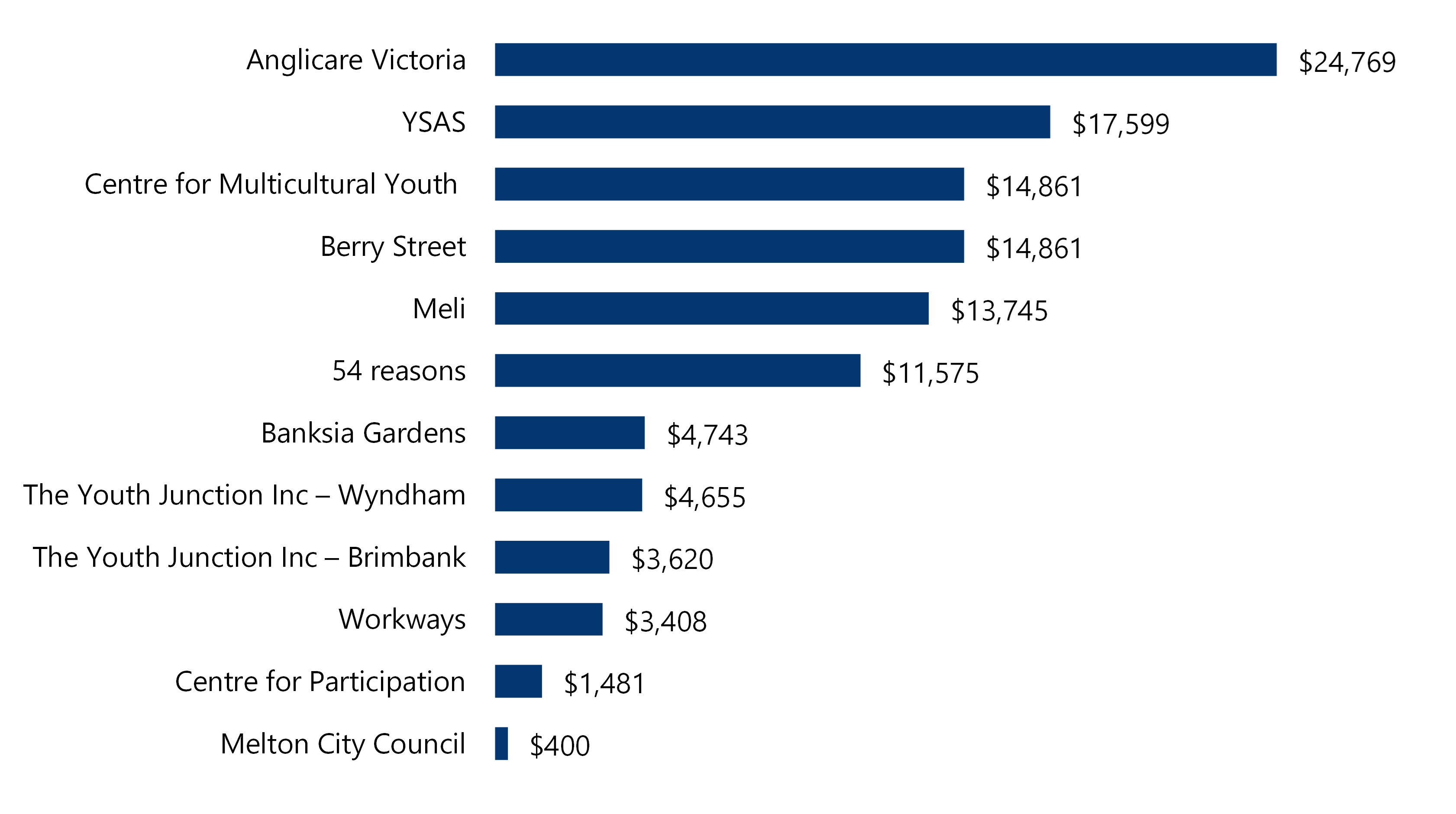
Some community organisations report reaching fewer participants than others. Their average costs per participant vary significantly, as Figure 6 shows.
For example, in their progress reports to the department covering January to June 2025:
- Melton City Council reported supporting 163 program participants, which is $400 per participant based on its grant funding. This is the lowest average cost.
- Anglicare Victoria reported supporting 9 participants, which is $24,769 per participant based on its grant funding. This is the highest average cost.
Figure 6: Cost per participant by organisation, January to June 2025
Note: This analysis is based on organisations' self-reported participant numbers. Sunraysia Community Health Services is not included as it joined the program in July 2025.
Source: VAGO, based on program reports to the department.
Organisations with a lower cost per participant may be more cost-efficient or may be delivering less intensive services. For example, Melton City Council often organises community events, while Anglicare Victoria focuses on intensive casework with families.
However, it is not clear how the department considers cost-efficiency when it sets each organisation's contractual targets for the number of participants reached, especially as there is no minimum service delivery requirement or recommended average cost per participant.
We also did not observe any obvious link between the cost per participant and offending outcomes.
The department told us that it developed contractual targets for participants when programs were established. It said it based targets on each organisation's proposed delivery model, in response to program intensity and complexity.
5. Ensuring safe, timely and appropriate services
The department's guidelines for the program allow for a flexible range of support services to be delivered under a place-based approach. In practice, this means that program approaches, activities and processes vary considerably by organisation. It is unclear to what extent this variation reflects local needs.
Just over half of participants are recorded as completing the program, but there are no minimum requirements for program service hours and total duration. Completion is based on the community organisation's assessment that the participant has met their goals or can access other support.
The department does not verify performance data reported by community organisations and, due to privacy concerns, does not require organisations to share participants' names or case records. This means that the department cannot assure itself that the program is delivering services to high-risk young people as intended.
Covered in this section:
- Program activities broadly align with the department’s guidelines but it is unclear if they match needs
- Fifty-one per cent of participants are recorded as completing the program, but there are no minimum requirements on timeliness, service hours or duration
- Data gaps limit the department's performance monitoring
Program activities broadly align with the department’s guidelines but it is unclear if they match needs
Activities in the guidelines
The department’s guidelines for the program outline the range of activities organisations can deliver with its grants. This means different community organisations have different service offerings. But it is unclear if or how much these offerings are based on local needs.
The 3 main service streams are:
- intensive case management
- mentoring
- support for pro-social activities (such as sport, education and employment).
Organisations can also offer funding to buy participants items such as transport and school fees.
Activities in practice
The department commissioned an external review of the program in 2024, which mapped the types of services offered under the program's grants.
While organisations' activities fall within program guidelines, there are significant differences in the types of activities and the approaches they use.
It is unclear to what extent the services they offer are based on individual participant or community needs. The department told us it relies on reporting from community organisations on how their services meet local needs.
For example, while lack of education and employment are both recognised as common crime-related risk factors, 54 reasons in Shepparton focuses on education, and Workways in Gippsland focuses on wellbeing and employment.
During our site visit to Banksia Gardens, staff reported that the department used to run a 'community of practice', which it said was useful for learning what other organisations were doing and exchanging ideas. The department's 2026 evaluation recommends re-establishing this forum.
Organisations’ approaches differ
As well as different types of activities, the program's 12 community organisations have very different approaches and philosophies.
For example, 54 reasons in Shepparton is part of Save the Children. It promotes a 'children's rights lens' based on international law such as the United Nations Convention on the Rights of the Child. Its activities include taking young people to the skatepark and encouraging them to express themselves by designing their own hoodies.
Meanwhile, Anglicare Victoria in East Gippsland engages with families to better supervise children. It trains parents to monitor social media to discover their child's location and bring them home, and on how to search their child's room for drugs.
The department’s broad program guidelines enable differences in program activities and approaches. This allows organisations considerable scope to focus on their area of expertise and to adapt to local needs.
But the level of variation between each community makes it challenging to evaluate the program as a whole or understand what works to address youth crime. Previous department evaluations and reviews have highlighted this variation. But they found the program to be effective based on feedback from community organisation staff and referral partners.
Since the department discontinued the program's community of practice, community organisations and the department have had no formal mechanism to exchange experiences and learn which of these varying approaches might be most effective.
Improvement during this review: Re-starting the community of practice
In August 2026, the department told us it is re-establishing the community of practice to give program organisations a forum to exchange experiences and insights on preventing youth crime.
Grant funding uses vary
Community organisations' approaches to using the program funding also vary.
| For example ... | uses the program funding to ... |
|---|---|
| Berry Street | run a distinct program (as described in Case Study 2) and cover 2 staff positions. When participants need additional services, Berry Street usually refers them to other organisations. |
| Banksia Gardens | run a distinct program. Participants may also benefit from Banksia Gardens’ in-house programs, which are funded by private philanthropy, as described in Case Study 1. |
| Sunraysia Community Health Services | add mentoring services to another youth program. It had not set up a distinct Youth Crime Prevention Program as at May 2026. |
The Sunraysia Community Health Services example means that the impact of the program can be difficult to measure, as it may not exist in its own right.
The program grant contracts do not require a certain number of staff to be hired or for the program to reach participants not already being supported by organisations. This means program funds may be absorbed into an organisation's existing activities.
In the Berry Street and Banksia Gardens' examples, there may be a 'multiplier effect' from linking participants to other programs. This is a positive outcome but raises the question as to which results can be attributed to the program. The department reports that referrals to other programs are an intentional and beneficial part of program design.
Introduction to case studies
As department guidelines for the program are broad, the 12 organisations deliver very different services using very different approaches. The following case studies highlight some of these differences.
Case study 1: Example of a community-based project with a range of in-house services
Banksia Gardens in Melbourne's north offers paid employment to some program participants and promotes a philosophy of 'radical inclusion'
Banksia Gardens is based inside a Melbourne public housing estate, which faces challenges including youth gang activity and intergenerational poverty.
When we visited in May 2026, staff told us that their decades-long presence in the housing estate is an advantage for youth crime prevention, as they have already built a relationship of trust with local residents. We observed that Banksia Gardens was busy during our visit, with families collecting bags of free groceries and out-of-school teens attending education programs.
Under its Youth Crime Prevention Program funding, Banksia Gardens offers both case management and pro-social activities to at-risk youth. Funding is also used as needed, for example, to support young people’s participation in sports clubs.
Staff showed us video testimonies of 3 program participants who had been given paid employment in Banksia Gardens’ social enterprises. Funded by private philanthropy, these social enterprises include a cafe, a garden maintenance business and an events catering company. Banksia Gardens also makes jams and other artisanal products to sell at Queen Victoria Market.
Staff told us that Banksia Gardens' approach to youth crime prevention is based a philosophy of ‘radical inclusion’. One youth worker said:
‘We try not to exclude anyone. We don’t put rigid criteria in place such as signing up to a goal plan. When young people came to Banksia and started smashing tables, we responded by inviting them in and building a connection. It’s important to always give opportunities and repair relationships when they backslide.’
Source: VAGO, based on on-site observations and discussions in May 2026.
Case study 2: Example of a community-based project using cross-agency collaboration
Berry Street in Ballarat convenes a cross-agency referral panel and offers intensive case management
Berry Street, a Victoria-wide family and disability services organisation, holds the program grant for Ballarat. In addition to case management, its main program-funded activity is chairing the monthly referral panel, Multi-Agency Support Team (MAST), which we observed in April 2026.
MAST is made up of representatives from other community organisations such as the Salvation Army, public services such as the Orange Door, and the Department of Education and Department of Justice and Community Safety.
We observed a MAST panel meeting in April. Around 20 government and community organisation staff met to discuss 3 cases of children aged between 12 and 16:
- In the first case, the child was considered ‘at risk’ due to reportedly assaulting other children and school staff.
- In the second case, the child was having to attend court for an alleged offence, and their school had raised child protection concerns due to malnutrition.
- In the third case, there were concerns about family violence in the child’s home, including pressure to commit crimes.
In all 3 cases, organisations were working with both the child and their family using methods such as home or school visits.
For each case, the meeting identified at least one opportunity to offer an additional service from a MAST panel organisation.
Source: VAGO, based on observing the MAST referral panel meeting in April 2026.
Fifty-one per cent of participants are recorded as completing the program, but there are no minimum requirements on timeliness, service hours or duration
Participant completion rate
Program completion is based on a community organisation's assessment that a participant has met their goals or can access other support.
According to the department’s Annual Report 2024–25:
- there were 511 participants in 2024–25 (against a target of 330)
- 51 per cent of participants went on to complete the program (against a target of 45 per cent).
While completion rates are above the performance target, this means that almost half of participants do not complete the program.
Reasons for this include a:
- participant's family moving to a different area
- participant choosing to drop out
- participant offending and going into youth custody.
During our site visit to Banksia Gardens, youth workers told us that program completion rates can be difficult to report on because case management can be a long-term process. They said some participants may temporarily disengage and then return later on when they are ready.
The department told us that participants may benefit from the program even if they don't complete it.
No timeliness requirements
The department’s guidelines do not specify any target timeframes for:
- how soon a child or young adult who has been referred to the program should be contacted for a needs assessment
- how long it should take for the child or young person to start receiving services.
The guidelines also do not require organisations to:
- maintain a program waitlist
- provide any guidance on how long a client could or should be waitlisted for entry.
According to the department’s 2024 review, only 4 of the 14 community projects funded at that time maintained a participant waitlist.
According to the department's 2026 evaluation report, some organisations choose not to maintain a waitlist as they are concerned about at-risk children and young people losing motivation and potentially offending while waiting for services.
No service hour or program length requirements
The department's definition of program completion is not specific or measurable. This is because there is no minimum number of service hours or length of time engaged with the program needed for a young person to be counted as a participant.
According to the department’s guidelines, the definition of a successful program completion is ‘young people who have achieved the majority of their case management plan and a mutual decision is made that further support through the program is not required’.
This creates a risk that different organisations or individual caseworkers could interpret this definition differently.
This means the department is not monitoring the extent of actual service delivery (for example, the number of case management appointments, hours of mentoring provided, ratio of youth workers to participants or value of brokerage funds distributed).
Setting key performance indicators based only on the number of participants may create an incentive to spread services too thin to maximise participant numbers, rather than invest in intensive services.
The department told us it does not set a minimum service hour or duration requirement to allow community organisations to tailor the program to each participant’s needs and 'not waste resources in over servicing'.
Actual program duration varies by organisation
While there is no consistent program data available on number of service hours or contacts per participant, a partial dataset is available to understand the amount of time some participants spend engaging in the program.
Since January 2025, the department has required community organisations to report individual de-identified data for each participant who has exited the program, including how long they were engaged with the program.
Out of the total of 229 exits reported across the 12 organisations during 2025, the:
- duration that participants engaged with the program ranged from one day to 5 years
- median duration was 5.5 months.
Results differ significantly for each organisation, as Figure 7 shows.
Figure 7: Median duration of reported program engagement for participants exiting in 2025
| Organisation | Number of participant exits | Median duration |
|---|---|---|
| Melton City Council | 31 | 3 weeks |
| The Youth Junction Inc | 43 | 3 months |
| Banksia Gardens | 44 | 5 months |
| Anglicare Victoria | 10 | 5 months |
| YSAS | 37 | 8 months |
| Berry Street | 10 | 9 months |
| Meli | 7 | 10.5 months |
| Centre for Multicultural Youth | 17 | 1 year |
| Centre for Participation | 21 | 1 year |
| 54 reasons | 7 | 2 years |
| Workways | 2 | 3 years |
Note: Sunraysia Community Health Services does not appear in this table because it has not yet reported any program exits.
Source: VAGO, based on program exit data community organisations reported to the department.
Data gaps limit the department's performance monitoring
Reliance on self-reported data
The department requires community organisations to submit milestone reports in a standard template, but they are based on self-reported data.
Part of the template requires community organisations to input the total number of participants they support during the reporting period. But the template does not require organisations to provide any evidence to support the participant numbers they report.
We have also not seen any evidence that the department makes efforts to monitor or verify these numbers, such as by reviewing a sample of case management files.
The department told us it was expanding the collection of client service and outcome data for the 2026–27 reporting period. But this will still rely on organisations' self-reported data.
Gaps in record-keeping
Community organisations all use different systems to record participant data.
Inconsistencies in record-keeping between organisations makes it harder to consistently monitor performance. There is no shared electronic client management system the department can use to extract comparable data on participants.
While organisations need to input aggregated figures into the department’s program reporting templates, these templates are not linked to individual-level participant data or case files. This means the department does not know how many unique participants the program has supported in total because it cannot identify which participants have been double-counted across multiple activity types.
The 2024 review of the program found that participant information is recorded using:
- an electronic case management system in 5 communities
- manual notes in 5 other communities
- an Excel spreadsheet or other methods in 3 other communities.
To improve program monitoring, the department’s 2026 evaluation recommended that it explore setting up a common program client management system for community organisations to access. The department told us it is not feasible to set up a common program client management system due to funding constraints.
Department action on performance
Despite limitations in the performance monitoring data collected for the program, the department’s regional program officers have detected and acted on performance issues with community organisations.
Between 2022 and 2026, the department actively followed up with at least 2 community organisations after identifying significant service delivery gaps.
| The ... | where the ... |
|---|---|
first case was the Gippsland organisation, Workways
| department raised concerns about:
The department withheld contract milestone payments pending evidence of service delivery. |
| second case was the Mildura organisation, Sunraysia Community Health Services | grant contract had to be extended due to the program's late start, including delays to recruiting staff and to consulting with First Nations partners. |
The department also showed us examples of email correspondence where it had followed up with other community organisations about overdue or inconsistent reports.
This shows that despite the gaps in program data, the department’s regional program officers have been alert to issues with local organisations.
Working with Children Checks
The department does not directly verify or receive assurance from community organisations on child safety requirements. The department’s program guidelines require that community organisations:
- hold insurance against child abuse that meets the minimum standards
- ensure that staff and any volunteers have a Working with Children Check.
The guidelines say that the department has the right to request evidence of compliance with these requirements at any time.
The department’s program milestone reporting template requires organisations to attach their insurance policy. But the department does not directly verify or receive assurance from program staff on their Working with Children Check status.
Improvement during this review: Verifying staff’s Working with Children Checks
In August 2026, the department told us that in response to the early findings of this review, it is now directly verifying compliance with child safety requirements by carrying out ‘spot checks’ on community organisations’ staff Working with Children Checks.
Security incident reports
Under the program’s 2025 guidelines, community organisations must report to the department within one business day any incidents involving:
- harm to or by program participants
- the police
- a hospital visit.
Between 2022 and 2026, the program's organisations reported a total of 26 security incidents to the department. Only 5 of the 12 community organisations have reported any security incidents.
This suggests that some organisations may be more compliant with the reporting requirements than others, or dealing with higher risk participants. The organisation reporting by far the highest number of incidents was Meli, which made 16 out of the total of 26 incident reports.
We have not seen any evidence of the department following up with organisations that submitted few or no security incident reports on their compliance with the guidelines.
Meli told us that, given the complexity of its clients, reporting every instance of police contact, hospital attendance or harm involving a young person would result in a very high volume of notifications.
The department told us that it is revising the guidelines to remove the security incident reporting requirements.
None of the 26 security incident reports involved any allegations of community organisation staff abuse or negligence. One out of the 26 involved an incident on an organisation’s premises. In December 2025, the department’s incident log records a ‘big brawl’ between 2 rival gangs outside the program room at Melton City Council.
The reported incidents include the alleged involvement of program participants in stabbings at train stations and other public places, threatening residential care case workers with axes and knives, and setting fires and assaulting workers in department stores.
Appendix A: Submissions and comments
Download a PDF copy of Appendix A: Submissions and comments.

Appendix B: Abbreviations, acronyms and glossary
Download a PDF copy of Appendix B: Abbreviations, acronyms and glossary.
Appendix C: Review scope and method
Download a PDF copy of Appendix C: Review scope and method.