
Responses to Performance Engagement Recommendations: Annual Status Update 2026
Review snapshot
Are public sector agencies implementing our performance engagement recommendations in a timely way?
Why we did this review
Our performance engagements assess if government agencies are effectively and efficiently meeting their objectives, economically using resources, and complying with legislation.
They often identify opportunities for improvement, which we reflect in our recommendations. There is no legislative requirement for audited agencies to accept, complete or publicly report on our recommendations.
We do this annual review to monitor how agencies have addressed our recommendations. This makes agencies’ responses and actions more transparent to Parliament and the community.
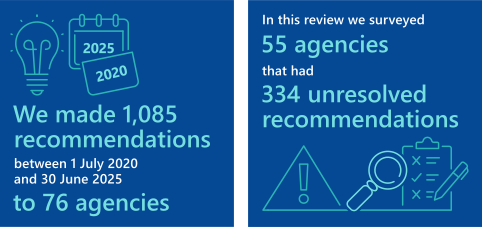
In this review, we look at all recommendations we made in the past 5 financial years. This year’s review covers from 1 July 2020 to 30 June 2025. We also look at any recommendations we made before 1 July 2020 that are still unresolved.
Key background information
Source: VAGO.
What we concluded
Agencies accepted and completed most of the recommendations we made over the past 5 financial years.
Of the 1,085 recommendations from reports we tabled between 1 July 2020 and 30 June 2025, agencies:
- accepted 95 per cent (a slight decrease from 96 per cent in last year's review)
- completed 85 per cent of the accepted recommendations (an increase from 82 per cent in last year's review)
- took a median of 12 months to complete them (an increase from 11 months in last year's review)
- completed 35 per cent by their initial target completion date.
Agencies reported they had not resolved 15 per cent of accepted recommendations, compared with 18 per cent last year. Agencies should complete these recommendations to address the risks we identified in our reports.
Data dashboard
View the dashboard full screen
Dashboard data
1. About this review
What we examined
Our review followed one line of inquiry:
1. Have agencies implemented performance engagement recommendations made between 1 January 2017 and 30 June 2025, including those that were accepted but unresolved at 30 June 2025?
To answer this question, we examined:
- all 76 agencies we made recommendations to in the 86 performance engagement reports we tabled between 1 July 2020 and 30 June 2025
- other agencies that still had unresolved recommendations made between 1 January 2017 and 30 June 2020.
Terms used in this report
Agency
In this report, an agency is any public sector organisation that meets the definition of a public body under the Audit Act 1994. This includes government departments, local councils, health and education services and other authorities.
Attestation
An attestation is a confirmation from a staff member on behalf of a surveyed agency that its response is accurate and complete to the best of their knowledge.
Engagement
An engagement is a performance audit or review.
Recommendation
A recommendation is a formal suggestion we provide to an agency after a performance audit or review. We publish recommendations in our reports. Recommendations usually focus on how an agency can improve its performance or address a risk.
Tabling date
The tabling date is the date we formally present a report to Parliament.
Background information
We do performance engagements to assess if Victorian public sector agencies, programs and services are operating effectively, efficiently and economically, and comply with relevant legislation.
At the end of an engagement we table a report in Parliament that outlines our findings and recommendations to agencies about how they can improve their performance.
We give agencies the opportunity to respond to our recommendations before we table our reports. We publish their responses in our reports. Agencies can accept each recommendation:
- in full
- in part
- in principle
- not at all.
Some agencies also provide an action plan that outlines how they will address each recommendation with target completion dates.
We do this review each year to survey agencies about their progress.
About this annual status update
This annual status update presents high-level information about all recommendations we made in the past 5 financial years (between 1 July 2020 and 30 June 2025). You can compare this information to our previous years’ status updates. This allows us to track how many of our recommendations agencies are accepting and implementing over time.
We also look at any recommendations that have been unresolved for more than 5 financial years (before 1 July 2020). We continue to track these older unresolved recommendations to understand if agencies have addressed the risks we identified.
Each year, we survey all agencies with unresolved recommendations. We ask agencies to report the status of their recommendations as at the end of the previous calendar year (31 December 2025).
Consultation with agencies
When reaching our conclusions, we consulted with the reviewed agencies and considered their views.
Some agencies gave us written responses. You can read their full responses in Appendix A.
Following up on unresolved recommendations
For this review we followed up agencies with recommendations that were unresolved at the time of our last status update (31 December 2024). We asked these agencies:
- if they still accepted each unresolved recommendation
- if they had since completed the recommendation
- when they completed the recommendation or if they had updated the target completion date.
See Appendix E or the accompanying dashboard on our website for more information about the original recommendations.
How agencies track progress on unresolved recommendations
When an agency accepts a recommendation (whether in full, in part or in principle), it is telling us that it plans to implement the recommendation and address the risk or performance gap we identified.
We expect that agencies track their progress in implementing the recommendations they accept. It is good practice for agencies to update their audit and risk committees on the status of recommendations each quarter.
The Standing Directions 2018, under the Financial Management Act 1994 (Vic), requires each public sector agency to have an audit and risk committee. The committee provides independent advice on:
- financial and performance reporting
- risk management
- internal controls
- legislative and policy compliance.
We give agencies the survey for this review at the beginning of the calendar year and ask them to provide a progress update as at the end of the previous calendar year. This means agencies can complete our survey with the same information they gave their audit and risk committee at the end of quarter 2.
How we track agencies' implementation of our recommendations
This recurring limited assurance review is the main way we collect information about whether audited agencies have accepted and implemented our recommendations. This gives us a broad overview of all agencies' performance.
We rely on agencies to give us accurate and truthful information about the status of their recommendations. We require the head of an agency, or someone authorised on their behalf, to sign an attestation confirming that the information they give us is accurate.
Another way we can track agencies' implementation of our recommendations is through follow-up reviews. These take a closer look at the recommendations from a specific performance engagement. We typically complete 2 follow-up reviews each year. We use the information we collect through this recurring review to identify which reports to follow up on.
We may choose to do a follow-up review if:
- the original engagement involved sensitive or high-risk topics, such as services for people experiencing disadvantage or complex project delivery
- the agency has told us they have not implemented our recommendations
- the agency has told us they have implemented our recommendations, but we think there are still risks or performance gaps that have not been addressed.
In a follow-up review, we request detailed evidence from agencies to show how they have:
- implemented the recommendations they previously accepted
- addressed any risks or performance gaps.
As part of a follow-up review, we also examine whether agencies gave us accurate information about the status of their recommendations in past years of this review.
The Parliamentary Accounts and Estimates Committee (PAEC) also conducts follow-up inquiries into selected VAGO performance audits. PAEC's follow‑up inquiries examine whether our recommendations have been fully implemented and identify any broader issues affecting implementation. PAEC's follow‑up inquiries also consider any new issues that have emerged since the performance engagement reports were tabled.
For more information about the scope of this review and our methods, please see Appendix C (Scope and method).
Status of recommendations
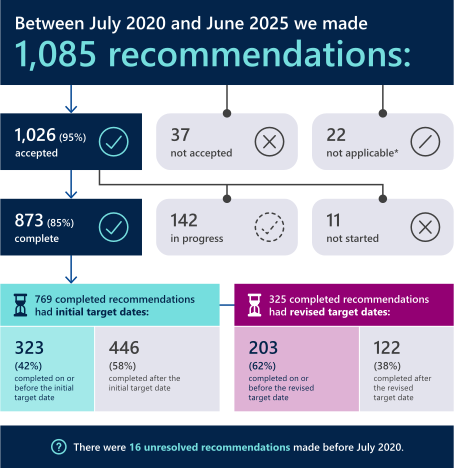
Figure 1 shows the status of recommendations we made in the past 5 financial years as at 31 December 2025.
Figure 1: Status of recommendations we examined in this report
Source: VAGO.
2. How agencies responded to our recommendations
Covered in this section:
- Agencies accepted and completed most of our recommendations
- Agencies completed most recommendations after their initial target completion date
- There are still 16 unresolved recommendations from before July 2020.
Agencies accepted and completed most of our recommendations
Acceptance status
Before we table a report, we ask the agencies we audited if they accept our recommendations.
In this review we asked agencies if they had changed any responses to ‘not accepted’ or ‘not applicable’. Common reasons for changes are:
- the recommendation is no longer relevant, for example:
- the agency's circumstances have changed
- the agency is doing other work that makes the recommendation no longer relevant
- the agency does not have the resources (time or money) to implement the recommendation.
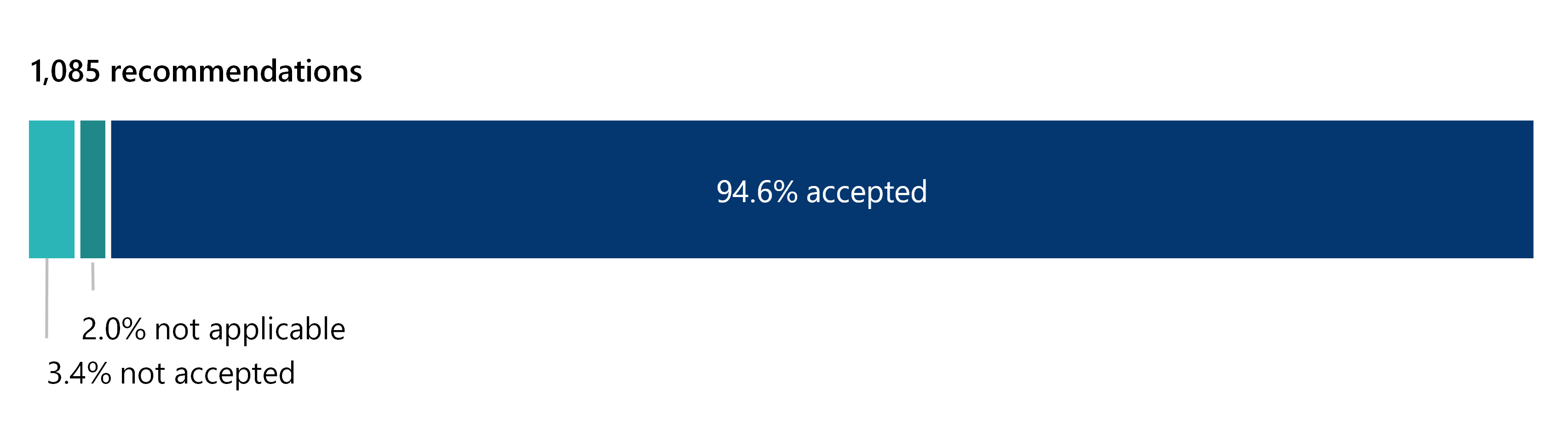
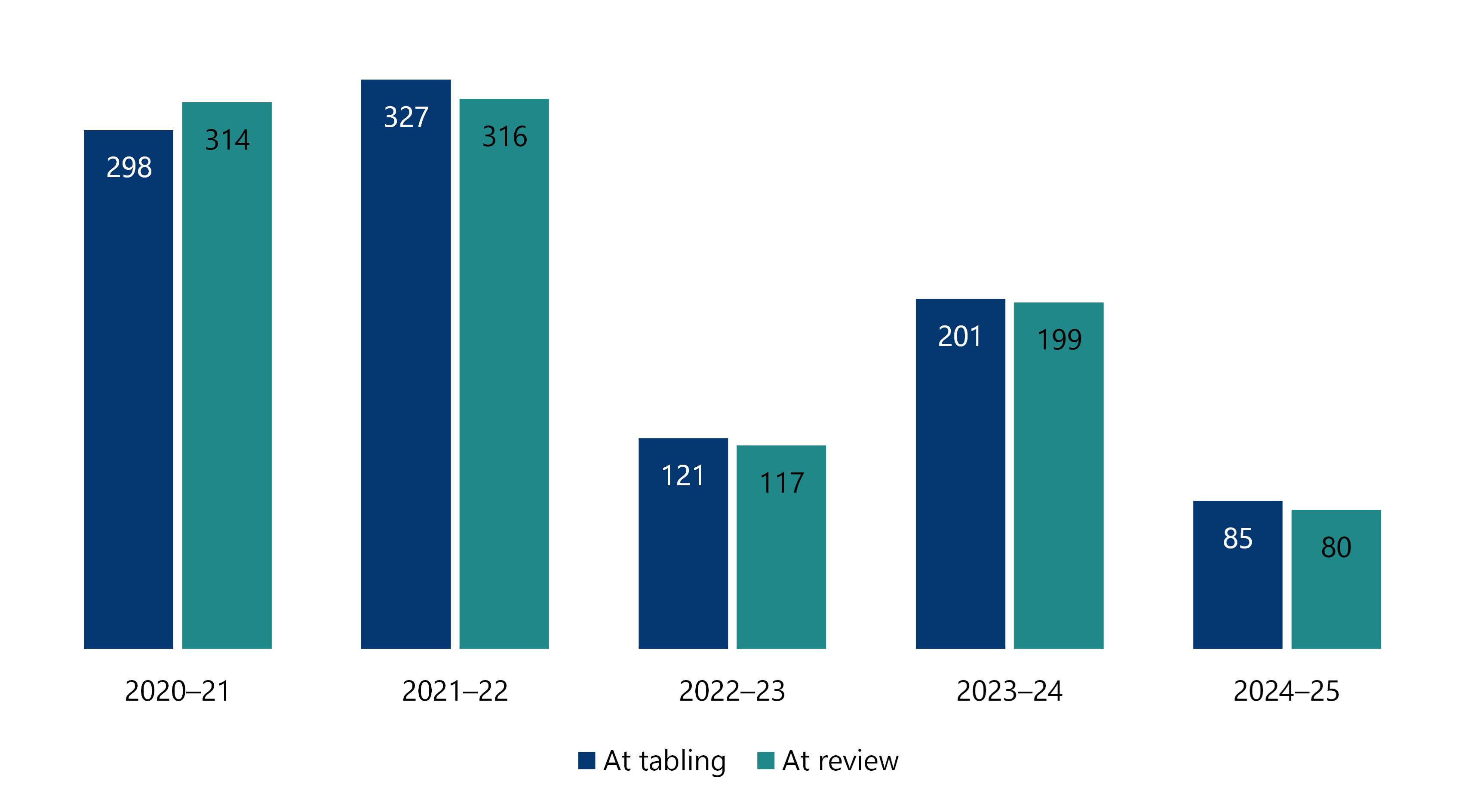
Between 1 July 2020 and 30 June 2025, we made 1,085 recommendations. Agencies accepted 1,032 (95.1 per cent) of these recommendations when we tabled the reports.
At the time of this review, agencies told us they still accepted 1,026 (94.6 per cent) of the recommendations, as Figure 2 shows.
Figure 2: Acceptance status of recommendations at the time of this review
Source: VAGO.
Figure 3 shows the breakdown of recommendations that agencies:
- accepted when the report tabled
- still accepted when we surveyed them for this report.
Figure 3: Number of recommendations accepted at the time of tabling and at the time of this review
Source: VAGO.
Reducing the number of recommendations we make
Agencies need to spend time and resources to implement our recommendations.
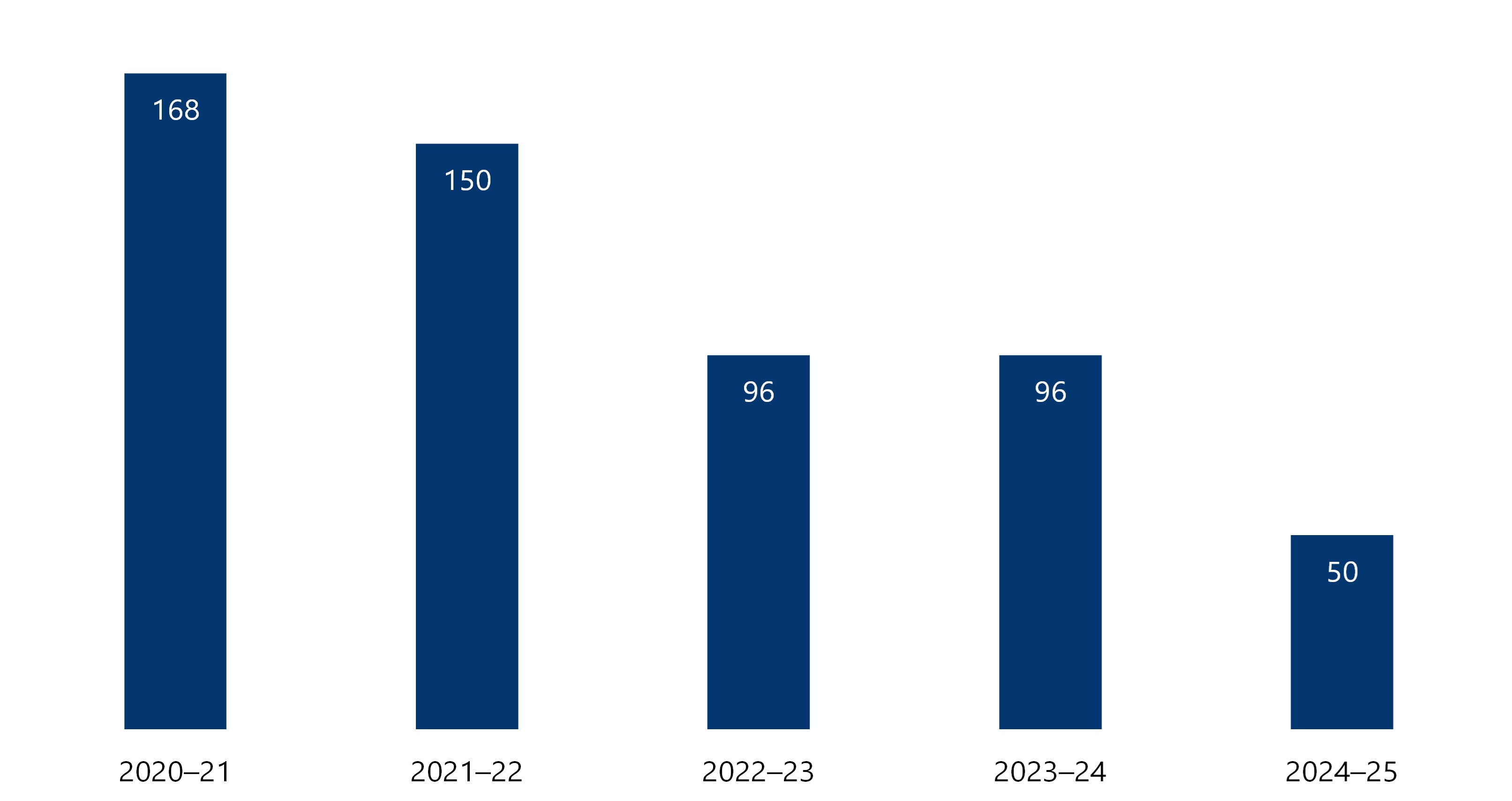
In recent years we have chosen to make fewer, more targeted recommendations in our reports. Our methodology uplift has renewed our risk-based approach to engagements. We identify our performance expectations from early planning and design our engagements to target areas posing the greatest risk to the activity's performance. This has supported recommendations focused on significant variations in performance that establish VAGO's performance expectations in a clear, unambiguous way.
Figure 4 shows the reduction in the number of unique recommendations we made in our reports between 2020–21 and 2024–25.
Figure 4: Number of unique recommendations made in our reports by financial year
Source: VAGO.
Note: 'Unique' means each recommendation is only counted once, even if it was made to multiple agencies.
Completion status
Of the 1,026 accepted recommendations from 1 July 2020 to 30 June 2025, agencies told us they have:
- completed 873 (85 per cent) of them
- not completed 153 (15 per cent) of them.
This review shows a slightly higher completion rate than last year’s review. In last year's review agencies told us they had completed 82 per cent of accepted recommendations from the prior 5 financial years (1 July 2019 to 30 June 2024).
We categorise unresolved recommendations as either ‘in progress’ or ‘not started’.
As Figure 5 shows, agencies told us that of the 153 unresolved recommendations:
- 142 were in progress
- 11 were not started.
Figure 5: Status of accepted recommendations included in this review by tabling year
| 2020–21 | 2021–22 | 2022–23 | 2023–24 | 2024–25 | Total | |
|---|---|---|---|---|---|---|
| Complete | 299 | 312 | 86 | 153 | 23 | 873 |
| In progress | 12 | 4 | 31 | 43 | 52 | 142 |
| Not started | 3 | 0 | 0 | 3 | 5 | 11 |
Source: VAGO.
Completion status by type of agency
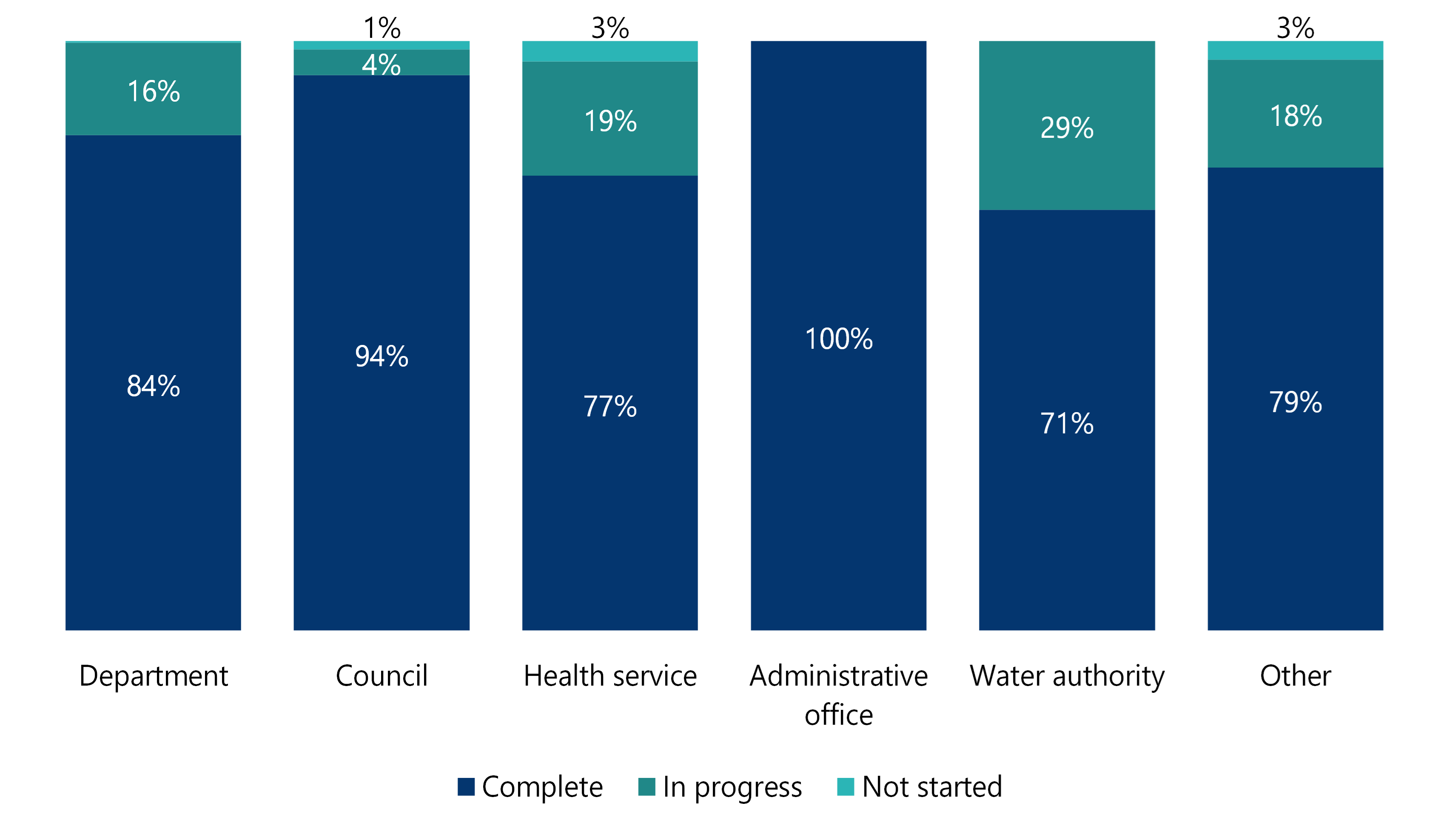
Figure 6 shows the percentage of accepted recommendations by agency type and completion status.
We categorised agencies into the following groups:
- department
- council
- health service
- TAFE/university
- administrative office
- water authority
- other (for example: Victoria Police, Country Fire Authority and Parks Victoria).
Figure 6: Accepted recommendations by agency type and completion status
Source: VAGO.
Note: Percentages have been rounded and may not add up to 100.
Note: TAFE/university is not shown because there were no agencies in the TAFE/university category.
Completion status by department
Of the 1,085 recommendations we made between 1 July 2020 and 30 June 2025, 654 (60 per cent) were to government departments.
Departments accepted 622 (95 per cent) of these recommendations at the time of this review. They have completed 523 (84 per cent) of the accepted recommendations.
List of departments
- Department of Education (DE)
- Department of Energy, Environment and Climate Action (DEECA)
- Department of Families, Fairness and Housing (DFFH)
- Department of Government Services (DGS)
- Department of Health (DH)
- Department of Jobs, Skills, Industry and Regions (DJSIR)
- Department of Justice and Community Safety (DJCS)
- Department of Premier and Cabinet (DPC)
- Department of Transport and Planning (DTP)
- Department of Treasury and Finance (DTF).
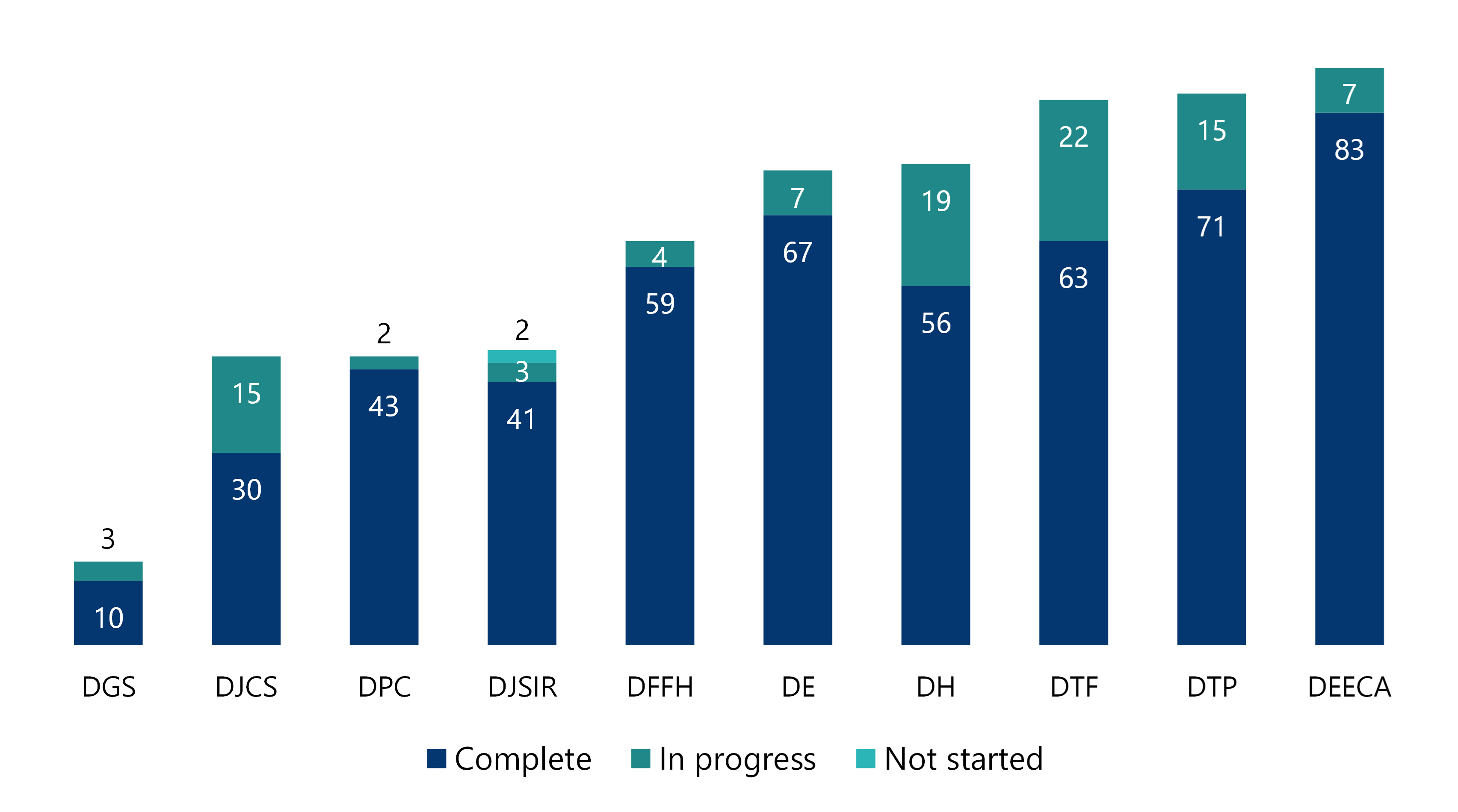
Figure 7 shows the status of accepted recommendations by department.
Figure 7: Status of accepted recommendations by department
Source: VAGO.
Agencies completed most recommendations after their initial target completion date
Setting and revising completion dates
Our recommendations help agencies address the risks and issues we identify in our performance engagements.
When an agency first accepts a recommendation it can set a target completion date. It can revise this target date as many times as needed.
Although some recommendations are more complex than others, agencies should seek to complete recommendations:
- in a timely way
- in line with their own target completion dates.
Overall completion time
Agencies took a median of 12 months to complete recommendations tabled between 1 July 2020 and 30 June 2025. This is slightly longer than the median of 11 months in last year's report.
The shortest completion time in this year's review was zero months, which means the recommendations had already been completed when we tabled the reports.
The longest completion time was 62 months from when we made the recommendation.
Completion time by department
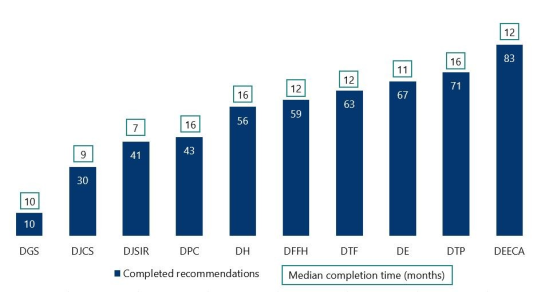
Departments took a median of 12 months to complete their recommendations. As Figure 8 shows:
- DPC, DH and DTP had the longest median completion time at 16 months
- DJSIR had the shortest median completion time at 7 months
- DEECA completed the most recommendations (83) at a median time of 12 months.
Figure 8: Number of completed recommendations and median completion time by department
Source: VAGO.
Initial target completion dates
Of the 1,026 accepted recommendations, agencies set an initial target completion date for 918 (89 per cent).
The median initial target date was 8 months after tabling.
Agencies completed:
- 323 recommendations (35 per cent) by the initial target date
- 446 recommendations (49 per cent) after the initial target date.
The longest delay in completing a recommendation was 52 months after the initial target date.
Revised completion dates
Agencies revised the initial target completion date for 432 recommendations in this year’s review (47 per cent of recommendations with an initial target date).
The median revision was a 13-month extension from the initial target date, or 25 months from the tabling date.
Of the 432 recommendations with a revised date, agencies:
- extended the target completion date for 385 (89 per cent)
- brought forward the target completion date for 47 (11 per cent).
In this year's survey, agencies told us they had completed 325 of the 432 recommendations with revised dates. However, some agencies did not meet their revised completion dates.
Of the 281 completed recommendations with extended target dates, agencies still completed 113 (40 per cent) after the revised date. The median additional delay was 105 days.
While preparing this year's report, we identified an error in the methodology used to calculate revised completion dates in our 2025 report. Because of this error, our 2025 report contains some incorrect numbers. Please see Appendix F for the corrected numbers.
Completion dates for unresolved recommendations
Agencies set an initial target completion date for 149 (97 per cent) of the 153 unresolved recommendations.
They went on to revise the target completion date for 107 of these 149 recommendations (72 per cent).
The median revision was a 23-month extension from the initial target completion date.
There are still 16 unresolved recommendations from before July 2020
Older recommendations
We asked agencies for updates on 31 unresolved recommendations we made before July 2020.
Of these recommendations, 16 are still unresolved as at 31 December 2025.
These 16 recommendations relate to 7 agencies across 11 engagements, as Figure 9 shows.
These older recommendations have been unresolved for a median of 84 months (7 years).
We urge the responsible agencies to resolve these recommendations. This will help them address the risks we found and make necessary improvements.
Figure 9: Engagements tabled before July 2020 with unresolved recommendations (in order of tabling date)
| Engagement title | Tabling date | Unresolved recommendations | Current responsible agency |
|---|---|---|---|
| Managing Public Sector Records | 8 March 2017 | 4 | DGS |
| Protecting Victoria's Coastal Assets | 29 March 2018 | 2 | Mornington Peninsula Shire Council |
| Local Government Insurance Risks | 25 July 2018 | 1 | Municipal Association of Victoria |
| Managing Rehabilitation Services in Youth Detention | 8 August 2018 | 1 | DJCS |
| Compliance with the Asset Management Accountability Framework | 23 May 2019 | 1 | DJCS |
| Local Government Assets: Asset Management and Compliance | 23 May 2019 | 1 | City of Darebin |
| Reporting on Local Government Performance* | 23 May 2019 | 1 | DGS |
| Security of Government Buildings | 29 May 2019 | 1 | DGS |
| Security of Patients' Hospital Data | 29 May 2019 | 2 | Barwon Health |
| Council Libraries | 13 November 2019 | 1 | Buloke Shire Council |
| Ravenhall Prison: Rehabilitating and Reintegrating Prisoners | 19 March 2020 | 1 | DJCS |
Source: VAGO.
Note: *DGS previously reported this recommendation as 'complete' in our 2024 review. It subsequently told us it is still in progress. As a result, we have included it in this year's report.
About these older recommendations
The most long-standing unresolved recommendations are from the Managing Public Sector Records report tabled in March 2017. DGS told us it plans to complete them by 1 July 2027.
These 4 recommendations, which we originally addressed to DPC, did not have an initial target completion date.
Mornington Peninsula Shire Council told us it plans to complete the remaining recommendations from the Protecting Victoria's Coastal Assets report by 31 December 2027.
One of these recommendations had an initial target completion date of 30 June 2018. The other did not have an initial target completion date.
See Appendix E for more information about the recommendations listed in Figure 9.
Appendix A: Submissions and comments
Download a PDF copy of Appendix A: Submissions and comments.

Appendix B: Abbreviations, acronyms and glossary
Download a PDF copy of Appendix B: Abbreviations, acronyms and glossary.
Appendix C: Review scope and method
Download a PDF copy of Appendix C: Review scope and method.
Appendix D: Performance engagements and agencies included in this review
Download a PDF copy of Appendix D: Performance engagements and agencies included in this review.
Download Appendix D: Performance engagements and agencies included in this review
Appendix E: Agency responses to our survey
Download a PDF copy of Appendix E: Agency responses to our survey.
Appendix F: Correction of errors in our 2025 report
Download a PDF copy of Appendix F: Correction of errors in our 2025 report.
Download Appendix F: Correction of errors in our 2025 report